
Contents
Introduction & Spiritual Essence
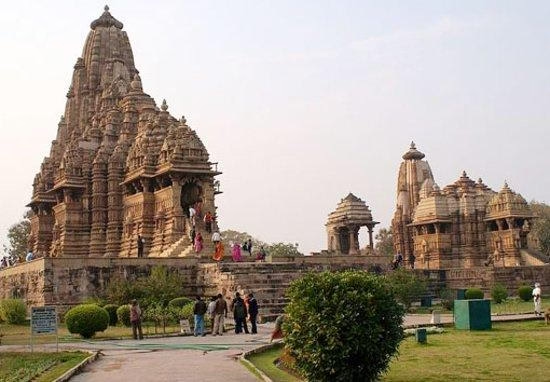
Standing as the crown jewel of the Khajuraho temple complex, the Kandariya Mahadeva Temple (Devanagari: कंदारिया महादेव मंदिर) is the largest and most ornate sanctuary dedicated to Lord Shiva in this medieval group located in Chhatarpur, Madhya Pradesh. The name translates to “the Great God of the Cave,” signifying the spiritual cave (consciousness) where the cosmic lord resides.
Deity and Form: The temple enshrines a Swayambhu (self-manifested) Shiva Lingam in its sanctum sanctorum (Garbhagriha). Unlike a standard murti, the Lingam represents the formless aspect of the divine, rising from the earth to the cosmos.
Phalaśruti (Spiritual Benefits):
- Cleansing Ancestral Karma: It is believed that offering prayers here helps ancestors attain liberation (Moksha), breaking the cycle of rebirth.
- Inner Cave Awakening: The architectural design mirrors the human body and the cosmic mountain, guiding the devotee from the sensory outer world to the dark, still silence of the inner cave of the heart.
- Artistic Liberation: The temple celebrates Kama (desire) not as sin, but as a necessary step toward Dharma (duty) and eventually Moksha (liberation).
Historical Origins & Scriptural Legend
Builders and Era: This architectural masterpiece was constructed by the Chandela Dynasty during the reign of King Vidyadhara (r. c. 1003–1035 CE). The construction is dated between 1025 and 1050 AD.
Scriptural and Historical Context:
- The Battle of Kalinjar: Tradition holds that King Vidyadhara built this temple to celebrate his successful defense against invasions by Mahmud of Ghazni (specifically the siege of 1022 CE). The temple stands as a stone monument to victory and devotion.
- Sthala Purana: Local legends suggest that the temple is built on a sacred spot where Lord Shiva emerged from a cave to bless the Chandela kings, merging the celestial Mount Kailash with the earthly plane.
| Date built: | circa 1030 CE |
|---|---|
| Deity: | Lord Shiva (Swayambhu Lingam) |
| Architectural style: | Khajuraho (Nagara Style) |
| Major festivals | Maha Shivaratri, Navratri |
| Locale: | Khajuraho |
| District: | Chhatarpur |
| Address: | Sevagram, Khajuraho, Madhya Pradesh 471606 |
| Phone | +91-7686-272-205 (ASI Office) |
Architectural Marvels
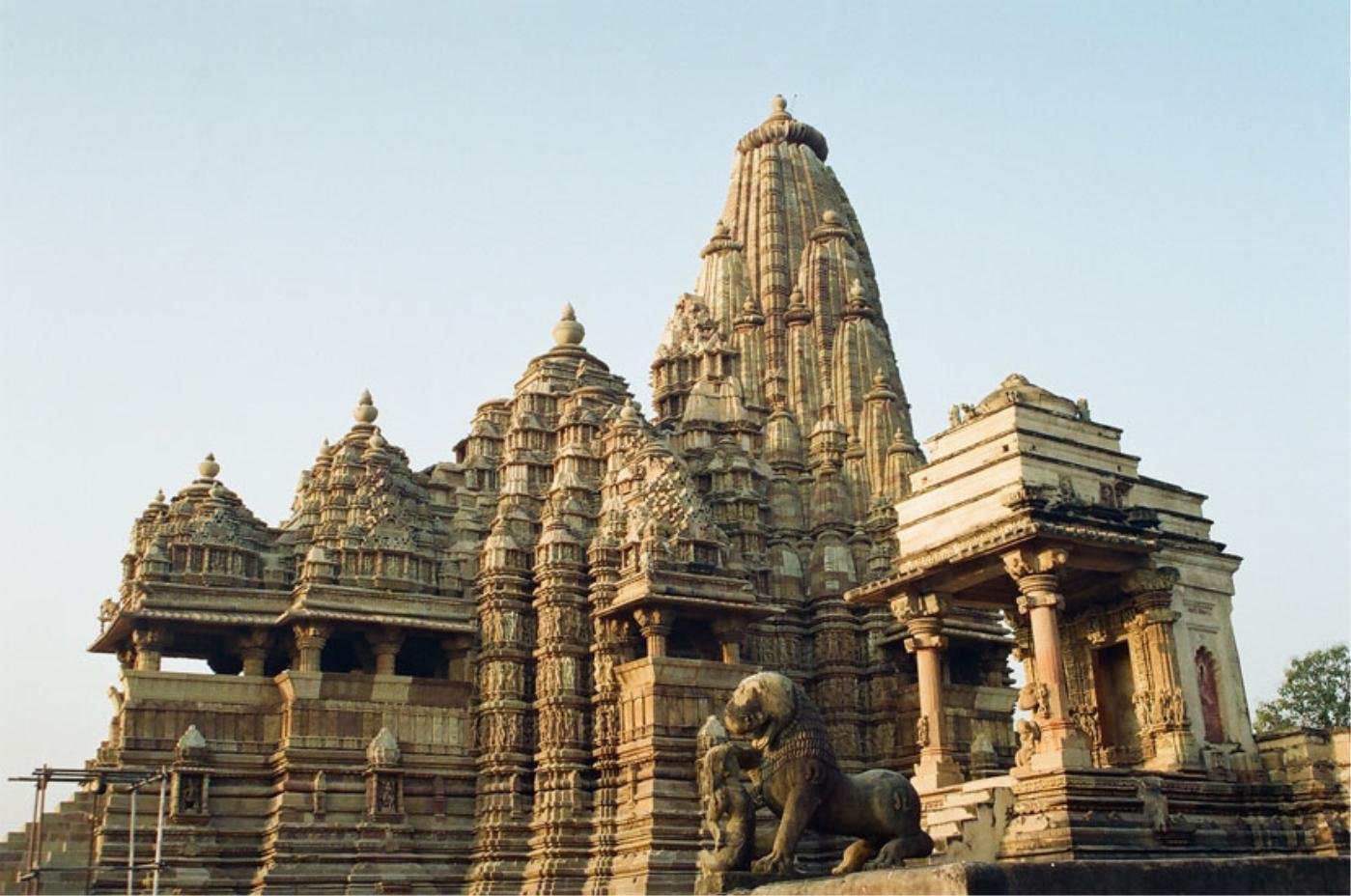
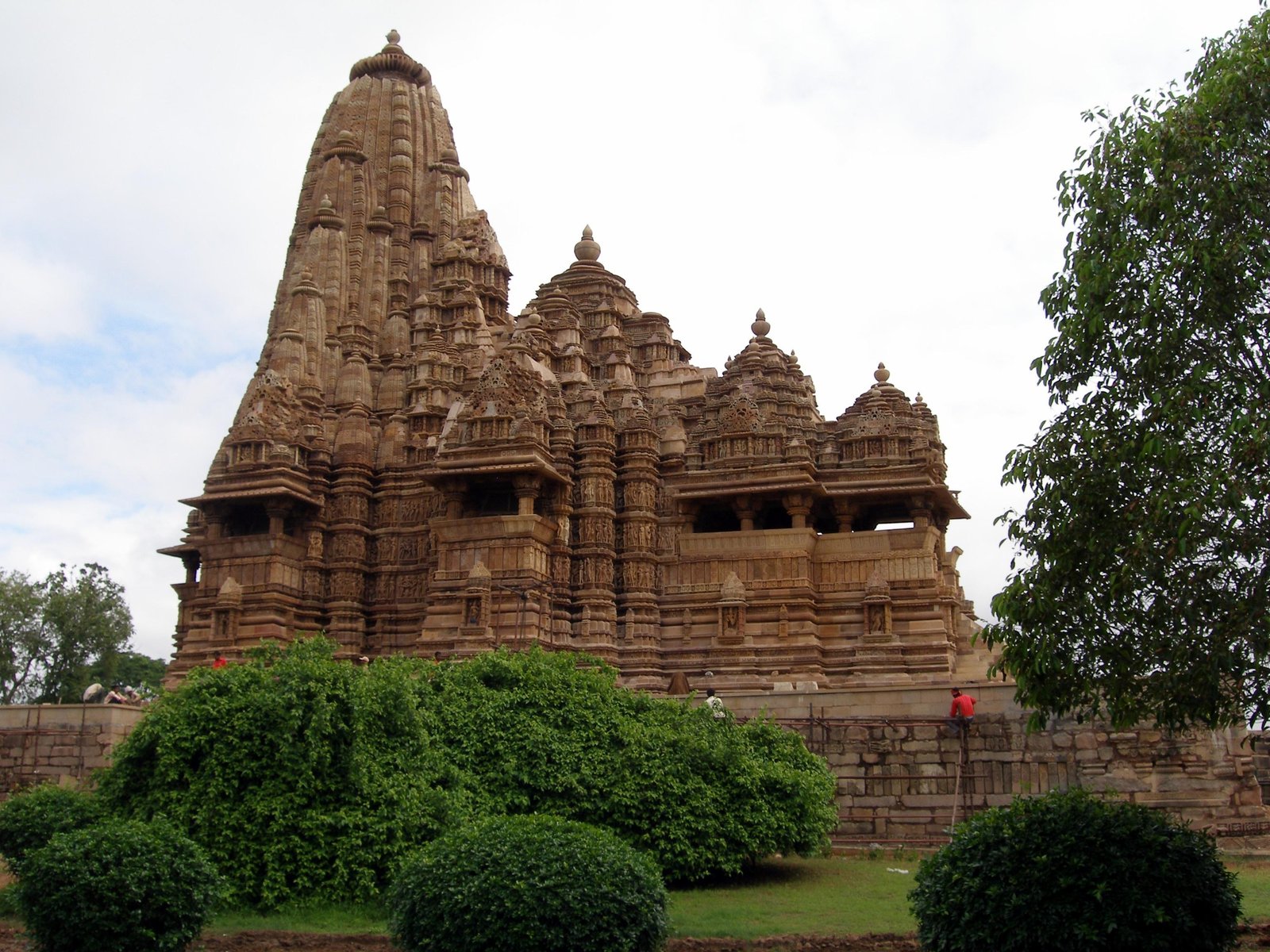
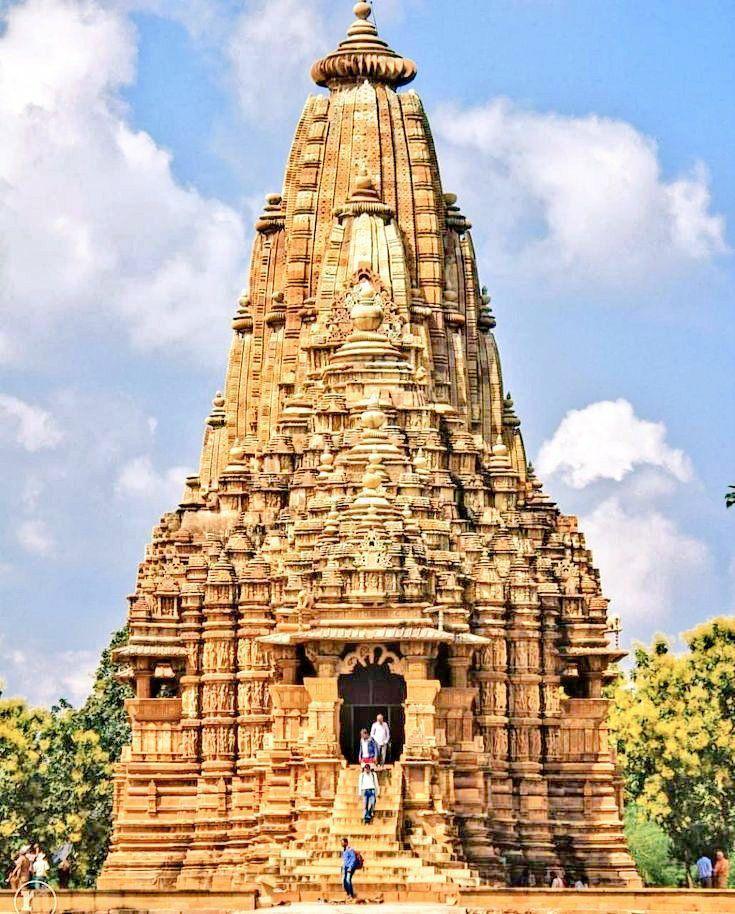
The Kandariya Mahadeva Temple is the finest example of the Nagara style of temple architecture, elevated to its zenith. It stands 31 meters (102 ft) high, modeled symbolically on Mount Meru, the mythical axis of the universe.
Structure and Layout
The temple rests on a massive plinth of 4 meters (13 ft). The layout is a five-part design:
- Entrance Torana: An intricately carved garland gate sculpted from a single stone.
- Three Mandapas: Hallways that successively rise in height and width (Maha Mandapa, Artha Mandapa, and Mukha Mandapa).
- Garbhagriha (Sanctum Sanctorum): The innermost chamber housing the Shiva Lingam. It is surrounded by interlinked passages and balconies, creating a cave-like atmosphere with minimal light, symbolizing the womb of creation.
The Shikhara (Spire)
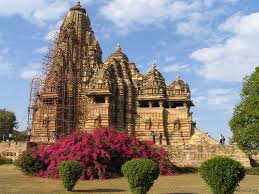
The main spire (Shikhara) rises steeply in a mountain-like form. It is crowned by 84 miniature spires, creating a rhythmic, serrated skyline that mimics the Himalayan peaks. This cluster of spires represents the cosmic mountain range surrounding Mount Kailash.


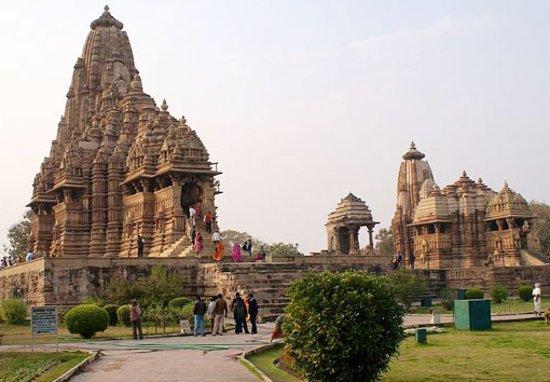
Temple of Kandaria Mahadev {Khajuraho Madhya Pradesh} built-in 1017 ED.
Sculptural Narratives
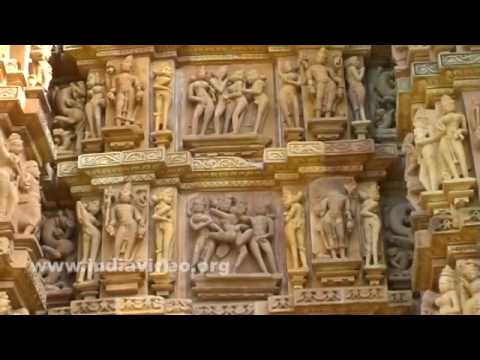
The exterior walls are divided into three vertical bands. The carvings include:
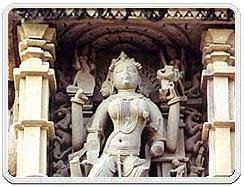
- Divine Niches: Deities like Saptamatrikas (seven mother goddesses) and Ganesha.
- Mithuna (Erosion): The famous erotic sculptures. In the context of temple architecture, these represent the union of matter and spirit, or the fulfillment of worldly desires before seeking the supreme.
- Apasaras and Apsaras: Celestial nymphs in dynamic poses, representing the beauty of the divine court.
Darshan & Ritual Logistics
The Kandariya Mahadeva Temple is under the management of the Archaeological Survey of India (ASI). While it is a protected monument, it remains an active place of worship.
Daily Timings
| Session | Timing |
|---|---|
| Morning Darshan | 5:00 AM – 12:00 PM |
| Evening Darshan | 4:00 PM – 9:00 PM |
| Light & Sound Show (Winter/Summer Schedule) | 6:30 PM – 7:30 PM (English) 7:40 PM – 8:40 PM (Hindi) |
Key Sevas and 2026 Festivals
Note on Seva: As this is a protected ASI site, regular daily Pujas are performed by local priests. For special Abhishekam or Archana, devotees usually coordinate with the temple priests at the entrance. Online booking is generally facilitated through the Madhya Pradesh Tourism portal for the larger complex pass, but specific priest services are on-site.
- Maha Shivaratri 2026: February 26, 2026. The temple sees a massive influx of pilgrims. A special Jalam (water) and Milk Abhishekam is performed at midnight.
- Navratri: March 30 – April 7, 2026 (Chaitra Navratri) and October 3 – October 11, 2026 (Sharad Navratri). While dedicated to Shiva, the surrounding Jain temples are also illuminated.
- Kartik Purnima: November 5, 2026. A significant day for lighting lamps (Deep Daan) in the temple complex.
Practical Visitor Guidance
To ensure a respectful and smooth darshan experience, please adhere to the following guidelines:
Etiquette and Rules
- Dress Code: Modest attire is required. Men should wear trousers/pants (shorts are discouraged in the inner sanctum). Women should cover shoulders and legs.
- Footwear: You must remove shoes before entering the inner mandapa. Designated shoe stands are available for a nominal fee.
- Photography: Photography is permitted in the complex and outer courtyards for personal use. However, tripods and professional equipment require prior permission from the ASI office. Inside the sanctum sanctorum (Garbhagriha), photography is strictly prohibited.
- Mobile Phones: Switch phones to silent mode. There are no dedicated locker facilities for mobile phones, but footwear lockers are available at the entrance.
Crowd Management & Seasonal Advice
- Best Hours: Visit between 6:00 AM – 8:00 AM for a serene morning Darshan. Avoid weekends and public holidays if possible.
- Summer (March–June): Temperatures can exceed 40°C. Carry a water bottle, sunglasses, and a head covering. The marble floors get hot.
- Monsoon (July–September): The sandstone walls glisten beautifully, but slippery moss can accumulate on steps. Wear rubber-soled shoes with grip.
Pilgrimage Connectivity
How to Reach
By Air: Khajuraho Airport (HJR) is 6 km from the temple. Flights connect to Delhi, Varanasi, and Mumbai.
By Rail: Khajuraho Railway Station is 9 km away. It connects to major cities like Delhi, Agra, and Varanasi. Mahoba (55 km) and Jhansi (175 km) are major junctions for long-distance trains.
By Road: The temple is on the Khajuraho–Chhatarpur highway (SH-23). Buses and taxis are available from Khajuraho bus stand (2 km from the temple).
Kaṇḍāriyā Mahādeva Temple is located in the Chhatarpur district of Madhya Pradesh. The temple complex is spread over an area of 6 square kilometres (2.3 sq mi) in the western part of the village to the west of the Vishnu temple. Khajuraho is 55 kilometres (34 mi) to the south of Mahoba, 47 kilometres (29 mi) away from the Chhatarpur city to its east, 43 kilometres (27 mi) away from Panna, 175 kilometres (109 mi) by road away from Jhansi on the north, and 600 kilometres (370 mi) to the south-east of Delhi. It is 9 kilometres (5.6 mi) from the railway station. Khajuraho is served by Khajuraho Airport (IATA Code: HJR), with services to Delhi, Agra, and Mumbai. It is 6 kilometres (3.7 mi) from the temple.
Nearby Sacred Sites
- Western Group Complex: Just a short walk away, visit the Lakshmana Temple (dedicated to Vishnu) and the Vishvanatha Temple.
- Eastern Group Temples: The Parsvanatha Temple (Jain) and Adinatha Temple are 2 km away.
- Raneh Falls & Panna National Park: Located 30 km from Khajuraho, this is a natural tirtha where the Ken River cuts through granite and sandstone formations.
Frequently Asked Questions (FAQ)
1. Is there a VIP Darshan entry at Kandariya Mahadeva?
Generally, no. As it is an ASI-protected site, entry is through a common ticket counter. However, Pujaris (priests) may allow devotees to enter the inner sanctum for a brief darshan during less crowded hours (early morning or late evening) upon a modest offering. VIP entry is usually reserved for the larger temple complex passes, not specific to this temple.
2. What is the entry fee for the temple?
The entry fee for Indian citizens is typically ₹40 (subject to revision), while SAARC/BIMSTEC tourists pay ₹600, and other foreigners pay ₹1000. There is often a discount for children under 15. Note: A separate ticket is required for the Sound & Light Show.
3. Why are erotic sculptures depicted on a religious temple?
These sculptures, known as Mithuna, are a part of the Tantric tradition. They symbolize the material world (Bhoga) which is a prerequisite for moving towards spiritual liberation (Moksha). They also represent the cosmic union of Purusha (consciousness) and Prakriti (nature).
4. Can we enter the Garbhagriha (Sanctum Sanctorum)?
Yes, unlike some temples where entry is restricted, devotees can enter the inner chamber to view the Shiva Lingam. However, photography is strictly prohibited inside.
5. Is Khajuraho safe for solo female travelers and families?
Yes, Khajuraho is a major tourist destination and is generally very safe. The ASI and local police patrol the complex frequently. It is advisable to avoid the isolated corners of the complex late at night.
Contact Details
Official Address:
Kandariya Mahadeva Temple,
Sevagram, Khajuraho, Chhatarpur,
Madhya Pradesh 471606, India.
Archaeological Survey of India (ASI):
Khajuraho Circle Office
Tel: +91-7686-272-205
Tourist Information Center:
Madhya Pradesh Tourism Development Corporation (MPTDC)
Khajuraho.
Tel: +91-7686-272-134
Recent Posts

Shri Kaamkoteeshwar Mandir, Varanasi – History & Significance
In the heart of Kashi, the eternal city of Lord Shiva, where the Ganges flows with celestial grace, stands the Shri Kaamkoteeshwar Mandir. This sacred Sannidhi is not merely a temple but a profound spiritual bridge between the Northern…

ओ सांवरे तूने ही मुझको संभाला – Lyrics & Meaning
ओ सांवरे तूने ही मुझको संभाला – A Prayer to Shyam Origin & Spiritual Essence Why This Bhajan Resonates Devotees chant this when overwhelmed by life’s storms—the refrain ‘तूने ही मुझको संभाला’ is the soul’s sigh of relief: “You…

कथा ये है महाराज मेरे की – Lyrics & Meaning
कथा ये है महाराज मेरे की छत्रपति संभाजी महाराज – A Prayer to Chhatrapati Sambhaji Maharaj Origin & Spiritual Essence Why This Bhajan Resonates Devotees chant this when their spirit feels tested—its powerful refrain “महाराज मेरे” is a soul’s…

Rigveda Samhita Yathartha Anuvada (ऋग्वेद संहिता यथार्थ अनुवाद) – Complete Set with Anvayartha & Hindi/English Translation
The Rigveda is the oldest surviving scripture of humanity and the foundational text of Sanātana Dharma. For serious students, scholars, UPSC aspirants studying ancient Indian history, Sanskrit learners, and spiritual seekers, a precise and grammatically structured translation is indispensable.…

आना भी अकेला है जाना भी अकेला है – Lyrics & Meaning | BharatTemples
आना भी अकेला है जाना भी अकेला है – A Prayer to the Divine Witness Origin & Spiritual Essence Why This Bhajan Resonates Devotees turn to this bhajan in moments of deep reflection—when life’s attachments begin to ache. The…

माता शेरावाली के द्वार जो भी जाता है – Lyrics & Meaning
माता शेरावाली के द्वार जो भी जाता है – A Prayer to Maa Sherawali Origin & Spiritual Essence Why This Bhajan Resonates Devotees turn to this bhajan in times of fear or uncertainty—its promise that no one leaves Maa’s…

मार लेना सपणी उबार लेणा भवरा – Lyrics & Meaning
मार लेना सपणी उबार लेणा भवरा – A Prayer to the Divine Beloved Origin & Spiritual Essence Why This Bhajan Resonates Devotees chant this in moments of deep vulnerability—its cry of “मार लेना सपणी, उबार लेणा भवरा” is the…

हमें श्याम सुंदर भरोसा तुम्हारा – Lyrics & Meaning
हमें श्याम सुंदर भरोसा तुम्हारा – A Prayer to Shyam Sundar Origin & Spiritual Essence Why This Bhajan Resonates Devotees chant this when feeling alone—its refrain ‘de do sahara’ is the soul’s cry for divine support. Lyrics in Hindi…

Mere Satguru Ne Di Thi Davai Lyrics in Hindi & Meaning
Mere Satguru Ne Di Thi Davai: Invoking the Guru’s Liberating Wisdom This soul-stirring bhajan venerates the Satguru (True Spiritual Master) as the divine physician who dispenses the only remedy for life’s deepest sufferings. Composed by Sant Karmaveer Tufani, it…

Janm Diyo Thari Maa Dukh Dekhiyo Lyrics in Hindi & Meaning
जन्म दियो थारी माँ दुख देखियो (Maa’s Grief Upon Birthing You) This soul-stirring Chetavani Bhajan (admonitory hymn) is addressed to the Divine Mother (Maa) – a call for repentance when children forget their filial duties in the dark age…