Omkareshwar Jyotirlinga Temple: History, Darshan Timings & Complete Guide 2026
Receive daily temple updates, divine darshan, and morning bhajans directly on WhatsApp.
Contents
- 1 Introduction & Spiritual Essence: The Resonating Om
- 2 Historical Origins & Scriptural Legend
- 3 Architectural Marvels: Nagara Style & Sacred Geometry
- 4 Darshan & Ritual Logistics (2026 Guide)
- 5 Practical Visitor Guidance
- 6 Pilgrimage Connectivity
- 7 Photo Gallery
- 8 Frequently Asked Questions (FAQs)
Introduction & Spiritual Essence: The Resonating Om
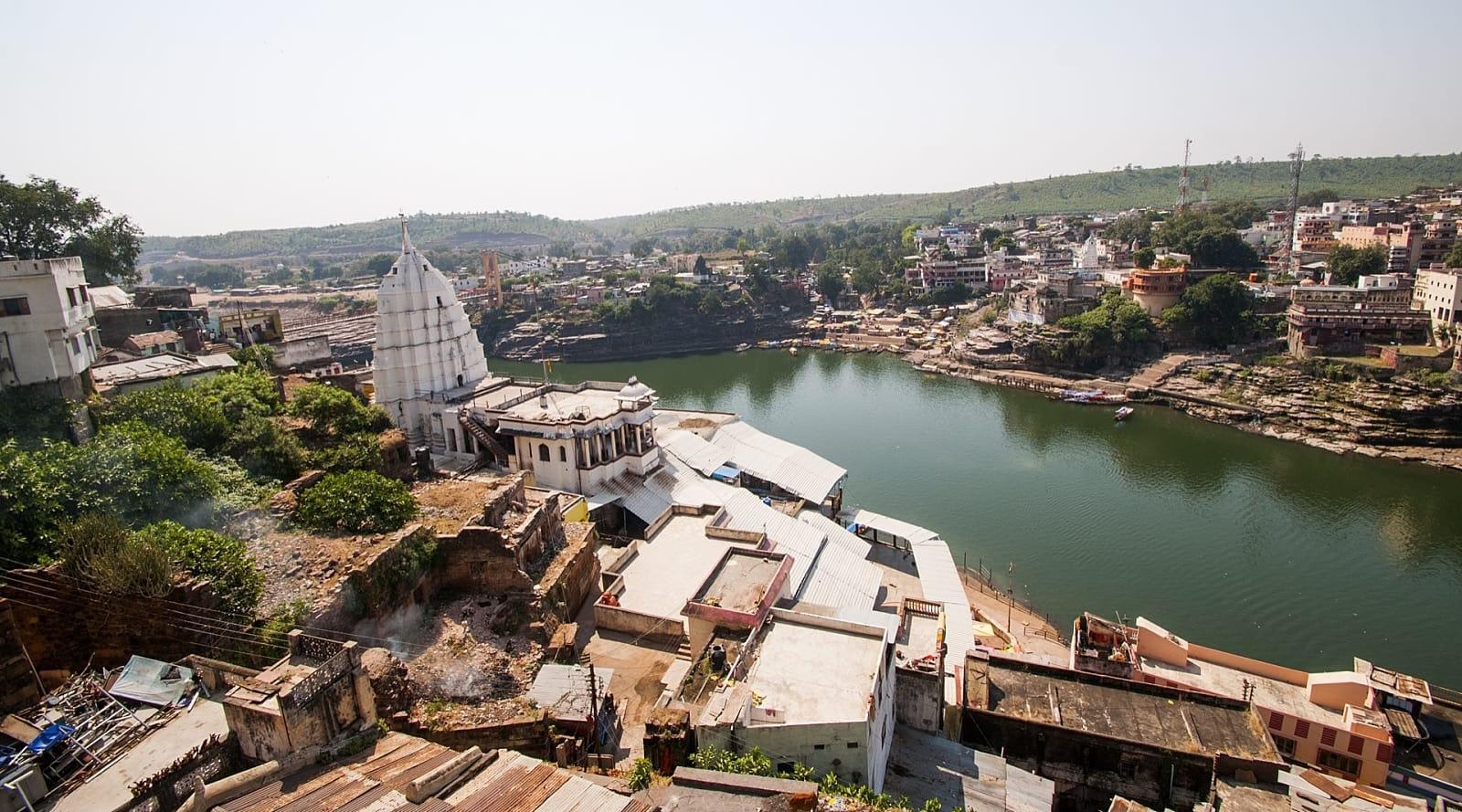
Nestled amidst the sacred waters of the Narmada River, the Omkareshwar Temple stands as a testament to ancient faith and architectural brilliance. As one of the twelve revered Jyotirlingas of Lord Shiva, it radiates a spiritual energy that resonates with the very cosmic sound of “Om.” This definitive guide invites devotees and heritage enthusiasts to explore the sanctity of this divine shrine in Khandwa, Madhya Pradesh.
The Primary Deity & Form: The temple enshrines Lord Shiva in the form of a Swayambhu (self-manifested) Jyotirlinga. Unlike typical idols, this represents the infinite pillar of light, a symbol of formless reality. The presiding deity is worshipped as Omkareshwar (Lord of the Sacred Sound ‘Om’). In the broader tradition, the deity is also referred to as Amareshwar or Mamleshwar. While some scriptures identify the main Jyotirlinga as Omkareshwar on the island, others consider the Amareshwar shrine across the river as the true lingam. However, both are treated with equal reverence by pilgrims.
Phalaśruti (Spiritual Benefits): Why do millions visit? It is believed that visiting Omkareshwar and bathing in the Narmada River washes away sins, specifically liberating the devotee from the cycle of birth and death. The Shiv Mahapuran cites that offering prayers here cleanses pitru dosha (ancestral karma) and grants moksha (liberation). The circular island itself, shaped like the Sanskrit symbol ॐ, is considered a natural yantra (sacred geometric diagram), amplifying the potency of a devotee’s prayers.
Historical Origins & Scriptural Legend
While the exact date of construction is obscured by millennia of oral tradition, the temple’s spiritual foundation is rooted in the Puranas. The structure seen today reflects a composite history of ancient origins and subsequent renovations by medieval dynasties, particularly the Paramaras and Holkars of the Malwa region.
Scriptural Foundations & Sthala Purana
The Infinite Pillar of Light: According to the Shiv Mahapuran, a dispute arose between Lord Brahma and Lord Vishnu regarding supremacy. Lord Shiva manifested as an infinite pillar of light (Jyotirlinga) piercing the three worlds. While Vishnu conceded defeat, Brahma lied about finding the end. Shiva then cursed Brahma to have no worship, while Vishnu would be revered. Omkareshwar marks one of the 64 original Jyotirlingas, of which 12 are considered supremely auspicious.
📖 Related: Dharakote Jagannath Temple History & Darshan Timings | Complete 2026 Guide
The Legend of Vindhya and Mandhata: Tradition holds that the deity of the Vindhya mountains, Mount Mandhata, worshipped Shiva with unwavering devotion. Shiva appeared in two forms—Omkareshwar and Amareshwar. The island is said to have emerged in the shape of an “Om” to bless the devotee. Another legend narrates that King Mandhata of the Ikshvaku dynasty (ancestor of Lord Rama) performed severe penance here, forcing Shiva to appear as a Jyotirlinga.
The Asura War: Local folklore speaks of a cosmic battle between the Devas (gods) and the Danavas (demons). The Danavas were winning, causing cosmic imbalance. The Devas prayed to Shiva, who emerged from the Narmada to defeat the Asuras, establishing the site as a center of protective energy.
Adi Shankara’s Spiritual Connection
Historically, the site is also significant for the lineage of Vedanta. It is believed that the 8th-century philosopher-saint Adi Shankaracharya met his guru, Govindapada, in a cave here. This cave, located just below the main temple, remains a silent witness to the transmission of ancient wisdom.
| Date built: | – |
|---|---|
| Deity: | – |
| Architectural style: | – |
| Major festivals | – |
| Locale: | Madhya Pradesh, India |
| District:: | Khandwa |
| Address: | – |
| Phone | – |
Architectural Marvels: Nagara Style & Sacred Geometry
The Omkareshwar temple complex is a masterpiece of Nagara style architecture, characterized by its towering spires and intricate carvings. The structure is designed in accordance with Vastu Shastra, aligning the cosmic energies of the earth with the celestial heavens.
The Shikhara (Spire): The main temple features a shikhara crowned by amalaka (stone disc) and kalasha (pot finial), symbolizing Mount Meru. The spire is adorned with smaller subsidiary spires (urushringas) that rise harmoniously.
Artistic Details: The temple walls and pillars are etched with detailed sculptures of deities, celestial nymphs (apsaras), and mythological narratives. While not officially listed as a UNESCO World Heritage Site, the temple is an archaeological gem protected by the Archaeological Survey of India (ASI). The sanctum houses the Swayambhu lingam, naturally fissured with a symbolic “Om” pattern.
Darshan & Ritual Logistics (2026 Guide)
Visiting Omkareshwar requires a blend of spiritual preparation and logistical planning. The temple follows specific timings for Mangala Aarti (Morning Ritual) and Shayan Aarti (Night Ritual).
Daily Timings
| Session | Timing (IST) | Details |
|---|---|---|
| Morning Darshan | 5:00 AM – 12:30 PM | Includes Mangala Aarti at 5:00 AM. Temple remains open continuously. |
| Afternoon Break | 12:30 PM – 2:30 PM | Sanctum closes for ritual cleaning and rest. |
| Evening Darshan | 2:30 PM – 9:00 PM | Includes Shayan Aarti (closing ritual). |
📖 Related: Maa Bhattarika Temple Cuttack: History, Darshan Timings & Pana Sankranti
Key Sevas & Online Booking
Devotees can participate in various sevas (offerings) to deepen their connection with the divine. Common rituals include:
- Abhishekam: Ritual bathing of the lingam with milk, honey, and water.
- Archana: Recitation of names accompanied by flower offerings.
- Rudrabhishek: A detailed Vedic ritual for prosperity and peace.
Online Booking: In 2026, the Madhya Pradesh Tourism Department and the Temple Trust have streamlined online booking. Visit the official MP Tourism portal or the temple’s dedicated website to book sevas in advance to avoid queues, especially during festivals.
Major 2026 Festival Dates
- Maha Shivaratri: February 26, 2026 (Grand celebration with night-long vigils).
- Navratri (Shardiya): October 2 – October 11, 2026.
- Kartik Purnima: November 15, 2026 (Marking the end of Sharad Purnima).
- Narmada Jayanti: July 25, 2026 (Specific to the region and river worship).
Practical Visitor Guidance
To ensure a smooth pilgrimage experience, adhere to the following guidelines:
- Dress Code: Traditional attire is mandatory. Men should wear dhoti or trousers with a shirt (no shorts). Women should wear salwar kameez, saree, or modest dresses covering shoulders and knees.
- Photography: Strictly prohibited inside the inner sanctum (garbhagriha). Photography is allowed in the outer courtyards but maintain silence and respect.
- Mobile Lockers: Electronic items, leather goods, and bags are not allowed inside the temple. Free and paid locker facilities are available near the entrance.
- Crowd Management: Weekends and Maha Shivaratri witness heavy footfall. Best hours to visit: 5:00 AM (early morning) or 4:00 PM (late afternoon).
- Seasonal Advice: Summers (April-June) in Khandwa are scorching; carry water and wear head coverings. Monsoon (July-Sept) sees heavy rains; waterproof footwear is recommended.
Note on Accessibility: The temple is on an island. Access is via a bridge or boat. While the main path is paved, there are steps and uneven surfaces. Those with mobility issues may need assistance.
Pilgrimage Connectivity
How to Reach Omkareshwar
By Air: The nearest airport is Devi Ahilya Bai Holkar Airport in Indore, approximately 75 km away. Taxis and buses are readily available from Indore to Omkareshwar (approx. 2 hours).
By Rail: The nearest major railway station is Khandwa Junction (20 km). The nearest minor station is Mortakka (12 km), but connectivity is limited. Khandwa is well-connected to Mumbai, Delhi, and Bhopal.
By Road: Omkareshwar is located on the Indore-Khandwa Road (NH 47A and NH 27). Regular state transport buses and private taxis ply from Indore, Khandwa, and Ujjain.
📖 Related: Kapilesvara Siva Temple Bhubaneswar: History, Timings & Darshan Guide
Nearby Sacred Sites (The Pilgrimage Circuit)
Extend your spiritual journey by visiting these nearby holy destinations:
- Indore (75 km): Visit the renowned Annapurna Temple and the ancient Kanch Mandir.
- Ujjain (130 km): Home to another Jyotirlinga, Mahakaleshwar, and the holy Kumbh Mela site (Shipra River).
- Mandu (100 km): While primarily historical, the Jahaz Mahal complex includes theHindola Mahal and other structures reflecting the region’s architectural grandeur.
Omkareshwar (IAST: Ōṃkārēśvar) is a Hindu temple dedicated to God Shiva. It is one of the 12 revered Jyotirlinga shrines of Shiva. It is on an island called Mandhata or Shivapuri in the Narmada river; the shape of the island is said to be like the Hindu ॐ symbol.
There are two main temples of Lord Shiva here, one to Omkareshwar (whose name means “Lord of Omkaara or the Lord of the Om Sound”) located in the island and one to Amareshwar (whose name means “Immortal lord” or “lord of the Immortals or Devas”) located on the south bank of Narmada River on the mainland.
Photo Gallery
1469706857, Omkareshwar Jyotirlinga, Khandwa, Madhya Pradesh
01_08_2013-omkareshwar, Omkareshwar Jyotirlinga, Khandwa, Madhya Pradesh
omkar_14_05_2017, Omkareshwar Jyotirlinga, Khandwa, Madhya Pradesh
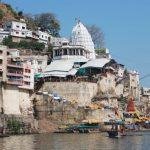
omkareshwar-temple-taken, Omkareshwar Jyotirlinga, Khandwa, Madhya Pradesh
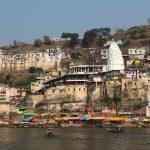
1200px-Omkareshwar_Temple_02, Omkareshwar Jyotirlinga, Khandwa, Madhya Pradesh
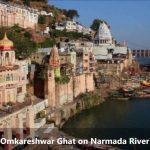
maxresdefault (53), Omkareshwar Jyotirlinga, Khandwa, Madhya Pradesh
Frequently Asked Questions (FAQs)
1. Is there a VIP darshan entry at Omkareshwar?
Yes, the temple trust offers a VIP Darshan pass for a nominal fee to skip the general queue, particularly for elderly devotees or those with time constraints. This can be booked online or purchased at the counter near the entrance.
2. Can I take a dip in the Narmada River near the temple?
Absolutely. The Narmada Parikrama involves walking around the island, and there are several ghats where devotees can take a holy dip. The water is generally calm, but caution is advised during the monsoon season.
3. Are there accommodation options on the island?
Yes, the Temple Trust manages Dharamshalas (pilgrim rest houses) on the island and the mainland. These offer basic, clean rooms at affordable rates. Private hotels are available in Mortakka and Khandwa.
4. Is photography allowed in the temple complex?
Photography is permitted in the outer areas and courtyards of the temple. However, it is strictly prohibited inside the sanctum sanctorum where the Jyotirlinga is enshrined. Mobile phones must be switched off or kept in silent mode inside the temple.
5. What is the best time of year to visit?
The ideal time to visit is between October and March when the weather in Khandwa is pleasant and cool. Summers (April-June) are extremely hot, and monsoons (July-September) bring heavy rains, though the landscape becomes lush and beautiful.