Gajanan Maharaj Temple Indore: History, Timings & Complete Guide

Receive daily temple updates, divine darshan, and morning bhajans directly on WhatsApp.
Contents
- 1 Introduction & Spiritual Essence
- 2 Historical Origins & Scriptural Legend
- 3 Architectural Marvels
- 4 Darshan & Ritual Logistics
- 5 Practical Visitor Guidance
- 6 Pilgrimage Connectivity
- 7 Frequently Asked Questions
Introduction & Spiritual Essence
The Shri Saint Gajanan Maharaj Temple in Indore, Madhya Pradesh, is a beacon of spiritual devotion dedicated to the revered Saint Gajanan Maharaj of Shegaon. Located in the peaceful enclave of Paliwal Nagar, this temple serves as a sanctum for thousands of devotees who seek the blessings of the Saint known for his miraculous powers and profound spiritual wisdom.
Primary Deity and Form
The central deity is Shri Sant Gajanan Maharaj, worshipped in a serene idol form. Unlike traditional ancient deities, this is a Swayambhu-like spiritual presence where the Saint’s benevolent form is venerated. The atmosphere is charged with the mantra “Sarv jan Hitaaye, sarv jan sukham” (Welfare of all, happiness for all).
Phalaśruti: Why Devotees Visit
Devotees flock to the Gajanan Maharaj Temple in Indore to:
- Cleansing Ancestral Karma: Performing rituals here is believed to liberate ancestors from worldly bonds, ensuring peace for their souls.
- Resolution of Obstacles: Saint Gajanan Maharaj is famously known as Sankat Mochan (the remover of troubles). Devotees believe that sincere prayer here clears professional and personal hurdles.
- Attainment of Wisdom: The temple is associated with the acquisition of Ashtkoti (eight supreme powers), fostering mental clarity and spiritual growth.
📖 Related: Kedareswar Temple Bhubaneswar: History, Darshan Timings & Guide
Historical Origins & Scriptural Legend
The history of the Indore branch is deeply tied to the lineage of Saint Gajanan Maharaj of Shegaon (1856–1918).
Establishment and Construction
According to temple records, the foundation was laid through an act of immense generosity. In 1988, Mr. Paliwal donated a plot of 13,000 square feet in Paliwal Nagar. On the auspicious day of Basant Panchami, a Bhumi Pujan (ground-breaking ceremony) was performed under the guidance of Shri Guru Baba in the presence of the Gajanan family.
Initial construction saw the creation of two rooms where a large photo of Shri Gajanan Maharaj was placed for worship. The temple structure was finalized in 1994 on the Saint’s Prakat Diwas (appearance day).
Spiritual Significance
Tradition holds that the temple possesses a unique spiritual element known as the “Ashtkoti”. This is described as one of the eight Asht Siddhis (supernatural attainments) of the Guru Maharaj. The importance of the Ashtkoti is explicitly detailed in the Garud Sanhita, an ancient scriptural text.
Architectural Marvels
While the temple follows a contemporary devotional architectural style, it integrates traditional Vastu Shastra elements to create a harmonious spiritual space.
Structure and Design
The temple complex spans approximately 2,200 square feet. The sanctum sanctorum (Garbhagriha) is designed to focus energy toward the central idol.
- Materials: The structure features sturdy pillars made of high-quality marble and granite, symbolizing permanence and purity.
- Ritual Space: The main prayer hall covers 224 square feet and accommodates the Ashtkoti installation.
- Mandapas: The temple includes a spacious community hall for Satsangh and Maha Prasad, facilitating large gatherings of devotees.
Visual Gallery
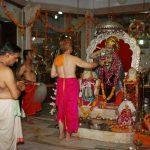
420859, Gajanan Maharaj Temple, Indore, Madhya Pradesh
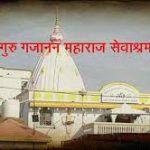
images, Gajanan Maharaj Temple, Indore, Madhya Pradesh
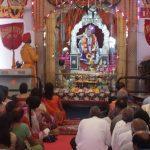
10410609, Gajanan Maharaj Temple, Indore, Madhya Pradesh
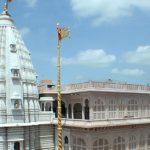
Gajanan-Maharaj-Temple-Indore, Gajanan Maharaj Temple, Indore, Madhya Pradesh
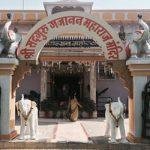
about_mandir, Gajanan Maharaj Temple, Indore, Madhya Pradesh
Darshan & Ritual Logistics
The temple is vibrant on Thursdays, which is considered highly auspicious for Saint Gajanan Maharaj.
Daily Timings
| Session | Timings |
|---|---|
| Morning Darshan | 6:00 AM – 12:00 PM |
| Afternoon Break | 12:00 PM – 4:00 PM |
| Evening Darshan | 4:00 PM – 8:30 PM |
| Thursday Satsangh | 7:00 PM onwards (Special Prasad distribution) |
📖 Related: Sarala Temple, Jagatsinghpur: History, Darshan Timings & Guide (2026)
Key Sevas & Online Booking
While traditional booking is available at the counter, the temple administration encourages digital tracking for major events.
- Weekly Akhand Path: Recitation of holy scriptures.
- Maha Prasad Seva: Offered every Thursday. It is recommended to register your participation for the Thursday Bhandara.
- Abhishekam: Ritual bathing of the idol (Performed on special Prakat Diwas and festivals).
Note on 2026 Festivals: For the year 2026, devotees should mark their calendars for the Guru Purnima celebrations in July and the Prakat Diwas (Appearance Day) in January/February. Specific dates will be announced via the temple notice board.
Practical Visitor Guidance
To ensure a peaceful Darshan experience, please adhere to the following guidelines.
Code of Conduct
- Dress Code: Traditional attire is recommended. Men should wear Dhoti/Kurta or formal shirts with trousers; Women should wear Sarees, Salwar Kameez, or decent ethnic wear.
- Photography: Photography is strictly prohibited inside the main sanctum (Garbhagriha) to maintain the sanctity of the Darshan.
- Mobile Electronics: Please switch phones to silent mode. Lockers are available near the entrance for storing bags and electronic devices.
- Accessibility: The temple has ramps for wheelchair access, though the inner sanctum may have limited space during peak hours.
Crowd Management
Thursdays attract the largest crowds. To avoid long queues:
- Best Time: Visit between 7:00 AM and 9:00 AM on weekdays.
- Seasonal Advice: Indore summers (May-June) are hot. Carry a water bottle and a head covering. The temple provides shaded waiting areas and drinking water.
Pilgrimage Connectivity
The temple is centrally located in Indore, making it easily accessible via road, rail, and air.
📖 Related: Sanisvara Siva Temple, Bhubaneswar: History, Darshan Timings & Odisha Guide
How to Reach
- By Air: The nearest airport is Devi Ahilya Bai Holkar Airport (IDR), located approximately 10 km from the temple (20-30 mins by taxi).
- By Rail: Indore Junction is the major railway station. It is about 5 km from Paliwal Nagar (15 mins drive via MR-10 Road).
- By Road: The temple is situated off AB Road (Agra-Bombay National Highway). Public transport (City Bus, Auto-rickshaws) is readily available from the Geeta Bhawan or Vijay Nagar square.
Nearby Sacred Sites
Enhance your pilgrimage by visiting these nearby spiritual centers in Indore:
- Annapurna Temple: Located roughly 4 km away, famous for its ornate South Indian architecture and four gates representing the four Vedas.
- Khajrana Ganesh Mandir: A highly revered temple complex approx 6 km away, built by Rani Ahilyabai Holkar.
- Kanch Mandir: A Jain temple entirely built of glass and mirrors, located in the old city (approx 8 km).
Frequently Asked Questions
Is there a VIP darshan entry available?
The temple administration maintains an equal approach for all devotees. However, senior citizens (above 70 years) and specially-abled visitors are given priority access during crowded hours.
Can I perform an Abhishekam on any day?
Abhishekam is generally performed on special occasions or Thursdays. For daily Abhishekam, permission must be sought from the temple secretary at least one day in advance.
Is there parking available?
Yes, the temple campus has a designated parking area for two-wheelers and cars. However, during major festivals, public parking in Paliwal Nagar is utilized.
Are non-Hindus allowed?
Saint Gajanan Maharaj’s teachings transcend caste and creed. Visitors of all backgrounds are welcome to visit the temple premises and partake in the Maha Prasad.
Where can I stay in Indore?
There are numerous hotels and guest houses near Palasia and Vijay Nagar, ranging from budget to luxury, all within a 15-minute drive of the temple.