
Contents
- 1 Khajrana Ganesh Temple: A Definitive Pilgrimage Guide
Khajrana Ganesh Temple: A Definitive Pilgrimage Guide
In the heart of Indore, Madhya Pradesh, amidst the bustle of modern life, stands a timeless sanctuary of devotion—Khajrana Ganesh Temple. As the Lead Heritage Architect and SEO Strategist for BharatTemples.com, I present this comprehensive guide to one of India’s most revered shrines. This is not merely a tourist itinerary; it is a journey into the spiritual legacy of the Holkar dynasty and the enduring faith of millions who visit this sacred site.
1. Introduction & Spiritual Essence
The Khajrana Ganesh Temple is dedicated to Lord Ganesha, the remover of obstacles and the harbinger of success. Locally known as the “Sankat Mochan” (dispeller of troubles) of Indore, this temple is a beacon of hope for devotees.
The Deity and Form
The Murti (idol) of Lord Ganesha here is believed to be Swayambhu (self-manifested). The deity is depicted in a seated posture, radiating tranquility and power. Unlike many ancient idols that are buried or hidden due to historical turmoil, this idol was rediscovered and reinstalled in the 18th century, preserving its original sanctity.
Phalaśruti: The Spiritual Benefits
Why do millions flock here annually? Phalaśruti, or the promised spiritual benefit, is central to this temple’s legend. It is widely believed that:
- Wish Fulfillment: Sincere prayers and the ritual of tying a sacred thread around the temple premises lead to the fulfillment of legitimate desires.
- Cleansing Ancestral Karma: Offering prayers here is said to pacify planetary afflictions (Graha Dosha) and cleanse negative karmic debts inherited from ancestors.
- Success in Endeavors: Students and professionals visit to seek blessings for academic excellence and career progression.
2. Historical Origins & Scriptural Legend
The history of Khajrana Ganesh is a tapestry woven with spiritual dreams and royal patronage.
The Holkar Legacy
According to historical records, the temple was constructed in 1735 CE by the legendary Rani Ahilyabai Holkar of the Maratha Empire. Rani Ahilyabai is renowned not just for her administrative acumen but for her unwavering devotion and patronage of Hindu sanctuaries across India.
The Legend of Discovery
Tradition holds that the idol was originally hidden in a well to protect it from the destructive forces of Mughal Emperor Aurangzeb in the late 17th century.
Centuries later, a local Pandit named Pandit Mangal Bhatt reportedly had a divine dream revealing the location of the lost idol. Guided by this vision, Rani Ahilyabai ordered an excavation. The idol was unearthed from the depths of the well, its spiritual energy intact. The temple was subsequently built on this sacred site to house the Swayambhu Murti. The well remains in front of the temple today, serving as a silent witness to the idol’s miraculous rediscovery.
3. Architectural Marvels
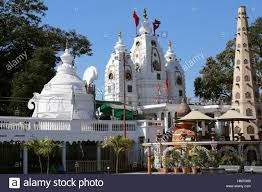
While the temple complex has been expanded over the centuries to accommodate the influx of devotees, the sanctum sanctorum retains an aura of antiquity. The architecture is a harmonious blend of traditional Hindu styles adapted to the region.
Garbhagriha & Material Opulence
The heart of the temple is the Garbhagriha (sanctum sanctorum). The architectural detailing is exquisite:
- Silver & Gold: The outer walls of the Garbhagriha are plated in silver (Chandi), featuring intricate reliefs depicting various moods and festivals of the Hindu pantheon.
- The Gate: The entrance to the sanctum is adorned with silver work, a testament to the craftsmanship of the Holkar era.
- Adornments: The eyes of Lord Ganesha are set with diamonds, a contribution donated by a prominent Indore businessman, symbolizing the community’s enduring stewardship of the shrine.
The Temple Complex
What began as a modest structure has evolved into a sprawling complex. The layout follows traditional Vastu Shastra, with the main shrine positioned to align with cosmic energies. Surrounding the main deity are shrines dedicated to other deities, creating a comprehensive pilgrimage circuit within the compound.
4. Darshan & Ritual Logistics (2026 Guide)
Planning your visit requires an understanding of the temple’s schedule and the specific rituals available. The temple administration operates with high efficiency to manage the daily influx of up to 50,000 devotees.
Daily Darshan Timings
| Session | Timings | Activity |
|---|---|---|
| Morning | 5:00 AM – 1:00 PM | Mangala Darshan & Rituals |
| Midday Break | 1:00 PM – 3:00 PM | Temple Cleaning & Deity Rest |
| Evening | 3:00 PM – 9:00 PM | Evening Aarti & Darshan |
| Special Aarti | 5:00 AM & 7:30 PM | Sankashti Chaturthi |
Note: Timings may vary slightly on major festival days. The temple remains closed between 1:00 PM and 3:00 PM.
Key Sevas & Online Booking
The temple administration encourages devotees to book Sevas in advance to avoid queues.
- Abhishekam: Ritual bathing of the deity with milk, honey, and curd. (Timing: 7:00 AM)
- Archana: Personalized chanting of Ganesha mantras. (Timing: Throughout the day)
- Rudrabhishek: A powerful Vedic ritual performed for prosperity and health.
Booking Process: Devotees can visit the official website of the Shri Khajrana Ganesh Mandir or use the dedicated mobile application to book Pujas. Payment receipts should be presented at the dedicated counter near the main gate.
2026 Major Festival Dates
- Sankashti Chaturthi (Monthly): Occurs every month; the next dates in 2026 are February 11, March 11, and April 10.
- Ganesh Chaturthi: August 27, 2026. This is the grandest celebration at Khajrana, featuring special decorations, cultural programs, and a massive Aarti.
- Magh Shukla Chaturthi: January 19, 2026. Another significant day for Ganesha devotees.
5. Practical Visitor Guidance
To ensure a spiritually enriching and hassle-free visit, please adhere to the following guidelines.
- Dress Code: Traditional attire is recommended. Men should wear dhotis or trousers (avoid shorts), and women should wear sarees, salwar kameez, or decent western attire covering shoulders and knees.
- Photography: Photography is strictly prohibited inside the sanctum sanctorum. It is generally allowed in the outer courtyard, but be respectful of other devotees.
- Mobile Lockers: The temple provides secure lockers for electronic devices. Mobile phones must be deposited before entering the sanctum to maintain a meditative atmosphere.
- Accessibility: The temple complex is wheelchair accessible, with ramps leading to the outer courtyard. However, access to the inner sanctum may be challenging for those with mobility issues due to the steps.
Crowd Management & Seasonal Advice
Peak Hours: 9:00 AM to 11:00 AM and 6:00 PM to 8:00 PM witness the highest footfall. For a quieter Darshan, visit between 10:00 AM and 1:00 PM or after 8:30 PM.
Seasonal Tips:
- May–June (Summer): Indore temperatures can exceed 40°C. Carry a water bottle (though plastic bottles are discouraged, use reusable ones).
- July–September (Monsoon): Humidity is high. Umbrellas are essential.
- November–February (Winter): The best time to visit. Mornings are cool and pleasant.
6. Pilgrimage Connectivity
How to Reach
Address: Khajrana Main Rd, Khajrana Mandir, Ganeshpuri, Khajrana, Indore, Madhya Pradesh 452016.
- By Air: Devi Ahilya Bai Holkar Airport (IDR) is the nearest airport, approximately 12 km away. Taxis and app-based cabs are readily available.
- By Rail: Indore Junction (INDB) is the main railway station, about 10 km from the temple.
- By Road: The temple is well-connected via State Highway 27. It is easily accessible from the main city bus stand and the Rajwada area.
Nearby Sacred Sites
Enhance your spiritual journey by visiting these nearby shrines:
- Annapurna Temple (3 km): Dedicated to the Goddess of food, featuring a stunning gate depicting the Ramayana.
- Kanch Mandir (7 km): A Jain temple entirely adorned with glass mirrors and intricate tile work.
- Bada Ganpati (6 km): Home to one of the largest Ganesha statues in the world.
7. Frequently Asked Questions (FAQs)
Is there a VIP darshan entry available?
While there is no strict VIP quota, senior citizens and devotees with medical conditions can request assistance from the temple staff for easier access. Donors contributing significantly to temple development are occasionally granted special access, subject to administration approval.
What are the contact numbers for the temple?
The official contact number is 098270 69149. However, for queries regarding Seva bookings, it is advisable to use the official website contact form to ensure your query is logged in the system.
Is the temple non-vegetarian or alcohol-free?
Strictly vegetarian and alcohol-free. The sanctity of the temple is maintained at all times. Devotees are advised not to carry non-vegetarian food items into the complex.
Can I perform my own Puja inside?
Generally, only appointed Pandits (priests) of the temple are authorized to perform Pujas within the sanctum. However, you may perform personal worship (Shradh) in the designated open areas of the courtyard.
Is there a donation box for Anna Daan (Food Charity)?
Yes, the temple runs a community kitchen. You can donate to the “Anna Daan Seva” counter to sponsor meals for devotees.
| Date built: | 1735 |
|---|---|
| Deity: | Lord Ganesha |
| Architectural style: | Hindu (Maratha Influence) |
| Major festivals | Ganesh Chaturthi, Sankashti Chaturthi |
| Locale: | Khajrana, Indore |
| District:: | Indore |
| Address: | Khajrana Main Rd, Khajrana Mandir, Ganeshpuri, Khajrana, Indore, Madhya Pradesh 452016 |
| Phone | 09827069149 |
Disclaimer: This guide is for informational purposes. Ritual timings and fees are subject to change by the temple authorities. Please verify current status before planning your visit.
Recent Posts

Shri Kaamkoteeshwar Mandir, Varanasi – History & Significance
In the heart of Kashi, the eternal city of Lord Shiva, where the Ganges flows with celestial grace, stands the Shri Kaamkoteeshwar Mandir. This sacred Sannidhi is not merely a temple but a profound spiritual bridge between the Northern…

ओ सांवरे तूने ही मुझको संभाला – Lyrics & Meaning
ओ सांवरे तूने ही मुझको संभाला – A Prayer to Shyam Origin & Spiritual Essence Why This Bhajan Resonates Devotees chant this when overwhelmed by life’s storms—the refrain ‘तूने ही मुझको संभाला’ is the soul’s sigh of relief: “You…

कथा ये है महाराज मेरे की – Lyrics & Meaning
कथा ये है महाराज मेरे की छत्रपति संभाजी महाराज – A Prayer to Chhatrapati Sambhaji Maharaj Origin & Spiritual Essence Why This Bhajan Resonates Devotees chant this when their spirit feels tested—its powerful refrain “महाराज मेरे” is a soul’s…

Rigveda Samhita Yathartha Anuvada (ऋग्वेद संहिता यथार्थ अनुवाद) – Complete Set with Anvayartha & Hindi/English Translation
The Rigveda is the oldest surviving scripture of humanity and the foundational text of Sanātana Dharma. For serious students, scholars, UPSC aspirants studying ancient Indian history, Sanskrit learners, and spiritual seekers, a precise and grammatically structured translation is indispensable.…

आना भी अकेला है जाना भी अकेला है – Lyrics & Meaning | BharatTemples
आना भी अकेला है जाना भी अकेला है – A Prayer to the Divine Witness Origin & Spiritual Essence Why This Bhajan Resonates Devotees turn to this bhajan in moments of deep reflection—when life’s attachments begin to ache. The…

माता शेरावाली के द्वार जो भी जाता है – Lyrics & Meaning
माता शेरावाली के द्वार जो भी जाता है – A Prayer to Maa Sherawali Origin & Spiritual Essence Why This Bhajan Resonates Devotees turn to this bhajan in times of fear or uncertainty—its promise that no one leaves Maa’s…

मार लेना सपणी उबार लेणा भवरा – Lyrics & Meaning
मार लेना सपणी उबार लेणा भवरा – A Prayer to the Divine Beloved Origin & Spiritual Essence Why This Bhajan Resonates Devotees chant this in moments of deep vulnerability—its cry of “मार लेना सपणी, उबार लेणा भवरा” is the…

हमें श्याम सुंदर भरोसा तुम्हारा – Lyrics & Meaning
हमें श्याम सुंदर भरोसा तुम्हारा – A Prayer to Shyam Sundar Origin & Spiritual Essence Why This Bhajan Resonates Devotees chant this when feeling alone—its refrain ‘de do sahara’ is the soul’s cry for divine support. Lyrics in Hindi…

Mere Satguru Ne Di Thi Davai Lyrics in Hindi & Meaning
Mere Satguru Ne Di Thi Davai: Invoking the Guru’s Liberating Wisdom This soul-stirring bhajan venerates the Satguru (True Spiritual Master) as the divine physician who dispenses the only remedy for life’s deepest sufferings. Composed by Sant Karmaveer Tufani, it…

Janm Diyo Thari Maa Dukh Dekhiyo Lyrics in Hindi & Meaning
जन्म दियो थारी माँ दुख देखियो (Maa’s Grief Upon Birthing You) This soul-stirring Chetavani Bhajan (admonitory hymn) is addressed to the Divine Mother (Maa) – a call for repentance when children forget their filial duties in the dark age…