
Contents
- 1 Imuktheeswarar Temple: A Definitive Pilgrimage Guide to Periyapalayam
Imuktheeswarar Temple: A Definitive Pilgrimage Guide to Periyapalayam
Imuktheeswarar Temple, Periyapalayam, Thiruvallur
| Date built: | – |
|---|---|
| Deity: | Imuktheeswarar |
| Architectural style: | Tamil Temple architecture |
| Major festivals | – |
| Locale: | Periyapalayam |
| District:: | Thiruvallur |
| Address: | – |
| Phone | – |
Introduction & Spiritual Essence
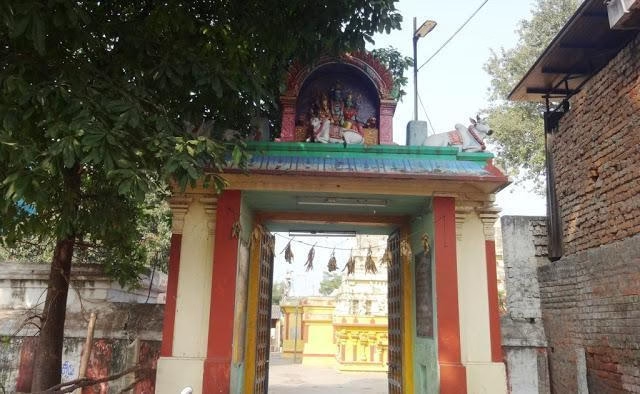
Imuktheeswarar Temple, situated in the serene locality of Moongilpattu near Periyapalayam, is a revered abode of Lord Shiva. The temple stands as a significant spiritual landmark in the Thiruvallur district of Tamil Nadu. The presiding deity is known as Imuktheeswarar (also revered as Agastheeswarar), a self-manifested (Swayambhu) Lingam. The consort of the Lord is Goddess Annapoorani, the provider of sustenance.
Phalaśruti: Why Devotees Visit
According to local tradition and scriptural beliefs, the temple holds immense power for cleansing ancestral karma and bestowing stability. As the temple is associated with the Prithvi (Earth) Lingam among the Pancha Bhoota Sthalas, worshipping here is believed to provide grounding energy, mental peace, and relief from planetary afflictions, particularly those related to Saturn (Shani) and Rahu. Devotees seek blessings here for family harmony and prosperity.
Historical Origins & Scriptural Legend
The Legend of Imuktheeswarar
The name “Imuktheeswarar” is derived from the deep connection to the five elemental forces (Pancha Bhootas). Since the Lord is worshipped here as the embodiment of Prithvi (Earth), alongside Appu (Water), Theyu (Fire), Vayu (Air), and Akasham (Space), he is revered as Imuktheeswarar.
Sages and Scriptures
Tradition holds that the great Sage Agasthiar worshipped the Lord at this site, which is why the deity is also called Agastheeswarar. Furthermore, it is believed that Sage Valmiki, the author of the Ramayana, stayed here and performed intense penance, infusing the site with ancient Vedic energy. While specific inscriptions regarding the dynasty and century of construction are sparse in current records, the temple follows the classical Dravidian style prevalent in the early medieval period, likely renovated over centuries by local chieftains.
Architectural Marvels
The Imuktheeswarar Temple showcases the elegance of traditional Tamil Temple Architecture. While it may not have the towering gopurams of larger Chola temples, its sanctity is preserved in its structural layout.
- Sanctum Sanctorum (Garbhagriha): The inner shrine houses the Swayambhu Lingam, which faces east.
- Mandapas: The temple features a pillared hall (Mandapa) that allows devotees to view the deity from a slight distance.
- Location & Vastu: The temple is strategically located on the banks of the Arani River, adhering to Vastu Shastra principles where proximity to flowing water enhances the positive energy of the site.
- Presiding Deity: The main deity is flanked by shrines for Lord Ganesha and Murugan, and the Sanctum of Goddess Annapoorani is a significant highlight for devotees seeking blessings for sustenance.
- Abhishekam: Performed during morning hours. Special items include milk, honey, and sandalwood paste.
- Archana: Recitation of the deity’s names. Annapoorani Stotram is highly recommended here.
- Online Booking: For specific large-scale rituals or donations, inquiries can be made via the HR&CE Department of Tamil Nadu or local temple trusts. (Note: As of 2026, local temples often rely on direct contact for specific archanai bookings).
- Maha Shivaratri: March 1, 2026 (Continuous chanting and special Abhishekam throughout the night).
- Arudra Darshanam: January 11, 2026 (Celebration of Lord Nataraja).
- Pradosham: Occurring twice monthly (13th and 28th approx.); highly auspicious for Shiva devotees.
- Navaratri: September 22 – October 1, 2026 (Special Poojas for Goddess Annapoorani).
- Dress Code: Traditional attire is mandatory. Men should wear dhotis or formal pants with shirts; women should wear sarees, salwar kameez, or churidars.
- Photography: Photography is strictly prohibited inside the sanctum sanctorum. Mobile phones should be kept on silent mode.
- Lockers: While small bags are allowed, it is recommended to keep valuables in your vehicle or use the cloakroom if available at the entrance.
- Crowd Management: Weekends and Mondays attract larger crowds. To experience a peaceful darshan, visit between 9:00 AM and 11:00 AM on weekdays.
- Seasonal Advice: May-June is extremely hot; carry ample water and an umbrella. July-September (Monsoon) brings lush greenery to the Arani river banks, though access roads may be slippery.
- By Air: Chennai International Airport (MAA) is approximately 53 km away.
- By Rail: Kavaraippettai Railway Station is the nearest railhead (approx. 17 km). Thiruvallur Railway Station is about 32 km away.
- By Road: The temple is situated on the Chennai – Kolkata Highway (NH 16 / Old NH 5). It is well connected by buses from Ambattur, T Nagar (Route 592), and CMBT (Route 514).
- Periyapalayam Bhavani Amman Temple: Located just across the Arani River (approx. 750 meters). This temple is one of the most famous “Kola” (Sacrificial) temples in Tamil Nadu.
- Kavaraipettai Kailasanathar Temple: Located about 17 km away, this is another historic Shiva temple on the banks of the Arani river.
- Thiruvallur Veeraraghava Swamy Temple: Located about 32 km away, this is a major Vaishnavite temple dedicated to Lord Raghava (a form of Vishnu), perfect for a balanced spiritual journey.
Darshan & Ritual Logistics (2026 Schedule)
Devotees planning to visit in 2026 should note the daily rituals. The temple follows standard timings, but it is advisable to verify during festival seasons.
| Session | Timings | Rituals |
|---|---|---|
| Morning | 6:00 AM – 12:00 PM | Ushathkalam Puja, Kalasha Pooja |
| Evening | 4:00 PM – 8:00 PM | Sayarakshai, Arthajama Pooja |
Key Sevas and Online Booking
While the temple operates largely on a traditional basis, devotees can coordinate specific Sevas (offerings) with the temple administration.
2026 Major Festivals at Imuktheeswarar Temple
Practical Visitor Guidance
Pilgrimage Connectivity
How to Reach
The temple is located at Moongilpattu, very close to the Periyapalayam Bus Terminus.
Nearby Sacred Sites
Extend your pilgrimage circuit by visiting these nearby powerful shrines:
Frequently Asked Questions (FAQ)
1. Is there a VIP Darshan entry at Imuktheeswarar Temple?
Generally, the temple operates on a first-come, first-served basis for general darshan. However, for specific Abhishekam rituals, devotees who have booked the Seva are allowed closer access during the ritual time. No separate VIP ticketing system is noted, maintaining the traditional temple atmosphere.
2. What is the significance of the Arani River here?
The Arani River, also known as Araniar, is a tributary of the Palar River. The temple’s location on its banks is significant because it enhances the elemental balance (Water + Earth) of the shrine. It is believed that the river’s flow carries away the sins of devotees who bathe before entering the temple.
3. Are there accommodation facilities nearby?
The temple does not have guest houses within its premises. However, basic lodgings are available in Periyapalayam and Ponneri. For better amenities, hotels in Redhills or Chennai (approx. 25-40 km) are recommended.
4. Can I offer Bilva leaves (Vilvam) to the deity?
Yes, Bilva leaves are the most sacred offering to Lord Shiva. You can bring them from outside or purchase them from vendors near the temple entrance. Performing a simple Archana with 108 Bilva leaves is a common practice here.
5. What is the main language spoken by the temple priests?
The priests primarily communicate in Tamil. However, they understand basic Telugu and English requests for rituals and offerings.
Recent Posts

Shri Kaamkoteeshwar Mandir, Varanasi – History & Significance
In the heart of Kashi, the eternal city of Lord Shiva, where the Ganges flows with celestial grace, stands the Shri Kaamkoteeshwar Mandir. This sacred Sannidhi is not merely a temple but a profound spiritual bridge between the Northern…

ओ सांवरे तूने ही मुझको संभाला – Lyrics & Meaning
ओ सांवरे तूने ही मुझको संभाला – A Prayer to Shyam Origin & Spiritual Essence Why This Bhajan Resonates Devotees chant this when overwhelmed by life’s storms—the refrain ‘तूने ही मुझको संभाला’ is the soul’s sigh of relief: “You…

कथा ये है महाराज मेरे की – Lyrics & Meaning
कथा ये है महाराज मेरे की छत्रपति संभाजी महाराज – A Prayer to Chhatrapati Sambhaji Maharaj Origin & Spiritual Essence Why This Bhajan Resonates Devotees chant this when their spirit feels tested—its powerful refrain “महाराज मेरे” is a soul’s…

Rigveda Samhita Yathartha Anuvada (ऋग्वेद संहिता यथार्थ अनुवाद) – Complete Set with Anvayartha & Hindi/English Translation
The Rigveda is the oldest surviving scripture of humanity and the foundational text of Sanātana Dharma. For serious students, scholars, UPSC aspirants studying ancient Indian history, Sanskrit learners, and spiritual seekers, a precise and grammatically structured translation is indispensable.…

आना भी अकेला है जाना भी अकेला है – Lyrics & Meaning | BharatTemples
आना भी अकेला है जाना भी अकेला है – A Prayer to the Divine Witness Origin & Spiritual Essence Why This Bhajan Resonates Devotees turn to this bhajan in moments of deep reflection—when life’s attachments begin to ache. The…

माता शेरावाली के द्वार जो भी जाता है – Lyrics & Meaning
माता शेरावाली के द्वार जो भी जाता है – A Prayer to Maa Sherawali Origin & Spiritual Essence Why This Bhajan Resonates Devotees turn to this bhajan in times of fear or uncertainty—its promise that no one leaves Maa’s…

मार लेना सपणी उबार लेणा भवरा – Lyrics & Meaning
मार लेना सपणी उबार लेणा भवरा – A Prayer to the Divine Beloved Origin & Spiritual Essence Why This Bhajan Resonates Devotees chant this in moments of deep vulnerability—its cry of “मार लेना सपणी, उबार लेणा भवरा” is the…

हमें श्याम सुंदर भरोसा तुम्हारा – Lyrics & Meaning
हमें श्याम सुंदर भरोसा तुम्हारा – A Prayer to Shyam Sundar Origin & Spiritual Essence Why This Bhajan Resonates Devotees chant this when feeling alone—its refrain ‘de do sahara’ is the soul’s cry for divine support. Lyrics in Hindi…

Mere Satguru Ne Di Thi Davai Lyrics in Hindi & Meaning
Mere Satguru Ne Di Thi Davai: Invoking the Guru’s Liberating Wisdom This soul-stirring bhajan venerates the Satguru (True Spiritual Master) as the divine physician who dispenses the only remedy for life’s deepest sufferings. Composed by Sant Karmaveer Tufani, it…

Janm Diyo Thari Maa Dukh Dekhiyo Lyrics in Hindi & Meaning
जन्म दियो थारी माँ दुख देखियो (Maa’s Grief Upon Birthing You) This soul-stirring Chetavani Bhajan (admonitory hymn) is addressed to the Divine Mother (Maa) – a call for repentance when children forget their filial duties in the dark age…