
Contents
Introduction & Spiritual Essence
Located in the historic Old Town of Bhubaneswar, amidst the ancient temple complex of Odisha, stands the serene Kapilesvara Siva Temple. This 14th-century structure is a profound spiritual destination dedicated to Lord Shiva. While the towering Lingaraj Temple often draws the spotlight, Kapilesvara offers a more intimate and contemplative atmosphere, deeply rooted in the theological fabric of Kalinga.
The presiding deity is a Swayambhu (self-manifested) Siva-lingam established within a circular Yonipitha (base) in the sanctum sanctorum. Unlike many temples where the deity is installed, tradition holds that the Lingam here emerged naturally from the earth, making it a powerful focal point for meditation.
Phalaśruti: Why Visit Kapilesvara?
Devotees flock to Kapilesvara not merely for sightseeing, but for the promise of Shanti (peace) and ancestral liberation. The temple is renowned for specific spiritual benefits:
- Cleansing Ancestral Karma: Performing Abhishekam here is believed to wash away sins not only of the individual but of their lineage (Pitra Dosha).
- Divine Union: As a satellite temple to the great Lingaraj, it is considered a vital node in the cosmic energy field of Bhubaneswar, known as the “City of Temples.”
- Inner Peace: The temple’s location on the northern embankment of the Manikarnika tank provides a natural ambiance for introspection and yoga.
Historical Origins & Scriptural Legend
According to temple records and ASI (Archaeological Survey of India) documentation, the current structure dates back to the 14th Century A.D. It was built during the reign of the Suryavamsi dynasty under King Kapilendra Deva (reigned 1434–1466).
However, archaeological evidence suggests the temple’s roots may go deeper. Fragmented inscriptions and sculptural styles found on the Parsvadevatas (niche deities) indicate that the original temple could predate the 11th century, potentially existing before the full rise of the Ganga dynasty’s architectural influence.
The Tale of Sage Kapila
Tradition holds that the village of Kapilesvara is named after the Vedic sage Kapila, a renowned incarnation of Lord Vishnu and a master of Sankhya philosophy. Legend states that Sage Kapila performed intense penance on this very land to please Lord Shiva. The self-manifested Lingam is believed to be the result of his devotion, a symbol of the ultimate consciousness merging with the devotee’s soul. The adjacent Manikarnika tank adds to the sanctity, as tanks adjacent to Shiva temples often represent the celestial waters of the Ganges.
Architectural Marvels
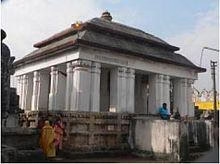
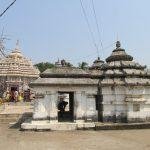
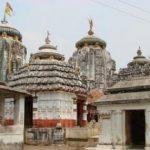
The Kapilesvara Temple is a textbook example of the Kalinga style of architecture, a distinct subset of the Nagara style. The temple complex is enclosed within a precinct containing 33 other monuments, creating a mini-historical village.
Structural Components
- Vimana (Sanctum): The shrine is curvilinear (Rekha order), rising to approximately 11.40 meters. It features the traditional Bada (vertical wall), Gandi (spire), and Mastaka (crowning structure). The lower potala has five tiers, while the upper has four.
- Jagamohana & Mandapas: Unlike the solid spire of the Vimana, the Jagamohana (assembly hall) is pyramidal with a Pidha roof. The Nata-mandira (dance hall) and Bhoga-mandapa (food offering hall) are later additions with flat roofs, showcasing the evolution of the structure over time.
Sculptural Details
The exterior walls are adorned with intricate carvings that narrate mythological stories:
- Niche Sculptures (Raha Paga):
- North: Parvati, holding a lotus and Naga Pasa (serpent noose) (partly damaged).
- West: Kartikeya (Murugan) standing in Tribhanga posture, holding a trident and a cattle drum.
- South: Ganesha holding a rosary, axe, modak, and his tusk.
- Entrance Arch (Lalatabimba): Carved with Gajalakshmi seated in Lalitasana, flanked by elephants pouring water—a symbol of purity and prosperity.
- Guardians: The doorjambs feature Dvarapalas (door guardians) flanked by river goddesses Ganga and Yamuna mounted on their respective vehicles.
Architectural Note: The temple is unique for its use of laterite stone and chlorite schist, typical of the transitional period between the Somavanshi and Gangavanshi dynasties.
Darshan & Ritual Logistics
The Kapilesvara Temple Trust Board manages the daily affairs. As a “living temple,” rituals are performed strictly according to Vedic traditions.
Daily Timings (Standard Schedule)
| Session | Timing | Activity |
|---|---|---|
| Morning | 6:00 AM – 12:00 PM | Mangala Alati, Abhishekam, Pushpanjali |
| Afternoon | 12:00 PM – 5:00 PM | Bhoga Alati, Temple Rest Period |
| Evening | 5:00 PM – 9:00 PM | Sandhya Alati, Pakaalana |
Key Sevas & Booking
Devotees can perform various Sevas (services) to the deity. While online booking is primarily centralized through the Lingaraj Temple administration for the complex, on-site tokens are available at the Kapilesvara Trust office.
- Abhishekam: Ritual bathing of the Lingam with milk, honey, and water. (Time: 7:00 AM).
- Archana: Recitation of names (Namaskara Mantram). Available throughout Darshan hours.
- Maha Deepa: Offering of ghee lamps on Tuesdays and Fridays.
2026 Festival Calendar (Major Observances)
- Maha Shivaratri: February 26, 2026. (Special night-long vigil and special Abhishekam).
- Nabaratri (Matsya & Chaitra): April 2026. (Special Yagna for devotees).
- Panchamy (Ratha Yatra of Lingaraj): June 2026. (Local procession passing the temple vicinity).
Practical Visitor Guidance
To ensure a spiritually fulfilling visit to Kapilesvara, please adhere to the following guidelines.
Code of Conduct
- Dress Code: Traditional Indian attire is mandatory. Men should wear Dhoti or formal trousers with a shirt. Women should wear Saree, Salwar Kameez, or full-length skirts. Western casuals (shorts/tees) are strictly prohibited.
- Photography: Photography is restricted inside the sanctum sanctorum. Permitted in the outer courtyard and Jagamohana (ask the trustee for specific permissions).
- Electronics: Mobile phones should be on silent mode. Lockers are available near the entrance of the Old Town precinct for electronic items.
Crowd Management & Seasons
- Best Time to Visit: Early morning (6:00 AM – 8:00 AM) offers the calmest Darshan experience.
- Seasonal Advice:
- Summer (May): Bhubaneswar gets extremely hot. Carry a reusable water bottle (disposable plastic is discouraged). Wear cotton fabrics.
- Monsoon (July-Sept): The courtyard can be slippery due to moss. Wear rubber-soled sandals with grip.
- Winter (Dec-Jan): Ideal for walking around the complex and exploring the adjacent Manikarnika tank.
Pilgrimage Connectivity
How to Reach Kapilesvara Temple
The temple is situated in the Kapilesvara locality, which is the western flank of Old Town Bhubaneswar.
- By Air: Biju Patnaik International Airport (BBI) is approximately 5-6 km away (15-20 mins by taxi via NH16).
- By Rail: Bhubaneswar Railway Station (BBS) is the major railhead, roughly 4 km from the temple. Auto-rickshaws are easily available.
- By Road: The temple is accessible via the Lingaraj Temple Road (now part of the heritage precinct). Buses and cabs ply via NH-16 (formerly NH-5). Note: The area is a congested heritage zone; parking is limited to designated lots outside the Old Town zone.
Nearby Sacred Sites (The Pilgrimage Circuit)
Kapilesvara is a pivotal stop in the ancient temple circuit of Bhubaneswar. Visitors are encouraged to explore:
- Lingaraj Temple (2 km): The largest temple in Bhubaneswar, dedicated to Harihara.
- Mukteswar Temple (1.5 km): Famous for its exquisite stone torana (archway) and Kalinga style.
- Parasurameswar Temple (3 km): One of the oldest surviving temples in Odisha, dating back to the 7th century.
Pro Tip: Start your day at Kapilesvara to avoid the main rush at Lingaraj, then walk towards the Bindu Sagar lake to complete the spiritual circuit.
Frequently Asked Questions (FAQs)
1. Is there a VIP darshan entry at Kapilesvara Temple?
Unlike large commercial temples, Kapilesvara Temple operates on a community trust model. There is no strictly defined “VIP” entry. However, devotees carrying a valid ID and a donation receipt from the Trust Board may request priority entry during crowded hours (like Maha Shivaratri) by contacting the temple secretary.
2. Are non-Hindus allowed inside the temple?
As is customary for most ancient Shiva temples in Odisha, entry is generally restricted to Hindus. Non-Hindu visitors can admire the architecture from the outer precinct and the adjacent street view, but entry to the inner sanctum requires adherence to local religious customs.
3. Is there a facility for staying overnight?
The Kapilesvara Temple precinct does not have an attached guest house (Dharmashala). For accommodation, pilgrims are advised to book lodges or hotels near Bhubaneswar Railway Station or the commercial district. However, the nearby Old Town area has several small traditional guest houses, though facilities are basic.
4. What is the best parking arrangement?
The temple is located in a narrow lane. Cars cannot enter the inner street. It is best to park at the designated parking lots near Bindu Sagar or near the Lingaraj Temple parking area and take a short auto-rickshaw ride or walk (approx. 10 minutes) to Kapilesvara.
5. When was the last major renovation?
While the original structure dates to the 14th century (or earlier), the temple underwent significant renovation in the late 20th century. The materials from the original structure were largely reused to maintain architectural integrity. The complex is currently maintained by the Kapilesvara Temple Trust Board under the supervision of the Odisha State Archaeology Department.
Lead Heritage Architect & SEO Strategist
With over 15 years of experience in documenting Odisha’s temple architecture and optimizing heritage content for digital platforms, this guide is crafted to provide both accurate historical data and a seamless user experience for modern pilgrims.
Recent Posts

Shri Kaamkoteeshwar Mandir, Varanasi – History & Significance
In the heart of Kashi, the eternal city of Lord Shiva, where the Ganges flows with celestial grace, stands the Shri Kaamkoteeshwar Mandir. This sacred Sannidhi is not merely a temple but a profound spiritual bridge between the Northern…

ओ सांवरे तूने ही मुझको संभाला – Lyrics & Meaning
ओ सांवरे तूने ही मुझको संभाला – A Prayer to Shyam Origin & Spiritual Essence Why This Bhajan Resonates Devotees chant this when overwhelmed by life’s storms—the refrain ‘तूने ही मुझको संभाला’ is the soul’s sigh of relief: “You…

कथा ये है महाराज मेरे की – Lyrics & Meaning
कथा ये है महाराज मेरे की छत्रपति संभाजी महाराज – A Prayer to Chhatrapati Sambhaji Maharaj Origin & Spiritual Essence Why This Bhajan Resonates Devotees chant this when their spirit feels tested—its powerful refrain “महाराज मेरे” is a soul’s…

Rigveda Samhita Yathartha Anuvada (ऋग्वेद संहिता यथार्थ अनुवाद) – Complete Set with Anvayartha & Hindi/English Translation
The Rigveda is the oldest surviving scripture of humanity and the foundational text of Sanātana Dharma. For serious students, scholars, UPSC aspirants studying ancient Indian history, Sanskrit learners, and spiritual seekers, a precise and grammatically structured translation is indispensable.…

आना भी अकेला है जाना भी अकेला है – Lyrics & Meaning | BharatTemples
आना भी अकेला है जाना भी अकेला है – A Prayer to the Divine Witness Origin & Spiritual Essence Why This Bhajan Resonates Devotees turn to this bhajan in moments of deep reflection—when life’s attachments begin to ache. The…

माता शेरावाली के द्वार जो भी जाता है – Lyrics & Meaning
माता शेरावाली के द्वार जो भी जाता है – A Prayer to Maa Sherawali Origin & Spiritual Essence Why This Bhajan Resonates Devotees turn to this bhajan in times of fear or uncertainty—its promise that no one leaves Maa’s…

मार लेना सपणी उबार लेणा भवरा – Lyrics & Meaning
मार लेना सपणी उबार लेणा भवरा – A Prayer to the Divine Beloved Origin & Spiritual Essence Why This Bhajan Resonates Devotees chant this in moments of deep vulnerability—its cry of “मार लेना सपणी, उबार लेणा भवरा” is the…

हमें श्याम सुंदर भरोसा तुम्हारा – Lyrics & Meaning
हमें श्याम सुंदर भरोसा तुम्हारा – A Prayer to Shyam Sundar Origin & Spiritual Essence Why This Bhajan Resonates Devotees chant this when feeling alone—its refrain ‘de do sahara’ is the soul’s cry for divine support. Lyrics in Hindi…

Mere Satguru Ne Di Thi Davai Lyrics in Hindi & Meaning
Mere Satguru Ne Di Thi Davai: Invoking the Guru’s Liberating Wisdom This soul-stirring bhajan venerates the Satguru (True Spiritual Master) as the divine physician who dispenses the only remedy for life’s deepest sufferings. Composed by Sant Karmaveer Tufani, it…

Janm Diyo Thari Maa Dukh Dekhiyo Lyrics in Hindi & Meaning
जन्म दियो थारी माँ दुख देखियो (Maa’s Grief Upon Birthing You) This soul-stirring Chetavani Bhajan (admonitory hymn) is addressed to the Divine Mother (Maa) – a call for repentance when children forget their filial duties in the dark age…