
Contents
Introduction & Spiritual Essence
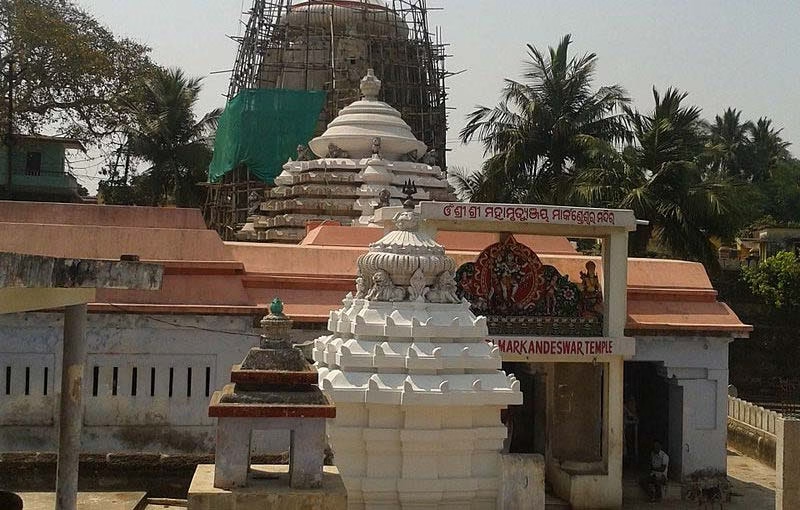
The Markandeshwar Temple in Puri, Odisha, stands as a timeless testament to devotion, nestled serenely north of the world-renowned Jagannath Temple. Dedicated to Lord Shiva, this sacred site is one of the Pancha Tirthas (five holy lakes) of Puri and is listed among the 52 most revered Shiva shrines in India. The temple derives its name from the legendary sage Markandeya, a devout follower of Lord Shiva.
Phalaśruti: Why Devotees Visit
According to spiritual traditions, a pilgrimage to Markandeshwar washes away ancestral karma and liberates the soul from the cycle of rebirth. The adjacent Markandeya Tank is considered highly purifying. Rituals such as Pinda Dana (offering to ancestors) and Mundan Kriya (tonsure) performed here are believed to bestow blessings of longevity and spiritual liberation (Moksha).
Historical Origins & Scriptural Legend
The Legend of Sage Markandeya
The Sthala Purana (local oral legend) recounts the divine intervention of Lord Vishnu. While meditating, Sage Markandeya observed the universe dissolving into the cosmic ocean (Pralaya). He witnessed a small infant floating atop a banyan leaf upon the turbulent waters. This child was none other than Lord Vishnu in his form as the preserver. Through this vision, the sage understood the eternal nature of time and the supremacy of the divine trinity.
Historical Timeline
Temple Records indicate that the current structure dates back to the 12th Century AD. Puri emerged as a major spiritual center during this era. Historical accounts confirm that the revered saint Sri Ramanuja visited Puri between 1107 and 1117 AD, further cementing the region’s spiritual significance. The temple complex and the Markandeya tank were likely constructed during the Ganga Dynasty rule in Odisha.
Architectural Marvels
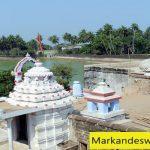
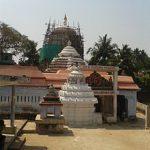
Markandeshwar Temple showcases the traditional Kalinga Architectural Style, characterized by its curvilinear Deul (tower) and pyramidal roof structures. While the temple is modest in size compared to the Jagannath Temple, it displays intricate stonework.
- Sanctum Sanctorum (Garbhagriha): Houses a Swayambhu (self-manifested) Sivalinga facing east.
- The Tank: The Markandeya Tank is an open rectangular structure enclosed by dressed laterite blocks. It features bathing ghats on the southern side, designed for ritual immersion.
- Stone Carvings: The temple walls and tank steps feature sculpted niches typical of Odishan temple art, though many have weathered the centuries.
Darshan & Ritual Logistics
Daily Temple Timings
Note: Timings may vary during festivals. The temple generally follows the standard Puri temple schedules.
| Session | Timing | Activity |
|---|---|---|
| Morning | 6:00 AM – 1:00 PM | Mangala Darshan, Abhishekam |
| Afternoon | 1:00 PM – 5:00 PM | Restricted (Temple Rest) |
| Evening | 5:00 PM – 9:00 PM | Sandhya Darshan, Aarti |
Sevas and Pujas
The temple is deeply integrated with the rituals of the Jagannath Temple. Major observances include Chandan Yatra, Sital Sasthi, and Shivaratri.
2026 Festival Calendar (Odisha)
- Shivaratri: February 26, 2026
- Ratha Yatra: June 27, 2026
- Janmashtami: September 14, 2026
- Diwali (Kaliyadalan): October 21, 2026
Online Seva Booking
While specific bookings for Markandeshwar are rare (as it is a Gramya Devata or community temple), general offerings can be coordinated through the Shree Jagannatha Temple Administration (SJTA) portals or local Sebayats. For specific rituals like Pinda Dana, priests are available at the tank site.
Practical Visitor Guidance
Rules & Etiquette
- Dress Code: Traditional attire is recommended (Dhoti/Saree). Avoid shorts and sleeveless tops.
- Photography: Strictly prohibited inside the sanctum sanctorum. Discretion is advised near the tank.
- Electronic Devices: Mobile phones are permitted, but lockers are available at the entrance if required for Sanatan Dharma compliance.
- Accessibility: The temple has a few steps. The Markandeya Tank steps can be slippery; caution is advised for elderly visitors.
Crowd Management
The temple is less crowded than the main Jagannath Temple, making it ideal for quiet reflection. However, during Shivaratri and Chandan Yatra, the area sees significant footfall.
Best Time to Visit: October to February (Winter) offers pleasant weather. Summers in Puri (May–June) are humid; carry water and stay hydrated.
Pilgrimage Connectivity
How to Reach Markandeshwar Temple
The temple is located on Markandeya Road, accessible from the Puri-Brahmagiri main road.
- By Air: The nearest airport is Biju Patnaik International Airport in Bhubaneswar (approx. 60 km). Taxis and buses are available to Puri.
- By Rail: Puri Railway Station is the terminus, well-connected to major cities. The temple is a 10-minute auto-rickshaw ride from the station.
- By Road: Puri is connected via NH 316 (formerly NH 203). Regular bus services operate from Bhubaneswar and Konark.
Nearby Sacred Sites (Pilgrimage Circuit)
Extend your spiritual journey with these nearby destinations:
- Shri Jagannath Temple: Located just south of Markandeshwar. The primary destination for Vaishnavites.
- Gundicha Temple: The garden house of Lord Jagannath, located at the end of the Grand Road.
- Swargadwar Beach: A sacred shoreline where the sea meets the estuary, believed to be the gateway to heaven.
Frequently Asked Questions (FAQs)
1. What is the significance of the Markandeya Tank?
The tank is one of the five sacred lakes of Puri (Pancha Tirtha). It is traditionally used for Pinda Dana rituals to honor deceased ancestors, and it is believed that bathing here purifies the soul.
2. Is there a VIP Darshan entry available?
As a smaller shrine, Markandeshwar Temple does not typically offer paid VIP darshan slots. Darshan is open and free for all devotees. However, during major festivals, priority is given to locals for specific rituals.
3. Who is the presiding deity?
The presiding deity is a self-manifested Shivalinga (Swayambhu) named Markandeshwar, worshipped in the form of Lord Shiva.
4. Can we take a dip in Markandeya Tank?
Yes, the tank has designated bathing ghats. However, the water is used for ritual offerings (Pinda Dana), so devotees should maintain spiritual discipline and cleanliness.
5. What is the distance from Jagannath Temple to Markandeshwar Temple?
It is approximately 1.5 kilometers (about 1 mile) to the north, a short 5-minute drive via the Markandeya Road.
Recent Posts

Shri Kaamkoteeshwar Mandir, Varanasi – History & Significance
In the heart of Kashi, the eternal city of Lord Shiva, where the Ganges flows with celestial grace, stands the Shri Kaamkoteeshwar Mandir. This sacred Sannidhi is not merely a temple but a profound spiritual bridge between the Northern…

ओ सांवरे तूने ही मुझको संभाला – Lyrics & Meaning
ओ सांवरे तूने ही मुझको संभाला – A Prayer to Shyam Origin & Spiritual Essence Why This Bhajan Resonates Devotees chant this when overwhelmed by life’s storms—the refrain ‘तूने ही मुझको संभाला’ is the soul’s sigh of relief: “You…

कथा ये है महाराज मेरे की – Lyrics & Meaning
कथा ये है महाराज मेरे की छत्रपति संभाजी महाराज – A Prayer to Chhatrapati Sambhaji Maharaj Origin & Spiritual Essence Why This Bhajan Resonates Devotees chant this when their spirit feels tested—its powerful refrain “महाराज मेरे” is a soul’s…

Rigveda Samhita Yathartha Anuvada (ऋग्वेद संहिता यथार्थ अनुवाद) – Complete Set with Anvayartha & Hindi/English Translation
The Rigveda is the oldest surviving scripture of humanity and the foundational text of Sanātana Dharma. For serious students, scholars, UPSC aspirants studying ancient Indian history, Sanskrit learners, and spiritual seekers, a precise and grammatically structured translation is indispensable.…

आना भी अकेला है जाना भी अकेला है – Lyrics & Meaning | BharatTemples
आना भी अकेला है जाना भी अकेला है – A Prayer to the Divine Witness Origin & Spiritual Essence Why This Bhajan Resonates Devotees turn to this bhajan in moments of deep reflection—when life’s attachments begin to ache. The…

माता शेरावाली के द्वार जो भी जाता है – Lyrics & Meaning
माता शेरावाली के द्वार जो भी जाता है – A Prayer to Maa Sherawali Origin & Spiritual Essence Why This Bhajan Resonates Devotees turn to this bhajan in times of fear or uncertainty—its promise that no one leaves Maa’s…

मार लेना सपणी उबार लेणा भवरा – Lyrics & Meaning
मार लेना सपणी उबार लेणा भवरा – A Prayer to the Divine Beloved Origin & Spiritual Essence Why This Bhajan Resonates Devotees chant this in moments of deep vulnerability—its cry of “मार लेना सपणी, उबार लेणा भवरा” is the…

हमें श्याम सुंदर भरोसा तुम्हारा – Lyrics & Meaning
हमें श्याम सुंदर भरोसा तुम्हारा – A Prayer to Shyam Sundar Origin & Spiritual Essence Why This Bhajan Resonates Devotees chant this when feeling alone—its refrain ‘de do sahara’ is the soul’s cry for divine support. Lyrics in Hindi…

Mere Satguru Ne Di Thi Davai Lyrics in Hindi & Meaning
Mere Satguru Ne Di Thi Davai: Invoking the Guru’s Liberating Wisdom This soul-stirring bhajan venerates the Satguru (True Spiritual Master) as the divine physician who dispenses the only remedy for life’s deepest sufferings. Composed by Sant Karmaveer Tufani, it…

Janm Diyo Thari Maa Dukh Dekhiyo Lyrics in Hindi & Meaning
जन्म दियो थारी माँ दुख देखियो (Maa’s Grief Upon Birthing You) This soul-stirring Chetavani Bhajan (admonitory hymn) is addressed to the Divine Mother (Maa) – a call for repentance when children forget their filial duties in the dark age…