
Contents
Introduction & Spiritual Essence
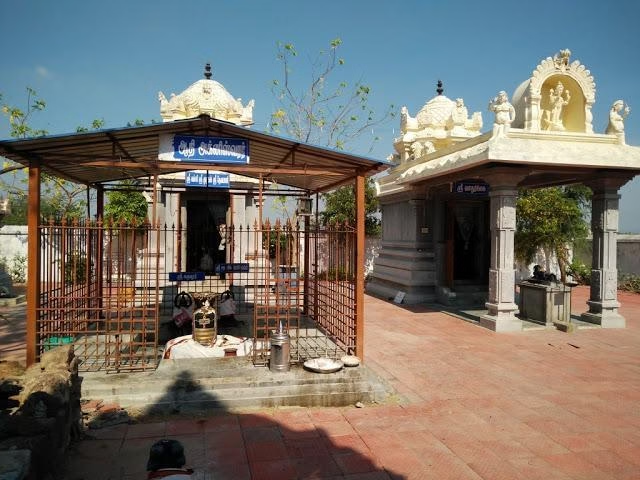
Nestled in the tranquil village of Neyveli in Thiruvallur District, the Agneeswarar Temple is a hidden spiritual jewel dedicated to Lord Shiva. While there are many temples in Tamil Nadu, this one holds a unique, almost mystic significance that draws devotees seeking relief from chronic afflictions and spiritual seekers alike.
Deity Details:
- Presiding Deity: Agneeswarar (a manifestation of Lord Shiva). The term “Agneeswara” derives from “Agni” (Fire), signifying the Lord as the source of cosmic energy and purification.
- Consort: Sri Lalithambigai (Mother Goddess).
- Form: The Shiva Lingam here is a Swayambhu (self-manifested) idol, believed to have been worshipped for centuries before its modern discovery.
Phalaśruti: The Benefits of Visiting
According to devotees and local tradition, the Agneeswarar Temple bears a strong spiritual resemblance to the famous Kalahasthi Temple in Andhra Pradesh. It is specifically renowned for:
- Sarpa Dhosha Nivarana: Remedying the “serpent curse” (mythical afflictions related to horoscopes and ancestral karma).
- Ancestral Peace: Performing rituals here is believed to cleanse negative karmic imprints and bring peace to ancestors.
- Removing Fear: As a Siddhar Adhishtanam (seat of enlightened masters), visiting removes mental instability and fear of unknown evils.
Historical Origins & Scriptural Legend
The history of Agneeswarar Temple is less about royal inscriptions and more about divine intervention. Unlike many temples built by dynasties, this temple was “revealed” rather than constructed.
The Legend of Rediscovery (2004)
According to temple records and oral history, the temple remained buried for a long period under dense vegetation. In 2004, two devotees visited the nearby Oondreeswarar Temple at Poondi. They were approached by a young village boy who mysteriously directed them to a hidden Shiva Lingam in Neyveli before vanishing.
Upon reaching the site, the devotees found a mound of thorny shrubs and banyan roots. After clearing the debris, they discovered a pristine, shining Shiva Lingam untouched by time. The roots of a massive Kallala tree (a banyan variety) had embraced the Lingam without crushing it. Tradition holds that when the team tried to enter the sanctum, a sudden whirlwind and rainstorm occurred, and the tree roots swayed like serpents, protecting the sanctity of the site. It was later revealed through Deiva Prasannam (divine oracle) that 18 Siddhars (enlightened sages) were worshipping the Lingam in their subtle bodies at that moment.
Stone Age Connection
The area surrounding Neyveli and Poondi is historically significant. The Archaeological Survey of India (ASI) protects nearby sites featuring Gudiyam Caves, remnants of Stone Age communities who lived near water bodies. This suggests that the spiritual energy of this land has been revered since prehistoric times.
Architectural Marvels
The temple showcases a blend of Tamil Temple Architecture with indigenous elements integrated into its rediscovery. The structure is compact yet powerful.
Notable Features
- The Sanctum (Garbhagriha): The Lingam is situated under the protection of the ancient Kallala tree roots, creating a natural, organic mandala.
- Agni Theertham: To the north-east of the temple lies a sacred pond known as Agni Theertham. Legend states this water sprang from Lord Shiva’s third eye. A dip here is essential for negating Sarpa Dosham.
- Vana Durga Shrine: The Kallala tree is believed to be the abode of Vana Durga (Forest Goddess). The tree lacks hanging roots, which is considered a unique botanical and spiritual phenomenon.
While the temple does not have an ASI-protected heritage monument status, its architectural style is strictly adhering to Agama Shastra norms following its renovation.
Darshan & Ritual Logistics
Given the temple’s mystical association with Siddhars, rituals here are potent. Abhishekam (ritual bathing of the deity) is performed with great devotion.
Daily Timings
Timings are subject to change during festivals; devotees are advised to call the temple authorities before planning a long trip.
| Session | Timings |
|---|---|
| Morning Darshan | 7:00 AM – 11:00 AM |
| Midday Closing | 11:00 AM – 4:30 PM |
| Evening Darshan | 4:30 PM – 8:00 PM |
| Special Pradosham | 6:00 PM – 7:30 PM (Only on Pradosham days) |
Key Sevas (Services)
- Abhishekam: Performed with milk, honey, and sandalwood paste. Highly recommended for clearing mental blocks.
- Sarpa Samskara: A specialized homam (fire ritual) performed to remove Sarpa Dosha. Requires prior booking.
- Archana: Daily archana in Tamil and Sanskrit.
Online Booking
Currently, this is a growing shrine. While a dedicated app may not exist, online seva bookings can often be coordinated through the temple trust representatives. Devotees can contact the numbers listed below to request remote sankalpam (intent).
2026 Festival Calendar (Highlights)
- Pradosham: Bi-monthly, significant for Shiva devotees.
- Maha Shivaratri (Feb 2026): A major night-long vigil and Abhishekam is performed.
- Arudra Darshanam: Celebrating Lord Nataraja (Dec 2025/Jan 2026).
- Navaratri: Special pujas for Sri Lalithambigai.
Practical Visitor Guidance
Because the temple is located in a village setting, logistics are simpler but require awareness.
- Dress Code: Traditional attire is mandatory. Men should wear dhotis or pants with shirts; women should wear sarees, salwar kameez, or churidars.
- Photography: Allowed in the outer precincts but strictly prohibited inside the Sanctum Sanctorum.
- Mobile Lockers: Basic storage facilities are available near the entrance, but it is advisable to carry minimal valuables.
- Accessibility: The temple has steps leading to the inner shrine. It is not fully wheelchair accessible yet.
Crowd Management & Best Hours
Unlike Chennai temples, Neyveli is relatively quiet. However, for a meditative experience:
- Best Time: Tuesday and Friday mornings, or Pradosham evenings (if you prefer energetic rituals).
- Seasonal Advice: Summer (April–June) can be very hot; carry water and an umbrella. Monsoon brings the Agni Theertham to life.
Pilgrimage Connectivity
How to Reach
The temple is located in Neyveli Village, approximately 50–60 km from Chennai.
- By Air: The nearest airport is Chennai International Airport (MAA), roughly 58 km away.
- By Train: The nearest railway junction is Thiruvallur (approx. 14 km). From there, local autos and buses are available.
- By Road:
- From Chennai: Take the Chennai–Tirupati Highway (NH71).
- Route: Via Padi, Avadi, Poonamallee, and Thiruvallur.
- Specific Route from Thiruvallur: Head towards Thiruthani/Thirupathi. After 2 km, take the right diversion towards Poondi/Uthukottai (along the Poondi Reservoir). The temple is 1 km inside from Poondi Junction.
Nearby Sacred Sites (Pilgrimage Circuit)
Make a day trip by visiting these nearby spiritual centers:
- Oondreeswarar Temple, Poondi: Just 4 km away. An ancient Shiva temple located near the Poondi Reservoir.
- Thiruvallur Veeraraghava Swamy Temple: A major 12th-century Divya Desam (approx. 10–12 km away), dedicated to Lord Vishnu as the healer.
- Thiruthani Murugan Temple: One of the Arupadaiveedu (Six Abodes) of Lord Murugan, located about 25 km from Neyveli.
Frequently Asked Questions (FAQ)
1. Is there a VIP darshan entry?
No. This is a humble village shrine where all devotees are treated equally. There are no special queues. However, elderly devotees can seek assistance from temple volunteers for priority entry.
2. How is this temple connected to Kalahasthi?
While located in Tamil Nadu, the spiritual energy of this temple is often compared to the famous Kalahasthi temple in Andhra Pradesh regarding the remedial effects of Sarpa Dosha. It is believed that performing rituals here yields similar results to visiting Kalahasthi.
3. Can I perform a Grihapravesham (House warming) or Rahu-Ketu Sarpa Homam here?
Yes. Due to the specific manifestation of Agneeswarar as a remover of Graha Dosham, special homams are conducted. You must contact the temple administration at least 3–4 days in advance to arrange for the priest and materials.
4. Are non-Hindus allowed inside?
Generally, only those who believe in the sanctity of the temple and follow the customs are permitted entry. It is best to check with the trust members on-site.
5. Is accommodation available nearby?
The temple itself does not have a guest house. Basic lodgings are available in Thiruvallur town. However, it is feasible to visit as a day trip from Chennai or Tirupati.
Contact Details
Agneeswarar Temple Trust
Neyveli – 602 023,
Thiruvallur District, Tamil Nadu
Phone: +91 44 24729660
Mobile: +91 99403 98648 / 94450 04908 / 98407 89096
Mobile: +91 9843685562 / 9710709301 / 94450 04908
Recent Posts

Shri Kaamkoteeshwar Mandir, Varanasi – History & Significance
In the heart of Kashi, the eternal city of Lord Shiva, where the Ganges flows with celestial grace, stands the Shri Kaamkoteeshwar Mandir. This sacred Sannidhi is not merely a temple but a profound spiritual bridge between the Northern…

ओ सांवरे तूने ही मुझको संभाला – Lyrics & Meaning
ओ सांवरे तूने ही मुझको संभाला – A Prayer to Shyam Origin & Spiritual Essence Why This Bhajan Resonates Devotees chant this when overwhelmed by life’s storms—the refrain ‘तूने ही मुझको संभाला’ is the soul’s sigh of relief: “You…

कथा ये है महाराज मेरे की – Lyrics & Meaning
कथा ये है महाराज मेरे की छत्रपति संभाजी महाराज – A Prayer to Chhatrapati Sambhaji Maharaj Origin & Spiritual Essence Why This Bhajan Resonates Devotees chant this when their spirit feels tested—its powerful refrain “महाराज मेरे” is a soul’s…

Rigveda Samhita Yathartha Anuvada (ऋग्वेद संहिता यथार्थ अनुवाद) – Complete Set with Anvayartha & Hindi/English Translation
The Rigveda is the oldest surviving scripture of humanity and the foundational text of Sanātana Dharma. For serious students, scholars, UPSC aspirants studying ancient Indian history, Sanskrit learners, and spiritual seekers, a precise and grammatically structured translation is indispensable.…

आना भी अकेला है जाना भी अकेला है – Lyrics & Meaning | BharatTemples
आना भी अकेला है जाना भी अकेला है – A Prayer to the Divine Witness Origin & Spiritual Essence Why This Bhajan Resonates Devotees turn to this bhajan in moments of deep reflection—when life’s attachments begin to ache. The…

माता शेरावाली के द्वार जो भी जाता है – Lyrics & Meaning
माता शेरावाली के द्वार जो भी जाता है – A Prayer to Maa Sherawali Origin & Spiritual Essence Why This Bhajan Resonates Devotees turn to this bhajan in times of fear or uncertainty—its promise that no one leaves Maa’s…

मार लेना सपणी उबार लेणा भवरा – Lyrics & Meaning
मार लेना सपणी उबार लेणा भवरा – A Prayer to the Divine Beloved Origin & Spiritual Essence Why This Bhajan Resonates Devotees chant this in moments of deep vulnerability—its cry of “मार लेना सपणी, उबार लेणा भवरा” is the…

हमें श्याम सुंदर भरोसा तुम्हारा – Lyrics & Meaning
हमें श्याम सुंदर भरोसा तुम्हारा – A Prayer to Shyam Sundar Origin & Spiritual Essence Why This Bhajan Resonates Devotees chant this when feeling alone—its refrain ‘de do sahara’ is the soul’s cry for divine support. Lyrics in Hindi…

Mere Satguru Ne Di Thi Davai Lyrics in Hindi & Meaning
Mere Satguru Ne Di Thi Davai: Invoking the Guru’s Liberating Wisdom This soul-stirring bhajan venerates the Satguru (True Spiritual Master) as the divine physician who dispenses the only remedy for life’s deepest sufferings. Composed by Sant Karmaveer Tufani, it…

Janm Diyo Thari Maa Dukh Dekhiyo Lyrics in Hindi & Meaning
जन्म दियो थारी माँ दुख देखियो (Maa’s Grief Upon Birthing You) This soul-stirring Chetavani Bhajan (admonitory hymn) is addressed to the Divine Mother (Maa) – a call for repentance when children forget their filial duties in the dark age…