
Contents
- 1 Mahavinayak Temple Jajpur: The Complete Pilgrimage Guide 2026
Mahavinayak Temple Jajpur: The Complete Pilgrimage Guide 2026
Nestled in the serene foothills of Chandikhole in the historic district of Jajpur, Odisha, stands the Mahavinayak Temple. Unlike typical shrines, this ancient site is unique for housing the Panchadeva—five distinct deities worshipped as a single entity. For the pilgrim seeking spiritual unity, understanding the temple’s deep-rooted Sthala Purana and planning a seamless darshan is essential. This guide, curated by the Heritage Architects of BharatTemples.com, blends devotional reverence with practical logistics for your 2026 visit.
1. Introduction & Spiritual Essence
Mahavinayak translates to the “Great Lord Ganesha,” yet the spiritual significance here transcends a single deity. The temple is renowned for the rare Panchadeva darshan, where Lord Ganesha, Lord Shiva, Lord Vishnu, Goddess Durga, and Surya (the Sun God) are enshrined together in the Garbhagriha (sanctum sanctorum).
Phalaśruti: The Benefits of Pilgrimage
According to local devotees and oral traditions, visiting this temple offers profound spiritual benefits:
- Ancestral Karma Cleansing: It is believed that offering prayers here helps mitigate Pitru Dosha (ancestral flaws), bringing peace to forefathers.
- Unity of Elements: Worshipping the Panchadeva represents the harmony of the five elements (Pancha Bhuta), balancing the devotee’s internal energies.
- Marital Harmony: Following the legend of Rati Devi (the wife of Kamadeva), childless couples and those seeking harmony in relationships flock here for blessings.
2. Historical Origins & Scriptural Legend
Architectural Patronage
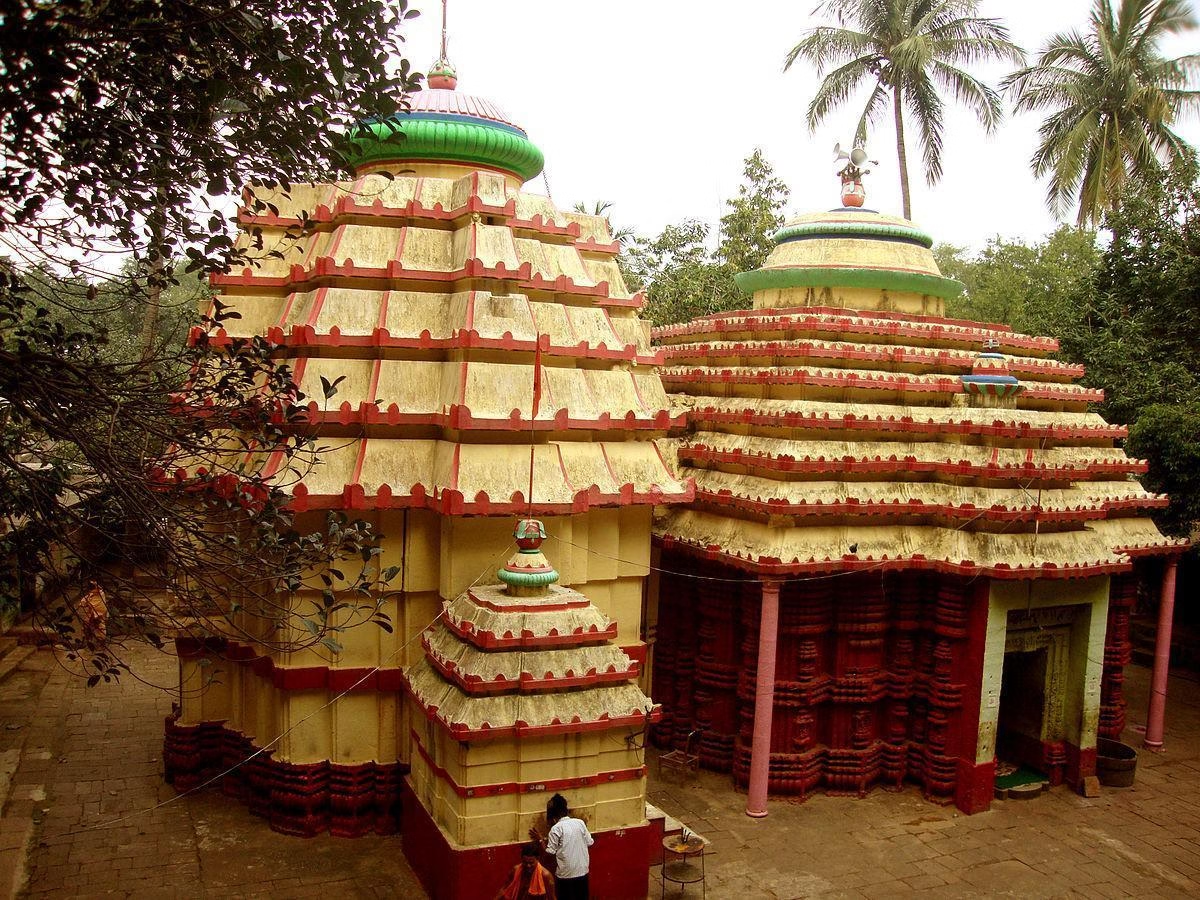
According to temple records and historical consensus, the Mahavinayak Temple was constructed during the 12th century. The patronage is attributed to the Keshari Dynasty of Odisha, a period renowned for monumental temple architecture in the region. While the temple has undergone restoration and renovation to preserve its structural integrity, the core sanctum remains rooted in medieval history.
The Legend of Panchadeva
The primary Sthala Purana (local legend) centers on Rati Devi, the wife of Kamadeva (the god of love). After Kamadeva was incinerated by Lord Shiva’s third eye, Rati performed intense penance here to seek his release.
As the legend holds, while offering prayers to Lord Ganesha, Rati was confused to see five hands simultaneously reaching out to receive her offering. Lord Brahma appeared and clarified that Lord Ganesha, Shiva, Vishnu, Durga, and Surya were all pleased by her devotion. Upon their collective boon, Kamadeva was revived, and a divine granite stone emerged from the earth, embodying the combined power of these five deities.
Mahabharata Connection
This region, historically part of the ancient Kalinga kingdom, is also linked to the Mahabharata. It is said that during the great war, Mother Kunti offered a Lakh Champa (100,000 golden flowers) to Lord Shiva from this location for the victory of the Pandavas.
3. Architectural Marvels
Style and Layout
The temple exhibits a distinct Kalinga architectural style, a regional variant of the Nagara style. Key features include:
Adjacent to the main temple are perennial springs and pucca swimming ponds (Golden Springs), designed for ritual bathing before approaching the deity.
4. Darshan & Ritual Logistics (2026 Update)
Planning your visit requires attention to specific timings and seasonal variations. Below is the standard schedule for 2026. Note: Timings may extend during festivals.
| Darshan Type | Morning Schedule | Evening Schedule |
|---|---|---|
| Mangala Darshan (Early Morning) | 06:00 AM – 07:00 AM | – |
| General Darshan | 07:00 AM – 12:00 PM | 04:00 PM – 08:00 PM |
| Shayan Darshan (Night Closing) | – | 08:00 PM – 08:30 PM |
Key Sevas & Online Booking
Devotees can book specific rituals to enhance their experience. For 2026, the temple administration encourages online reservations to manage crowds.
- Abhishekam: Ritual bathing of the Panchadeva. Performed daily between 7:00 AM and 9:00 AM.
- Archana: Individual name recitations. Available throughout the day.
- Sahasranama Archana: Recitation of 1,000 names.
Booking Platform: Visit the official Odisha Temple Administration portal or the temple’s specific listing on BharatTemples.com (Direct links available in the app).
2026 Major Festival Dates
- Vinayaka Chaturthi: August 26, 2026 (Special Maha Abhishekam)
- Diwali: October 31, 2026 (Night-long Kirtan)
- Shivaratri: February 26, 2026 (Major Panchadeva Puja)
- Chandikhole Yatra: November 10-15, 2026 (Regional Fair)
5. Practical Visitor Guidance
Dress Code & Etiquette
As this is a major pilgrimage center in Jajpur, modest attire is mandatory. Traditional Indian wear (Dhoti/Kurta for men, Saree/Salwar for women) is preferred. Western attire may be restricted within the inner sanctum.
Rules & Regulations
- Photography: Strictly prohibited inside the Garbhagriha and during the main Abhishekam. Photography is allowed in the outer premises.
- Mobile Phones: Electronic devices must be kept silent. Dedicated mobile lockers are available near the entrance for storage.
- Footwear: A designated shoe-keeping facility is available for a nominal fee.
Crowd Management & Seasonal Advice
- Best Time to Visit: Winter months (November to February) offer the most pleasant weather for temple hopping.
- Avoid: Weekends and the last Monday of the month see peak crowds.
- Hydration: Visiting in May? The Odisha summer is intense. Carry water and a head covering, though vendors are available outside.
6. Pilgrimage Connectivity
How to Reach Mahavinayak Temple
The temple is strategically located in Chandikhole, making it accessible via major transit hubs.
- By Road: The temple is 4 km from Chandikhole Chhak and lies on the NH-5 (now NH-16) connecting Cuttack and Bhadrak. Private taxis and bus services are frequent from Jajpur Road and Cuttack.
- By Train: The nearest major railway junction is Cuttack (approx. 44 km). The smaller station Haridaspur is only 6 km away.
- By Air: Biju Patnaik International Airport in Bhubaneswar is the closest airport, approximately 65 km away (approx. 1.5-hour drive via expressway).
Nearby Sacred Sites
Enhance your pilgrimage by visiting these nearby locations:
- Chandikhole Chandi Temple: Located at the foothill, dedicated to Goddess Chandi.
- Maa Banadurga Temple: Situated midway up the hill, overlooking the Mahavinayak complex.
- Biraja Temple (Jajpur Town): One of the Shakti Peethas, located 25 km from Chandikhole.
7. Frequently Asked Questions (FAQs)
Is there a VIP Darshan entry available?
Yes, the temple administration offers a priority entry pass for elderly devotees, differently-abled visitors, and those who have pre-booked specific Sevas online. These tickets can be purchased at the counter or via the official app.
What are the accommodation options nearby?
While the temple complex itself is a day-visit destination, the town of Chandikhole and the city of Jajpur offer various Dharamshalas, budget hotels, and guest houses. For luxury accommodation, Bhubaneswar (60 km away) is recommended.
Can we perform asthi visarjan (ashes immersion) here?
The Mahavinayak temple is primarily a Pinda Pradana site for ancestors. While it holds spiritual significance for rituals, specific Visarjan (immersion of ashes) is generally performed at nearby riverbanks or designated tirthas like the Biraja temple area. Consult the temple priest for specific guidance.
Is the temple accessible for wheelchair users?
The main mandapa is ground level and accessible, but the pathways leading to the perennial springs and hill temples may be uneven. The temple committee has recently added ramps for the main entrance.
What is the significance of the five hands in the legend?
The legend of Rati Devi signifies the collective grace of the Panchadeva. It teaches that when one surrenders completely to the divine, the various forces of nature (Sun, Shiva, Vishnu, Durga) and remover of obstacles (Ganesha) respond simultaneously to grant liberation.
Disclaimer: While every effort is made to ensure accuracy, temple timings and dates are subject to change by the managing committee. Please verify locally before travel.
Recent Posts

Shri Kaamkoteeshwar Mandir, Varanasi – History & Significance
In the heart of Kashi, the eternal city of Lord Shiva, where the Ganges flows with celestial grace, stands the Shri Kaamkoteeshwar Mandir. This sacred Sannidhi is not merely a temple but a profound spiritual bridge between the Northern…

ओ सांवरे तूने ही मुझको संभाला – Lyrics & Meaning
ओ सांवरे तूने ही मुझको संभाला – A Prayer to Shyam Origin & Spiritual Essence Why This Bhajan Resonates Devotees chant this when overwhelmed by life’s storms—the refrain ‘तूने ही मुझको संभाला’ is the soul’s sigh of relief: “You…

कथा ये है महाराज मेरे की – Lyrics & Meaning
कथा ये है महाराज मेरे की छत्रपति संभाजी महाराज – A Prayer to Chhatrapati Sambhaji Maharaj Origin & Spiritual Essence Why This Bhajan Resonates Devotees chant this when their spirit feels tested—its powerful refrain “महाराज मेरे” is a soul’s…

Rigveda Samhita Yathartha Anuvada (ऋग्वेद संहिता यथार्थ अनुवाद) – Complete Set with Anvayartha & Hindi/English Translation
The Rigveda is the oldest surviving scripture of humanity and the foundational text of Sanātana Dharma. For serious students, scholars, UPSC aspirants studying ancient Indian history, Sanskrit learners, and spiritual seekers, a precise and grammatically structured translation is indispensable.…

आना भी अकेला है जाना भी अकेला है – Lyrics & Meaning | BharatTemples
आना भी अकेला है जाना भी अकेला है – A Prayer to the Divine Witness Origin & Spiritual Essence Why This Bhajan Resonates Devotees turn to this bhajan in moments of deep reflection—when life’s attachments begin to ache. The…

माता शेरावाली के द्वार जो भी जाता है – Lyrics & Meaning
माता शेरावाली के द्वार जो भी जाता है – A Prayer to Maa Sherawali Origin & Spiritual Essence Why This Bhajan Resonates Devotees turn to this bhajan in times of fear or uncertainty—its promise that no one leaves Maa’s…

मार लेना सपणी उबार लेणा भवरा – Lyrics & Meaning
मार लेना सपणी उबार लेणा भवरा – A Prayer to the Divine Beloved Origin & Spiritual Essence Why This Bhajan Resonates Devotees chant this in moments of deep vulnerability—its cry of “मार लेना सपणी, उबार लेणा भवरा” is the…

हमें श्याम सुंदर भरोसा तुम्हारा – Lyrics & Meaning
हमें श्याम सुंदर भरोसा तुम्हारा – A Prayer to Shyam Sundar Origin & Spiritual Essence Why This Bhajan Resonates Devotees chant this when feeling alone—its refrain ‘de do sahara’ is the soul’s cry for divine support. Lyrics in Hindi…

Mere Satguru Ne Di Thi Davai Lyrics in Hindi & Meaning
Mere Satguru Ne Di Thi Davai: Invoking the Guru’s Liberating Wisdom This soul-stirring bhajan venerates the Satguru (True Spiritual Master) as the divine physician who dispenses the only remedy for life’s deepest sufferings. Composed by Sant Karmaveer Tufani, it…

Janm Diyo Thari Maa Dukh Dekhiyo Lyrics in Hindi & Meaning
जन्म दियो थारी माँ दुख देखियो (Maa’s Grief Upon Birthing You) This soul-stirring Chetavani Bhajan (admonitory hymn) is addressed to the Divine Mother (Maa) – a call for repentance when children forget their filial duties in the dark age…