
Contents
Introduction & Spiritual Essence
The Sri Nilamadhav Temple stands as a timeless testament to Odisha’s spiritual heritage, nestled in the serene environs of Kantilo, Nayagarh district. Located near the banks of the sacred Mahanadi river, this ancient Vishnu temple is deeply revered by devotees for its unique spiritual resonance. The presiding deity, Lord Nilamadhava, is worshipped here as a central figure in the cult of Lord Jagannath.
Deity & Form: The deity is known as Nilamadhava, often associated with the Indranila (blue sapphire) gem image mentioned in ancient texts. Tradition holds that the shrine represents the form of God worshipped by the local Sabara community.
Phalaśruti (Spiritual Benefits): Devotees visit this sacred site to seek blessings for spiritual purification and the dissolution of ancestral karma. The temple is situated at the confluence of three rivers—the Mahanadi, Kuanria, and Kusumi—referred to locally as the “Triveni Sangam” of Odisha. Bathing in these holy waters is believed to cleanse sins and bestow peace, much like the Beni-Madhava at Prayag.
Historical Origins & Scriptural Legend
The history of the Nilamadhav Temple is steeped in antiquity and scriptural lore. Tradition holds that the deity originated in a small cave in the Brahmadri hills, situated on the banks of the Mahanadi. Long before the temple’s construction, the local Sabara Chief, Biswabasu, worshipped the deity here, known in the Sabara dialect as “Kitung.”
According to the Puranas, the deity was originally worshipped in the form of an Indranila gem image known as “Nilamadhava.” Unlike the wooden Daru Murti found in Puri, this form represents the original, abstract cosmic beauty. It is believed that even now, a shrine dedicated to Lord Nilamadhava exists on the right side of the Lakshmi Temple within the sanctum of the Puri Jagannath Temple, linking the spiritual energies of both sites.
While specific dynastic records are absent in the provided text, the architectural style suggests a lineage similar to the Jagannath Temple of Puri, indicating construction during a period when Kalingan temple architecture flourished.
Architectural Marvels
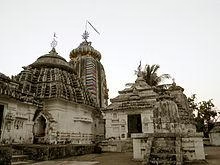
The temple structure is a masterpiece of traditional Kalinga architecture, closely resembling the famous Jagannath Temple in Puri. It stands majestically on the right bank of the Mahanadi, oriented to harness the flow of cosmic energies.
Design Elements:
- Sanctum Sanctorum (Garbhagriha): Houses the idol of Lord Nilamadhava.
- Deity of Lord Siddheswar: A distinct highlight of the temple complex is the presence of Lord Siddheswar, adding to the spiritual diversity of the site.
- Surroundings: The temple is framed by twin hills and lush surrounding forests, creating a natural protective barrier and enhancing the meditative atmosphere.
While the temple is currently under the jurisdiction of the Shree Jagannath Temple Administration, it retains its unique structural integrity, featuring a towering spire and expansive community halls.
Darshan & Ritual Logistics
To facilitate a seamless pilgrimage experience, here are the operational details for the Sri Nilamadhav Temple. Please note that timings may vary slightly during festivals.
| Day | Morning Timing | Evening Timing |
|---|---|---|
| Monday – Sunday | 6:00 AM – 12:00 PM | 3:00 PM – 9:00 PM |
Key Sevas and Booking
Several rituals are performed daily to honor Lord Nilamadhava. Online seva booking is currently managed through the official Shree Jagannath Temple Administration portal.
- Abhishekam: Ritual bathing of the deity with water, milk, and holy substances.
- Archana: Chanting of hymns and names of the deity.
- Sahasranama: Recitation of the 1,000 names of Vishnu.
Festival Dates for 2026:
- Nabanna (Harvest Festival): January 14, 2026
- Ratha Yatra (Car Festival): June 27, 2026
- Dola Purnima (Holi): March 13, 2026
- Janmashtami: September 14, 2026
Practical Visitor Guidance
Ensuring a respectful and comfortable visit requires adherence to traditional guidelines and practical planning.
- Dress Code: Traditional attire is preferred. Men should wear dhoti or pants with a shirt, and women should wear saree or salwar kameez. Avoid shorts and sleeveless tops.
- Photography & Mobiles: Photography is restricted inside the sanctum. Mobile lockers are available near the entrance for storage during darshan.
- Crowd Management: The temple experiences moderate crowds. Best hours to visit: Early morning (6:00 AM – 8:00 AM) or late evening (after 6:00 PM).
- Seasonal Advice: Summers in Nayagarh (May-June) are hot; carry sufficient water and an umbrella. The monsoon season (July-September) brings lush greenery but also heavy rains.
Pilgrimage Connectivity
The temple is well-connected by road and rail, making it accessible for pilgrims from across India.
How to Reach
- By Air: The nearest airport is Biju Patnaik International Airport, Bhubaneswar, located approximately 73 km away.
- By Rail: The nearest railway station is Nayagarh Town. However, direct train connectivity is better to Bhubaneswar. From Bhubaneswar, frequent buses and taxis are available to Kantilo.
- By Road: Kantilo is well-connected via State Highway 60 and local roads. Regular bus services operate from Bhubaneswar and Nayagarh town.
Nearby Sacred Sites
Extend your pilgrimage circuit by visiting these nearby temples:
- Maa Khandagiri & Udayagiri Caves: Located in Bhubaneswar, these ancient rock-cut caves date back to the 2nd century BCE.
- Puri Jagannath Temple: The ultimate spiritual destination of Odisha, approximately 100 km from Kantilo.
- Sri Siddheshwar Temple: Located right at the Nilamadhav complex, offering a secondary darshan opportunity.
Frequently Asked Questions (FAQ)
1. Is there a VIP darshan entry available?
Yes, the temple administration facilitates special darshan for elderly devotees, differently-abled persons, and VIPs. This can be arranged through the temple office upon presentation of valid identification.
2. Are there accommodation facilities available at the temple?
While the temple itself does not have extensive guesthouses, Kantilo town has several lodges and dharamshalas. It is advisable to book accommodation in advance during festival seasons.
3. What is the significance of the Indranila gem?
The “Indranila” refers to a rare blue sapphire. Scriptural legend suggests that Lord Nilamadhava was originally worshipped as a gem image representing the deep, cosmic blue hue of the universe, symbolizing infinite preservation and grace.
4. Is non-vegetarian food allowed near the temple?
No, the area is strictly vegetarian. Devotees are encouraged to maintain purity and abstain from alcohol and non-vegetarian food during their pilgrimage visit.
5. How old is the Nilamadhav Temple?
While exact construction dates are unrecorded, legend and historical analysis place the origins in the early centuries CE, with the current structure likely dating back to the medieval period in alignment with the Kalinga style of architecture.
Recent Posts

Shri Kaamkoteeshwar Mandir, Varanasi – History & Significance
In the heart of Kashi, the eternal city of Lord Shiva, where the Ganges flows with celestial grace, stands the Shri Kaamkoteeshwar Mandir. This sacred Sannidhi is not merely a temple but a profound spiritual bridge between the Northern…

ओ सांवरे तूने ही मुझको संभाला – Lyrics & Meaning
ओ सांवरे तूने ही मुझको संभाला – A Prayer to Shyam Origin & Spiritual Essence Why This Bhajan Resonates Devotees chant this when overwhelmed by life’s storms—the refrain ‘तूने ही मुझको संभाला’ is the soul’s sigh of relief: “You…

कथा ये है महाराज मेरे की – Lyrics & Meaning
कथा ये है महाराज मेरे की छत्रपति संभाजी महाराज – A Prayer to Chhatrapati Sambhaji Maharaj Origin & Spiritual Essence Why This Bhajan Resonates Devotees chant this when their spirit feels tested—its powerful refrain “महाराज मेरे” is a soul’s…

Rigveda Samhita Yathartha Anuvada (ऋग्वेद संहिता यथार्थ अनुवाद) – Complete Set with Anvayartha & Hindi/English Translation
The Rigveda is the oldest surviving scripture of humanity and the foundational text of Sanātana Dharma. For serious students, scholars, UPSC aspirants studying ancient Indian history, Sanskrit learners, and spiritual seekers, a precise and grammatically structured translation is indispensable.…

आना भी अकेला है जाना भी अकेला है – Lyrics & Meaning | BharatTemples
आना भी अकेला है जाना भी अकेला है – A Prayer to the Divine Witness Origin & Spiritual Essence Why This Bhajan Resonates Devotees turn to this bhajan in moments of deep reflection—when life’s attachments begin to ache. The…

माता शेरावाली के द्वार जो भी जाता है – Lyrics & Meaning
माता शेरावाली के द्वार जो भी जाता है – A Prayer to Maa Sherawali Origin & Spiritual Essence Why This Bhajan Resonates Devotees turn to this bhajan in times of fear or uncertainty—its promise that no one leaves Maa’s…

मार लेना सपणी उबार लेणा भवरा – Lyrics & Meaning
मार लेना सपणी उबार लेणा भवरा – A Prayer to the Divine Beloved Origin & Spiritual Essence Why This Bhajan Resonates Devotees chant this in moments of deep vulnerability—its cry of “मार लेना सपणी, उबार लेणा भवरा” is the…

हमें श्याम सुंदर भरोसा तुम्हारा – Lyrics & Meaning
हमें श्याम सुंदर भरोसा तुम्हारा – A Prayer to Shyam Sundar Origin & Spiritual Essence Why This Bhajan Resonates Devotees chant this when feeling alone—its refrain ‘de do sahara’ is the soul’s cry for divine support. Lyrics in Hindi…

Mere Satguru Ne Di Thi Davai Lyrics in Hindi & Meaning
Mere Satguru Ne Di Thi Davai: Invoking the Guru’s Liberating Wisdom This soul-stirring bhajan venerates the Satguru (True Spiritual Master) as the divine physician who dispenses the only remedy for life’s deepest sufferings. Composed by Sant Karmaveer Tufani, it…

Janm Diyo Thari Maa Dukh Dekhiyo Lyrics in Hindi & Meaning
जन्म दियो थारी माँ दुख देखियो (Maa’s Grief Upon Birthing You) This soul-stirring Chetavani Bhajan (admonitory hymn) is addressed to the Divine Mother (Maa) – a call for repentance when children forget their filial duties in the dark age…