
Contents
- 1 Introduction & Spiritual Essence
- 2 Historical Origins & Scriptural Legend
- 3 Architectural Marvels
- 4 Temple Visuals
- 5 Darshan & Ritual Logistics (2026)
- 6 Practical Visitor Guidance
- 7 Pilgrimage Connectivity
- 8 Frequently Asked Questions (FAQ)
- 8.1 1. Is there a VIP Darshan entry at Durgiana Temple?
- 8.2 2. Is photography allowed inside the temple?
- 8.3 3. What is the entry fee for the temple?
- 8.4 4. Can we carry mobile phones inside the temple?
- 8.5 5. Is the temple accessible for wheelchairs?
- 8.6 6. Is non-vegetarian food allowed in the temple vicinity?
Introduction & Spiritual Essence
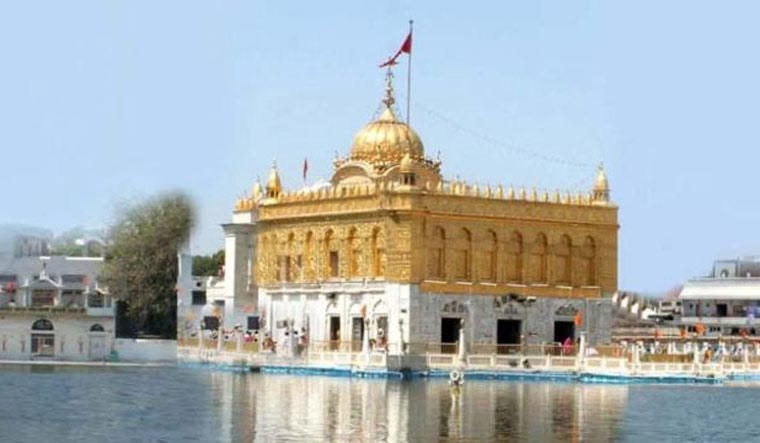
Rising from the sacred waters of a silver-rimmed tank in the heart of Amritsar, the Durgiana Temple stands as a monumental testament to Hindu devotion. Often referred to as the Lakshmi Narayan Temple or the Silver Temple, this spiritual complex is dedicated primarily to Devi Durga, the fierce protector of the universe.
While the temple’s physical form mirrors the iconic Golden Temple nearby, its soul is distinctly Vedic. Secondary deities, including Lord Vishnu (Narayan) and Goddess Lakshmi (the bestower of wealth), are enshrined in the sanctum, making it a comprehensive pilgrimage site for Vaishnavites and Shaktas alike.
Phalaśruti: The Spiritual Benefits
Devotees visit the Durgiana Temple to:
- Seek Protection: Praying to Durga grants protection against negative energies and cleanses ancestral karma.
- Attract Abundance: Worshipping Lakshmi here is believed to invite prosperity and financial stability.
- Achieve Peace: The temple’s serene location in the middle of a water body (similar to the Golden Temple) offers a unique vibrational peace, ideal for meditation.
Historical Origins & Scriptural Legend
Builders and Architecture
Unlike many ancient temples in India, Durgiana Temple has a relatively modern construction date but holds immense historical significance. According to temple records, the foundation was laid in 1921 by Guru Harsai Mal Kapoor, a wealthy philanthropist.
The structure was inaugurated by the renowned freedom fighter Pandit Madan Mohan Malaviya. While the blueprint mimics the Sikh Golden Temple, it was designed to adhere strictly to Hindu principles of Vastu Shastra.
Sthala Purana (Local Legend)
The site is believed to be an ancient tirtha (pilgrimage spot). Legend holds that the tank surrounding the temple is linked to the cosmic ocean of ambrosia. Though the current structure is modern, the energy of the site has been worshipped for centuries. It is the focal point during major festivals like Janmashtami and Rama Navami, drawing lakhs of pilgrims annually.
Architectural Marvels
Fusion of Nagara and Sikh Styles
The Durgiana Temple is a masterpiece of architectural synthesis. While the overall layout resembles the Sri Harmandir Sahib (Golden Temple), the spire (Shikhara) is distinctly Nagara-style (North Indian), which typically features a beehive-shaped tower. This contrasts with the domes of Mughal or Sikh architecture, symbolizing the integration of the earthly and the divine.
Notable Features
- The Silver Doors: The temple is renowned for its massive, exquisitely carved silver doors, which is why it is often called the “Silver Temple.” These doors depict scenes from Hindu mythology.
- Marble Interiors: Extensive use of white marble gives the temple a pristine, ethereal glow, especially when illuminated by colorful lights at night.
- The Lake: The temple is built in the center of a sacred tank measuring 160m x 130m, accessible via a sturdy bridge.
- Subsidiary Temples: The complex houses shrines for Sita Mata and Bara Hanuman, adding to the circuit of worship within the premises.
Temple Visuals
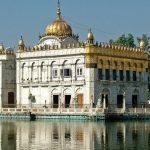
Immerse yourself in the divine aesthetics of the temple complex.
Darshan & Ritual Logistics (2026)
To ensure a smooth darshan experience, we have compiled the daily schedule. Note that timings may vary slightly during festivals.
| Session | Morning Timings | Evening Timings |
|---|---|---|
| Temple Opening | 5:00 AM | 5:00 PM |
| Shringar Darshan | 6:00 AM – 7:00 AM | 6:30 PM – 7:30 PM |
| Bhog Aarti | 12:00 PM | 7:30 PM |
| Closing | 12:30 PM (Noon) | 10:00 PM |
Key Sevas & Online Booking
Devotees can book Abhishekam (ritual bathing of the deity) and Archana (recitation of names) both at the temple counter and online.
- Abhishekam: Performed with milk, honey, and sandalwood paste.
- Sunderkand Path: Reciting the Hanuman Chalisa or Sundara Kanda for blessings.
- Booking: Visit the official temple website (durgianatempleamritsar.org) or authorized portals to book Sevas for 2026. Look for the “Online Seva Booking” tab.
Major Festivals 2026
- Janmashtami (Krishna Jayanti): August 14-15, 2026. The temple is decorated with flowers and lights; night-long vigil and special bhajans.
- Dussehra (Vijayadashami): October 2, 2026. Grand processions and special offerings to Goddess Durga.
- Diwali: October 21, 2026. The Silver Temple shines brightly with thousands of earthen lamps (diyas).
Practical Visitor Guidance
Dress Code & Etiquette
As with all Hindu temples, modesty is essential. Traditional Indian attire (Kurtas, Sarees, Dhotis) is recommended. Western clothing like shorts or sleeveless tops is discouraged. Footwear must be removed at the designated stands before entering the bridge approach.
Crowd Management & Best Time to Visit
Best Hours: Early morning (5:00 AM – 7:00 AM) or late evening (8:00 PM – 9:30 PM) for a peaceful darshan.
Seasonal Advice: Amritsar experiences extreme weather. In May and June, temperatures can exceed 40°C; carry water and an umbrella. Winters (Dec-Jan) are foggy and cool; warm layers are necessary for morning visits.
Security: Due to proximity to the Golden Temple and the temple’s sanctity, security is tight. Mobile lockers are available for electronics and prohibited items.
Pilgrimage Connectivity
How to Reach Durgiana Temple
- By Air: Guru Ram Das Jee International Airport (Raja Sansi Airport) is approximately 12 km away. Taxis and ride-sharing apps are readily available.
- By Rail: Amritsar Junction Railway Station is the nearest major railhead, located just 1.5 km from the temple. It takes about 10 minutes by auto-rickshaw.
- By Road: The temple is situated near the Lohgarh Gate. Amritsar is connected via National Highway 1 (GT Road). Major bus stands (Amritsar Bus Stand) are within 2 km.
Nearby Sacred Sites (Pilgrimage Circuit)
While in Amritsar, complete your spiritual journey by visiting:
- Sri Harmandir Sahib (Golden Temple): Just a few minutes’ drive away. The central shrine of Sikhism.
- Akal Takht: Situated in the Golden Temple complex, it is the highest seat of earthly Sikh authority.
- Mata Lal Devi Temple (Sheesh Mahal): A smaller, intricate temple adorned with mirror work, located near the Durgiana Temple.
Frequently Asked Questions (FAQ)
1. Is there a VIP Darshan entry at Durgiana Temple?
Currently, the temple does not have a paid VIP darshan system. Darshan is free for all devotees. However, during festivals, management may have separate queues for differently-abled and elderly visitors.
2. Is photography allowed inside the temple?
Photography inside the inner sanctum (Garbhagriha) is strictly prohibited. Photography in the outer complex and the lake area is generally permitted, but visitors are advised to respect the sanctity of the place.
3. What is the entry fee for the temple?
There is no entry fee. However, donations are welcome at the designated donation boxes near the sanctum.
4. Can we carry mobile phones inside the temple?
Yes, mobile phones are allowed. However, visitors are requested to keep them on silent mode. There are no mandatory lockers, but security may inspect bags.
5. Is the temple accessible for wheelchairs?
The bridge approach and main marble floor are wheelchair accessible, though some steps to the subsidiary temples might pose a challenge. Security personnel are available to assist.
6. Is non-vegetarian food allowed in the temple vicinity?
No. Amritsar, particularly the area around the Durgiana Temple and Golden Temple, is a zone where the sale of alcohol, tobacco, and non-vegetarian food is restricted or banned.
Recent Posts

Shri Kaamkoteeshwar Mandir, Varanasi – History & Significance
In the heart of Kashi, the eternal city of Lord Shiva, where the Ganges flows with celestial grace, stands the Shri Kaamkoteeshwar Mandir. This sacred Sannidhi is not merely a temple but a profound spiritual bridge between the Northern…

ओ सांवरे तूने ही मुझको संभाला – Lyrics & Meaning
ओ सांवरे तूने ही मुझको संभाला – A Prayer to Shyam Origin & Spiritual Essence Why This Bhajan Resonates Devotees chant this when overwhelmed by life’s storms—the refrain ‘तूने ही मुझको संभाला’ is the soul’s sigh of relief: “You…

कथा ये है महाराज मेरे की – Lyrics & Meaning
कथा ये है महाराज मेरे की छत्रपति संभाजी महाराज – A Prayer to Chhatrapati Sambhaji Maharaj Origin & Spiritual Essence Why This Bhajan Resonates Devotees chant this when their spirit feels tested—its powerful refrain “महाराज मेरे” is a soul’s…

Rigveda Samhita Yathartha Anuvada (ऋग्वेद संहिता यथार्थ अनुवाद) – Complete Set with Anvayartha & Hindi/English Translation
The Rigveda is the oldest surviving scripture of humanity and the foundational text of Sanātana Dharma. For serious students, scholars, UPSC aspirants studying ancient Indian history, Sanskrit learners, and spiritual seekers, a precise and grammatically structured translation is indispensable.…

आना भी अकेला है जाना भी अकेला है – Lyrics & Meaning | BharatTemples
आना भी अकेला है जाना भी अकेला है – A Prayer to the Divine Witness Origin & Spiritual Essence Why This Bhajan Resonates Devotees turn to this bhajan in moments of deep reflection—when life’s attachments begin to ache. The…

माता शेरावाली के द्वार जो भी जाता है – Lyrics & Meaning
माता शेरावाली के द्वार जो भी जाता है – A Prayer to Maa Sherawali Origin & Spiritual Essence Why This Bhajan Resonates Devotees turn to this bhajan in times of fear or uncertainty—its promise that no one leaves Maa’s…

मार लेना सपणी उबार लेणा भवरा – Lyrics & Meaning
मार लेना सपणी उबार लेणा भवरा – A Prayer to the Divine Beloved Origin & Spiritual Essence Why This Bhajan Resonates Devotees chant this in moments of deep vulnerability—its cry of “मार लेना सपणी, उबार लेणा भवरा” is the…

हमें श्याम सुंदर भरोसा तुम्हारा – Lyrics & Meaning
हमें श्याम सुंदर भरोसा तुम्हारा – A Prayer to Shyam Sundar Origin & Spiritual Essence Why This Bhajan Resonates Devotees chant this when feeling alone—its refrain ‘de do sahara’ is the soul’s cry for divine support. Lyrics in Hindi…

Mere Satguru Ne Di Thi Davai Lyrics in Hindi & Meaning
Mere Satguru Ne Di Thi Davai: Invoking the Guru’s Liberating Wisdom This soul-stirring bhajan venerates the Satguru (True Spiritual Master) as the divine physician who dispenses the only remedy for life’s deepest sufferings. Composed by Sant Karmaveer Tufani, it…

Janm Diyo Thari Maa Dukh Dekhiyo Lyrics in Hindi & Meaning
जन्म दियो थारी माँ दुख देखियो (Maa’s Grief Upon Birthing You) This soul-stirring Chetavani Bhajan (admonitory hymn) is addressed to the Divine Mother (Maa) – a call for repentance when children forget their filial duties in the dark age…