
Contents
Introduction & Spiritual Essence: The Abode of Durga and Jwala Ji
Located amidst the serene agrarian landscapes of Punjab, Maiser Khana stands as a beacon of spiritual resilience and inter-faith harmony. This revered temple is dedicated to the worship of two powerful manifestations of the Divine Feminine: Goddess Durga, the embodiment of shakti (power), and Goddess Jwala Ji, the fiery form of eternal light.
The primary deity is worshipped here in a form that invokes both protection and cosmic energy. Unlike standard iconography, the spiritual pull here is deeply rooted in the Swayambhu (self-manifested) nature of the faith, where the divine presence is felt rather than merely observed.
Phalaśruti: Why Devotees Visit
Devotees flock to Maiser Khana not merely for wishes, but for the profound sense of liberation. According to temple records and long-standing tradition, visiting this shrine is believed to:
- Remove Ancestral Karmic Blocks: It is widely believed that prayers offered here aid in the liberation of forefathers, cleansing Pitru Dosha (ancestral flaws).
- Grant Protection: As a center of Shakti, it is a sanctuary for those seeking protection from external fears and internal conflicts.
- Fulfillment of Long-cherished Desires: The temple is historically associated with the granting of visions (Darshan) to devotees who undertake sincere penance.
Historical Origins & Scriptural Legend
The history of Maiser Khana is a blend of documented modern revival and ancient oral tradition. While the exact date of the original structure is lost to time, the temple as it stands today is a testament to community resilience.
The Legend of Kamala
The soul of Maiser Khana lies in its Stala Purana (local legend). Tradition holds that centuries ago, a humble devotee named Kamala aspired to make the arduous pilgrimage to the distant Jwala Ji temple in Himachal Pradesh. However, due to financial and physical constraints, he failed to undertake the journey.
Undeterred, Kamala underwent a lifelong penance right here in Maiser Khana, invoking the grace of Durga. Pleased by his unwavering devotion (Bhakti), the Goddess appeared before him, granting him the very Darshan he sought. It is this divine sanction that birthed the temple’s existence and the bi-annual Melas (fairs) celebrated here.
Revival and Architecture
According to historical records, by 1951, the original shrine had fallen into disrepair. The Mahavir Dal, a prominent organization, stepped in. Under the leadership of visionary devotees including Radhesham Budhlada, Jagannath Ji of Maur Mandi, and Hansraj Aggarwal, funds were collected to erect the current structure. They hired India’s finest architects to ensure the temple reflected the grandeur of its celestial deity. Today, it stands as one of the nine key spots the Bathinda administration is developing to boost religious tourism in Punjab.
Architectural Marvels
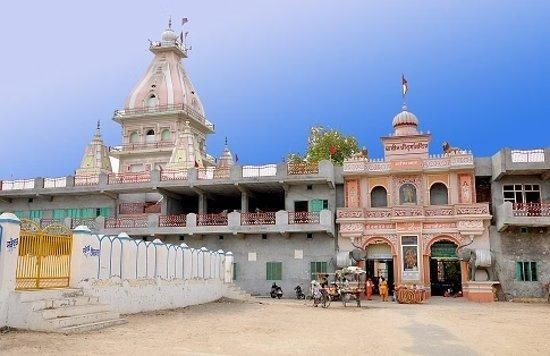
While rooted in ancient spiritual energies, the physical structure of Maiser Khana reflects a synthesis of traditional aesthetics and modern durability. The architecture can be described as a refined adaptation of the Nagara style, adapted to the regional sensibilities of Punjab.
Key Elements
- The Shikhara (Spire): The temple features a towering spire that cuts into the horizon, adorned with intricate carvings that depict stories from the Devi Mahatmya.
- The Mandapa: A spacious pillared hall allows for large congregations of devotees, particularly during the Ashtami Melas. The pillars are designed to resonate with Vastu Shastra principles, aligning energy flow toward the sanctum.
- Sculpture and Iconography: The exterior and interior feature detailed friezes of various deities, celebrating the pantheon of Hindu mythology.
Darshan & Ritual Logistics
Planning your visit ensures a peaceful spiritual experience. Please note that timings are subject to change during festivals and public holidays.
Daily Timings
| Session | Timing |
|---|---|
| Morning Darshan | 06:00 AM – 12:00 PM |
| Afternoon Break | 12:00 PM – 03:00 PM |
| Evening Darshan | 04:00 PM – 08:00 PM |
Key Sevas & Online Booking
Devotees can partake in various Sevas (offerings). While physical booking is available at the temple counter, the Punjab Government’s ‘e-Sewa’ portal has streamlined the process for devotees traveling from afar.
- Abhishekam: The ritual bathing of the deity with milk, honey, and ghee (performed during morning hours).
- Archana: Chanting of names (Sankalp) performed for personal well-being.
- Shringar: Decorating the deity on special festive days.
2026 Festival Dates (Major Melas)
Two grand Melas are held annually, attracting thousands of devotees. These dates are calculated based on the traditional Hindu Panchang.
- Chaitra Ashtami Mela: April 2, 2026 (Spring Festival).
- Sharad Navratri Ashtami: October 2, 2026 (Autumn Festival).
Practical Visitor Guidance
To ensure a comfortable visit, especially during the peak Mela season, please adhere to the following guidelines.
Rules & Etiquette
- Dress Code: Modest, traditional attire is recommended. Men should wear Dhoti or full-length trousers, and women should wear Salwar Kameez or Saree. Avoid shorts and sleeveless tops.
- Photography: Photography is strictly prohibited inside the sanctum sanctorum (Garbhagriha). It may be permitted in the outer courtyards with permission from the managing committee.
- Footwear: Shoes must be removed at the designated designated racks outside the main temple complex.
- Accessibility: The temple has ramps for wheelchair access to the main courtyard, though the sanctum involves steps.
Crowd Management Tips
- Best Time to Visit: Weekday mornings (Tuesday and Saturday are particularly auspicious).
- Seasonal Advice: During the summer months (May-June), temperatures in Bathinda can rise above 40°C. Carry a water bottle and a head covering. The winter months (Nov-Feb) are ideal for travel.
- Locker Facilities: Mobile lockers and storage facilities are available near the entrance for a nominal fee.
Pilgrimage Connectivity
Maiser Khana is well-connected via road and is a popular stop on the Punjab pilgrimage circuit.
How to Reach
- By Air: The nearest airport is Sri Guru Ram Dass Jee International Airport in Amritsar (approx. 160 km). Alternatively, Chandigarh Airport is about 180 km away.
- By Rail: The nearest major railway junction is Bathinda Junction (BTI), located just 29 km from the temple. Auto-rickshaws and taxis are readily available.
- By Road: The temple is located on the Bathinda-Mansa Road (State Highway 13). It connects seamlessly to NH 7, providing access to Delhi, Chandigarh, and Jaipur.
Nearby Sacred Sites
Extend your pilgrimage with these nearby destinations:
- Qila Mubarak (Bathinda): A historic fort complex housing ancient temples of Lakshmi, Kali, and Hanuman.
- Chand Taraṇa Sahib: Located near Mansa, this Gurdwara marks the visit of Guru Gobind Singh Ji, adding a layer of inter-faith heritage to the region.
- Bohru Temple: A historic temple in Bathinda famous for its Hanuman idol and Shivaratri celebrations.
Frequently Asked Questions (FAQs)
Is there a VIP darshan entry at Maiser Khana?
Yes, the temple committee provides a special entry pass for elderly citizens and differently-abled devotees. However, to maintain spiritual equality, there is no paid VIP entry system.
What are the accommodation options nearby?
While there are no luxury hotels directly at the temple, Bathinda (29 km) offers numerous hotels and Dharamshalas. For a spiritual stay, Dharamshalas in Bathinda are recommended for their proximity to other major temples.
Is non-vegetarian food allowed near the temple?
Maiser Khana is a sacred zone. The entire temple complex and the immediate market area are strictly vegetarian and alcohol-free zones. Devotees are advised to respect these dietary restrictions.
Can I participate in the Akhand Jyoti?
Yes, arrangements can be made for sponsoring the Akhand Jyoti (eternal flame) through the temple office. It is a highly auspicious ritual for devotees seeking long-life and prosperity.
Is there parking available?
Yes, a designated parking area is available for cars and buses. It is advisable to arrive early during Mela days as parking spaces fill up quickly.
Contact Details
For inquiries, donations, or Seva bookings, please contact:
- Address: Maiser Khana, Tehsil Talwandi Sabo, District Bathinda, Punjab, India.
- Phone: 06239997105 (Official)
- Email: Available via the District Administration Office, Bathinda.
Recent Posts

Shri Kaamkoteeshwar Mandir, Varanasi – History & Significance
In the heart of Kashi, the eternal city of Lord Shiva, where the Ganges flows with celestial grace, stands the Shri Kaamkoteeshwar Mandir. This sacred Sannidhi is not merely a temple but a profound spiritual bridge between the Northern…

ओ सांवरे तूने ही मुझको संभाला – Lyrics & Meaning
ओ सांवरे तूने ही मुझको संभाला – A Prayer to Shyam Origin & Spiritual Essence Why This Bhajan Resonates Devotees chant this when overwhelmed by life’s storms—the refrain ‘तूने ही मुझको संभाला’ is the soul’s sigh of relief: “You…

कथा ये है महाराज मेरे की – Lyrics & Meaning
कथा ये है महाराज मेरे की छत्रपति संभाजी महाराज – A Prayer to Chhatrapati Sambhaji Maharaj Origin & Spiritual Essence Why This Bhajan Resonates Devotees chant this when their spirit feels tested—its powerful refrain “महाराज मेरे” is a soul’s…

Rigveda Samhita Yathartha Anuvada (ऋग्वेद संहिता यथार्थ अनुवाद) – Complete Set with Anvayartha & Hindi/English Translation
The Rigveda is the oldest surviving scripture of humanity and the foundational text of Sanātana Dharma. For serious students, scholars, UPSC aspirants studying ancient Indian history, Sanskrit learners, and spiritual seekers, a precise and grammatically structured translation is indispensable.…

आना भी अकेला है जाना भी अकेला है – Lyrics & Meaning | BharatTemples
आना भी अकेला है जाना भी अकेला है – A Prayer to the Divine Witness Origin & Spiritual Essence Why This Bhajan Resonates Devotees turn to this bhajan in moments of deep reflection—when life’s attachments begin to ache. The…

माता शेरावाली के द्वार जो भी जाता है – Lyrics & Meaning
माता शेरावाली के द्वार जो भी जाता है – A Prayer to Maa Sherawali Origin & Spiritual Essence Why This Bhajan Resonates Devotees turn to this bhajan in times of fear or uncertainty—its promise that no one leaves Maa’s…

मार लेना सपणी उबार लेणा भवरा – Lyrics & Meaning
मार लेना सपणी उबार लेणा भवरा – A Prayer to the Divine Beloved Origin & Spiritual Essence Why This Bhajan Resonates Devotees chant this in moments of deep vulnerability—its cry of “मार लेना सपणी, उबार लेणा भवरा” is the…

हमें श्याम सुंदर भरोसा तुम्हारा – Lyrics & Meaning
हमें श्याम सुंदर भरोसा तुम्हारा – A Prayer to Shyam Sundar Origin & Spiritual Essence Why This Bhajan Resonates Devotees chant this when feeling alone—its refrain ‘de do sahara’ is the soul’s cry for divine support. Lyrics in Hindi…

Mere Satguru Ne Di Thi Davai Lyrics in Hindi & Meaning
Mere Satguru Ne Di Thi Davai: Invoking the Guru’s Liberating Wisdom This soul-stirring bhajan venerates the Satguru (True Spiritual Master) as the divine physician who dispenses the only remedy for life’s deepest sufferings. Composed by Sant Karmaveer Tufani, it…

Janm Diyo Thari Maa Dukh Dekhiyo Lyrics in Hindi & Meaning
जन्म दियो थारी माँ दुख देखियो (Maa’s Grief Upon Birthing You) This soul-stirring Chetavani Bhajan (admonitory hymn) is addressed to the Divine Mother (Maa) – a call for repentance when children forget their filial duties in the dark age…