
Contents
- 1 Mukteshwar Mahadev Temple, Pathankot: A Definitive Pilgrimage Guide
Mukteshwar Mahadev Temple, Pathankot: A Definitive Pilgrimage Guide
As the Lead Heritage Architect for BharatTemples.com, I invite you to explore a monument where time stands still and the echoes of the Mahabharata resonate within ancient cave walls. Nestled on the banks of the River Ravi, the Mukteshwar Mahadev Temple is not merely a shrine; it is a 5,500-year-old testament to the resilience of the Pandavas and the eternal grace of Lord Shiva.

1. Introduction & Spiritual Essence
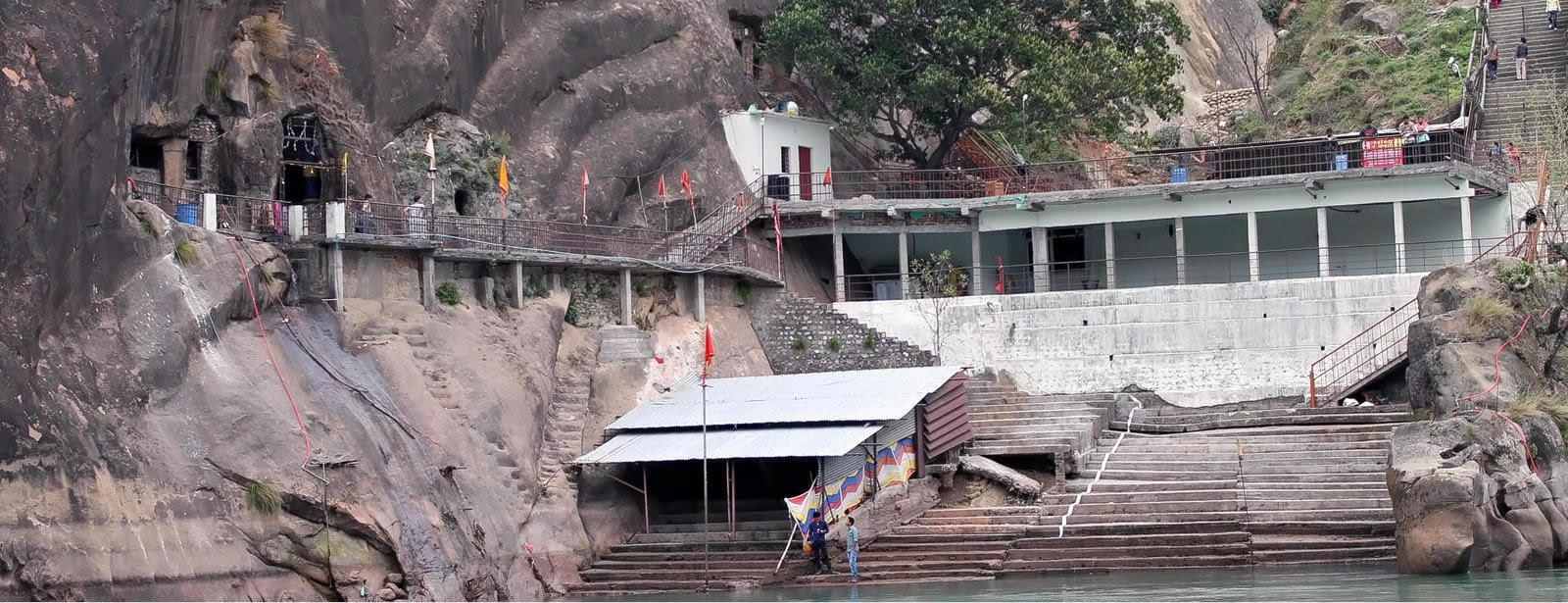
The Mukteshwar Mahadev Temple, locally revered as Mukesaran Mandir, is a sacred sanctuary located in the Doong village of Pathankot district, Punjab. The presiding deity is Lord Shiva in the form of a Swayambhu (self-manifested) white marble Shivalinga.
The Divine Form: The central Shivalinga rests within a natural cave atop a rocky hill. It is unique for its copper Yoni (base) and is surrounded by idols of Lord Brahma, Lord Vishnu, Goddess Parvati, Lord Hanuman, and Lord Ganesha, creating a complete panchayat (assembly) of divinity.
Phalaśruti: The Spiritual Benefits
Why do devotees undertake this pilgrimage? According to scriptural traditions and local beliefs:
- Ancestral Liberation: The temple is often called Mini Haridwar. Devotees perform asthi visarjan (immersion of ashes) in the Ravi River here to grant moksha (liberation) to ancestors when a trip to Haridwar is not feasible.
- Karmic Cleansing: As a site where the Pandavas worshipped during their exile, it is believed that sincere prayer here cleanses the karma of sins committed in past lives.
- Release from Bondage: The name “Mukteshwar” itself translates to “Lord of Liberation.” Devotees seeking freedom from the cycle of rebirth or worldly sufferings visit for peace and spiritual breakthrough.
2. Historical Origins & Scriptural Legend
The history of this temple is woven into the fabric of India’s epic age. It is not a structure of brick and mortar, but one carved out of living rock.
The Pandava Connection
Timeline: The origins trace back to the Dvapara Yuga (circa 3500 BCE), contemporaneous with the events of the Mahabharata.
The Legend: Tradition holds that during the Agayatwas (13th year of exile in disguise), the five Pandavas, accompanied by Draupadi, traveled through the Punjab region. Seeking refuge and a place to worship their Ishta Devata (favorable deity), they stayed on the banks of the Ravi River.
According to temple records and oral folklore:
“It was during this incognito period that the Pandavas carved the caves and constructed the Shivalinga with their own hands. The Havan Kunda (sacrificial fire pit) visible on the premises is said to be the very spot where they performed yajnas to seek Shiva’s blessings for their eventual victory in the Kurukshetra war.”
Over millennia, the natural rock formation evolved into the structured temple we see today, yet the sanctity of the original rock remains untouched. The British administration later developed the approach road, but the sanctum dates back to the mythological era.
3. Architectural Marvels
The temple is a prime example of Rock-Cut Architecture blended with later Nagara-style influences. Unlike standard north Indian temples built from ground up, this shrine is chiseled into the hilltop’s granite face.

Key Structural Elements
- The Cave Sanctum: The inner sanctum (Garbhagriha) is a natural cave. The ceiling features drip lines characteristic of ancient stone-cutting technology, designed to divert rainwater.
- The Shivalinga: A polished white marble Lingam set into the rock floor. The contrast between the rough rock walls and the smooth Lingam highlights the artistic skill of ancient artisans.
- The Havan Kunda: Located just outside the cave entrance, this stone-lined fire pit is aligned with Vastu Shastra principles, allowing smoke to rise naturally through the cave opening.
- Scenic Vantage: Perched at an elevation, the temple offers a panoramic view of the Shahpur Kandi Dam and the ceaseless flow of the Ravi River.
While the temple is not a UNESCO World Heritage site, it is protected as a heritage monument of significant archaeological importance by local authorities and the Archaeological Survey of India (ASI) guidelines for preservation.
4. Darshan & Ritual Logistics
Planning your visit requires attention to timings and ritual offerings. The temple operates on a standard schedule, with extended hours during festivals.
Daily Timings
| Session | Timing | Activity |
|---|---|---|
| Morning | 6:00 AM – 12:30 PM | Mangala Aarti, Shringar Darshan |
| Afternoon | 12:30 PM – 3:00 PM | Sanctum Cleaning (Brief Break) |
| Evening | 3:00 PM – 8:00 PM | Sandhya Aarti, Shayan Darshan |
Seva (Ritual Offerings) & Booking
Devotees can participate in various rituals. For 2026, the temple committee has digitized most bookings.
- Abhishekam: Ritual bathing of the Shivalinga with milk, honey, and Gangajal. Performed during morning hours.
- Archana: Recitation of hymns and offering of flowers/fruits.
- Maha Aarti: Held at 6:00 PM daily.
How to Book: Visit the official Punjab Tourism portal or the local temple trust office at Pathankot. While the temple is ancient, a “online seva booking” system is available for special occasions.
2026 Major Festival Calendar
Plan your visit around these key dates (Gregorian calendar):
- Maha Shivratri: February 26, 2026 (Night-long vigil and special Abhishekam).
- Chaitra Chodiya: April 20 – April 22, 2026 (3-day festival featuring a grand fair).
- Baisakhi Mela (Mukesran Da Mela): April 13 – 14, 2026 (Massive gathering of devotees from Punjab, Himachal, and Jammu).
- Somvati Amavasya: Monthly occurrences; check the Panchang for specific dates (High footfall days).
5. Practical Visitor Guidance
To ensure a serene experience, adhere to the following guidelines.
Code of Conduct
- Dress Code: Traditional attire is recommended (Kurta-Pajama/Dhoti for men; Saree/Salwar Kameez for women). Avoid Western casuals like shorts or sleeveless tops.
- Photography: Photography is permitted in the outer complex and cave entrance but strictly prohibited inside the sanctum where the Shivalinga is housed.
- Footwear: There is a designated shoe keeping counter near the base of the hill. A nominal fee is charged.
Crowd Management & Accessibility
Staircase Warning: Reaching the temple requires climbing a significant number of steps (approx. 100+) carved into the hill. It is moderately strenuous. Elderly visitors should take frequent breaks.
Best Time to Visit:
- Early Morning (6 AM – 8 AM): Least crowded, cool weather.
- Season: October to March offers the most pleasant weather. Summers (May-June) can be scorching; carry water and umbrellas.
6. Pilgrimage Connectivity
Located at Doong village, the temple is well-connected to the broader Punjab circuit.
How to Reach
- By Air: Sri Guru Ram Dass Jee International Airport, Amritsar (120 km / 2.5 hours).
- By Rail: Pathankot Junction Railway Station is the nearest major hub (22 km). Auto-rickshaws and taxis are readily available.
- By Road: Situated on the Shahpur Kandi Dam road. The temple is 22 km from Pathankot city. Private vehicles can park near the base.
Divine Circuit: Nearby Sacred Sites
Enhance your pilgrimage by visiting these nearby landmarks:
- Shahpur Kandi Dam: Located just 2 km away, offering scenic views of the Ravi River.
- Shiv Temple at Kali Mata Mandir (Pathankot): Another ancient site within the city limits.
- Nurpur Fort (25 km): Home to the ancient Nritya (Dancing) Gopal Temple, dedicated to Lord Krishna.
7. Frequently Asked Questions (FAQs)
1. Is there a VIP Darshan entry at Mukteshwar Mahadev Temple?
No, the temple trust promotes equality among devotees. While there is no formal VIP gate, senior citizens and differently-abled visitors are assisted by temple volunteers to bypass the main queue. Access to the cave sanctum is regulated to prevent overcrowding.
2. Can we carry our own Puja items?
Yes, devotees can carry fruits, flowers, and Bel leaves for personal offering. However, the temple committee also provides standard Puja thalis at the entrance counter.
3. Is the temple wheelchair accessible?
Due to the rock-cut nature and the steep hill climb, wheelchair access is limited to the base of the temple complex. The cave sanctum is not wheelchair friendly.
4. Are there food facilities available?
Yes, a Langar (community kitchen) operates during festival days. For regular days, small stalls selling tea, snacks, and Prasad are available near the parking area.
5. What is the exact location of the caves?
The caves are integrated into the hilltop structure directly behind the main temple. They are open for view but not for overnight stay. Historically, they were used by the Pandavas; today, they serve as a meditation chamber for Sadhus.
Recent Posts

Shri Kaamkoteeshwar Mandir, Varanasi – History & Significance
In the heart of Kashi, the eternal city of Lord Shiva, where the Ganges flows with celestial grace, stands the Shri Kaamkoteeshwar Mandir. This sacred Sannidhi is not merely a temple but a profound spiritual bridge between the Northern…

ओ सांवरे तूने ही मुझको संभाला – Lyrics & Meaning
ओ सांवरे तूने ही मुझको संभाला – A Prayer to Shyam Origin & Spiritual Essence Why This Bhajan Resonates Devotees chant this when overwhelmed by life’s storms—the refrain ‘तूने ही मुझको संभाला’ is the soul’s sigh of relief: “You…

कथा ये है महाराज मेरे की – Lyrics & Meaning
कथा ये है महाराज मेरे की छत्रपति संभाजी महाराज – A Prayer to Chhatrapati Sambhaji Maharaj Origin & Spiritual Essence Why This Bhajan Resonates Devotees chant this when their spirit feels tested—its powerful refrain “महाराज मेरे” is a soul’s…

Rigveda Samhita Yathartha Anuvada (ऋग्वेद संहिता यथार्थ अनुवाद) – Complete Set with Anvayartha & Hindi/English Translation
The Rigveda is the oldest surviving scripture of humanity and the foundational text of Sanātana Dharma. For serious students, scholars, UPSC aspirants studying ancient Indian history, Sanskrit learners, and spiritual seekers, a precise and grammatically structured translation is indispensable.…

आना भी अकेला है जाना भी अकेला है – Lyrics & Meaning | BharatTemples
आना भी अकेला है जाना भी अकेला है – A Prayer to the Divine Witness Origin & Spiritual Essence Why This Bhajan Resonates Devotees turn to this bhajan in moments of deep reflection—when life’s attachments begin to ache. The…

माता शेरावाली के द्वार जो भी जाता है – Lyrics & Meaning
माता शेरावाली के द्वार जो भी जाता है – A Prayer to Maa Sherawali Origin & Spiritual Essence Why This Bhajan Resonates Devotees turn to this bhajan in times of fear or uncertainty—its promise that no one leaves Maa’s…

मार लेना सपणी उबार लेणा भवरा – Lyrics & Meaning
मार लेना सपणी उबार लेणा भवरा – A Prayer to the Divine Beloved Origin & Spiritual Essence Why This Bhajan Resonates Devotees chant this in moments of deep vulnerability—its cry of “मार लेना सपणी, उबार लेणा भवरा” is the…

हमें श्याम सुंदर भरोसा तुम्हारा – Lyrics & Meaning
हमें श्याम सुंदर भरोसा तुम्हारा – A Prayer to Shyam Sundar Origin & Spiritual Essence Why This Bhajan Resonates Devotees chant this when feeling alone—its refrain ‘de do sahara’ is the soul’s cry for divine support. Lyrics in Hindi…

Mere Satguru Ne Di Thi Davai Lyrics in Hindi & Meaning
Mere Satguru Ne Di Thi Davai: Invoking the Guru’s Liberating Wisdom This soul-stirring bhajan venerates the Satguru (True Spiritual Master) as the divine physician who dispenses the only remedy for life’s deepest sufferings. Composed by Sant Karmaveer Tufani, it…

Janm Diyo Thari Maa Dukh Dekhiyo Lyrics in Hindi & Meaning
जन्म दियो थारी माँ दुख देखियो (Maa’s Grief Upon Birthing You) This soul-stirring Chetavani Bhajan (admonitory hymn) is addressed to the Divine Mother (Maa) – a call for repentance when children forget their filial duties in the dark age…