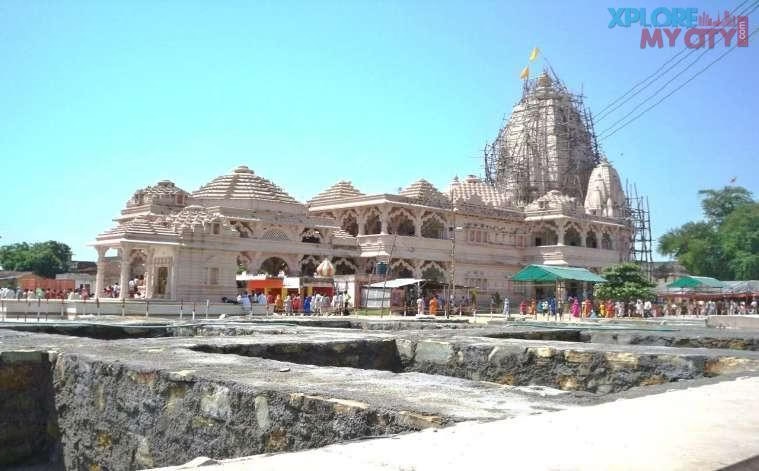
Sanwariaji Temple Chittorgarh: The Definitive Pilgrimage Guide
Introduction & Spiritual Essence
In the historic landscape of Chittorgarh, Rajasthan, stands the revered Sanwariaji Temple, a divine sanctuary dedicated to Lord Krishna. Known affectionately by devotees as Shri Sanwaria Seth or the Dark Krishna (Shyama Varana), this temple is a beacon of faith for the Vaishnav sect. Unlike the standing forms of Krishna found elsewhere, the deity here is worshipped in a unique seated posture, radiating a sense of cosmic calm and intimacy.
The Deity Form: The central idol is a Swayambhu (self-manifested) black stone statue of Lord Krishna, often described as mesmerizing and dark as the night sky. He is adorned with gold jewelry and a golden crown, sitting in a posture that invites devotees into his divine court.
Phalaśruti: The Spiritual Benefits
Devotees believe that a pilgrimage to Sanwariaji Temple fulfills deepest desires and washes away sins. According to local oral tradition, visiting the three temples of Sanwalia Ji (Mandaphiya, Bhadsoda, and Chapar) in a single pilgrimage cycle is equivalent to visiting the holy shrines of Vrindavan. It is specifically believed that:
Ancestral Cleansing: Rituals performed here help cleanse Pitru Dosha (ancestral karma), bringing peace to forefathers.
Fulfillment of Wishes: Devotees visit Shri Sanwaliya Seth’s Darbar (Court) to present their worldly problems, believing the Lord provides solutions through Prasadam (blessed food).
Vaishnav Moksha: For followers of the Vaishnav tradition, this is considered the second holiest site after Shri Nathadwara.
Historical Origins & Scriptural Legend
The history of Sanwariaji Temple is not written in ancient copper plates but etched in the faith of the 19th century. It serves as a testament to how divine discovery shapes history.
The origin story dates back to the year 1840. Tradition holds that a local milkman named Bholaram Gurjar dreamt of three divine statues buried beneath the earth in the Chapar village of Bhadsora-Bagund. In his dream, the Lord instructed him to unearth them.
Following this divine vision, villagers began digging at the specified location. Miraculously, they found three black stone idols of Lord Krishna, exactly as described in the dream. These three idols were distributed to different locations:
Mandaphiya: Now known as Shri Sanwaliya Dham.
Bhadsoda: The site of the current Sanwariaji Temple.
Chapar: The place of original discovery.
Construction History
According to temple records, the construction of the current structure in Bhadsoda was driven by the local community. Shri Rodulalji Jain, the village head of Mandaphiya, along with villagers, initially built a small temple consisting of four walls and a shade (Mandapa). Over time, as the fame of the deity spread, the structure was renovated and expanded to accommodate the influx of thousands of devotees daily. While the original founding date is historical (1840), the current grand architecture has been developed over the last century.
Architectural Marvels
The Sanwariaji Temple showcases the resilience and devotion of Rajasthani architecture. While the original shrine was modest, the current temple complex is a vibrant example of the Ornate Rajasthani Style (a blend of Māru-Gurjara and Nagara styles).
Key Architectural Features
The Shikhara (Spire): The temple features a tiered shikhara typical of North Indian temples, adorned with intricate carvings and capped with an Amalaka (circular ribbed disk). The spire is visible from the highway, guiding pilgrims.
Mandapa (Hall of Assembly): A spacious hall allows for large gatherings during Bhajans and Aartis. The pillars are carved with motifs from Hindu mythology.
The Garbhagriha (Sanctum Sanctorum): The inner sanctum is relatively intimate, focusing all energy on the central deity. The black stone idol is set against a backdrop of gold and silver ornaments.
Vastu Shastra: The temple layout follows Vastu principles, oriented to the East, allowing the first rays of the sun to illuminate the deity during morning rituals.
ASI Status: While the temple is a protected monument under local municipal limits, it operates primarily as a living place of worship under the management of the Sanwariaji Seva Samiti, rather than a central ASI/UNESCO heritage site.
Darshan & Ritual Logistics
Planning your visit to Sanwariaji Temple requires understanding the daily schedule and seva availability. The temple follows a strict ritualistic calendar.
*Note: Timings may vary during festivals. Please check with the official contact number before travel.
Key Sevas & Online Booking
Devotees can book specific Sevas (services) to offer to the deity. In 2026, digital booking is the standard.
Abhishekam (Ritual Bathing): Performed in the early morning. Devotees can sponsor milk, honey, or sandalwood paste.
Archana (Chanting Names): Can be performed from any location via proxy by authorized priests.
Maha Aarti: The grand evening ceremony.
How to Book: Visit the official website or the temple portal often linked via the contact details provided below. Search for “Sanwariaji Temple Online Seva Booking” on the official government tourism portals for Rajasthan.
2026 Festival Calendar (Major Dates)
Janmashtami: August 14-15, 2026 (Grand celebrations, night-long vigil).
Holi: March 13-14, 2026 (Morning Phag in the temple courtyard).
Deepawali: October 21, 2026 (Annakut offering).
Govardhan Puja: October 22, 2026.
Practical Visitor Guidance
To ensure a peaceful darshan, adhere to the following guidelines designed to respect the sanctity of the shrine and manage the crowds.
Code of Conduct
Dress Code: Traditional attire is highly recommended. Men should wear Dhoti or Kurta-Pyjama; women should wear Saree or Salwar-Kameez. Avoid shorts, sleeveless tops, or tight-fitting western wear.
Photography: Strictly prohibited inside the Garbhagriha (sanctum). Photography in the outer Mandapa may be allowed with permission, but flash is prohibited.
Electronics: Mobile phones must be silenced. Lockers are available near the entrance for bags and electronics.
Accessibility: The temple has ramps for wheelchair access to the main Mandapa, though the inner sanctum has narrow steps.
Crowd Management & Seasonal Advice
Best Hours: The least crowded time is between 2:00 PM and 4:00 PM (after morning rush and before evening Aarti).
Summer (April-June): Chittorgarh temperatures soar above 40°C. Carry a water bottle (free water dispensers are available), a hat, and sunglasses. Wear light cotton clothing.
Monsoon (July-September): The arid landscape turns green, but heavy rains can disrupt road access. Check highway conditions on NH48.
Winter (November-February): The best time to visit. Mornings are misty and cool; evenings are pleasant.
Pilgrimage Connectivity
How to Reach Sanwariaji Temple
The temple is strategically located on the Chittorgarh-Udaipur Highway (State Highway 27), connecting two major heritage cities of Rajasthan.
By Air: The nearest airport is Maharana Pratap Airport, Udaipur (approx. 80 km / 1.5 hours). Alternatively, Jaipur International Airport is 230 km away.
By Rail: The nearest railway station is Chittorgarh Railway Station (approx. 35 km). Taxis and auto-rickshaws are readily available from the station to Bhadsora village.
By Road: The temple is located at Bhadsoda Village, approximately 40 km from Chittorgarh city center. It is well-connected via NH 48 (Old NH 79).
Extend your journey to these nearby spiritual destinations:
Shri Sanwaliya Dham (Mandaphiya): Located very close to Bhadsoda, this is the second temple housing one of the three original idols. It is often referred to as the main spiritual hub of Sanwariaji.
Chittorgarh Fort: The largest fort in India, a UNESCO World Heritage Site. Visit the Mira Bai Temple inside the fort, dedicated to the saint-poetess devoted to Krishna.
Savitri Temple: Located on a hilltop overlooking the fort, dedicated to Goddess Savitri, offering panoramic views of the region.
1. Is there a VIP or special entry darshan available?
Yes, the temple management offers a “Special Darshan” ticket (typically ranging from ₹100 to ₹500 depending on the seva included) to bypass the general queue. This can be purchased at the temple counter or online via the official portal.
2. Are there accommodation facilities near the temple?
While there are limited guest houses (Dharamshalas) in Bhadsoda village, most pilgrims prefer staying in Chittorgarh city, which offers a wide range of hotels, resorts, and budget lodges. Booking in advance is recommended during Janmashtami.
3. What is the significance of the “Sanwaria Seth” title?
“Seth” is a title of respect used for wealthy merchants in the region. Here, Lord Krishna is revered as the Lord of the Dark Night (Sanwaria) and the divine treasurer (Seth) who manages the fortunes of his devotees.
4. Is Prasadam available for visitors?
Yes, the temple offers free Prasadam (Bhog) to all devotees during evening hours. Additionally, a Bhojanalaya (community kitchen) operates near the temple premises providing affordable meals.
5. What is the best route from Udaipur?
Take the NH48 towards Chittorgarh. The temple is located at Bhadsoda, about 40 km before reaching Chittorgarh city. The road is well-maintained.
Contact Details
Official Address:
Sanwariaji Temple,
Bhadsoda Village, Bhadsora,
Dist. Chittorgarh, Rajasthan – 312024 Phone:07737519547
In the heart of Kashi, the eternal city of Lord Shiva, where the Ganges flows with celestial grace, stands the Shri Kaamkoteeshwar Mandir. This sacred Sannidhi is not merely a temple but a profound spiritual bridge between the Northern…
ओ सांवरे तूने ही मुझको संभाला – A Prayer to Shyam Origin & Spiritual Essence Why This Bhajan Resonates Devotees chant this when overwhelmed by life’s storms—the refrain ‘तूने ही मुझको संभाला’ is the soul’s sigh of relief: “You…
कथा ये है महाराज मेरे की छत्रपति संभाजी महाराज – A Prayer to Chhatrapati Sambhaji Maharaj Origin & Spiritual Essence Why This Bhajan Resonates Devotees chant this when their spirit feels tested—its powerful refrain “महाराज मेरे” is a soul’s…
The Rigveda is the oldest surviving scripture of humanity and the foundational text of Sanātana Dharma. For serious students, scholars, UPSC aspirants studying ancient Indian history, Sanskrit learners, and spiritual seekers, a precise and grammatically structured translation is indispensable.…
आना भी अकेला है जाना भी अकेला है – A Prayer to the Divine Witness Origin & Spiritual Essence Why This Bhajan Resonates Devotees turn to this bhajan in moments of deep reflection—when life’s attachments begin to ache. The…
माता शेरावाली के द्वार जो भी जाता है – A Prayer to Maa Sherawali Origin & Spiritual Essence Why This Bhajan Resonates Devotees turn to this bhajan in times of fear or uncertainty—its promise that no one leaves Maa’s…
मार लेना सपणी उबार लेणा भवरा – A Prayer to the Divine Beloved Origin & Spiritual Essence Why This Bhajan Resonates Devotees chant this in moments of deep vulnerability—its cry of “मार लेना सपणी, उबार लेणा भवरा” is the…
हमें श्याम सुंदर भरोसा तुम्हारा – A Prayer to Shyam Sundar Origin & Spiritual Essence Why This Bhajan Resonates Devotees chant this when feeling alone—its refrain ‘de do sahara’ is the soul’s cry for divine support. Lyrics in Hindi…
Mere Satguru Ne Di Thi Davai: Invoking the Guru’s Liberating Wisdom This soul-stirring bhajan venerates the Satguru (True Spiritual Master) as the divine physician who dispenses the only remedy for life’s deepest sufferings. Composed by Sant Karmaveer Tufani, it…
जन्म दियो थारी माँ दुख देखियो (Maa’s Grief Upon Birthing You) This soul-stirring Chetavani Bhajan (admonitory hymn) is addressed to the Divine Mother (Maa) – a call for repentance when children forget their filial duties in the dark age…