

Contents
Introduction & Spiritual Essence of Shrinathji Temple
Nestled in the hills of Rajasthan, just 48 kilometers northeast of Udaipur, lies the sacred town of Nathdwara—a divine threshold known as the “Gate of the Lord.” The Shrinathji Temple, often referred to as the “Haveli of Shrinathji,” stands as the epicenter of Vaishnava devotion in India. This 17th-century sanctuary is not merely a structure of stone but a living, breathing abode of Lord Shrinathji, a revered form of Lord Krishna.
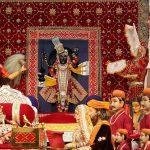
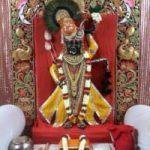
Established as a protective haven for the deity during the tumultuous Mughal era, the temple enshrines a Swayambhu (self-manifested) black stone idol. Shrinathji is depicted as the youthful Krishna who lifted the Govardhan Hill, with his left hand raised in a gesture of grace and his right hand clenched, symbolizing his divine power. For devotees (known as Vallabhkul), a visit here is the ultimate spiritual attainment. The ritual of Shringar—the elaborate dressing and adornment of the idol—is performed eight times daily, allowing devotees to witness the Lord in different moods and forms, from waking (Mangla) to resting (Shayan).
Phalaśruti: The Benefits of Pilgrimage
According to ancient spiritual traditions and the oral histories of the Vallabhacharya sect, cleansing ancestral karma is a primary benefit of visiting Nathdwara. Devotees believe that offering prayers at Shrinathji’s feet alleviates the burdens of past sins and liberates the soul from the cycle of rebirth. The temple is particularly renowned for blessing childless couples with progeny and granting peace to departed souls through ancestral rites performed by Brahmin priests.
Historical Origins & Scriptural Legend
The origin of the Shrinathji Temple is a poignant blend of historical reality and divine intervention, recorded in the Sthala Purana (local legend).
The Flight from Vrindavan
The idol of Shrinathji originally resided in Vrindavan, the land of Lord Krishna’s childhood. In the late 17th century, as the destructive armies of Aurangzeb swept across North India threatening Hindu temples, the idol was moved for protection. Historical accounts from temple records date this migration to approximately 1672. The idol was transported via a bullock cart towards Rajasthan under the protection of Rana Raj Singh of Mewar.
The Divine Accident
Tradition holds that when the procession reached the village of Sihad (modern-day Nathdwara), the cart suddenly became mired in deep mud and could not be moved despite the efforts of the bearers. The accompanying priests, particularly Vallabhacharya (the sect’s founder), interpreted this event not as a mishap but as a divine command. It was revealed that Lord Shrinathji had chosen this specific spot as his eternal abode. Thus, the Shrinathji Temple was constructed on that very spot in 1672 AD, marking the transition of the deity from the Braj region to the Aravalli hills.
Architectural Marvels
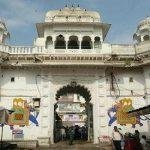
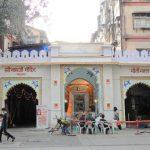
While the temple’s exterior exhibits a modest fort-like appearance typical of Mewar architecture, the interior is a sanctuary of exquisite artistry. The architecture of Shrinathji Temple is a unique synthesis of Rajput, Mughal, and Gujarati styles.
Style and Layout
The complex is designed as a Haveli (mansion) rather than a traditional towering temple. The structure features high walls and a single gateway, enclosing a spacious courtyard. The inner sanctum (Garbhagriha) houses the central icon, while the surrounding corridors are designed to facilitate the circumambulation (Parikrama) of the deity.
The Icon and Sculpture
The focal point of the architecture is the niche where the idol rests. The black stone idol is illuminated by intricate oil lamps and adorned with gold and silver jewelry. Surrounding the main idol are carvings of cows, snakes, lions, peacocks, and parrots—symbolizing Krishna’s dominion over nature. The walls of the temple feature ornate carvings depicting scenes from the Bhagavata Purana.
While the temple is not a UNESCO World Heritage site, it falls under the protection of the Rajasthan State Archaeology and the Shrinathji Temple Trust, ensuring the preservation of its heritage artifacts and murals.
Darshan & Ritual Logistics
The life of Nathdwara revolves around the Seva Puja (service to the Lord). The schedule is rigid and divine, with the temple closing between darshan intervals.
Daily Darshan Timings
Note: Timings are subject to change based on seasons and religious festivals.
| Darshan | Timing |
|---|---|
| Mangla (Morning Awakening) | 5:15 AM – 6:00 AM |
| Shringar (Adornment) | 7:00 AM – 7:45 AM |
| Gval (Mid-day) | 12:30 PM – 1:30 PM |
| Bhog (Offerings) | 4:00 PM – 4:45 PM |
| Aarti (Evening Prayer) | 6:30 PM – 7:15 PM |
| Shayan (Night Rest) | 8:30 PM onwards |
Key Sevas and Online Booking
To perform specific rituals like Abhishekam (ritual bathing of the idol) or Archana (offering of flowers and mantras), devotees can book through the official Shrinathji Temple Trust website. For the year 2026, digital bookings are essential due to high demand.
- Annakut Seva: Offerings of food grains arranged like a mountain.
- Gold/Silver Flower Offering: Available for auspicious occasions.
- Booking Portal: Register at
shrinathjitrust.org(hypothetical URL for 2026) with valid ID proof.
2026 Major Festivals (Panchang Dates)
- Janmashtami: August 14, 2026 (Darshan remains open 24 hours).
- Holi (Phagun Utsav): March 13–15, 2026. This is the grandest festival; expect extreme crowds.
- Annakut: November 1, 2026 (Govardhan Puja).
- Diwali: October 21, 2026 (Maha Laxmi Puja).
Practical Visitor Guidance
Code of Conduct and Dress Code
As this is a living temple with a daily schedule, silence and decorum are mandatory in the sanctum. Photography is strictly prohibited inside the inner sanctum (Garbhagriha) and during rituals.
- Dress Code: Traditional attire is required. Men should wear Dhoti/Pyjama and Kurta (no trousers/shorts). Women should wear Saree, Lehenga, or Salwar Kameez with a Dupatta covering the head. Western clothing is not permitted.
- Locker Facilities: Electronic items (phones, cameras, belts with metal buckles) must be deposited in free lockers located at the temple entrance.
- Accessibility: The temple has stairs. For elderly visitors, a palanquin (Palki) service is available for a nominal fee.
Crowd Management and Seasonal Advice
Peak seasons include summer (May–June) and festival months.
- Best Time to Visit: October to February (Winter). The weather is pleasant, and crowds are manageable compared to summer.
- Summer Advice: May and June can be scorching (up to 45°C). Carry water bottles (plastic bottles are often restricted; use steel flasks) and a cap.
- Pro Tip: For the most peaceful darshan, visit on a weekday morning between Mangla and Shringar timings.
Pilgrimage Connectivity
How to Reach Nathdwara
Nathdwara is well-connected by road and rail, serving as a crucial part of the Mewar pilgrimage circuit.
- By Air: Maharana Pratap Airport (UDR) in Udaipur is the nearest airport, located approximately 55 km away. Taxis are readily available.
- By Rail: Nathdwara has its own railway station (Nathdwara Code: NDW). Major trains connect to Udaipur (UDZ).
- By Road: Located on NH 27 and State Highway 32. Regular buses and private cabs operate from Udaipur (48 km) and Ahmedabad (160 km).
Nearby Sacred Sites
Expand your pilgrimage circuit with these nearby destinations:
- Eklingji Temple (22 km): The family deity of the Mewar dynasty, featuring intricate Nagara-style architecture.
- Charbhuja Temple (40 km): A 15th-century temple dedicated to Lord Vishnu, located in the Garhbor village.
- Boharat Shiva Temple (10 km): A serene Shiva temple on the banks of the Banas river.
Frequently Asked Questions (FAQs)
1. Is there a VIP or special entry darshan available?
Yes, the Shrinathji Trust offers a “Special Darshan” ticket for Rs. 300 (approx.) per person. This allows devotees to bypass the general queue during specific intervals. VIP entry is generally reserved for donors or during specific festivals.
2. Can foreigners visit Shrinathji Temple?
Traditionally, entry was restricted to Hindus only. However, as of recent years, foreigners are permitted entry into the temple courtyard, but entry into the inner sanctum (Garbhagriha) is still restricted to Hindus. Foreigners are advised to dress conservatively and respect local customs.
3. What is the best way to see all 8 Sevas (Darshans)?
It is recommended to stay in Nathdwara for at least 24 hours. A common itinerary involves arriving the previous evening, attending the Shayan Darshan (night rest), and staying overnight to catch the Mangla (early morning) and Shringar Darshans the next day.
4. Are mobile phones allowed inside the temple?
No. Strict security checks ensure all mobile phones, smartwatches, and electronic gadgets are deposited at the free locker facility before entering the temple premises.
5. What is the significance of Annakut?
Annakut is a festival where thousands of sweets and vegetarian dishes are stacked in the form of a mountain (representing Mount Govardhan) and offered to Shrinathji. It typically falls after Diwali (Govardhan Puja) and attracts huge crowds.
Recent Posts

Shri Kaamkoteeshwar Mandir, Varanasi – History & Significance
In the heart of Kashi, the eternal city of Lord Shiva, where the Ganges flows with celestial grace, stands the Shri Kaamkoteeshwar Mandir. This sacred Sannidhi is not merely a temple but a profound spiritual bridge between the Northern…

ओ सांवरे तूने ही मुझको संभाला – Lyrics & Meaning
ओ सांवरे तूने ही मुझको संभाला – A Prayer to Shyam Origin & Spiritual Essence Why This Bhajan Resonates Devotees chant this when overwhelmed by life’s storms—the refrain ‘तूने ही मुझको संभाला’ is the soul’s sigh of relief: “You…

कथा ये है महाराज मेरे की – Lyrics & Meaning
कथा ये है महाराज मेरे की छत्रपति संभाजी महाराज – A Prayer to Chhatrapati Sambhaji Maharaj Origin & Spiritual Essence Why This Bhajan Resonates Devotees chant this when their spirit feels tested—its powerful refrain “महाराज मेरे” is a soul’s…

Rigveda Samhita Yathartha Anuvada (ऋग्वेद संहिता यथार्थ अनुवाद) – Complete Set with Anvayartha & Hindi/English Translation
The Rigveda is the oldest surviving scripture of humanity and the foundational text of Sanātana Dharma. For serious students, scholars, UPSC aspirants studying ancient Indian history, Sanskrit learners, and spiritual seekers, a precise and grammatically structured translation is indispensable.…

आना भी अकेला है जाना भी अकेला है – Lyrics & Meaning | BharatTemples
आना भी अकेला है जाना भी अकेला है – A Prayer to the Divine Witness Origin & Spiritual Essence Why This Bhajan Resonates Devotees turn to this bhajan in moments of deep reflection—when life’s attachments begin to ache. The…

माता शेरावाली के द्वार जो भी जाता है – Lyrics & Meaning
माता शेरावाली के द्वार जो भी जाता है – A Prayer to Maa Sherawali Origin & Spiritual Essence Why This Bhajan Resonates Devotees turn to this bhajan in times of fear or uncertainty—its promise that no one leaves Maa’s…

मार लेना सपणी उबार लेणा भवरा – Lyrics & Meaning
मार लेना सपणी उबार लेणा भवरा – A Prayer to the Divine Beloved Origin & Spiritual Essence Why This Bhajan Resonates Devotees chant this in moments of deep vulnerability—its cry of “मार लेना सपणी, उबार लेणा भवरा” is the…

हमें श्याम सुंदर भरोसा तुम्हारा – Lyrics & Meaning
हमें श्याम सुंदर भरोसा तुम्हारा – A Prayer to Shyam Sundar Origin & Spiritual Essence Why This Bhajan Resonates Devotees chant this when feeling alone—its refrain ‘de do sahara’ is the soul’s cry for divine support. Lyrics in Hindi…

Mere Satguru Ne Di Thi Davai Lyrics in Hindi & Meaning
Mere Satguru Ne Di Thi Davai: Invoking the Guru’s Liberating Wisdom This soul-stirring bhajan venerates the Satguru (True Spiritual Master) as the divine physician who dispenses the only remedy for life’s deepest sufferings. Composed by Sant Karmaveer Tufani, it…

Janm Diyo Thari Maa Dukh Dekhiyo Lyrics in Hindi & Meaning
जन्म दियो थारी माँ दुख देखियो (Maa’s Grief Upon Birthing You) This soul-stirring Chetavani Bhajan (admonitory hymn) is addressed to the Divine Mother (Maa) – a call for repentance when children forget their filial duties in the dark age…