

Contents
Introduction & Spiritual Essence: The Lord of Mewar
Standing approximately 22 kilometers northeast of Udaipur in the serene village of Kailash Puri lies the Eklingji Mahadev Temple. This complex is not merely a place of worship; for the people of Rajasthan, it is the spiritual axis around which the history of the Mewar dynasty revolves. The primary deity is Lord Shiva, worshipped here in the form of Eklingji (also known as Ekalingnath).
While the temple is dedicated to Shiva, its unique spiritual significance lies in its hierarchy of devotion. The Maharana (the hereditary ruler of Udaipur) acts as the Dewan (chief servant) of Eklingji. Historically and traditionally, the Maharana does not consider himself the sovereign owner of the land but rather the temporary administrator on behalf of the presiding deity, Lord Shiva. Thus, this temple is often referred to as the “State Temple” of the historic Mewar region.
Phalaśruti: The Fruits of Devotion
Devotees undertake this pilgrimage seeking specific spiritual and worldly benefits. According to temple tradition and the Ekalinga Mahatmya, a visit to this shrine is believed to:
- Establish Sovereignty and Protection: Rulers and individuals alike visit to seek the protection of the “Ruling Deity,” ensuring stability and strength in their endeavors.
- Cleanse Ancestral Karma: As a powerful site of Lord Shiva, it is considered highly potent for performing rites (Shraddha) to honor ancestors and cleanse generational debts.
- Fulfill Spiritual Desires: The unique four-faced murti (idol) is believed to grant material desires (Artha) and spiritual liberation (Moksha) simultaneously.
Historical Origins & Scriptural Legend
The history of Eklingji is a tapestry woven with devotion, destruction, and resilience. The temple complex bears the architectural imprints of centuries of patronage by the Sisodia rulers of Mewar.
Scriptural References and Sthala Purana
The primary scriptural source regarding the temple’s sanctity is the Ekalinga Mahatmya, a text dating back to the 15th century. Local tradition holds that the land of Kailash Puri was originally a dense forest where Lord Shiva appeared as a Swayambhu (self-manifested) Lingam.
Historical Timeline and Renovations
According to historical records and the Ekalinga Mahatmya:
- 8th Century: The original temple is believed to have been constructed by Bappa Rawal, the founder of the Mewar dynasty (Chauhan Rajput), establishing Shiva as the family deity.
- 14th Century: The original temple and murti suffered significant damage due to invasions by the Delhi Sultanate. Hamir Singh undertook extensive renovations and installed the earliest extent version of the idol.
- 15th Century (c. 1459): The architectural zenith arrived under Rana Kumbha. He rebuilt the main temple complex and constructed the Vishnu temple within the precincts. An inscription from 1460 CE reveres him as the “Personal Servant of Eklinga.”li>
- Late 15th Century: After the devastation by Malwa Sultanate ruler Ghiyath Shah, Rana Raimal (1473–1509) used the war ransom to finance the last major reconstruction. This phase saw the installation of the present-day murti of Eklingji.
Architectural Marvels: Maru-Gurjara Style
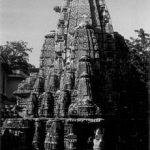
The temple is a masterpiece of the Maru-Gurjara architectural style, a distinct subset of Nagara architecture prevalent in Rajasthan. The structure is a double-storied edifice that commands a majestic presence against the Aravalli hills.
The Shikhara and Mandapa
The temple features a striking pyramidal roof (Shikhara) and a uniquely carved tower. The outer walls are defined by steps that descend gently to touch the waters of the surrounding tanks, creating a reflection of the temple in the serene pool.
The Sanctum Sanctorum (Garbhagriha)
Upon entering the massive pillared hall (Mandapa), visitors are greeted by a silver image of Nandi (the bull vehicle of Shiva). The Garbhagriha houses the spectacular four-faced idol of Eklingji, carved from a single block of black marble.
- The Four Faces: The idol stands approximately 50 feet high and represents four forms of Lord Shiva:
- West: Surya Narayana (The Sun God).
- North: Brahma (The Creator).
- East: Vishnu (The Preserver).
- South: Rudra (The Destroyer/Transformer).
The central Lingam is encircled by a massive silver snake, adding to the idol’s mystique. The ASI (Archaeological Survey of India) has noted the temple’s significant heritage value, though it functions primarily as a living place of worship under the administration of the Mewar Royal family.
Darshan & Ritual Logistics (2026 Schedule)
The rituals at Eklingji are conducted with royal precision. The atmosphere transforms from the quiet stillness of early morning to the vibrant energy of evening Aarti.
Daily Darshan Timings
| Session | Time Slots | Description |
|---|---|---|
| Morning | 04:30 AM – 1:00 PM | Opens with Maha Abhishek. Darshan continues until midday break. |
| Afternoon Break | 1:00 PM – 4:30 PM | Temple remains closed for rituals and restoration. |
| Evening | 4:30 PM – 9:30 PM | Reopens for evening Darshan and Sandhya Aarti. |
Key Sevas & Online Booking
Devotees can book specific sevas (rituals) in advance. For 2026, the Mewar Trust has streamlined the digital booking process.
- Maha Abhishekam: The primary ritual performed with milk, honey, and sacred herbs. Best viewed early morning.
- Shodashopachara Puja: A comprehensive offering of 16 rituals.
- Online Seva Booking: Visit the official Mewar Temple Trust website to reserve slots for sevas or to purchase remote darshan tickets. It is advisable to book at least 7 days in advance for festival dates.
Major Festivals 2026
- Eklingji Patotsav (Festival of Flag Hoisting): March 28, 2026 (Friday). This is the most significant festival here, celebrating the temple’s installation. The Maharana often participates in the ceremonial rituals.
- Maha Shivaratri: February 26, 2026 (Thursday). A night-long vigil (Jagran) is held, drawing thousands of devotees.
- Savan Somvar: Monsoon Mondays (July-August 2026). Special Abhishekam is performed with water from the Mansarovar tank.
Practical Visitor Guidance
To ensure a respectful and smooth visit, adhere to the following guidelines established by the temple administration.
Code of Conduct
- Dress Code: Traditional attire is recommended. Men should wear dhoti/kurta or full-length trousers and shirts. Women should wear sarees, salwar kameez, or lehenga choli. Western attire (shorts/t-shirts) is not permitted inside the sanctum.
- Photography: Photography is strictly prohibited inside the Garbhagriha and near the main idol. It is allowed within the outer precincts (Mandapas) without flash.
- Mobile Phones: Usage of mobile phones is restricted in the inner sanctum. Lockers are available near the entrance for electronic devices.
- Accessibility: The temple has steps leading to the main hall. While assistance is available for elderly visitors, the inner sanctum may be challenging for wheelchair users due to the architectural age.
Crowd Management & Seasonal Advice
- Best Hours: For a peaceful darshan, visit between 9:00 AM and 11:00 AM on weekdays. Avoid weekends and Mondays during the monsoon season.
- Seasonal Tips:
- Summer (April-June): Udaipur temperatures can exceed 40°C. Carry a water bottle and head cover; stay hydrated.
- Monsoon (July-September): The architecture and surrounding gardens become lush and vibrant. Carry an umbrella for sudden showers.
Pilgrimage Connectivity
Eklingji is a major stop on the religious circuit of Mewar, making it highly accessible.
How to Reach
- By Air: Maharana Pratap Airport, Udaipur (UDR) is the nearest airport, approximately 30 km away. Taxis are readily available.
- By Rail: Udaipur Railway Station is the main railhead, well-connected to major cities like Delhi, Mumbai, and Jaipur. From there, it is a 45-minute drive (approx. 22 km) via NH 48.
- By Road: The temple is located on the Udaipur-Haldighati road (State Highway 32). It connects seamlessly to NH 48 for travelers coming from Ahmedabad or Jaipur.
Nearby Sacred Sites (Pilgrimage Circuit)
Expand your spiritual journey by visiting these nearby landmarks:
- Nathdwara (Shri Nathji Temple): Located 45 km from Eklingji (approx. 1 hour drive). Famous for the worship of Lord Krishna.
- Achalgarh Shiva Temple: Located about 15 km further north of Eklingji. A historic temple complex surrounded by a fort.
- Sahastrabahu Temple (Saas Bahu Temple): Located near Nagda, about 10 km from Eklingji, featuring exquisite 10th-century architecture.
Frequently Asked Questions (FAQs)
1. Is there a VIP darshan entry?
Yes, the temple trust offers a “Priority Darshan” pass for a nominal fee, which allows devotees to bypass the general queue during peak hours. This can be purchased at the counter or booked online.
2. Can non-Hindus visit Eklingji?
As per the temple tradition maintained by the Mewar Trust, entry is generally restricted to Hindus. However, exceptions are sometimes made for scholars or tourists on specific permission from the trust administration.
3. Is there a dress code for children?
Children are allowed in regular clothing, but it is recommended to dress them modestly.
4. What is the entry fee?
Entry to the temple complex is free for general darshan. However, there is a separate fee for camera/photography equipment and specific Sevas.
5. Are food and accommodation available nearby?
Basic vegetarian food is available in the local market outside the temple. For accommodation, Udaipur city offers numerous options ranging from heritage hotels to budget lodges, as Kailash Puri village has limited facilities.
Contact Details
Official Address:
Eklingji Temple Trust, Kailash Puri, Udaipur District, Rajasthan, 313202.
Contact: +91-294-2711025 (Administrative Office)
Recent Posts

Shri Kaamkoteeshwar Mandir, Varanasi – History & Significance
In the heart of Kashi, the eternal city of Lord Shiva, where the Ganges flows with celestial grace, stands the Shri Kaamkoteeshwar Mandir. This sacred Sannidhi is not merely a temple but a profound spiritual bridge between the Northern…

ओ सांवरे तूने ही मुझको संभाला – Lyrics & Meaning
ओ सांवरे तूने ही मुझको संभाला – A Prayer to Shyam Origin & Spiritual Essence Why This Bhajan Resonates Devotees chant this when overwhelmed by life’s storms—the refrain ‘तूने ही मुझको संभाला’ is the soul’s sigh of relief: “You…

कथा ये है महाराज मेरे की – Lyrics & Meaning
कथा ये है महाराज मेरे की छत्रपति संभाजी महाराज – A Prayer to Chhatrapati Sambhaji Maharaj Origin & Spiritual Essence Why This Bhajan Resonates Devotees chant this when their spirit feels tested—its powerful refrain “महाराज मेरे” is a soul’s…

Rigveda Samhita Yathartha Anuvada (ऋग्वेद संहिता यथार्थ अनुवाद) – Complete Set with Anvayartha & Hindi/English Translation
The Rigveda is the oldest surviving scripture of humanity and the foundational text of Sanātana Dharma. For serious students, scholars, UPSC aspirants studying ancient Indian history, Sanskrit learners, and spiritual seekers, a precise and grammatically structured translation is indispensable.…

आना भी अकेला है जाना भी अकेला है – Lyrics & Meaning | BharatTemples
आना भी अकेला है जाना भी अकेला है – A Prayer to the Divine Witness Origin & Spiritual Essence Why This Bhajan Resonates Devotees turn to this bhajan in moments of deep reflection—when life’s attachments begin to ache. The…

माता शेरावाली के द्वार जो भी जाता है – Lyrics & Meaning
माता शेरावाली के द्वार जो भी जाता है – A Prayer to Maa Sherawali Origin & Spiritual Essence Why This Bhajan Resonates Devotees turn to this bhajan in times of fear or uncertainty—its promise that no one leaves Maa’s…

मार लेना सपणी उबार लेणा भवरा – Lyrics & Meaning
मार लेना सपणी उबार लेणा भवरा – A Prayer to the Divine Beloved Origin & Spiritual Essence Why This Bhajan Resonates Devotees chant this in moments of deep vulnerability—its cry of “मार लेना सपणी, उबार लेणा भवरा” is the…

हमें श्याम सुंदर भरोसा तुम्हारा – Lyrics & Meaning
हमें श्याम सुंदर भरोसा तुम्हारा – A Prayer to Shyam Sundar Origin & Spiritual Essence Why This Bhajan Resonates Devotees chant this when feeling alone—its refrain ‘de do sahara’ is the soul’s cry for divine support. Lyrics in Hindi…

Mere Satguru Ne Di Thi Davai Lyrics in Hindi & Meaning
Mere Satguru Ne Di Thi Davai: Invoking the Guru’s Liberating Wisdom This soul-stirring bhajan venerates the Satguru (True Spiritual Master) as the divine physician who dispenses the only remedy for life’s deepest sufferings. Composed by Sant Karmaveer Tufani, it…

Janm Diyo Thari Maa Dukh Dekhiyo Lyrics in Hindi & Meaning
जन्म दियो थारी माँ दुख देखियो (Maa’s Grief Upon Birthing You) This soul-stirring Chetavani Bhajan (admonitory hymn) is addressed to the Divine Mother (Maa) – a call for repentance when children forget their filial duties in the dark age…