
Contents
- 1 Introduction & Spiritual Essence
- 2 Historical Origins & Scriptural Legend
- 3 Architectural Marvels
- 4 Architecture
- 5 Legend / Local stories
- 6 Photo Gallery
- 7 How to Reach:
- 8 Contact Details
- 9 Darshan & Ritual Logistics (2026 Guide)
- 10 Practical Visitor Guidance
- 11 Pilgrimage Connectivity
- 12 Frequently Asked Questions (FAQ)
- 13 Dharba Grass Rituals
- 14 Thirunallar History
Introduction & Spiritual Essence
Deep within the spiritual geography of Tamil Nadu, nestled in the serene town of Tirunallar, lies the Dharbaranyeswarar Temple. Also revered as the Tirunallar Saniswaran Temple, this shrine is a celestial beacon for devotees worldwide. The primary deity here is Lord Shiva in the form of Dharbaranyeswarar, while the temple is most famously associated with Lord Shani (Saturn).
Unlike typical temples, the murti (idol) of Lord Shiva is believed to be a Swayambhu (self-manifested) lingam made of dharba grass. This unique origin story elevates its spiritual potency. The temple is classified as a Paadal Petra Sthalam, sanctified by the verses of the Nayanars—Appar, Sundarar, and Sambandhar—who praised its glory in the 7th century.
Phalaśruti: The Benefits of Pilgrimage
Devotees flock here to mitigate the adverse effects of Shani Dosha or Sade Sati (the seven-and-a-half-year cycle of Saturn). According to temple lore, worshiping here cleanses ancestral karma and removes obstacles caused by Saturn’s transit. It is said that Kubera, the God of Wealth, worshiped Lord Shiva here to regain his prosperity, making it a potent site for financial stability and spiritual liberation.
Historical Origins & Scriptural Legend
According to temple records, the origins of Tirunallar are intertwined with ancient Tamil legends. The place was historically known as Dharbaranyam, a forest of dharba grass. The Stala Purana narrates the story of King Nala, the ruler of the Nishadha kingdom. After losing his kingdom and wealth due to the curse of Lord Shani, he came to this forest. By worshiping the Swayambhu lingam here, he was absolved of his afflictions and regained his kingdom.
Archaeological evidence suggests that the temple was significantly expanded during the Chola Dynasty (circa 10th–13th century CE), with later contributions from the Nayak rulers (16th–17th century). The structure stands today as a testament to centuries of unwavering devotion and royal patronage.
Architectural Marvels
The temple is a masterpiece of Dravidian architecture. Enclosed within a massive prakaram (enclosure), the structure features towering gopurams (gateway towers) adorned with intricate stucco work depicting stories from Hindu mythology.
Key Architectural Highlights:
- The Sanctum (Garbhagriha): The main deity, Dharbaranyeswarar, faces east. The base of the lingam is wider than the top, a design element unique to this era of Dravidian sculpting.
- Shani Shrine: Located in a separate enclosure, the idol of Lord Shani is depicted as a dark figure standing on a platform, flanked by his consorts, Neela and Dhamini. This shrine is structurally aligned so that Sun rays directly illuminate the deity during specific times of the year.
- Mandapas: The temple features several pillared halls. The Sandi Mandapa is particularly notable, used for the installation of the Ashta Lakshmi deities.
- Vastu Shastra: The temple layout adheres to strict Vastu principles, with the sanctum sanctorum at the center and a perfect eastward orientation, allowing for maximum solar energy absorption during sunrise.
| Date built: | – |
|---|---|
| Deity: | – |
| Architectural style: | Dravidian architecture |
| Major festivals | – |
| Locale: | Tirunallar |
| District:: | Karaikkal |
| Address: | Nalankulam, Thirunallar, Puducherry 609607 |
| Phone | – |
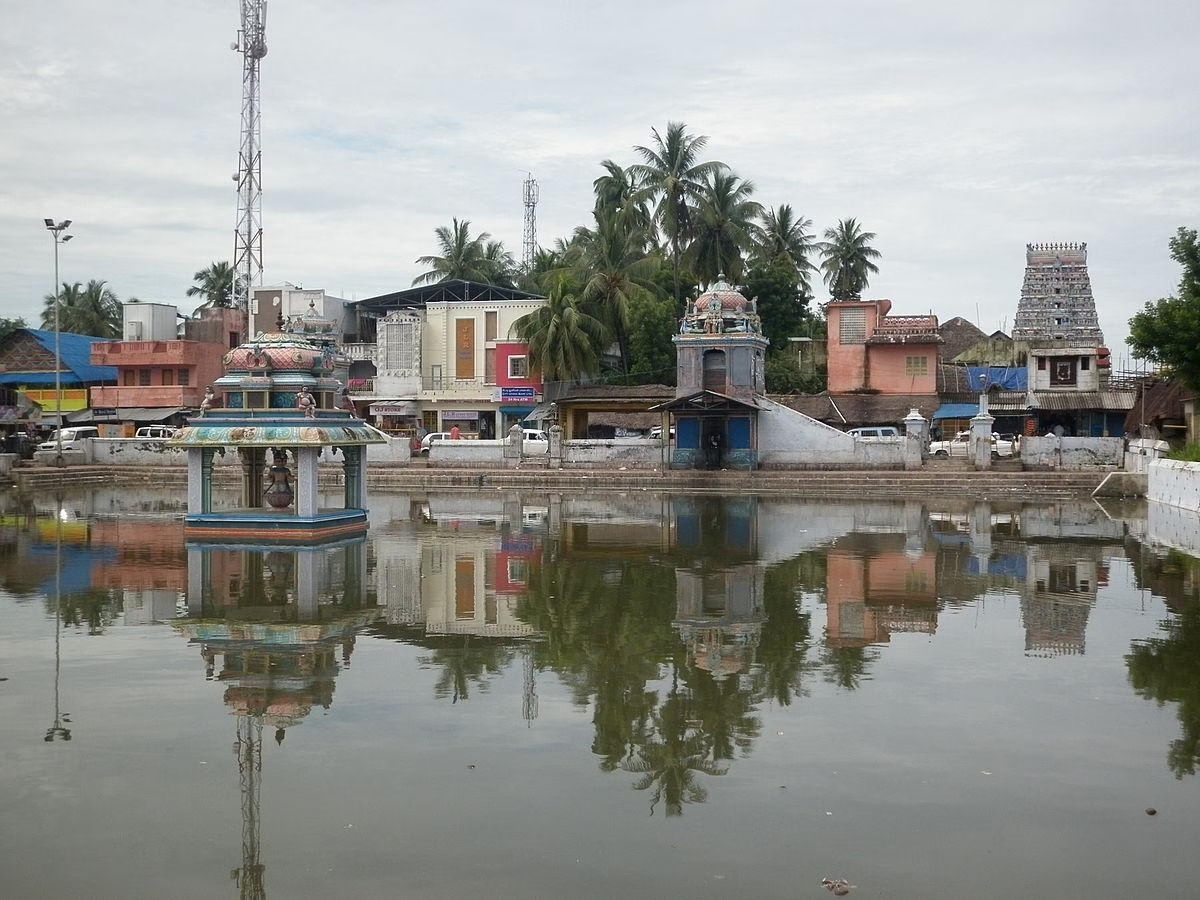
Tirunallar Saniswaran Temple or Dharbaranyeswarar Temple is a Hindu temple dedicated to Lord Shani (saturn) located in Tirunallar in Karaikal district of Pondicherry, India. The presiding deity is Lord Siva, Dharbaranyeswar and the place Tirunallar was historically called Dharbaranyam. The temple is revered by the hymns of 7th century Tamil saivite poets, Appar, Sundarar and Sambandhar and is classified as Paadal Petra Sthalam.
Architecture
Legend / Local stories
The presiding deity is Dharbaranyeswarar and is believed to have been made of dharba grass. The worship is also centered around the icon of planet saturn, called Shani, originally treated as the door keeper of the shrine. According to Hinduism, saturn resides in each rasi(zodiac) for two and half years. The tradition is to worship Shani before entering the inner sanctum of Lord Siva. Sambandhar, the 7th century nayanar and Tamil saivite poet has revered the deity with four hymns, in one of which he refers to a contest with Jains, and his victory. Appar and Sundarar, the other Nayanars have glorified the temple with their hymns. Arunagirinathar, a 15th-century poet and staunch devotee of Lord Muruga has composed hymns on the deity and this temple is attributed to Murugan worship as well.
Photo Gallery
How to Reach:
Contact Details
Official Address
Darshan & Ritual Logistics (2026 Guide)
The temple follows strict Agamic traditions. Rituals begin at dawn with the Thiruvananthal (early morning rite).
Daily Timings
| Session | Timings |
|---|---|
| Morning Opening | 06:00 AM |
| Ucha Kalam (Noon Puja) | 12:00 PM – 01:00 PM |
| Evening Closing | 06:00 PM |
Key Sevas and Booking
Devotees can book online seva through the official TTD (Tirunallar Temple Development) portal. Key rituals include:
- Shani Abhishekam: Performed on Saturdays. A sacred bath is performed on the Shani idol.
- Sri Dharbaranyeswarar Archana: Daily offering of flowers and sacred threads.
- Nala Archana: Performed specifically to remove obstacles in career and personal life.
Note: Online booking opens 30 days in advance. Queue cards are available at the temple counter for on-the-spot darshan.
2026 Festival Calendar
- Maha Shivaratri (Feb 26, 2026): The most auspicious night of the year. All-night vigil and special Abhishekam.
- Aadi Perukku (Aug 02, 2026): Celebration of the river banks; special procession for the Lord.
- Karthigai Deepam (Nov 04, 2026): Lighting of the giant lamp; signifies the victory of light over darkness.
- Nataraja Darshan (Dec 22, 2026): Specific window where the Nataraja form is unveiled for darshan.
Practical Visitor Guidance
Visiting Tirunallar requires preparation, especially during weekends and festival days.
Dress Code & Etiquette
Traditional attire is mandatory. Men must wear Dhoti or pants with a shirt, while women should wear Saree, Salwar Kameez, or Chudithar. Western attire is strictly prohibited inside the sanctum.
Crowd Management
Best Hours to Visit: Weekdays between 10:00 AM and 3:00 PM offer the shortest queues. Tuesdays are generally crowded due to the worship of Angaraka (Mars).
Seasonal Advice: Karaikkal experiences humid weather. In May and June, temperatures rise; carry a bottle of water. Monsoons (October–November) are picturesque but require rain gear.
Facilities
- Mobile Lockers: Available at the temple entrance for a nominal fee. Electronic items are restricted inside.
- Accessibility: The temple has ramps for wheelchair access in the outer precincts, but the inner sanctum requires navigating steps.
- Photography: Strictly prohibited inside the shrine and the Shani enclosure.
Pilgrimage Connectivity
How to Reach
By Air: The nearest airport is Puducherry International Airport (PNY), approximately 65 km away. Alternatively, Tiruchirappalli International Airport (TRZ) is 150 km away and offers better connectivity.
By Train: Tirunallar Railway Station (TNR) is the nearest stop (2 km from the temple). Major trains connecting here include the Nagercoil–Chennai Express.
By Road: The temple is well-connected via NH 32 (formerly NH 45A). Regular buses are available from Karaikkal bus stand to Tirunallar.
Nearby Sacred Sites
Expand your spiritual journey with these nearby locations:
- Karikal Amman Temple (Karaikkal): 10 km away, dedicated to the Goddess protecting the region.
- Thirunallar Lake: Located just outside the temple, where devotees traditionally take a holy dip before darshan.
- Haritha Beach (Karaikkal): A serene spot for meditation after the temple visit.
Frequently Asked Questions (FAQ)
Is there a VIP darshan entry available?
Yes, the temple offers a special entry darshan for a nominal fee (subject to change). This can be booked online or purchased at the temple counter. However, during Maha Shivaratri, VIP privileges are suspended to manage crowds.
Can I perform Shani Pooja if I am not an Hindu?
Spirituality is universal. All devotees, regardless of their background, are welcome to seek blessings from Lord Shani. The temple administration welcomes everyone with respect.
What is the significance of offering black sesame oil?
Offering black sesame oil (til oil) to Lord Shani is a powerful ritual to appease him. It is believed to cool the effect of Saturn’s rays and mitigate hardships. This is most effective on Saturdays.
Is accommodation available near the temple?
Yes. The Karaikkal and Tirunallar regions have numerous lodges and hotels. Additionally, the temple management runs a guest house (Choultry), which requires prior reservation via the official website.
How long does a full darshan take?
On normal days, a complete darshan including the main shrine and Shani idol takes about 45 minutes to 1 hour. On weekends and festival days, it may take up to 3 hours.
What is the voltage for electronics?
India uses 230V/50Hz. Travelers should carry appropriate converters for charging devices, though it is advised to charge at the hotel rather than inside the temple complex.
Dharba Grass Rituals
Unique to this temple, the Dharba grass is a central element. Devotees offer Dharba bundles to Lord Shiva. Legend says that the soil here is rich in medicinal properties due to the accumulated energy of thousands of pilgrims over centuries.
Thirunallar History
The historical significance of Tirunallar dates back to the Sangam period. It is mentioned in various Tamil scriptures as a land of healing. The town was originally part of the Chola kingdom and later fell under the French colonial administration of Pondicherry before merging with the Union Territory.
Recent Posts

Shri Kaamkoteeshwar Mandir, Varanasi – History & Significance
In the heart of Kashi, the eternal city of Lord Shiva, where the Ganges flows with celestial grace, stands the Shri Kaamkoteeshwar Mandir. This sacred Sannidhi is not merely a temple but a profound spiritual bridge between the Northern…

ओ सांवरे तूने ही मुझको संभाला – Lyrics & Meaning
ओ सांवरे तूने ही मुझको संभाला – A Prayer to Shyam Origin & Spiritual Essence Why This Bhajan Resonates Devotees chant this when overwhelmed by life’s storms—the refrain ‘तूने ही मुझको संभाला’ is the soul’s sigh of relief: “You…

कथा ये है महाराज मेरे की – Lyrics & Meaning
कथा ये है महाराज मेरे की छत्रपति संभाजी महाराज – A Prayer to Chhatrapati Sambhaji Maharaj Origin & Spiritual Essence Why This Bhajan Resonates Devotees chant this when their spirit feels tested—its powerful refrain “महाराज मेरे” is a soul’s…

Rigveda Samhita Yathartha Anuvada (ऋग्वेद संहिता यथार्थ अनुवाद) – Complete Set with Anvayartha & Hindi/English Translation
The Rigveda is the oldest surviving scripture of humanity and the foundational text of Sanātana Dharma. For serious students, scholars, UPSC aspirants studying ancient Indian history, Sanskrit learners, and spiritual seekers, a precise and grammatically structured translation is indispensable.…

आना भी अकेला है जाना भी अकेला है – Lyrics & Meaning | BharatTemples
आना भी अकेला है जाना भी अकेला है – A Prayer to the Divine Witness Origin & Spiritual Essence Why This Bhajan Resonates Devotees turn to this bhajan in moments of deep reflection—when life’s attachments begin to ache. The…

माता शेरावाली के द्वार जो भी जाता है – Lyrics & Meaning
माता शेरावाली के द्वार जो भी जाता है – A Prayer to Maa Sherawali Origin & Spiritual Essence Why This Bhajan Resonates Devotees turn to this bhajan in times of fear or uncertainty—its promise that no one leaves Maa’s…

मार लेना सपणी उबार लेणा भवरा – Lyrics & Meaning
मार लेना सपणी उबार लेणा भवरा – A Prayer to the Divine Beloved Origin & Spiritual Essence Why This Bhajan Resonates Devotees chant this in moments of deep vulnerability—its cry of “मार लेना सपणी, उबार लेणा भवरा” is the…

हमें श्याम सुंदर भरोसा तुम्हारा – Lyrics & Meaning
हमें श्याम सुंदर भरोसा तुम्हारा – A Prayer to Shyam Sundar Origin & Spiritual Essence Why This Bhajan Resonates Devotees chant this when feeling alone—its refrain ‘de do sahara’ is the soul’s cry for divine support. Lyrics in Hindi…

Mere Satguru Ne Di Thi Davai Lyrics in Hindi & Meaning
Mere Satguru Ne Di Thi Davai: Invoking the Guru’s Liberating Wisdom This soul-stirring bhajan venerates the Satguru (True Spiritual Master) as the divine physician who dispenses the only remedy for life’s deepest sufferings. Composed by Sant Karmaveer Tufani, it…

Janm Diyo Thari Maa Dukh Dekhiyo Lyrics in Hindi & Meaning
जन्म दियो थारी माँ दुख देखियो (Maa’s Grief Upon Birthing You) This soul-stirring Chetavani Bhajan (admonitory hymn) is addressed to the Divine Mother (Maa) – a call for repentance when children forget their filial duties in the dark age…