
Contents
- 1 Introduction & Spiritual Essence
- 2 Historical Origins & Scriptural Legend
- 3 Architectural Marvels
- 4 Darshan & Ritual Logistics
- 5 Practical Visitor Guidance
- 6 Pilgrimage Connectivity
- 7 Frequently Asked Questions (FAQ)
- 7.1 1. Is there a VIP darshan entry available at Sitaram Bagh Temple?
- 7.2 2. What is the significance of the step-wells (Baolis) inside the temple?
- 7.3 3. Is photography allowed inside the sanctum sanctorum?
- 7.4 4. Are there accommodation facilities available at the temple?
- 7.5 5. What is the best time to visit to avoid crowds?
Introduction & Spiritual Essence
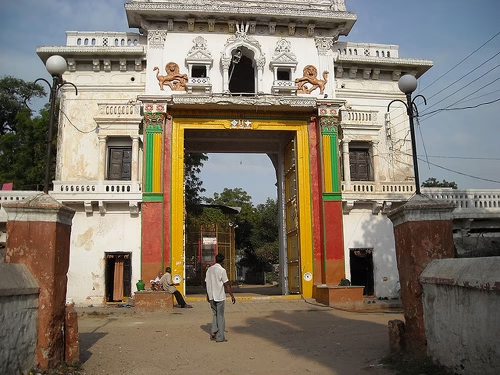
The Sitaram Bagh Temple in Mangalhat, Hyderabad, stands as a profound testament to the enduring spiritual heritage of Telangana. Constructed in the 1830s, this magnificent complex is dedicated to Lord Rama (Sri Ramachandra) and his consort Sita, along with a powerful shrine for Lord Hanuman. Unlike a typical temple, Sitaram Bagh is a spiritual fortification, spread over 25 acres and encircled by a formidable 50-foot wall.
Phalaśruti (Spiritual Benefits): Devotees flock to this ancient site seeking relief from Rahu-Ketu dosha and protection from negative influences. It is widely believed that offering prayers at the Samadhi of the saintly founder, Seth Puranmal Ganeriwala, brings ancestral blessings and cleanses accumulated karma. The temple is particularly revered for fulfilling the wishes of unmarried women seeking suitable alliances and granting courage (symbolized by the Hanuman shrine) to devotees.
Historical Origins & Scriptural Legend
Constructors and Era: The temple was established in the early 19th century (circa 1830-1835) by Seth Puranmal Ganeriwala, a wealthy merchant of the Ganeriwala family, during the reign of the Qutub Shahi dynasty. It is classified as a Grade II Heritage Building by the Indian National Trust for Art and Cultural Heritage (INTACH).
Sthala Purana (Local Legend): Tradition holds that the site was chosen due to a divine vision revealed to Seth Puranmal. Historical records note the complex relationship between the temple and the surrounding Islamic architecture. In the mid-20th century, during the unrest involving the Razakars, the temple’s massive walls served as a sanctuary. “Tradition holds that over 10,000 Hindu women took shelter within these walls during perilous times,” recalls family descendant Arvind Ganeriwal.
Another significant historical intervention occurred when HEH Mir Osman Ali Khan, the 7th Nizam of Hyderabad, made a substantial donation for the temple’s reconstruction, highlighting the region’s historic Ganga-Jamni Tehzeeb (composite culture).
Architectural Marvels
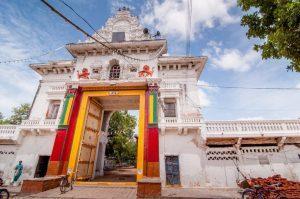
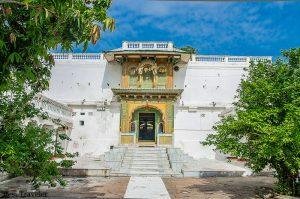
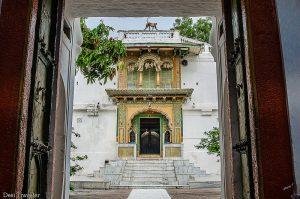
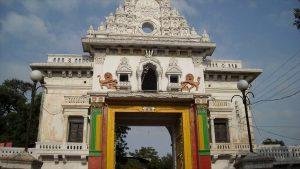
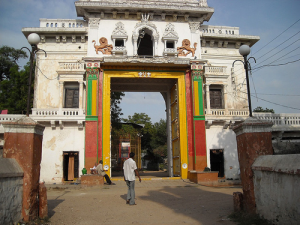
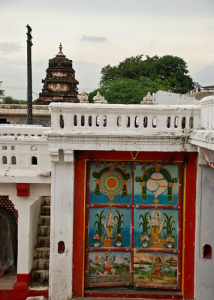
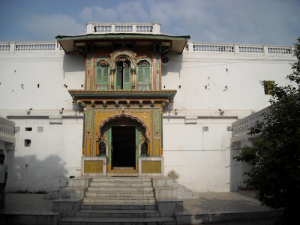
The architecture of Sitaram Bagh is a unique amalgamation of Mughal, Rajput, and Qutb Shahi styles. While the outer structure resembles a fortress, the inner sanctity reflects classical Hindu Vastu principles.
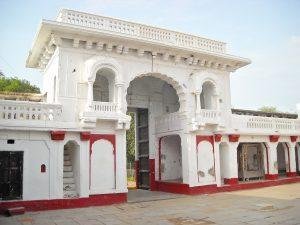
- The Fortification: The 50-foot high wall not only protects the temple from encroachment but also creates a serene, insulated atmosphere for meditation.
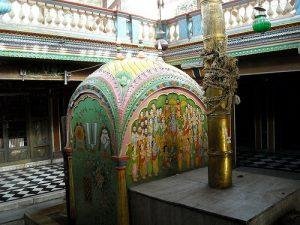
- The Sanctum: The primary deities of Lord Rama and Sita are exquisitely carved from marble.
- Hidden Discovery: In a fascinating revelation, the full Vigraha (idol) of Lord Hanuman was discovered only recently. For decades, the family worshipped only the knee portion, unaware that the rest of the idol lay buried beneath the soil, a common practice in ancient times to protect idols from invaders.
- Hydraulic Engineering: The complex features six step-wells (Baolis), including an ancient Qutub Shahi step-well shared historically with the adjacent mosque, symbolizing communal harmony.
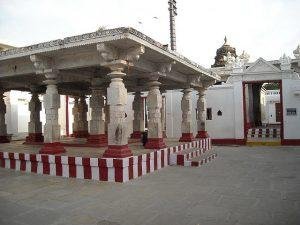
- Complex Layout: The 25-acre property includes open scrubland, residential quarters for priests, and various samadhis, offering a glimpse into the monastic lifestyle of the 19th century.
Darshan & Ritual Logistics
Visitors are advised to check the calendar before planning a visit, as specific rituals are performed on auspicious days. The temple follows the standard Panchayatana Puja style.
Daily Timings
| Session | Timings |
|---|---|
| Morning Darshan | 06:00 AM – 12:00 PM |
| Afternoon Break | 12:00 PM – 04:00 PM |
| Evening Darshan | 04:00 PM – 08:30 PM |
Key Sevas & Online Booking
While the temple is managed by the Ganeriwala family trust, devotees can participate in various Sevas. It is recommended to contact the temple office for the most current online seva booking procedures.
- Suprabhatam: 6:00 AM
- Abhishekam (Lord Hanuman): 8:00 AM (Tuesdays and Saturdays are highly auspicious).
- Sahasranama Archana: Performed for general well-being.
- Samadhi Pooja: Performed for ancestors at the resting place of Seth Puranmal.
Festivals in 2026
The temple becomes a hub of devotion during these specific dates in 2026:
- Rama Navami: April 6, 2026 (Grand procession and Akhand Ramayan).
- Hanuman Jayanti: April 12, 2026 (Special Abhishekam and Rudrabhishekam).
- Deepavali: October 21, 2026 (Special Nithya Pooja).
- Maha Shivaratri: February 26, 2026 (Night-long vigil).
Practical Visitor Guidance
Given the heritage status and open scrubland surrounding the temple, visitors should be prepared for an authentic, rustic experience.
- Dress Code: Traditional Indian attire is preferred. Men should wear dhotis or trousers, and women should wear sarees or salwar kameez. Avoid shorts or sleeveless tops.
- Photography: Photography is generally allowed in the outer courtyards but is strictly prohibited inside the sanctum sanctorum.
- Mobile Lockers: Due to the historical nature of the structure, modern locker facilities may be limited. It is advisable to travel light and carry minimal valuables.
- Accessibility: The temple complex is vast and involves walking on uneven ground. It is not fully wheelchair accessible, though the main sanctum is reachable via steps.
- Crowd Management: Weekends and Tuesdays can be crowded. Best hours to visit: Weekday mornings (9 AM – 11 AM). During May (summer), carry water, as the open scrubland absorbs significant heat.
Pilgrimage Connectivity
How to Reach
Address: Sitaram Bagh, Mangalhat, Hyderabad, Telangana 500001.
- By Air: Rajiv Gandhi International Airport (HYD) is approximately 25 km away (45-60 mins drive via NH65).
- By Rail: The nearest major railway station is Hyderabad Deccan (Nampally) Station, roughly 4 km away. Alternatively, Kachiguda Station is about 5 km away.
- By Road: Located off NH65 (Hyderabad – Mumbai Highway). The temple is accessible via the Mangalhat main road, well-connected by TSRTC buses and cabs.
Nearby Sacred Sites
Expand your pilgrimage circuit by visiting these nearby landmarks:
- Shri Hanuman Temple (Kachiguda): A prominent temple dedicated to Lord Hanuman, located about 3 km away.
- Birla Mandir (Hyderabad): A stunning marble temple dedicated to Lord Venkateshwara, roughly 7 km from Mangalhat.
- Mecca Masjid: While not a Hindu site, its historical proximity and shared water source (step-well) with Sitaram Bagh highlight the unique cultural fabric of Old Hyderabad (located ~3 km away).
Photo Gallery

Frequently Asked Questions (FAQ)
1. Is there a VIP darshan entry available at Sitaram Bagh Temple?
Currently, Sitaram Bagh Temple does not offer a formal VIP darshan pass system like large corporate temples. Darshan is open to all devotees equally. However, prior appointment with the Ganeriwala family trust office is recommended for large group visits or special rituals.
2. What is the significance of the step-wells (Baolis) inside the temple?
The six step-wells are architectural marvels from the Qutub Shahi era. Historically, they provided water for the temple and the adjacent community mosque, symbolizing the Ganga-Jamni Tehzeeb of Hyderabad. The water is considered holy, especially for performing Abhishekam.
3. Is photography allowed inside the sanctum sanctorum?
No, photography is strictly prohibited inside the inner sanctum (Garbhagriha) where the idols of Lord Rama, Sita, and Hanuman are installed. Photography is permitted in the outer courtyards and the open scrubland.
4. Are there accommodation facilities available at the temple?
Due to the temple’s heritage status and location in a dense urban area, there are no guest houses inside the complex. However, several budget hotels and guest houses are available in the nearby Kachiguda and Nampally areas.
5. What is the best time to visit to avoid crowds?
The best time for a peaceful darshan is between 9:00 AM and 11:00 AM on weekdays (Monday to Thursday). Tuesdays and Saturdays see higher footfall due to Hanuman worship. Early mornings are also ideal for those wishing to meditate in the tranquil surroundings.
Recent Posts

Shri Kaamkoteeshwar Mandir, Varanasi – History & Significance
In the heart of Kashi, the eternal city of Lord Shiva, where the Ganges flows with celestial grace, stands the Shri Kaamkoteeshwar Mandir. This sacred Sannidhi is not merely a temple but a profound spiritual bridge between the Northern…

ओ सांवरे तूने ही मुझको संभाला – Lyrics & Meaning
ओ सांवरे तूने ही मुझको संभाला – A Prayer to Shyam Origin & Spiritual Essence Why This Bhajan Resonates Devotees chant this when overwhelmed by life’s storms—the refrain ‘तूने ही मुझको संभाला’ is the soul’s sigh of relief: “You…

कथा ये है महाराज मेरे की – Lyrics & Meaning
कथा ये है महाराज मेरे की छत्रपति संभाजी महाराज – A Prayer to Chhatrapati Sambhaji Maharaj Origin & Spiritual Essence Why This Bhajan Resonates Devotees chant this when their spirit feels tested—its powerful refrain “महाराज मेरे” is a soul’s…

Rigveda Samhita Yathartha Anuvada (ऋग्वेद संहिता यथार्थ अनुवाद) – Complete Set with Anvayartha & Hindi/English Translation
The Rigveda is the oldest surviving scripture of humanity and the foundational text of Sanātana Dharma. For serious students, scholars, UPSC aspirants studying ancient Indian history, Sanskrit learners, and spiritual seekers, a precise and grammatically structured translation is indispensable.…

आना भी अकेला है जाना भी अकेला है – Lyrics & Meaning | BharatTemples
आना भी अकेला है जाना भी अकेला है – A Prayer to the Divine Witness Origin & Spiritual Essence Why This Bhajan Resonates Devotees turn to this bhajan in moments of deep reflection—when life’s attachments begin to ache. The…

माता शेरावाली के द्वार जो भी जाता है – Lyrics & Meaning
माता शेरावाली के द्वार जो भी जाता है – A Prayer to Maa Sherawali Origin & Spiritual Essence Why This Bhajan Resonates Devotees turn to this bhajan in times of fear or uncertainty—its promise that no one leaves Maa’s…

मार लेना सपणी उबार लेणा भवरा – Lyrics & Meaning
मार लेना सपणी उबार लेणा भवरा – A Prayer to the Divine Beloved Origin & Spiritual Essence Why This Bhajan Resonates Devotees chant this in moments of deep vulnerability—its cry of “मार लेना सपणी, उबार लेणा भवरा” is the…

हमें श्याम सुंदर भरोसा तुम्हारा – Lyrics & Meaning
हमें श्याम सुंदर भरोसा तुम्हारा – A Prayer to Shyam Sundar Origin & Spiritual Essence Why This Bhajan Resonates Devotees chant this when feeling alone—its refrain ‘de do sahara’ is the soul’s cry for divine support. Lyrics in Hindi…

Mere Satguru Ne Di Thi Davai Lyrics in Hindi & Meaning
Mere Satguru Ne Di Thi Davai: Invoking the Guru’s Liberating Wisdom This soul-stirring bhajan venerates the Satguru (True Spiritual Master) as the divine physician who dispenses the only remedy for life’s deepest sufferings. Composed by Sant Karmaveer Tufani, it…

Janm Diyo Thari Maa Dukh Dekhiyo Lyrics in Hindi & Meaning
जन्म दियो थारी माँ दुख देखियो (Maa’s Grief Upon Birthing You) This soul-stirring Chetavani Bhajan (admonitory hymn) is addressed to the Divine Mother (Maa) – a call for repentance when children forget their filial duties in the dark age…