Kondagattu Anjaneya Swamy Temple: History, Darshan Timings & Guide
Receive daily temple updates, divine darshan, and morning bhajans directly on WhatsApp.
Contents
- 1 1. Introduction & Spiritual Essence
- 2 2. Historical Origins & Scriptural Legend
- 3 3. Architectural Marvels
- 4 4. Darshan & Ritual Logistics (2026 Schedule)
- 5 5. Practical Visitor Guidance
- 6 6. Pilgrimage Connectivity
- 7 7. Frequently Asked Questions (FAQs)
- 7.1 Is there a VIP darshan entry available?
- 7.2 What is the significance of the Chandanam (Sandalwood paste)?
- 7.3 Can we perform the 40-day ritual individually?
- 7.4 Are there accommodation facilities available?
- 7.5 What is the contact number for the temple?
- 7.6 Is non-vegetarian food allowed near the temple?
Respectfully written by the Lead Heritage Architect & SEO Strategist for bharattemples.com.
1. Introduction & Spiritual Essence
Nestled amidst the serene hills of the Jagitial district lies the Kondagattu Anjaneya Swamy Temple, a beacon of devotion dedicated to Lord Hanuman. Also known locally as Sri Anjaneya Swamy Vari Devasthanam, this shrine is revered not merely as a place of worship, but as a source of potent healing energy.
The presiding deity, Sri Anjaneya Swamy, is believed to be a Swayambhu (self-manifested) idol, radiating immense spiritual power. Devotees flock here with unwavering faith, seeking the blessings of the “Sanjeeva” (life-restorer) form of Lord Hanuman.
Phalaśruti: The Boon of Visiting
According to deep-rooted tradition and the Sthala Purana, visiting this temple offers profound spiritual benefits:
-
Progeny Blessings: Couples who perform the 40-day puja with sincere devotion are traditionally blessed with children.
-
Healing & Wellness: Devotees believe that the energy here helps cure mental disabilities and chronic health ailments.
-
Karmic Cleansing: Performing the Abhishekam is believed to cleanse ancestral karma and fulfill long-cherished vows (Manasika Vratham).
2. Historical Origins & Scriptural Legend
The history of Kondagattu is a blend of folklore and documented renovations. While the deity is ancient, the temple structure has evolved over centuries.
Scriptural Legend & Sthala Purana
According to temple records and local lore, the temple’s origins trace back approximately 300 years. Tradition holds that a cowherd from the nearby village discovered the self-manifested idol. However, the lineage of the temple’s construction is attributed to Singam Sanjeevudu and Ashamma of Kodimyal village, who were the parents of Singam Balaiah. They constructed the initial shrine following the divine guidance received through their cowherd.
Renovation History
The significant renovation that shaped the current temple structure was undertaken approximately 160 years ago by Krishna Rao Deshmukh. His efforts preserved the sanctity of the Swayambhu idol while expanding the complex for the growing influx of pilgrims.
3. Architectural Marvels
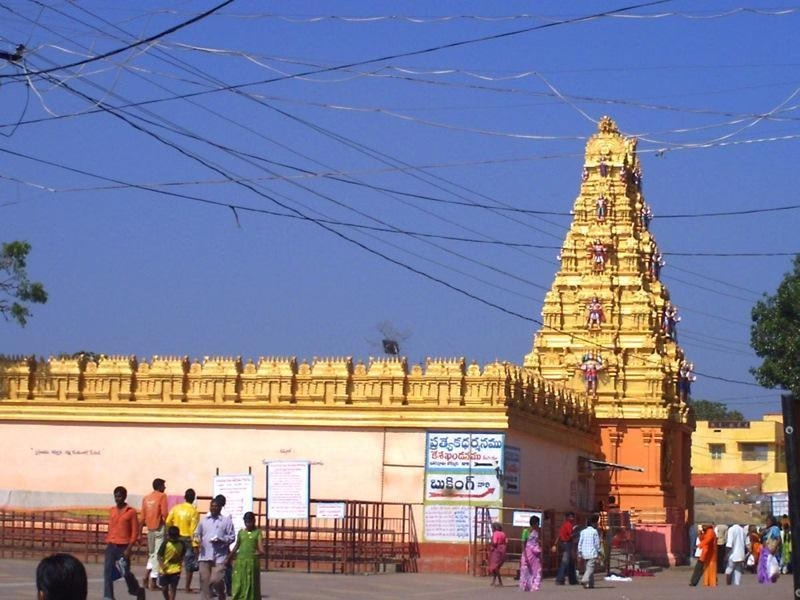
The temple architecture is a distinctive blend of traditional South Indian styles, adapted to the local Telangana landscape.
Style & Layout
While the temple does not strictly follow the classical Nagara or Dravida canons rigidly, it exhibits strong elements of Vastu Shastra. The sanctum (Garbhagriha) is oriented such that the deity faces North. Uniquely, the idol of Anjaneya Swamy features Narasimha Vaktram (the face of Lord Narasimha) and holds the Shankhu (Conch) and Chakra (Discus), linking him closely to the avatar of Vishnu.
Idols & Sculptures
Apart from the central Anjaneya Swamy idol, the complex houses shrines for:
- Sri Venkateswara Swamy
- Alwar (Sri Vishvaksena)
- Lakshmi Ammavaru
The external walls of the Garbhagriha bear the Silasasana (stone inscriptions) that verify the lineage of the original donors.
_
4. Darshan & Ritual Logistics (2026 Schedule)
The rituals at Kondagattu are performed strictly according to the Chatada Sri Visnava Agama Sampradayam. This ensures the ancient purity of the worship methods.
Daily Timings
While timings may vary slightly during festivals, the standard schedule is as follows:
| Session | Timings |
|---|---|
| Morning Darshan | 05:00 AM – 12:00 PM |
| Afternoon Break | 12:00 PM – 03:00 PM |
| Evening Darshan | 03:00 PM – 08:00 PM |
Key Sevas & Online Booking
Devotees can perform various Sevas (rituals) to fulfill their vows. The most prominent is the 40-day Diksha, but shorter durations (11 days, 21 days) are also available.
Primary Rituals:
- Abhishekam: Performed with water and sacred items. It is believed to wash away sins.
- Chandanam Distribution: A unique practice here involves taking Chandanam (sandalwood paste) from the left hand bowl of the deity. This is considered highly auspicious.
Online Booking:
Currently, devotees are advised to check the TTD (Telangana Tourism Department) or the specific district administration portals for the latest online booking links for Special Entry Darshan or Sevas as the system is digitalized for 2026.
2026 Festival Dates
- Sri Rama Navami: April 6, 2026
- Hanuman Jayanti: April 12, 2026 (Chaitra Purnima)
- Venkateswara Swamy Kalyanam: Dates as per Telugu Calendar (Vaikuntha Ekadashi equivalent).
5. Practical Visitor Guidance
Dress Code & Rules
- Attire: Traditional Indian dress is mandatory (Dhoti/Saree/Shirt/Trousers). Avoid modern clothing like jeans/t-shirts inside the sanctum.
- Photography: Strictly prohibited inside the Garbhagriha and inner premises. Use of mobile phones is restricted near the sanctum.
- Lockers: Mobile lockers are available at the entrance for devotees to deposit electronic devices.
Crowd Management & Seasonal Advice
The temple attracts thousands daily.
- Best Time to Visit: Weekdays (Tuesday and Saturday are auspicious but crowded). Early morning (5:30 AM – 7:00 AM) offers a peaceful darshan.
- Seasonal Tip: During May and June, the region experiences high heat. It is advisable to carry a water bottle and wear head coverings while queuing. Monsoon (July-Sept) brings lush greenery to the hills but requires caution on the ghats.
6. Pilgrimage Connectivity
How to Reach
Kondagattu is located in Muthyumpeta village, Mallial mandal, approximately 35 km from Karimnagar and 16 km from Jagitial.
- By Road:
- From Karimnagar: Take the road towards Jagitial via CSI Hospital and District Court. (Approx 50 mins).
- From Jagitial: Near Jagitial Cheruvu, take the Y-junction towards Karimnagar. The temple is on the right side.
- By Rail: The nearest railway station is Jagitial (JGL) (16 km) or Karimnagar (KRR) (35 km).
- By Air: The nearest airport is Rajiv Gandhi International Airport, Hyderabad (approx. 200 km / 4 hours drive).
Nearby Sacred Sites
- Kotagallu Temple (Kotagallu Gattu): A nearby hill temple dedicated to Lord Shiva.
- Karimnagar Pochamma Temple: A significant local deity shrine in Karimnagar city.
- Kaleshwaram Temple: Though farther away (approx 100 km), it is a major Triveni Sangam pilgrimage site often combined with this trip.
7. Frequently Asked Questions (FAQs)
Is there a VIP darshan entry available?
While there are provisions for special entry, the temple administration emphasizes equality among devotees. However, elderly citizens and differently-abled visitors are often given priority access. Online booking for special darshan (if available for the year) is recommended.
What is the significance of the Chandanam (Sandalwood paste)?
The Chandanam is taken from the left hand bowl of the Swamy. It is not just a blessing but is believed to possess medicinal and spiritual properties. It is a custom for every pilgrim to take this as Prasadam.
Can we perform the 40-day ritual individually?
Yes, individuals or couples can perform the 40-day Diksha. It is usually performed on a continuous basis or by visiting the temple for 40 consecutive Tuesdays or Saturdays. It is advisable to consult the temple priest (Archaka) for the correct procedure.
Are there accommodation facilities available?
Basic guest houses and choultries are available in the vicinity of the temple, managed by the local administration and trusts. It is recommended to book accommodation in advance during festivals.
What is the contact number for the temple?
For current updates, devotees can contact the District Tourism Officer or the local Mandal Office of Jagitial. Specific landline numbers are often subject to change, so checking the official Telangana Tourism website is advised.
Is non-vegetarian food allowed near the temple?
Kondagattu is a holy site. Consumption of alcohol and non-vegetarian food is strictly prohibited within the temple complex and the surrounding vicinity. Free Annadanam (community meals) is often provided during festivals.
📖 Related: Kalpeshwar Temple History and Darshan Timings: The Eternal Panch Kedar
_