
Contents
- 1 Introduction & Spiritual Essence
- 2 Historical Origins & Scriptural Legend
- 3 Architectural Marvels
- 4 Darshan & Ritual Logistics
- 5 Practical Visitor Guidance
- 6 Pilgrimage Connectivity
- 6.1 How to Reach
- 6.2 Nearby Sacred Sites
- 6.3 Frequently Asked Questions (FAQs)
- 6.4 1. Is there a VIP darshan entry available?
- 6.5 2. What is the significance of the cave inside the sanctum?
- 6.6 3. Are there accommodation facilities available?
- 6.7 4. Is non-vegetarian food allowed in the area?
- 6.8 5. What is the best time to visit Ananthagiri Hills?
- 6.9 Contact Details
Introduction & Spiritual Essence
Nestled amidst the lush greenery of the Ananthagiri Hills, the Sri Anantha Padmanabha Swamy Temple stands as a beacon of tranquility and divine grace in the Ranga Reddy district of Telangana. Dedicated to Lord Vishnu, specifically in his Anantha Padmanabha form (reclining on the serpent Adishesha), this shrine is one of the most significant spiritual sites near Hyderabad.
The presiding deity is a Swayambhu (self-manifested) Saligrama Shila, believed to have been worshipped by the great sage Markandeya Rishi. Unlike many modern structures, the temple radiates an ancient, primal energy attributed to the sacred cave within the Garbhagriha (sanctum sanctorum).
Phalaśruti: The Benefits of Visit
Devotees flock here seeking liberation from worldly burdens. According to local tradition and the Skanda Purana, visiting this temple yields specific spiritual benefits:
- Cleansing Ancestral Karma: It is believed that prayers offered here help resolve ancestral debts and bring peace to departed souls.
- Relief from Shani Dosha: Lord Vishnu, in this form, protects devotees from the malefic effects of planetary afflictions.
- Removal of Fears & Anxiety: The serene atmosphere and the Swayambhu murti are known to instill immense mental peace and courage.
Historical Origins & Scriptural Legend
The history of the Ananthagiri Temple is woven with mythology, local folklore, and historical patronage. While the exact Shasana (inscription) dating is debated, the spiritual lineage traces back thousands of years.
The Legend of Markandeya Rishi
According to the Skanda Purana, the sage Markandeya Rishi performed rigorous Yoga Sadhana in these hills during the Dvapara Yuga (approx. 700 BC). Known for his devotion to Lord Vishnu, Markandeya wished to take a holy dip in the Ganges at Kashi every Dwadasi (12th day of the lunar cycle).
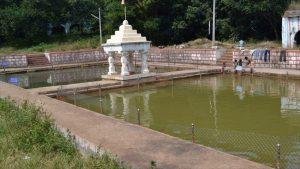
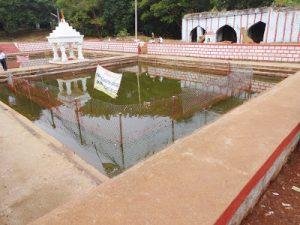
Tradition holds that one day, delayed by circumstances, he was distraught. Lord Vishnu, moved by his devotion, appeared in his dreams and miraculously channeled the Ganges to flow through a small cave right next to his abode. Thus, the Pushkarini (temple tank) here is considered a manifestation of the holy river.
Patronage and Expansion
The structural fortification of the temple is attributed to the Rajah of Mirzapur (a local feudatory under the Nizams) approximately 400 years ago. History records suggest that the Nizam Nawabs frequented these hills for hunting expeditions and retreat. Legend states that Lord Vishnu appeared in the Nawab’s dream, instructing him to build the temple. Consequently, the main sanctum and surrounding mandapas were constructed under royal patronage, blending local devotion with architectural patronage.
Architectural Marvels
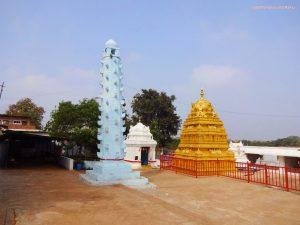
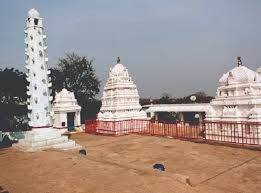
The temple exemplifies the classic Dravidian style of architecture, characterized by pyramidal towers (Vimana) and enclosed courtyards. However, the unique feature of Ananthagiri is the integration of natural cave elements into the structural design.
- The Sanctum (Garbhagriha): The central shrine houses the Swayambhu Saligrama Shila. A notable feature is a small cave visible to the left inside the sanctum, directly linking to the legend of Markandeya Rishi.
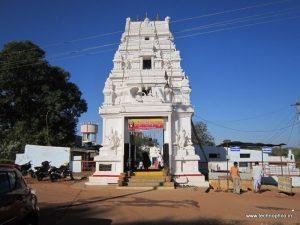
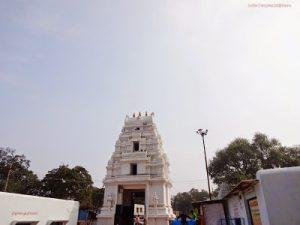
- The Gopuram: The towering Rajagopuram (main entrance gateway) is visible from the approach road, adorned with colorful sculptures of deities.
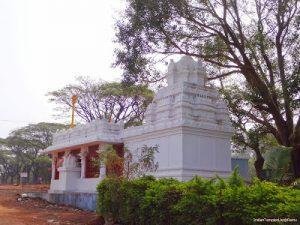
- Mandapas: The Maha Mandapa features sturdy stone pillars with intricate carvings depicting scenes from the Puranas.
- Natural Setting: The temple is harmoniously integrated into the rocky terrain of the Ananthagiri Hills, a designated biodiversity hotspot in the Deccan Plateau.
[Note: Placeholder for architectural visualization]
Imagine the interplay of stone and nature, where the temple walls rise directly from the ancient rock formations.
Darshan & Ritual Logistics
Planning your visit requires understanding the daily rituals and seasonal variations. The temple follows standard Agamic rituals dedicated to Lord Vishnu.
Daily Timings (2026 Schedule)
The temple is generally open year-round, though timings may vary slightly during peak monsoon or festival seasons.
| Session | Timings | Activity |
|---|---|---|
| Morning | 06:00 AM – 12:00 PM | Suprabhatam, Abhishekam, Alankaram |
| Evening | 04:00 PM – 08:30 PM | Darshan, Deeparadhana, Pallaki Seva |
*Note: Temple doors may close briefly for ritual rest between 12:00 PM and 4:00 PM. Please check local notices upon arrival.
Key Sevas & Booking
To participate in specific rituals, booking is recommended, especially on weekends and holidays.
- Suprabhatam: Early morning chanting to awaken the deity.
- Abhishekam: Ritual bathing of the deity (usually performed on Ekadashi days).
- Archana: Offering of flowers and recitation of names (can be done individually).
- Kalyanam (Wedding Ceremony): Conducted on specific festival days.
Online Booking: While the temple management is managed by the Endowments Department of Telangana, online booking availability is frequently updated. Visit the official telanganatemples.in portal or the specific Ananthagiri Temple page for real-time booking links for the year 2026.
2026 Festival Calendar
- Vaikuntha Ekadashi: January 10, 2026 (Major festival; expect heavy crowds).
- Brahmotsavam: April 20 – April 28, 2026 (Annual temple festival).
- Rathotsavam (Chariot Festival): April 26, 2026.
- Janmashtami: August 14, 2026.
- Deepavali: November 2026 (Special Lakshmi Puja).
Practical Visitor Guidance
To ensure a serene darshan experience, adhere to the following guidelines:
- Dress Code: Traditional attire is mandatory. Men should wear Dhoti or Pants with a Shirt (no shorts/t-shirts). Women should wear Saree, Salwar Kameez, or traditional Lehenga.
- Photography & Mobiles: Photography inside the sanctum is strictly prohibited. Mobile phones should be kept silent; lockers are available near the ticket counter.
- Crowd Management:
- Best Time: Weekday mornings (6:00 AM – 8:00 AM) are least crowded.
- Seasonal Advice: Ananthagiri is cool throughout the year, but summer (April–June) can be warm during the day. Carry a water bottle. Monsoon (July–September) enhances the beauty but makes the steps slippery—wear rubber-soled footwear.
- Accessibility: There are steps leading from the parking area to the temple. While manageable for most, those with severe mobility issues may require assistance.
Pilgrimage Connectivity
How to Reach
Ananthagiri Hills is located approximately 25 km from Vikarabad and 85 km from Hyderabad.
- By Air: Rajiv Gandhi International Airport (HYD) is the nearest airport (approx. 1.5 hours drive via ORR).
- By Rail: The nearest railway station is Vikarabad Junction (approx. 12 km). From there, auto-rickshaws and buses are available to the temple.
- By Road: Drive via NH 65 (Hyderabad–Mumbai Highway) taking the exit at Ankushapur towards Vikarabad. The roads are well-paved and scenic, winding through the forest reserve.
Nearby Sacred Sites
Extend your pilgrimage with these nearby destinations:
- Temple of Lord Shiva (Outside Complex): Located just outside the main Sri Lakshmi Anantha Padmanabhaswamy Temple premises (mentioned in local guides).
- Chilkur Balaji Temple: Known as the “Visa Balaji,” located about 40 km away on the outskirts of Hyderabad.
- Kotla Fort: A historical ruin near Vikarabad, offering a blend of history and nature trekking.
Frequently Asked Questions (FAQs)
1. Is there a VIP darshan entry available?
Yes, special darshan tickets are available at the counter for a nominal fee (usually ₹20–₹50). However, for genuine VIP protocols, one must obtain prior permission from the Telangana Endowments Department.
2. What is the significance of the cave inside the sanctum?
The cave is believed to be the pathway used by Markandeya Rishi to travel spiritually to the Ganges. It symbolizes the direct connection between the divine and the devotee’s heart.
3. Are there accommodation facilities available?
The temple trust runs basic choultries (guest houses) for pilgrims. Additionally, private resorts like Harita Valley View Resort are available in the vicinity. It is advisable to book accommodation in advance during festivals.
4. Is non-vegetarian food allowed in the area?
Strictly No. Ananthagiri is a vegetarian zone. Alcohol and non-vegetarian food are prohibited within the temple premises and nearby hills.
5. What is the best time to visit Ananthagiri Hills?
The post-monsoon season (October to February) offers the best weather with lush greenery and cool breezes, making it ideal for darshan and nature walks.


Contact Details
Sri Anantha Padmanabha Swamy Temple
Ananthagiri Hills, Vikarabad
Ranga Reddy District, Telangana
Phone: (To be updated by local administration)
Recent Posts

Shri Kaamkoteeshwar Mandir, Varanasi – History & Significance
In the heart of Kashi, the eternal city of Lord Shiva, where the Ganges flows with celestial grace, stands the Shri Kaamkoteeshwar Mandir. This sacred Sannidhi is not merely a temple but a profound spiritual bridge between the Northern…

ओ सांवरे तूने ही मुझको संभाला – Lyrics & Meaning
ओ सांवरे तूने ही मुझको संभाला – A Prayer to Shyam Origin & Spiritual Essence Why This Bhajan Resonates Devotees chant this when overwhelmed by life’s storms—the refrain ‘तूने ही मुझको संभाला’ is the soul’s sigh of relief: “You…

कथा ये है महाराज मेरे की – Lyrics & Meaning
कथा ये है महाराज मेरे की छत्रपति संभाजी महाराज – A Prayer to Chhatrapati Sambhaji Maharaj Origin & Spiritual Essence Why This Bhajan Resonates Devotees chant this when their spirit feels tested—its powerful refrain “महाराज मेरे” is a soul’s…

Rigveda Samhita Yathartha Anuvada (ऋग्वेद संहिता यथार्थ अनुवाद) – Complete Set with Anvayartha & Hindi/English Translation
The Rigveda is the oldest surviving scripture of humanity and the foundational text of Sanātana Dharma. For serious students, scholars, UPSC aspirants studying ancient Indian history, Sanskrit learners, and spiritual seekers, a precise and grammatically structured translation is indispensable.…

आना भी अकेला है जाना भी अकेला है – Lyrics & Meaning | BharatTemples
आना भी अकेला है जाना भी अकेला है – A Prayer to the Divine Witness Origin & Spiritual Essence Why This Bhajan Resonates Devotees turn to this bhajan in moments of deep reflection—when life’s attachments begin to ache. The…

माता शेरावाली के द्वार जो भी जाता है – Lyrics & Meaning
माता शेरावाली के द्वार जो भी जाता है – A Prayer to Maa Sherawali Origin & Spiritual Essence Why This Bhajan Resonates Devotees turn to this bhajan in times of fear or uncertainty—its promise that no one leaves Maa’s…

मार लेना सपणी उबार लेणा भवरा – Lyrics & Meaning
मार लेना सपणी उबार लेणा भवरा – A Prayer to the Divine Beloved Origin & Spiritual Essence Why This Bhajan Resonates Devotees chant this in moments of deep vulnerability—its cry of “मार लेना सपणी, उबार लेणा भवरा” is the…

हमें श्याम सुंदर भरोसा तुम्हारा – Lyrics & Meaning
हमें श्याम सुंदर भरोसा तुम्हारा – A Prayer to Shyam Sundar Origin & Spiritual Essence Why This Bhajan Resonates Devotees chant this when feeling alone—its refrain ‘de do sahara’ is the soul’s cry for divine support. Lyrics in Hindi…

Mere Satguru Ne Di Thi Davai Lyrics in Hindi & Meaning
Mere Satguru Ne Di Thi Davai: Invoking the Guru’s Liberating Wisdom This soul-stirring bhajan venerates the Satguru (True Spiritual Master) as the divine physician who dispenses the only remedy for life’s deepest sufferings. Composed by Sant Karmaveer Tufani, it…

Janm Diyo Thari Maa Dukh Dekhiyo Lyrics in Hindi & Meaning
जन्म दियो थारी माँ दुख देखियो (Maa’s Grief Upon Birthing You) This soul-stirring Chetavani Bhajan (admonitory hymn) is addressed to the Divine Mother (Maa) – a call for repentance when children forget their filial duties in the dark age…