
Contents
- 1 The Definitive Pilgrimage Guide to Hanumangarh, Ayodhya (2026)
- 1.1 1. Introduction & Spiritual Essence
- 1.2 2. Historical Origins & Scriptural Legend
- 1.3 3. Architectural Marvels
- 1.4 4. Darshan & Ritual Logistics (2026 Update)
- 1.5 5. Practical Visitor Guidance
- 1.6 6. Pilgrimage Connectivity
- 1.7 7. Frequently Asked Questions (FAQ)
- 1.8 Preserving the Sanctity of Ayodhya
- 1.9 Contact Details
The Definitive Pilgrimage Guide to Hanumangarh, Ayodhya (2026)
By BharatTemples.com Heritage Team
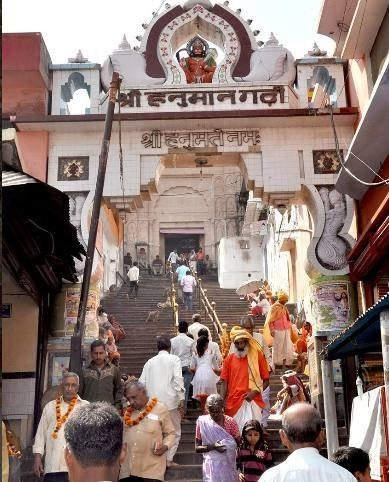
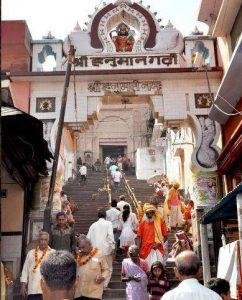
Standing watch over the sacred precincts of Lord Rama’s Janmabhoomi, the Hanumangarh Temple in Ayodhya is not merely a structure of stone but a living testament to devotion. Perched atop a hillock, this ancient fortress-temple is the spiritual heartbeat of Ayodhya. For the devotee, a journey to Ayodhya is incomplete without the ascent of its 76 sacred steps, seeking the blessings of Sankat Mochan (the reliever of troubles).
1. Introduction & Spiritual Essence
Primary Deity: Lord Hanuman (Anjaneya).
Form: Bal Hanuman seated on the lap of Maa Anjani.
Alternate Name: Hanuman Garhi (Fort of Hanuman).
Phalaśruti (The Fruit of Visiting):
According to ancient scriptures and local tradition, visiting Hanumangarh offers specific spiritual benefits:
- Removal of Obstacles: As the guardian of Ayodhya, Lord Hanuman is believed to remove all hurdles (Vighnas) from the devotee’s path.
- Cleansing of Karma: It is widely held that offering prayers here washes away negative karmic imprints, particularly those affecting one’s courage and vitality.
- Protection of Ancestors: A visit here is traditionally believed to grant peace to ancestors (Pitru Dosha Nivaran), ensuring their safe passage to the divine realm.
2. Historical Origins & Scriptural Legend
Timeline: The current structure is widely attributed to the 18th Century (approx. 1750-1800 AD), built by the Nawab of Awadh. However, archaeological evidence suggests the site’s sanctity dates back to the Treta Yuga.
The Legend of the Guardian:
Tradition holds that Hanumangarh marks the exact spot where Lord Hanuman stayed while guarding the Ram Kot (the fortress of Lord Rama) during his exile. It is said that Hanuman ji meditated here to gain the strength required to carry the Sanjeevani mountain.
Local Sthala Purana:
According to temple records and oral traditions, before constructing the grand Ram Mandir in Ayodhya, Lord Rama instructed Hanuman to find a resting place. Hanuman, wishing to stay close to Rama, chose this elevated ground. The name “Hanuman Garhi” reflects this fortified sanctuary. It is a deeply held custom that devotees must visit Hanumangarh to seek Hanuman’s permission before having the Darshan of Shri Ram Lalla.
3. Architectural Marvels
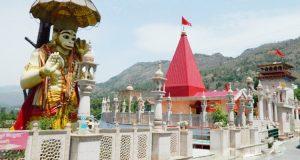
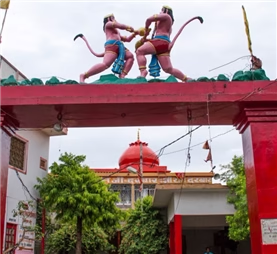
The Hanumangarh temple complex is a masterpiece of Awadhi Architecture, blending elements of fortification and traditional Nagara style temple construction.
Key Features:
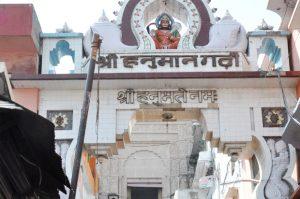
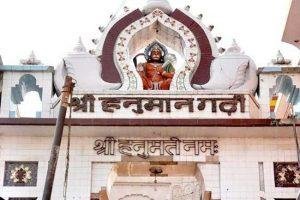
- The Fortification: The temple is built in the shape of a four-sided fort (Chaukhandi) with circular bastions at each corner, symbolizing Hanuman’s role as a protector.
- The Ascent: The climb consists of 76 steep steps, representing a spiritual test of the devotee’s dedication.
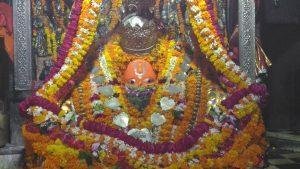
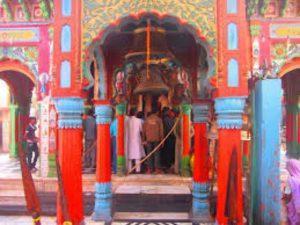
- Sanctum Sanctorum: The inner shrine houses the Murti of Maa Anjani holding Bal Hanuman. Unlike typical depictions, here Hanuman is depicted as a child, symbolizing innocence and divine strength.
- Viewpoint: The temple platform offers a panoramic view of the Ram Janmabhoomi, making it a prime location for sunset viewing and photography.



4. Darshan & Ritual Logistics (2026 Update)
To ensure a seamless spiritual experience, we have compiled the operational timings and major festivals for 2026. Note that timings may vary slightly during major festivals.
Daily Darshan Timings
| Session | Timings | Activity |
|---|---|---|
| Morning | 05:00 AM – 12:00 PM | Mangala Aarti, Abhishekam, General Darshan |
| Afternoon | 12:00 PM – 03:00 PM | Temple Rest / Cleaning |
| Evening | 04:00 PM – 09:00 PM | Shayan Aarti, Darshan |
Key Sevas & Online Booking
Devotees can book the following Sevas online through the official Shri Ram Janmabhoomi Teerth Kshetra portal or associated temple trust websites:
- Special Abhishekam: Performed with milk, honey, and ghee.
- Sunderkand Path: Recitation for relief from obstacles.
- Chola Offering: Dressing the deity in ceremonial cloth.
Note: Online slots for 2026 festivals open 60 days in advance.
2026 Major Festival Dates
- Hanuman Jayanti: Wednesday, April 15, 2026 (Chaitra Purnima).
- Ram Navami: Saturday, April 5, 2026 (Strict security expected).
- Diwali: Tuesday, November 10, 2026 (Deepotsav celebrations).
- Shivratri: Friday, February 27, 2026 (Special Aarti).
5. Practical Visitor Guidance
Dress Code: Traditional Indian attire is mandatory. Men should wear Dhoti/Kurta or full-length trousers and shirts. Women should wear Saree, Salwar Kameez, or traditional suits. Western attire (shorts/jeans/t-shirts) is strictly prohibited inside the temple premises.
Photography & Electronics: Photography is prohibited inside the inner sanctum. Mobile phones are allowed but must be kept on silent mode. Large bags and cameras may need to be deposited at the cloakroom facility provided at the entrance of the temple complex.
Crowd Management & Seasonal Advice:
- Best Time to Visit: October to March (Pleasant weather).
- Peak Hours: Avoid 7:00 AM – 9:00 AM and 6:00 PM – 8:00 PM to skip heavy crowds.
- Summer (May-June): Ayodhya can be extremely hot. Carry a water bottle and cover your head during the ascent of the 76 steps.
- Accessibility: While the climb is steep, a side ramp is available for senior citizens and differently-abled devotees.
6. Pilgrimage Connectivity
How to Reach Hanumangarh
The temple is located in the Sai Nagar area of Ayodhya, easily accessible via the main Ayodhya Dham highway.
- By Air: The nearest airport is Maharishi Valmiki International Airport, Ayodhya Dham (AYJ) (approx. 15 km). Alternatively, Chaudhary Charan Singh Airport, Lucknow (LKO) is 150 km away.
- By Rail: Ayodhya Dham Junction (AY) is the primary railway station, just 6 km from Hanumangarh. Ayodhya Cantt (AYC) is also nearby.
- By Road: Ayodhya is connected via NH 27 and NH 330. Direct bus services are available from Lucknow, Faizabad, and Gorakhpur.
Nearby Sacred Sites (The Ayodhya Circuit)
- Shri Ram Janmabhoomi Mandir: Located less than 2 km from Hanumangarh.
- Kanak Bhavan Temple: Famous for its stunning architecture and idols of Rama-Sita.
- Saryu Ghat: Essential for the holy dip and evening Ganga Aarti.
7. Frequently Asked Questions (FAQ)
Is there a VIP darshan entry available at Hanumangarh?
Generally, Hanumangarh follows a queue system for all devotees. However, during large festivals, special passes are issued by the district administration for dignitaries. For regular devotees, booking a Seva (like Abhishekam) often allows for a quicker entry through a separate gate.
What is the significance of the 76 steps at Hanumangarh?
The 76 steps represent a spiritual climb. It is believed that Lord Hanuman lived here to protect Lord Rama’s birthplace. Ascending these steps is an act of surrendering one’s ego to the divine will.
Is there a separate entry for senior citizens?
Yes, the temple trust provides assistance for senior citizens and differently-abled persons. A ramp is available on one side of the steps, and volunteers are present to assist with wheelchairs during peak hours.
What are the timings for the evening Aarti?
The Shayan Aarti (Sleeping Aarti) typically takes place around 8:30 PM to 9:00 PM, though exact timings can shift seasonally. It is advisable to check the official trust website or local notices on the day of visit.
Can we leave luggage safely while visiting?
Yes, official cloakrooms and locker facilities are available near the temple entrance and the Ram Janmabhoomi complex. Do not leave belongings unattended in vehicles.
Preserving the Sanctity of Ayodhya
As we step into 2026, Ayodhya undergoes a divine transformation. While infrastructure grows, the soul of Hanumangarh remains rooted in the ancient soil of devotion. We invite you to visit with reverence, follow the traditions, and immerse yourself in the eternal grace of Sankat Mochan.
Jai Shri Ram! Jai Hanuman!
Contact Details
Official Address: Sai Nagar, Ayodhya, Uttar Pradesh 224123
Recent Posts

Shri Kaamkoteeshwar Mandir, Varanasi – History & Significance
In the heart of Kashi, the eternal city of Lord Shiva, where the Ganges flows with celestial grace, stands the Shri Kaamkoteeshwar Mandir. This sacred Sannidhi is not merely a temple but a profound spiritual bridge between the Northern…

ओ सांवरे तूने ही मुझको संभाला – Lyrics & Meaning
ओ सांवरे तूने ही मुझको संभाला – A Prayer to Shyam Origin & Spiritual Essence Why This Bhajan Resonates Devotees chant this when overwhelmed by life’s storms—the refrain ‘तूने ही मुझको संभाला’ is the soul’s sigh of relief: “You…

कथा ये है महाराज मेरे की – Lyrics & Meaning
कथा ये है महाराज मेरे की छत्रपति संभाजी महाराज – A Prayer to Chhatrapati Sambhaji Maharaj Origin & Spiritual Essence Why This Bhajan Resonates Devotees chant this when their spirit feels tested—its powerful refrain “महाराज मेरे” is a soul’s…

Rigveda Samhita Yathartha Anuvada (ऋग्वेद संहिता यथार्थ अनुवाद) – Complete Set with Anvayartha & Hindi/English Translation
The Rigveda is the oldest surviving scripture of humanity and the foundational text of Sanātana Dharma. For serious students, scholars, UPSC aspirants studying ancient Indian history, Sanskrit learners, and spiritual seekers, a precise and grammatically structured translation is indispensable.…

आना भी अकेला है जाना भी अकेला है – Lyrics & Meaning | BharatTemples
आना भी अकेला है जाना भी अकेला है – A Prayer to the Divine Witness Origin & Spiritual Essence Why This Bhajan Resonates Devotees turn to this bhajan in moments of deep reflection—when life’s attachments begin to ache. The…

माता शेरावाली के द्वार जो भी जाता है – Lyrics & Meaning
माता शेरावाली के द्वार जो भी जाता है – A Prayer to Maa Sherawali Origin & Spiritual Essence Why This Bhajan Resonates Devotees turn to this bhajan in times of fear or uncertainty—its promise that no one leaves Maa’s…

मार लेना सपणी उबार लेणा भवरा – Lyrics & Meaning
मार लेना सपणी उबार लेणा भवरा – A Prayer to the Divine Beloved Origin & Spiritual Essence Why This Bhajan Resonates Devotees chant this in moments of deep vulnerability—its cry of “मार लेना सपणी, उबार लेणा भवरा” is the…

हमें श्याम सुंदर भरोसा तुम्हारा – Lyrics & Meaning
हमें श्याम सुंदर भरोसा तुम्हारा – A Prayer to Shyam Sundar Origin & Spiritual Essence Why This Bhajan Resonates Devotees chant this when feeling alone—its refrain ‘de do sahara’ is the soul’s cry for divine support. Lyrics in Hindi…

Mere Satguru Ne Di Thi Davai Lyrics in Hindi & Meaning
Mere Satguru Ne Di Thi Davai: Invoking the Guru’s Liberating Wisdom This soul-stirring bhajan venerates the Satguru (True Spiritual Master) as the divine physician who dispenses the only remedy for life’s deepest sufferings. Composed by Sant Karmaveer Tufani, it…

Janm Diyo Thari Maa Dukh Dekhiyo Lyrics in Hindi & Meaning
जन्म दियो थारी माँ दुख देखियो (Maa’s Grief Upon Birthing You) This soul-stirring Chetavani Bhajan (admonitory hymn) is addressed to the Divine Mother (Maa) – a call for repentance when children forget their filial duties in the dark age…