
Contents
Introduction & Spiritual Essence
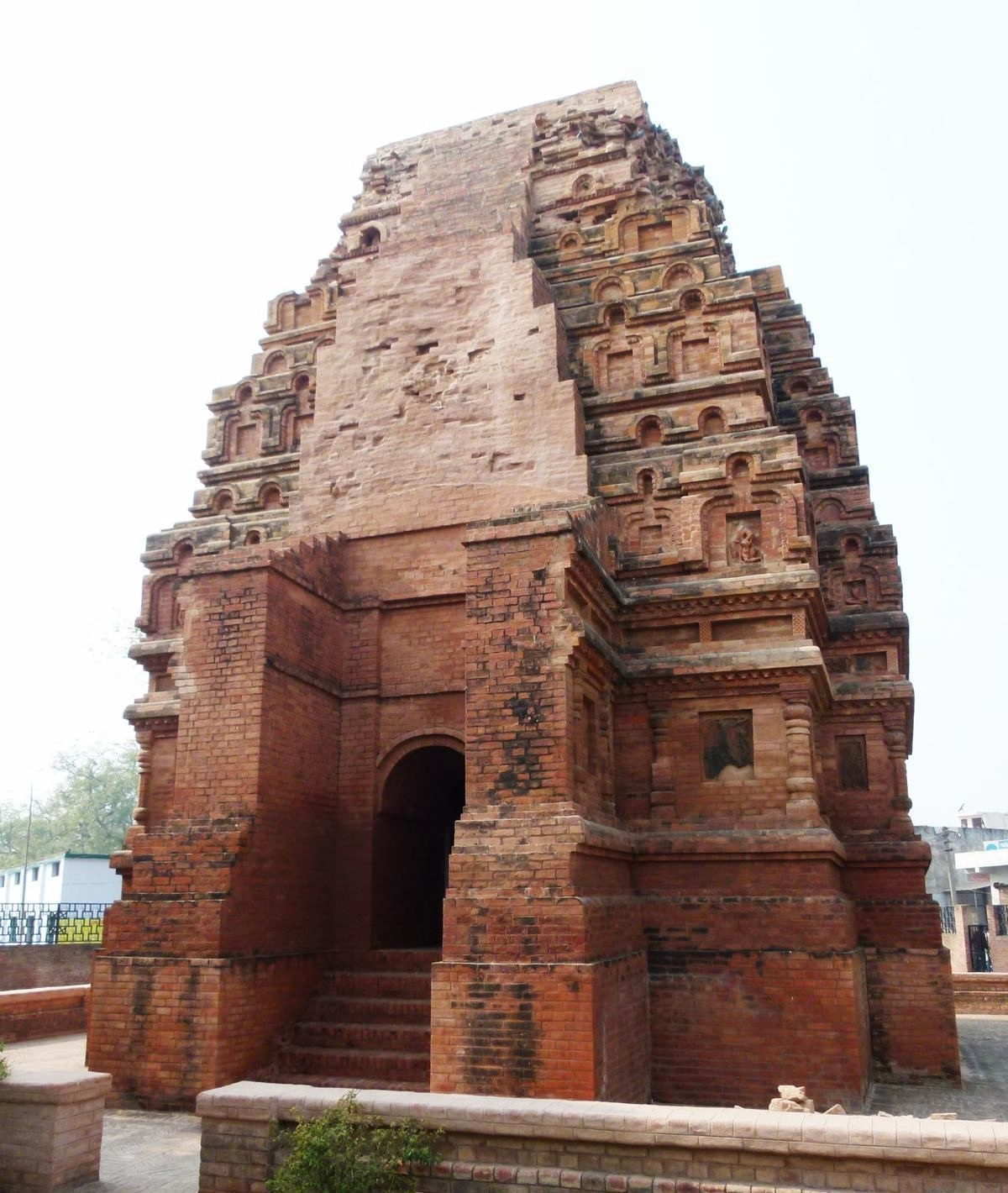
The Bhitargaon Temple, nestled in the quiet village of Bhitargaon in the Kanpur district of Uttar Pradesh, stands as a colossal testament to the architectural and spiritual zenith of the Gupta Empire. While modern devotion often focuses on intricate stone carvings, this shrine is revered as the largest surviving ancient brick temple from the Gupta period in India. Dedicated to Lord Vishnu, the temple is a rare architectural anomaly—constructed entirely of baked brick and terracotta, yet designed to emulate the grandeur of stone temples.
Deity and Form: The primary deity is a manifestation of Lord Vishnu. Historically, the temple is classified as a Sarvatobhadra (an open structural style). While the inner sanctum originally housed a deity, the spiritual essence today resides in the structure itself—a geometric representation of the cosmos built to withstand the ravages of time.
Phalaśruti (Spiritual Benefits): According to local beliefs and scriptural tradition, visiting Bhitargaon is spiritually equivalent to visiting the ancient centers of learning and worship established by the early Guptas. Devotees believe that paying obeisance here helps in:
1. Strengthening Resolve: As a temple built on the principles of structural stability (akin to Vastu), it aids devotees in grounding their spiritual aspirations.
2. Connecting with Heritage: Unlike temples merely for ritual, Bhitargaon serves as a direct link to the “Golden Age” of Indian history, allowing devotees to absorb the intellectual and aesthetic vibrations of the 5th century CE.
Historical Origins & Scriptural Legend
Chronology and Builders: The temple dates back to the 5th century CE (approx. 400–500 AD). It is attributed to the Gupta Dynasty, specifically the period between the reigns of Chandragupta II and early post-Gupta eras. Unlike later temples commissioned by specific kings for personal glory, Bhitargaon is believed to have been built by a guild of builders or a wealthy community patronizing the Gupta court, known for their patronage of arts and sciences.
Local Legend (Sthala Purana): Local folklore adds a layer of mystique to the historical narrative. Tradition holds that the area was once known as “Pushp-pur” (City of Flowers) in ancient times. The village of Bhitargaon is said to derive its name from “Bhitari Gaon” (Inner Village), forming the residential center of the ancient settlement. A popular local legend narrates that the temple was constructed overnight by divine forces, or that the bricks were laid using a technique of interlocking that defies conventional masonry, symbolizing the indestructible nature of the divine soul.
Renaissance of the Site: For centuries, the temple remained buried under debris, having suffered structural collapse likely due to seismic activity or inundation. It was excavated and restored in the late 19th century by the Archaeological Survey of India (ASI), revealing the intricate terracotta panels that had been protected beneath the earth.
Architectural Marvels
The Bhitargaon Temple is a masterpiece of Indo-Gothic brick architecture. It represents a unique experimental phase in Indian temple construction before the standardization of stone masonry.
Style and Structure: The temple follows a basic Nagara style layout but with a distinct brick-centric approach. It consists of a square sanctum (Garbhagriha) with a high ceiling and a portico (Mandapa). The structure originally featured a high plinth and a strikingly tall curvilinear Shikhara (tower), the remnants of which are still visible.
Key Architectural Features:
- Interlocking Brickwork: The most technologically advanced feature is the use of double-layered burnt bricks laid with a special lime mortar. The bricks are interlocked in a way that provides exceptional resistance to earthquakes—a technique highly unusual for the 5th century.
- Terracotta Panels: The exterior walls were once adorned with intricate terracotta panels depicting scenes from the Puranas and Vishnu Purana. Notable motifs include the Navagraha (nine planets), Dikpalas (guardians of directions), and floral geometrical patterns typical of Gupta art.
- The Shikhara: The temple features one of the earliest known examples of a curvilinear tower (Shikhara) in North India. Though partially ruined, the verticality of the tower reflects the architectural transition from the flat-roofed structures of the pre-Gupta era to the soaring towers of the medieval period.
| Date built: | 5th Century CE (Gupta Period) |
|---|---|
| Deity: | Lord Vishnu |
| Architectural style: | Indo-Gothic Brick (Nagara influence) |
| Major festivals | Maha Shivaratri, Diwali, Navaratri |
| Locale: | Bhitargaon Village |
| District:: | Kanpur |
| Address: | Bhitargaon, Kanpur, Uttar Pradesh 209202 |
| Phone | +91 512 266 0174 (ASI Office) |
Darshan & Ritual Logistics
While Bhitargaon is a historical monument protected by the ASI, it remains an active place of worship for the local community. Rituals are conducted with deep reverence, focusing on the preservation of the sanctity of the site.
| Darshan / Activity | Timings (Daily) | Notes |
|---|---|---|
| Morning Darshan | 06:00 AM – 12:00 PM | Best time for quiet reflection. |
| Evening Darshan | 03:00 PM – 06:00 PM | Lighting of lamps (Aarti) occurs during this time. |
| Archaeological Museum | 10:00 AM – 05:00 PM | Closed on Fridays. Requires separate entry ticket. |
Sevas (Rituals):
1. Abhishekam: Ritual bathing of the deity. Usually performed on Mondays and special days.
2. Archana: Recitation of holy names. Can be performed individually or in groups.
3. Online Booking: Currently, the Bhitargaon Temple does not have a dedicated online portal for seva booking. Devotees are encouraged to visit the ASI office on-site or contact local priests for scheduling specific rituals.
Festivals in 2026:
- Maha Shivaratri: February 26, 2026 (Though dedicated to Vishnu, the temple participates in regional celebrations).
- Diwali: November 1, 2026 (The temple is illuminated with traditional earthen lamps).
- Navaratri: September 22 – October 1, 2026 (Special daily recitations of Durga Saptashati).
- Deepavali Brahmotsavam: A week-long celebration featuring a procession of the temple chariot.
Practical Visitor Guidance
Visiting a heritage site requires mindfulness. The Bhitargaon Temple is a protected monument, and strict rules apply to preserve its ancient brickwork.
Dress Code & Etiquette: Modest, traditional attire is recommended. Avoid tight-fitting clothes or revealing outfits. Footwear must be removed before entering the Mandapa area.
Photography & Mobiles: Photography is permitted in the outer courtyard. However, flash photography is strictly prohibited inside the sanctum to prevent damage to the terracotta panels. Mobile phones are allowed but should be on silent mode.
Crowd Management: Unlike major pilgrimage hubs, Bhitargaon offers a serene experience. However, during festivals, local crowds peak in the evening (4 PM – 6 PM). The best hours for a peaceful darshan and photography are early mornings (7 AM – 9 AM) on weekdays.
Accessibility: The main temple structure has steps leading to the mandapa. While the ground level is accessible via ramp in the outer area, the inner sanctum may pose challenges for wheelchair users due to heritage constraints.
Pilgrimage Connectivity
How to Reach:
- By Air: The nearest airport is Chaudhary Charan Singh International Airport, Lucknow (approx. 90 km). The second nearest is Kanpur Airport (approx. 50 km).
- By Rail: The nearest major railway junction is Kanpur Central (CNB), approximately 50 km away. From there, taxis and state transport buses are available to Ghatampur/Bhitargaon.
- By Road: Bhitargaon is located on the Kanpur-Ghatampur Highway. It is roughly 40 km from Kanpur city. Private cabs and UPSRTC buses run frequently to Ghatampur, from where local auto-rickshaws can reach the temple.
Nearby Sacred Sites (Pilgrimage Circuit):
1. Shri Venkateshwar Temple (Ghatampur): Located about 10-15 km away, this is a popular modern temple dedicated to Lord Balaji.
2. Kanpur Central (Bhuli Bhatiyari Temple): While returning to Kanpur, devotees often visit this ancient temple located deep within the forested area of the city.
3. Allen Forest Zoo (Kanpur Zoological Park): Although not a temple, it houses a revered Hanuman temple within its premises.
Photo Gallery


Frequently Asked Questions (FAQs)
1. What is the entry fee for Bhitargaon Temple?
There is no entry fee for general darshan. However, a nominal fee of ₹20 is charged for visiting the on-site Archaeological Museum, which is managed by the ASI.
2. Is photography allowed inside the temple?
Yes, photography is allowed in the exterior areas of the temple. However, photography is strictly prohibited inside the sanctum sanctorum and the museum to protect the artifacts and panels.
3. Is there a VIP darshan entry available?
As the temple is a protected monument and not a large-scale commercial pilgrimage center, there is no formal VIP ticket system. Darshan is generally accessible to all, with minimal waiting time.
4. What is the best time of year to visit?
The ideal time to visit is between October and March when the weather in Kanpur is pleasant. Summers (April–June) can be extremely hot, making brick-structure exploration uncomfortable.
5. Are non-Hindus allowed inside?
As a functioning place of Hindu worship, entry is generally restricted to Hindus. However, the Archaeological Survey of India treats the monument as a historical site; specific regulations should be checked with the local ASI superintendent.
Recent Posts

Shri Kaamkoteeshwar Mandir, Varanasi – History & Significance
In the heart of Kashi, the eternal city of Lord Shiva, where the Ganges flows with celestial grace, stands the Shri Kaamkoteeshwar Mandir. This sacred Sannidhi is not merely a temple but a profound spiritual bridge between the Northern…

ओ सांवरे तूने ही मुझको संभाला – Lyrics & Meaning
ओ सांवरे तूने ही मुझको संभाला – A Prayer to Shyam Origin & Spiritual Essence Why This Bhajan Resonates Devotees chant this when overwhelmed by life’s storms—the refrain ‘तूने ही मुझको संभाला’ is the soul’s sigh of relief: “You…

कथा ये है महाराज मेरे की – Lyrics & Meaning
कथा ये है महाराज मेरे की छत्रपति संभाजी महाराज – A Prayer to Chhatrapati Sambhaji Maharaj Origin & Spiritual Essence Why This Bhajan Resonates Devotees chant this when their spirit feels tested—its powerful refrain “महाराज मेरे” is a soul’s…

Rigveda Samhita Yathartha Anuvada (ऋग्वेद संहिता यथार्थ अनुवाद) – Complete Set with Anvayartha & Hindi/English Translation
The Rigveda is the oldest surviving scripture of humanity and the foundational text of Sanātana Dharma. For serious students, scholars, UPSC aspirants studying ancient Indian history, Sanskrit learners, and spiritual seekers, a precise and grammatically structured translation is indispensable.…

आना भी अकेला है जाना भी अकेला है – Lyrics & Meaning | BharatTemples
आना भी अकेला है जाना भी अकेला है – A Prayer to the Divine Witness Origin & Spiritual Essence Why This Bhajan Resonates Devotees turn to this bhajan in moments of deep reflection—when life’s attachments begin to ache. The…

माता शेरावाली के द्वार जो भी जाता है – Lyrics & Meaning
माता शेरावाली के द्वार जो भी जाता है – A Prayer to Maa Sherawali Origin & Spiritual Essence Why This Bhajan Resonates Devotees turn to this bhajan in times of fear or uncertainty—its promise that no one leaves Maa’s…

मार लेना सपणी उबार लेणा भवरा – Lyrics & Meaning
मार लेना सपणी उबार लेणा भवरा – A Prayer to the Divine Beloved Origin & Spiritual Essence Why This Bhajan Resonates Devotees chant this in moments of deep vulnerability—its cry of “मार लेना सपणी, उबार लेणा भवरा” is the…

हमें श्याम सुंदर भरोसा तुम्हारा – Lyrics & Meaning
हमें श्याम सुंदर भरोसा तुम्हारा – A Prayer to Shyam Sundar Origin & Spiritual Essence Why This Bhajan Resonates Devotees chant this when feeling alone—its refrain ‘de do sahara’ is the soul’s cry for divine support. Lyrics in Hindi…

Mere Satguru Ne Di Thi Davai Lyrics in Hindi & Meaning
Mere Satguru Ne Di Thi Davai: Invoking the Guru’s Liberating Wisdom This soul-stirring bhajan venerates the Satguru (True Spiritual Master) as the divine physician who dispenses the only remedy for life’s deepest sufferings. Composed by Sant Karmaveer Tufani, it…

Janm Diyo Thari Maa Dukh Dekhiyo Lyrics in Hindi & Meaning
जन्म दियो थारी माँ दुख देखियो (Maa’s Grief Upon Birthing You) This soul-stirring Chetavani Bhajan (admonitory hymn) is addressed to the Divine Mother (Maa) – a call for repentance when children forget their filial duties in the dark age…