

Contents
Introduction & Spiritual Essence
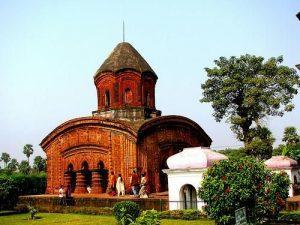
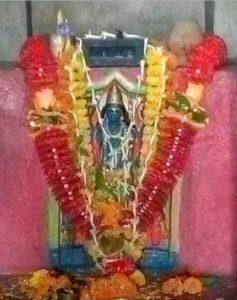
Nestled within the historic Hangseshwari temple complex in Bansberia, Hooghly, the Ananta Basudeba Temple stands as a testament to the divine love of Lord Krishna and the artistic zenith of 17th-century Bengal. While the temple complex is named after the goddess Hangseshwari, the Ananta Basudeba shrine is dedicated to Vishnu in his form as Balarama’s brother.
Why Devotees Visit (Phalaśruti)
Devotees flock to this sanctuary seeking the blessings of Lord Krishna, the preserver and protector. The temple is spiritually renowned for:
- Relief from Ancestral Burdens: Rituals performed here are believed to cleanse ancestral karma, particularly during the fortnight of Pitru Paksha.
- Balancing Life’s Pressures: The calm atmosphere of the terracotta sanctum aids in mental stability and overcoming the chaos of daily life (Maya).
- Protection from Enemies: As the slayer of demons, the form of Basudeba is invoked for safety from adversarial forces.
Historical Origins & Scriptural Legend
The history of Ananta Basudeba is deeply intertwined with the patronage of the Datta dynasty during the Mughal era.
The Datta Dynasty and Construction
According to temple records, the shrine was constructed in 1679 CE by Raja Rameswar Datta. The Datta family were originally appointed as zamindars of Patuli by the Mughal emperor in 1656. Legend holds that Rameswar Datta’s father, Raghab Datta, cleared a dense bamboo grove to build a fort, which eventually gave the region its name: Bansberia (“Bans” meaning bamboo).
The Sthala Purana
While the temple celebrates Krishna, its location holds deep historical layers. Situated at the confluence of three rivers—Tribeni (Ganga, Jamuna, and Saraswati)—this area was a seat of power long before Mughal occupation. The temple is a physical manifestation of the resurgence of Vaishnavism in the late 17th century, a period where local rulers used art to assert their religious identity despite Mughal rule.
Architectural Marvels
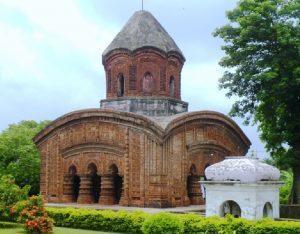
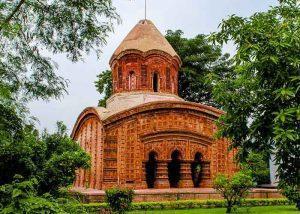
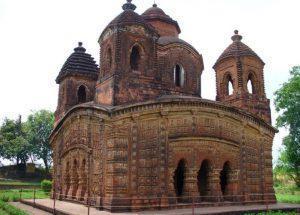
The Ananta Basudeba Temple is a masterpiece of the Eka-Ratna (one jewel) architectural style, a typical feature of Bengal temples.
Terracotta and Vastu Shastra
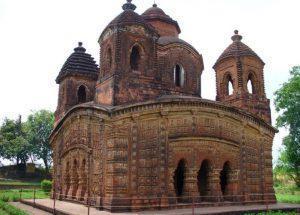
Built on a traditional rectangular plinth (astarang), the temple features the classic curved cornices (chala) of Bengali architecture. The structure rises to an octagonal tower (resembling a pinnacle), a unique blend of do-chala and ek-bangla roof aesthetics adapted for stone.
The Terracotta Panels
The walls are adorned with pristine terracotta works—a distinct art form that replaced brick kilns in the 17th century. The panels depict:
- Scenes from the Mahabharata: Specifically the battles of the Kurukshetra.
- Ramayana: Depictions of Rama’s return to Ayodhya and the construction of the Ram Setu.
- Radha-Krishna Lila: Visual narratives of the divine couple’s pastimes.
- Secular Life: Topical scenes of hunting, festivals, and courtly life of the Datta period.
Architectural Note: The temple bears a striking stylistic resemblance to the terracotta temples of Bishnupur (Bankura) and the later Guptipara temples, inspiring regional craftsmen for centuries.
Photo Gallery
Darshan & Ritual Logistics
Planning your visit ensures a seamless spiritual experience. Note that timings may vary during festivals.
Daily Timings
| Time Slot | Timing | Activity |
|---|---|---|
| Morning Darshan | 6:00 AM – 12:00 PM | Mangala Arati, Shringar Darshan |
| Midday Break | 12:00 PM – 4:00 PM | Sanctum Cleaning (Closed) |
| Evening Darshan | 4:00 PM – 8:00 PM | Sandhya Arati, Aarti |
Key Sevas & Booking
While the temple administration is managed locally by the Hooghly district trust, offerings can be made at the counter. For major sevas, contact the temple committee directly.
- Abhishekam (Ritual Bathing): Performed during morning hours with milk, honey, and ghee.
- Archana (Chanting): Personalized mantras for family well-being.
- Bhog Offering: Sweets (Peda) and fruits are standard offerings.
2026 Festival Dates (Specific Dates to Note):
- Janmashtami: Monday, August 18, 2026 (Grand celebrations with night-long vigil).
- Ratha Yatra: Sunday, July 27, 2026.
- Dola Purnima: Wednesday, March 12, 2026.
Practical Visitor Guidance
Code of Conduct & Rules
- Dress Code: Traditional Indian attire is recommended (Dhoti/Saree/Kurta). Maintain modesty.
- Photography: Allowed in the complex grounds. Strictly prohibited inside the inner sanctum (Garbhagriha) and during active Aarti.
- Mobile Phones: Please silence phones. Lockers are generally not available; travel light.
- Accessibility: The temple has a raised threshold. There are no ramps, so assistance may be required for wheelchair users.
Crowd Management
- Best Time: Tuesday and Saturday mornings see higher crowds due to Hanuman/Stone worship associations. For a quiet Darshan, visit between 2:00 PM and 3:30 PM on weekdays.
- Seasonal Advice: West Bengal summers (May-June) are humid. Carry a water bottle and a handheld fan. Monsoons (July-August) are lush but muddy; wear waterproof footwear.
Pilgrimage Connectivity
How to Reach Ananta Basudeba Temple
By Road:
The temple is located in Bansberia, near Mithapukur More. It is well-connected to Kolkata via National Highway 2 (NH2) and National Highway 6 (NH6). Private taxis, app-based cabs (Uber/Ola), and local buses are available from Hooghly town (approx. 20 km) and Kolkata.
By Rail:
The nearest railway station is Bandel Junction (approx. 10 km). From there, auto-rickshaws are readily available. Howrah Railway Station is about 45 km away.
By Air:
The nearest airport is Netaji Subhas Chandra Bose International Airport (CCU) in Kolkata, approximately 40 km away.
Nearby Sacred Sites
Extend your pilgrimage with these nearby spiritual stops:
- Hangseshwari Temple: Located immediately adjacent. Dedicated to Goddess Kali, it features a unique five-story architecture.
- Chinsurah Mosque (Dutch Style): 15 km away. A historical landmark representing the fusion of Mughal and Dutch architecture.
- Bandel Basilica: 10 km away. One of the oldest churches in Bengal, dedicated to Our Lady of the Rosary.
Frequently Asked Questions
Is there a VIP darshan entry?
No, the Ananta Basudeba Temple does not have a formal VIP or paid entry system. All devotees are treated equally. However, visiting during non-peak hours (early morning or late afternoon) allows for a faster, uninterrupted darshan.
What is the significance of “Basudeba”?
“Basudeba” is a name for Lord Krishna, specifically referring to him as the son of Vasudeva. It denotes the incarnation of Vishnu who guides humanity through righteous action (Dharma).
Are there food facilities available?
There are no full-service restaurants inside the complex. However, small stalls selling packaged water, sweets, and snacks are available outside. For a proper meal, one must travel to Chinsurah or Hooghly town.
Is the temple closed on any specific days?
The temple remains open 365 days a year. It may close briefly during the afternoon for cleaning (12:00 PM – 4:00 PM). During major festivals like Janmashtami, it remains open all day and night.
What is the best way to explore the terracotta carvings?
The terracotta panels are located on the outer walls (pradakshina path). Walk slowly around the temple perimeter. Early morning sunlight (East facing walls) illuminates the relief work best for photography.
Is there parking available?
Limited parking space is available for private cars and two-wheelers near the temple entrance. During festivals, public transport is advised due to road congestion.
Recent Posts

Shri Kaamkoteeshwar Mandir, Varanasi – History & Significance
In the heart of Kashi, the eternal city of Lord Shiva, where the Ganges flows with celestial grace, stands the Shri Kaamkoteeshwar Mandir. This sacred Sannidhi is not merely a temple but a profound spiritual bridge between the Northern…

ओ सांवरे तूने ही मुझको संभाला – Lyrics & Meaning
ओ सांवरे तूने ही मुझको संभाला – A Prayer to Shyam Origin & Spiritual Essence Why This Bhajan Resonates Devotees chant this when overwhelmed by life’s storms—the refrain ‘तूने ही मुझको संभाला’ is the soul’s sigh of relief: “You…

कथा ये है महाराज मेरे की – Lyrics & Meaning
कथा ये है महाराज मेरे की छत्रपति संभाजी महाराज – A Prayer to Chhatrapati Sambhaji Maharaj Origin & Spiritual Essence Why This Bhajan Resonates Devotees chant this when their spirit feels tested—its powerful refrain “महाराज मेरे” is a soul’s…

Rigveda Samhita Yathartha Anuvada (ऋग्वेद संहिता यथार्थ अनुवाद) – Complete Set with Anvayartha & Hindi/English Translation
The Rigveda is the oldest surviving scripture of humanity and the foundational text of Sanātana Dharma. For serious students, scholars, UPSC aspirants studying ancient Indian history, Sanskrit learners, and spiritual seekers, a precise and grammatically structured translation is indispensable.…

आना भी अकेला है जाना भी अकेला है – Lyrics & Meaning | BharatTemples
आना भी अकेला है जाना भी अकेला है – A Prayer to the Divine Witness Origin & Spiritual Essence Why This Bhajan Resonates Devotees turn to this bhajan in moments of deep reflection—when life’s attachments begin to ache. The…

माता शेरावाली के द्वार जो भी जाता है – Lyrics & Meaning
माता शेरावाली के द्वार जो भी जाता है – A Prayer to Maa Sherawali Origin & Spiritual Essence Why This Bhajan Resonates Devotees turn to this bhajan in times of fear or uncertainty—its promise that no one leaves Maa’s…

मार लेना सपणी उबार लेणा भवरा – Lyrics & Meaning
मार लेना सपणी उबार लेणा भवरा – A Prayer to the Divine Beloved Origin & Spiritual Essence Why This Bhajan Resonates Devotees chant this in moments of deep vulnerability—its cry of “मार लेना सपणी, उबार लेणा भवरा” is the…

हमें श्याम सुंदर भरोसा तुम्हारा – Lyrics & Meaning
हमें श्याम सुंदर भरोसा तुम्हारा – A Prayer to Shyam Sundar Origin & Spiritual Essence Why This Bhajan Resonates Devotees chant this when feeling alone—its refrain ‘de do sahara’ is the soul’s cry for divine support. Lyrics in Hindi…

Mere Satguru Ne Di Thi Davai Lyrics in Hindi & Meaning
Mere Satguru Ne Di Thi Davai: Invoking the Guru’s Liberating Wisdom This soul-stirring bhajan venerates the Satguru (True Spiritual Master) as the divine physician who dispenses the only remedy for life’s deepest sufferings. Composed by Sant Karmaveer Tufani, it…

Janm Diyo Thari Maa Dukh Dekhiyo Lyrics in Hindi & Meaning
जन्म दियो थारी माँ दुख देखियो (Maa’s Grief Upon Birthing You) This soul-stirring Chetavani Bhajan (admonitory hymn) is addressed to the Divine Mother (Maa) – a call for repentance when children forget their filial duties in the dark age…