

Contents
Located in the spiritual heart of Birbhum, West Bengal, Tarapith stands as a beacon for devotees seeking the blessings of Maa Tara. Known as one of the 51 Shakti Pithas, this temple is not merely a structure of brick and mortar but a living nexus of Tantric energy, miraculous legends, and profound devotion. As we step into 2026, the sanctity of Tarapith continues to draw pilgrims from across the globe.
1. Introduction & Spiritual Essence
Tarapith is renowned as a Siddha Pith—a wish-fulfilling sacred site. The primary deity here is Goddess Tara, worshipped primarily in her fierce Tantric form, yet revered here as a compassionate mother figure. The temple is uniquely associated with the Sadhak Bamakhepa, the “mad saint” who perfected Tantric yoga within these premises.
Why Devotees Visit: The Phalaśruti
The spiritual benefits of visiting Tarapith are deeply rooted in Hindu scripture and oral tradition:
- Removal of Poison (Vishahara): Legend states that Maa Tara suckled Lord Shiva to neutralize the Halahala poison that threatened the universe. Devotees believe prayers here cleanse the “poisons” of life—mental stress, fear, and negativity.
- Karmic Cleansing: As a Shakti Pith, it is believed to absolve ancestral karma, ensuring peace for departed souls.
- Tantric Siddhis: It is the primary center for Tantric practitioners (Sadhaks) seeking spiritual awakening and mastery over the elements.
2. Historical Origins & Scriptural Legend
The history of Tarapith is a blend of Puranic mythology and medieval history. While the exact date of the original structure is lost to time, the current temple architecture suggests a legacy preserved over centuries.
The Shakti Pith Legend
According to the Devi Mahatmyam and Shakti Pitha Stotram, Tarapith marks the spot where the right eye of Goddess Sati fell after her self-immolation and Lord Vishnu’s dissection of her body with the Sudarshana Chakra. This makes it a site of immense cosmic significance.
The Tale of Sage Vashistha
Tradition holds that Sage Vashistha performed intense austerities here to appease Tara. When his initial efforts failed, a divine voice guided him to the Buddha (considered an avatar of Vishnu in some sects), who instructed him in the ways of Vamachara (left-hand path/Tantra). Vashistha envisioned the goddess in the form of a mother nursing Shiva and established her idol at this very spot.
3. Architectural Marvels
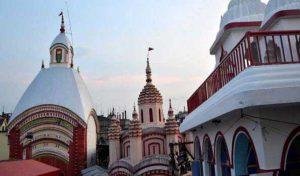
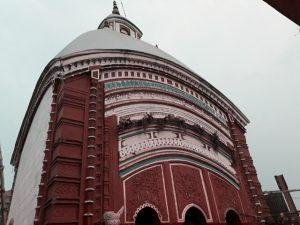
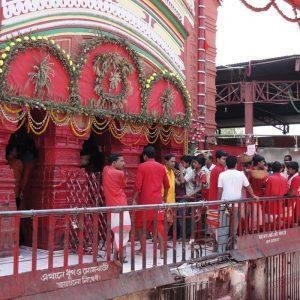
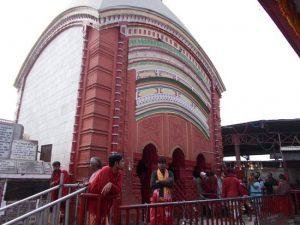
The Tarapith temple is a masterpiece of Bengal Rural Architecture, characterized by its distinct curved roofs and use of indigenous materials.
Structure and Design
The temple features thick walls made of burnt brick and a superstructure elevated with covered passages and arches leading to a traditional spire (Shikhara). The sanctum sanctorum is dimly lit, adding to the mystical atmosphere.
The Deity: The Dual Tara
The inner sanctum houses two distinct images of Tara:
- The Stone Image (Primordial): Hidden behind the main deity, this 3-foot stone idol depicts Tara as a mother suckling the infant Shiva. It is rarely seen directly by the general public but is the focal point of Tantric rituals.
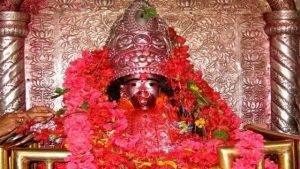
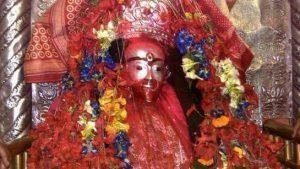
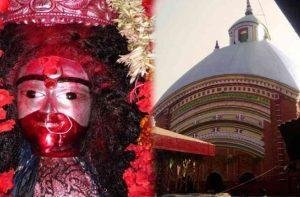
- The Metal Image (Fierce): The visible idol for devotees is a metal statue depicting Tara in her fiery form—four arms, wearing a garland of skulls, with a protruding tongue. She is adorned with a silver crown, red Kumkum, and marigold garlands.
The Sacred Tank (Kund)
Adjacent to the temple lies the Brahmani Kund (or Tara Kund). The waters here are considered Teerth (holy water) with healing properties. Historically, Sadhak Bamakhepa is said to have revived a dead devotee using these waters. A holy dip here is mandatory before entering the temple.
Ritual Note: Tarapith is one of the few remaining active temples where Chandi Homam and specific Tantric sacrifices (historically involving goats, though practice varies) are performed to fulfill specific desires of devotees.
4. Darshan & Ritual Logistics (2026 Season)
To facilitate a smooth pilgrimage, devotees should plan their visit according to the daily schedule and festival calendars.
Daily Darshan Timings
| Session | Timing | Rituals |
|---|---|---|
| Morning Darshan | 6:00 AM – 12:00 PM | Mangal Aarti, Abhishekam |
| Afternoon Break | 12:00 PM – 3:00 PM | Sanctum closed |
| Evening Darshan | 3:00 PM – 6:00 PM | Sandhya Aarti |
| Night Darshan | 7:30 PM – 9:00 PM | Shayan Aarti |
Key Sevas & Online Booking
While traditional offerings are made in person, the temple administration has digitized several Sevas for devotees unable to travel.
- Abhishekam (Ritual Bathing): Performed with milk, honey, and water.
- Chandi Path/Akhanda Jyoti: Dedicated scripture recitation and eternal lamp.
- Online Booking: Devotees can book specific Archana (prayers) via the official temple trust website (Birbhum District Administration portal). Look for the “Tarapith Temple Trust” link for 2026 bookings.
Major Festivals 2026
- Navratri: April (Chaitra) and October (Ashwin). Special night-long Jaagran and cultural programs.
- Tara Jayanti: The birthday of Goddess Tara (Vaishakh Shukla Tritiya) – April 21, 2026.
- Kali Puja/Diwali: Grand illuminations and Tantric rituals performed by Tagore (Raj) family priests.
- Makar Sankranti: Community meals and kite festivals.
5. Practical Visitor Guidance
Being a rural site, Tarapith retains a rustic charm, but modern amenities have been introduced to manage the heavy footfall.
Rules & Etiquette
- Dress Code: Traditional attire is recommended. Men should wear dhotis or full-length trousers; women should wear sarees or modest dresses (avoid shorts).
- Photography: Strictly prohibited inside the sanctum. Photography in the outer complex is allowed but must respect the privacy of worshippers.
- Lockers: Mobile phones and leather items (bags, belts) are not allowed inside the temple. Free and paid locker facilities are available at the entrance gates (East and West).
- Accessibility: The temple has stone steps. A ramp facility is available for senior citizens at the main entrance.
Crowd Management & Seasonal Tips
- Best Hours: Weekday mornings (6:00 AM – 8:00 AM) offer the least crowd.
- Summer (April-May): Birbhum gets very hot. Carry a water bottle, use the free water dispensers, and wear a hat.
- Monsoon: The tank area can be slippery; exercise caution.
6. Pilgrimage Connectivity
How to Reach Tarapith
- By Air: Nearest airport is Netaji Subhas Chandra Bose International Airport (CCU) in Kolkata (approx. 200 km). Taxis and buses are available from Kolkata to Birbhum.
- By Rail: The nearest railway station is Rampurhat (RPH), located just 4 km from the temple. Rampurhat is well-connected to Kolkata and Howrah via Vandebharat Express and other mail trains.
- By Road: Tarapith is connected via NH 114. Buses ply regularly from Kolkata (Esplanade/Baranagar), Bolpur (Shantiniketan), and Rampurhat.
Nearby Sacred Sites
Extend your pilgrimage circuit by visiting these nearby spiritual destinations:
- Maharajpur (Goddess Kali Temple): Located 20 km from Tarapith, known for its peaceful environment.
- Nalhateswari Temple (Nalhati): A Shakti Pitha where the throat of Sati fell, located about 35 km away.
- Shantiniketan (Bolpur): (32 km) The abode of Rabindranath Tagore, offering a blend of art, culture, and spirituality.
7. Frequently Asked Questions (FAQ)
Is there a VIP darshan entry?
Yes, the temple trust provides a special entry lane for senior citizens (above 65 years) and persons with disabilities. A small donation (approx. ₹50-100) may be required for priority entry during peak festivals, though regular darshan is free for all.
Can we offer alcohol or non-vegetarian food inside?
While Tarapith is a Tantric site where specific rituals historically involved alcohol and sacrifices, these are strictly regulated by the temple administration. Generally, visitors are advised not to bring external offerings. Puja offerings (coconuts, sweets, flowers) are available at shops outside the temple.
What are the accommodation options nearby?
Several hotels, guest houses (Yatri Nivas), and lodges exist within 1-2 km of the temple. The West Bengal Tourism Development Corporation (WBTDC) operates a lodge for affordable stays.
Is there a mobile network inside?
Mobile networks are generally available in the temple precincts, but due to high footfall, signals may be weak during festivals. Network locking is advised inside the sanctum.
What is the significance of the red powder (Kumkum)?
The forehead of the metal idol of Tara is coated with red vermilion (Kumkum). The priest applies a speck of this on the devotee’s forehead as a mark of Tara’s blessing, symbolizing auspiciousness and protection.
Photo Gallery
Contact Details
Tarapith Temple Trust Office
District: Birbhum, West Bengal
Location: Near Rampurhat, Tarapith
Phone: +91-3461-255XXX (Administrative Office)
Email: tarapithtrust@wb.gov.in
Recent Posts

Shri Kaamkoteeshwar Mandir, Varanasi – History & Significance
In the heart of Kashi, the eternal city of Lord Shiva, where the Ganges flows with celestial grace, stands the Shri Kaamkoteeshwar Mandir. This sacred Sannidhi is not merely a temple but a profound spiritual bridge between the Northern…

ओ सांवरे तूने ही मुझको संभाला – Lyrics & Meaning
ओ सांवरे तूने ही मुझको संभाला – A Prayer to Shyam Origin & Spiritual Essence Why This Bhajan Resonates Devotees chant this when overwhelmed by life’s storms—the refrain ‘तूने ही मुझको संभाला’ is the soul’s sigh of relief: “You…

कथा ये है महाराज मेरे की – Lyrics & Meaning
कथा ये है महाराज मेरे की छत्रपति संभाजी महाराज – A Prayer to Chhatrapati Sambhaji Maharaj Origin & Spiritual Essence Why This Bhajan Resonates Devotees chant this when their spirit feels tested—its powerful refrain “महाराज मेरे” is a soul’s…

Rigveda Samhita Yathartha Anuvada (ऋग्वेद संहिता यथार्थ अनुवाद) – Complete Set with Anvayartha & Hindi/English Translation
The Rigveda is the oldest surviving scripture of humanity and the foundational text of Sanātana Dharma. For serious students, scholars, UPSC aspirants studying ancient Indian history, Sanskrit learners, and spiritual seekers, a precise and grammatically structured translation is indispensable.…

आना भी अकेला है जाना भी अकेला है – Lyrics & Meaning | BharatTemples
आना भी अकेला है जाना भी अकेला है – A Prayer to the Divine Witness Origin & Spiritual Essence Why This Bhajan Resonates Devotees turn to this bhajan in moments of deep reflection—when life’s attachments begin to ache. The…

माता शेरावाली के द्वार जो भी जाता है – Lyrics & Meaning
माता शेरावाली के द्वार जो भी जाता है – A Prayer to Maa Sherawali Origin & Spiritual Essence Why This Bhajan Resonates Devotees turn to this bhajan in times of fear or uncertainty—its promise that no one leaves Maa’s…

मार लेना सपणी उबार लेणा भवरा – Lyrics & Meaning
मार लेना सपणी उबार लेणा भवरा – A Prayer to the Divine Beloved Origin & Spiritual Essence Why This Bhajan Resonates Devotees chant this in moments of deep vulnerability—its cry of “मार लेना सपणी, उबार लेणा भवरा” is the…

हमें श्याम सुंदर भरोसा तुम्हारा – Lyrics & Meaning
हमें श्याम सुंदर भरोसा तुम्हारा – A Prayer to Shyam Sundar Origin & Spiritual Essence Why This Bhajan Resonates Devotees chant this when feeling alone—its refrain ‘de do sahara’ is the soul’s cry for divine support. Lyrics in Hindi…

Mere Satguru Ne Di Thi Davai Lyrics in Hindi & Meaning
Mere Satguru Ne Di Thi Davai: Invoking the Guru’s Liberating Wisdom This soul-stirring bhajan venerates the Satguru (True Spiritual Master) as the divine physician who dispenses the only remedy for life’s deepest sufferings. Composed by Sant Karmaveer Tufani, it…

Janm Diyo Thari Maa Dukh Dekhiyo Lyrics in Hindi & Meaning
जन्म दियो थारी माँ दुख देखियो (Maa’s Grief Upon Birthing You) This soul-stirring Chetavani Bhajan (admonitory hymn) is addressed to the Divine Mother (Maa) – a call for repentance when children forget their filial duties in the dark age…