
Contents
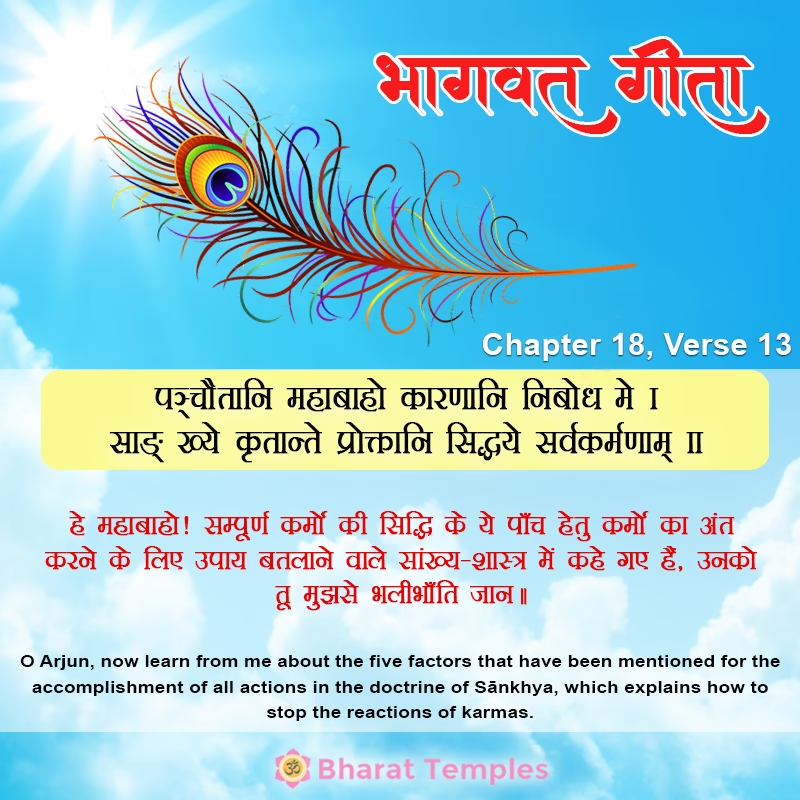
पञ्चैतानि महाबाहो कारणानि निबोध मे |
साङ् ख्ये कृतान्ते प्रोक्तानि सिद्धये सर्वकर्मणाम् ||
pañchaitāni mahā-bāho kāraṇāni nibodha me
sānkhye kṛitānte proktāni siddhaye sarva-karmaṇām
भावार्थ:
हे महाबाहो! सम्पूर्ण कर्मों की सिद्धि के ये पाँच हेतु कर्मों का अंत करने के लिए उपाय बतलाने वाले सांख्य-शास्त्र में कहे गए हैं, उनको तू मुझसे भलीभाँति जान॥13॥
Translation
O Arjun, now learn from me about the five factors that have been mentioned for the accomplishment of all actions in the doctrine of Sānkhya, which explains how to stop the reactions of karmas.
English Translation Of Sri Shankaracharya’s Sanskrit Commentary By Swami Gambirananda
18.13 O mighty-armed one, nibodha, learn; me, from Me; imani, these; panca, five; karanani, factors, accessories, which are going to be stated-for drawing the attention of his (Arjuna’s) mind and for showing the difference among these categories [Categories: locus (body) etc], the Lord praises those accessories in the succeeding verses as fit for being known-; siddhaye, for the accomplishment; sarva-karmanam, of all actions; proktani, which have been spoken of; sankhye, in Vedanta-sankhya is that scripture where the subject-matters [In the sentence, ‘Thou art That’, the word Thou means the individual Self, and That means Brahman. The comprehension of their unity, and also ‘hearing, reflection and meditation’ are referred to as the subject-matters.] to be known are fully (samyak) stated (khyayante)-; krtante, in which actions terminate. Krtante alifies that very word (Vedanta).
Krtam mean action. That in which occurs the culmination (anta) of that krtam is krtantam, i.e. the termination of actions. In the texts, ‘৷৷.as much utility as a man has in a well’ (2.46), and ‘O son of Prtha, all actions in their totality culminate in Knowledge’ (4.33), the Lord shows the cessation of all actions when the knowledge of the Self dawns. Hence (it is said): ‘৷৷.which have been spoken of in that Vedanta where actions culminate and which is meant for the knowledge of the Self.’
Which are they? This is being answered:
Recent Posts

Shri Kaamkoteeshwar Mandir, Varanasi – History & Significance
In the heart of Kashi, the eternal city of Lord Shiva, where the Ganges flows with celestial grace, stands the Shri Kaamkoteeshwar Mandir. This sacred Sannidhi is not merely a temple but a profound spiritual bridge between the Northern…

ओ सांवरे तूने ही मुझको संभाला – Lyrics & Meaning
ओ सांवरे तूने ही मुझको संभाला – A Prayer to Shyam Origin & Spiritual Essence Why This Bhajan Resonates Devotees chant this when overwhelmed by life’s storms—the refrain ‘तूने ही मुझको संभाला’ is the soul’s sigh of relief: “You…

कथा ये है महाराज मेरे की – Lyrics & Meaning
कथा ये है महाराज मेरे की छत्रपति संभाजी महाराज – A Prayer to Chhatrapati Sambhaji Maharaj Origin & Spiritual Essence Why This Bhajan Resonates Devotees chant this when their spirit feels tested—its powerful refrain “महाराज मेरे” is a soul’s…

Rigveda Samhita Yathartha Anuvada (ऋग्वेद संहिता यथार्थ अनुवाद) – Complete Set with Anvayartha & Hindi/English Translation
The Rigveda is the oldest surviving scripture of humanity and the foundational text of Sanātana Dharma. For serious students, scholars, UPSC aspirants studying ancient Indian history, Sanskrit learners, and spiritual seekers, a precise and grammatically structured translation is indispensable.…

आना भी अकेला है जाना भी अकेला है – Lyrics & Meaning | BharatTemples
आना भी अकेला है जाना भी अकेला है – A Prayer to the Divine Witness Origin & Spiritual Essence Why This Bhajan Resonates Devotees turn to this bhajan in moments of deep reflection—when life’s attachments begin to ache. The…

माता शेरावाली के द्वार जो भी जाता है – Lyrics & Meaning
माता शेरावाली के द्वार जो भी जाता है – A Prayer to Maa Sherawali Origin & Spiritual Essence Why This Bhajan Resonates Devotees turn to this bhajan in times of fear or uncertainty—its promise that no one leaves Maa’s…

मार लेना सपणी उबार लेणा भवरा – Lyrics & Meaning
मार लेना सपणी उबार लेणा भवरा – A Prayer to the Divine Beloved Origin & Spiritual Essence Why This Bhajan Resonates Devotees chant this in moments of deep vulnerability—its cry of “मार लेना सपणी, उबार लेणा भवरा” is the…

हमें श्याम सुंदर भरोसा तुम्हारा – Lyrics & Meaning
हमें श्याम सुंदर भरोसा तुम्हारा – A Prayer to Shyam Sundar Origin & Spiritual Essence Why This Bhajan Resonates Devotees chant this when feeling alone—its refrain ‘de do sahara’ is the soul’s cry for divine support. Lyrics in Hindi…

Mere Satguru Ne Di Thi Davai Lyrics in Hindi & Meaning
Mere Satguru Ne Di Thi Davai: Invoking the Guru’s Liberating Wisdom This soul-stirring bhajan venerates the Satguru (True Spiritual Master) as the divine physician who dispenses the only remedy for life’s deepest sufferings. Composed by Sant Karmaveer Tufani, it…

Janm Diyo Thari Maa Dukh Dekhiyo Lyrics in Hindi & Meaning
जन्म दियो थारी माँ दुख देखियो (Maa’s Grief Upon Birthing You) This soul-stirring Chetavani Bhajan (admonitory hymn) is addressed to the Divine Mother (Maa) – a call for repentance when children forget their filial duties in the dark age…