
Contents
Introduction & Spiritual Essence
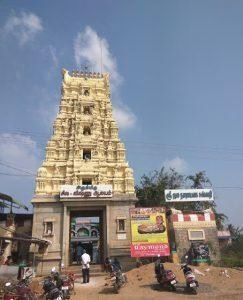
The Jalanarayanan Shiva Vishnu Temple in Kakkalur, Thiruvallur, stands as a rare testament to the syncretic harmony of Shaivism and Vaishnavism. This sacred site is unique because it houses the presiding deities, Lord Pushpavaneswarar (Shiva) and Lord Jalanarayanan (Vishnu), in the same Prakaram (enclosure), allowing devotees to worship both forms of the divine in a single pilgrimage.
Why Devotees Visit: The Phalaśruti
According to local devotional tradition, worshipping at this temple yields profound spiritual benefits. The primary Phalaśruti (fruits of devotion) associated with Jalanarayanan Temple is the cleansing of ancestral karma. Devotees believe that performing rituals here, especially for ancestors, helps liberate souls from the cycle of rebirth.
Furthermore, because Lord Jalanarayanan is depicted in a reclining posture similar to the Panchavarnaswamy temple, it is considered highly auspicious for devotees seeking relief from prolonged ailments and mental turmoil. The simultaneous presence of Shiva and Vishnu offers a holistic spiritual path—Shiva as the destroyer of illusion and Vishnu as the preserver of righteousness.
Historical Origins & Scriptural Legend
While specific inscriptional evidence dating back to a particular dynasty is yet to be fully cataloged by the Archaeological Survey of India, the temple is widely acknowledged by locals and historical consensus to have been constructed during the late Chola era or early Vijayanagara period (approximately 14th–16th century). The architectural style suggests significant contributions from the Vijayanagara Nayak rulers who patronized the arts and temple renovation in the Thiruvallur region.
The Sthala Purana: The Legend of Jala Narayana
The Sthala Purana (local oral legend) of Kakkalur is deeply connected to the Varaha Avatar and the recovery of the Vedas. Tradition holds that the demon king Hiranyaksha stole the Vedas and dragged them into the cosmic waters. Lord Vishnu took the form of Jala Narayana (Narayana resting on the celestial waters) to recover them.
While the famous Jala Narayana Temple in Kathmandu, Nepal, is widely known for this iconography, the Kakkalur temple mirrors this divine form. According to temple records, this manifestation of Vishnu appeared to a sage (Rishi) meditating in this specific location. The sage received the Lord’s Darshan exactly as described in the Puranas—resting on the serpent bed (Adishesha) atop the primordial waters. Thus, the temple was established to enshrine this rare reclining form.
Architectural Marvels
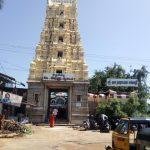
The temple is a classic example of Dravidian architecture, characterized by its stepped pyramid towers and intricate sculptural details.
Sanctum Structure (Vimana & Shikhara)
The temple complex is compact but densely filled with iconography. The Shikhara (tower above the sanctum) follows the Dravida style, distinct from the curved Nagara style of the North. The outer walls are adorned with stucco figures depicting various avatars of Vishnu and forms of Shiva.
Notable Sculptures and Shrines
The temple houses an impressive 44 shrines within its premises, a feature that makes it distinct from smaller rural temples.
- Jalanarayanan Shrine: The highlight of the temple. The idol depicts Lord Vishnu in a reclining posture on the Adishesha (five-headed serpent). The arrangement is symbolic of the Lord residing in his heavenly abode, Vaikunta (the celestial ocean of milk).
- Pushpavaneswarar Shrine: The primary Shiva Lingam, where Lord Shiva is worshipped as the Lord of the flower forest.
- Mandapas: The temple features a central Mandapa (hall) with square pillars featuring reliefs of deities.
- Navagraha Shrine: Located around the Shiva sanctum, this is a crucial spot for devotees performing remedial rituals for planetary afflictions.
Photo Gallery

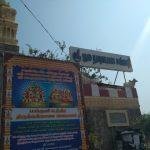
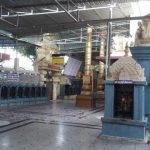
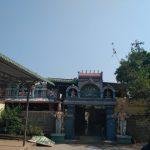
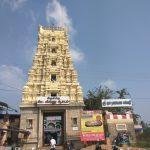
Darshan & Ritual Logistics (2026 Guide)
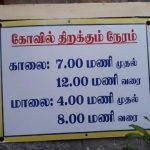
For the year 2026, the temple trust has maintained a consistent schedule. However, timings may vary slightly during festivals. It is recommended to check the official board at the entrance or contact the temple administrator before planning your visit.
Daily Timings
| Session | Timing |
|---|---|
| Morning Darshan | 06:00 AM – 12:00 PM |
| Midday Break | 12:00 PM – 04:00 PM |
| Evening Darshan | 04:00 PM – 08:30 PM |
Key Sevas & Online Booking
Devotees can participate in various rituals. While many on-site bookings are available, specific high-demand Sevas can be arranged in advance.
- Abhishekam: Performed to both Shiva and Vishnu. The Jala Abhishekam (water ritual) for Lord Jalanarayanan is highly revered.
- Archana: Personalized prayers recited by the Archakas (priests).
- Thirukalyana Utsavam: The celestial wedding ceremony of the deities.
Online Seva Booking: To book online, devotees can visit the official Tamil Nadu Hindu Religious and Charitable Endowments (HR&CE) portal. Search for “Jalanarayanan Temple Kakkalur” under the Thiruvallur district section. Note: While the input data did not provide a specific phone number, the standard HR&CE booking system covers this temple.
2026 Festival Calendar
Mark your calendars for these major events in 2026:
- Pradosham: Occurring every month (13th and 28th of every Tamil Month) – Special Abhishekam for Lord Shiva.
- Shivratri (March 2026): All-night vigil and special rituals.
- Brahmotsavam (April/May 2026): The annual festival spanning 10 days. The temple chariot (Ther) procession is a key highlight.
- Vaikuntha Ekadashi (January 2026): Celebrated with high grandeur for Lord Jalanarayanan.
Practical Visitor Guidance
Code of Conduct
- Dress Code: Traditional attire is mandatory. Men should wear dhotis or formal trousers with shirts; women should wear sarees, salwar kameez, or long skirts.
- Photography: Photography is strictly prohibited inside the inner sanctum (Garbhagriha). It is generally allowed in the outer corridors, but please respect the privacy of other devotees.
- Mobile Phones: Electronic devices should be kept silent. Although there are no dedicated lockers mentioned at this specific rural-urban interface temple, it is advisable to travel light.
Crowd Management & Best Times to Visit
Kakkalur is a suburb of Thiruvallur, which can get crowded during weekends and festival days.
- Best Time: Tuesday and Friday mornings are ideal for a peaceful darshan.
- Seasonal Advice: During the summer months (April–June), temperatures in Thiruvallur can rise above 38°C. Carry a reusable water bottle and an umbrella. The temple grounds are open-air, so head coverings are recommended.
- Accessibility: The temple is accessible for senior citizens via the main entrance, though the inner sanctum requires navigating a few steps.
Pilgrimage Connectivity
How to Reach
The Jalanarayanan Temple is strategically located near major transport hubs in Tamil Nadu.
- By Air: Chennai International Airport (MAA) is the nearest airport, approximately 46 km away. Taxis and airport shuttles are readily available to Thiruvallur.
- By Rail: Thiruvallur Railway Station is the closest railhead, just 2 km away. Alternatively, Putlur Railway Station is about 2.5 km away. Autorickshaws are available from both stations to Kakkalur.
- By Road: The temple is located roughly 1.5 km from the Kakkalur Bus Stop and 4 km from the Thiruvallur Bus Stand. It is well-connected via State Highway 5 (SH-5) and is accessible from Chennai via NH 152 (formerly NH 205).
Nearby Sacred Sites (Pilgrimage Circuit)
Extend your spiritual journey by visiting these nearby locations:
- Prasanna Venkateswara Perumal Temple (Thiruvallur): Located about 5 km away, this is the main temple of Thiruvallur, dedicated to Lord Venkateswara (Vishnu).
- Vadivudaiamman Temple (Thiruvotriyur): Approximately 30 km away, this is a powerful Shakti temple associated with the Paadal Petra Sthalam.
- Chennai (Tirumala Tirupati Devasthanam (TTD) Temple): Located in Chennai, about 45 km away, for devotees seeking the blessings of Lord Venkateswara in the capital city.
Frequently Asked Questions (FAQs)
1. What is the unique feature of the Jalanarayanan Temple?
The most unique feature is the presence of both Lord Shiva (Pushpavaneswarar) and Lord Vishnu (Jalanarayanan) in the same enclosure. The reclining posture of Lord Jalanarayanan is identical to the famous Jala Narayana Temple in Nepal.
2. Is there a VIP Darshan entry available?
Yes, the temple administration usually provides a priority entry lane for senior citizens, specially-abled devotees, and VIPs (with valid authorization). However, on heavy crowd days, all devotees may be required to wait in the general queue.
3. Can I book Archana or Abhishekam on the same day?
Yes, most sevas can be booked at the counter inside the temple premises. However, for specific rituals like Rudra Homam or Thirukalyana Utsavam, it is highly recommended to book via the Tamil Nadu HR&CE website at least 3 days in advance.
4. Is the temple wheelchair accessible?
The outer corridors and the main shrines have relatively flat access, but the inner sanctum (Garbhagriha) is traditional and may require assistance for wheelchair users due to the threshold and space constraints.
5. What is the significance of the 44 shrines mentioned?
The 44 shrines allow devotees to perform a comprehensive Parikrama (circumambulation) and seek blessings from various minor deities including Lord Muruga, Goddess Lakshmi, Lord Ayyappan, and the Navagrahas (nine planets) without leaving the temple complex.
Recent Posts

Shri Kaamkoteeshwar Mandir, Varanasi – History & Significance
In the heart of Kashi, the eternal city of Lord Shiva, where the Ganges flows with celestial grace, stands the Shri Kaamkoteeshwar Mandir. This sacred Sannidhi is not merely a temple but a profound spiritual bridge between the Northern…

ओ सांवरे तूने ही मुझको संभाला – Lyrics & Meaning
ओ सांवरे तूने ही मुझको संभाला – A Prayer to Shyam Origin & Spiritual Essence Why This Bhajan Resonates Devotees chant this when overwhelmed by life’s storms—the refrain ‘तूने ही मुझको संभाला’ is the soul’s sigh of relief: “You…

कथा ये है महाराज मेरे की – Lyrics & Meaning
कथा ये है महाराज मेरे की छत्रपति संभाजी महाराज – A Prayer to Chhatrapati Sambhaji Maharaj Origin & Spiritual Essence Why This Bhajan Resonates Devotees chant this when their spirit feels tested—its powerful refrain “महाराज मेरे” is a soul’s…

Rigveda Samhita Yathartha Anuvada (ऋग्वेद संहिता यथार्थ अनुवाद) – Complete Set with Anvayartha & Hindi/English Translation
The Rigveda is the oldest surviving scripture of humanity and the foundational text of Sanātana Dharma. For serious students, scholars, UPSC aspirants studying ancient Indian history, Sanskrit learners, and spiritual seekers, a precise and grammatically structured translation is indispensable.…

आना भी अकेला है जाना भी अकेला है – Lyrics & Meaning | BharatTemples
आना भी अकेला है जाना भी अकेला है – A Prayer to the Divine Witness Origin & Spiritual Essence Why This Bhajan Resonates Devotees turn to this bhajan in moments of deep reflection—when life’s attachments begin to ache. The…

माता शेरावाली के द्वार जो भी जाता है – Lyrics & Meaning
माता शेरावाली के द्वार जो भी जाता है – A Prayer to Maa Sherawali Origin & Spiritual Essence Why This Bhajan Resonates Devotees turn to this bhajan in times of fear or uncertainty—its promise that no one leaves Maa’s…

मार लेना सपणी उबार लेणा भवरा – Lyrics & Meaning
मार लेना सपणी उबार लेणा भवरा – A Prayer to the Divine Beloved Origin & Spiritual Essence Why This Bhajan Resonates Devotees chant this in moments of deep vulnerability—its cry of “मार लेना सपणी, उबार लेणा भवरा” is the…

हमें श्याम सुंदर भरोसा तुम्हारा – Lyrics & Meaning
हमें श्याम सुंदर भरोसा तुम्हारा – A Prayer to Shyam Sundar Origin & Spiritual Essence Why This Bhajan Resonates Devotees chant this when feeling alone—its refrain ‘de do sahara’ is the soul’s cry for divine support. Lyrics in Hindi…

Mere Satguru Ne Di Thi Davai Lyrics in Hindi & Meaning
Mere Satguru Ne Di Thi Davai: Invoking the Guru’s Liberating Wisdom This soul-stirring bhajan venerates the Satguru (True Spiritual Master) as the divine physician who dispenses the only remedy for life’s deepest sufferings. Composed by Sant Karmaveer Tufani, it…

Janm Diyo Thari Maa Dukh Dekhiyo Lyrics in Hindi & Meaning
जन्म दियो थारी माँ दुख देखियो (Maa’s Grief Upon Birthing You) This soul-stirring Chetavani Bhajan (admonitory hymn) is addressed to the Divine Mother (Maa) – a call for repentance when children forget their filial duties in the dark age…