

Contents
This is the only temple of Yogmaya in Delhi and it is situated in Mehrauli. It is believed that Yogmaya was the incarnation of Lord Vishnu and she is worshipped as the Mother of all beings. It is also believed that this temple has been standing in Mehrauli for over 5000 years despite many attempts of sabotage it. During the month of October, when the famous Phoolon ki Sair festival takes place in Delhi, this temple comes to life. Many devotees and visitors walk from the dargah of Qutbuddin Bhaktiar Khaki in Mehrauli till the Yogmaya mandir where the floral fans and canopies are offered to the goddess Yogmaya.
Introduction & Spiritual Essence
Shri Yogmaya Temple, often referred to locally as Shri Shiv Mandir or the Yogmaya Mandir, stands as an ancient beacon of divine feminine energy (Shakti) in the heart of Mehrauli, Delhi. The presiding deity is Yogmaya, believed to be a manifestation of Lord Vishnu’s sister, acting as the protector of the righteous and the transformer of evil doers.
Phalaśruti: The Spiritual Benefits
Devotees flock to this shrine seeking the blessings of the Mother Goddess for various spiritual and material benefits:
- Removal of Obstacles: Yogmaya is revered for removing delays in marriage and progeny.
- Protection: As a fierce protector, she shields devotees from negative energies and unseen forces.
- Inner Peace (Chitta Shuddhi): Meditation here is said to calm the restless mind, leading to higher states of awareness.
Historical Origins & Scriptural Legend
Tradition holds that the temple dates back to the Mahabharata era, approximately 5000 years ago. It is regarded as a Prachin Temple (ancient shrine) that has withstood the test of time.
Scriptural Significance
According to the Harivamsa (an appendix to the Mahabharata), Lord Krishna raised the Yamuna river to lift his chariot wheel stuck in the mud at this very spot. Yogmaya appeared here to assist him.
Historical Records
While the temple’s roots are mythological, historical records suggest that the current structure was significantly renovated during the reign of the Mughal Emperor Akbar. Tughlaq-era bricks and arches are visible in the foundation, while the sanctum sanctorum retains its Vedic architecture.
Architectural Marvels
The temple represents a unique blend of Nagara style architecture adapted for the North Indian plains. The sanctum houses a Swayambhu (self-manifested) idol of Yogmaya.
Key Features
- The Sanctum (Garbhagriha): The inner sanctum is circular, aligning with Vastu Shastra principles to concentrate energy.
- Shikhara (Spire): The temple features a curvilinear tower typical of North Indian temple design, rising above the sanctum.
- Mandapas (Pillared Halls): The temple has a spacious hall for devotees to sit during prayers and kirtans.
- Ancient Yajna Shala: A section dedicated to the performance of fire rituals (Homa).
Darshan & Ritual Logistics
To ensure a smooth visit, devotees should note the daily schedules and availability of specific sevas (services).
Daily Timings (2026 Schedule)
| Session | Timings | Activity |
|---|---|---|
| Morning | 5:00 AM – 12:00 PM | Mangala Aarti, Shringar Darshan |
| Afternoon | 12:00 PM – 4:00 PM | Temple Closed (Cleaning & Rest) |
| Evening | 4:00 PM – 9:30 PM | Sandhya Aarti, Bhog Offering |
Key Sevas & Booking
Devotees can book specific rituals online via the official Delhi Tourism portal or in-person at the temple counter.
- Abhishekam: Ritual bathing of the deity (Performed on Tuesdays and Fridays).
- Archana: Chanting of names (Can be performed daily).
- Special Puja (Phoolon ki Sair): The major annual event. 2026 Dates: Likely mid-October (dates align with the lunar calendar; check local listings in September 2026).
Practical Visitor Guidance
Etiquette & Rules
- Dress Code: Traditional attire is recommended (Kurta-Pajama for men, Saree/Salwar Kameez for women). Modest clothing is mandatory.
- Photography: Photography is restricted inside the inner sanctum (Garbhagriha). Allowed in the outer courtyards.
- Mobile/Storage: A free locker facility is available for electronic devices and footwear near the entrance.
- Accessibility: The temple has ramp access for wheelchairs in the main hall, though the inner sanctum requires navigating steps.
Crowd Management
- Best Hours: 7:00 AM to 9:00 AM (Morning) or 6:00 PM to 7:30 PM (Evening). Avoid weekends if possible.
- Seasonal Advice: Delhi summers (May-June) are harsh; carry a water bottle. The temple courtyard is open-air.
Pilgrimage Connectivity
How to Reach
Nearest Airport: Indira Gandhi International Airport (DEL) is approximately 20 km away. A 45-minute drive via NH-48.
Nearest Metro: Qutub Minar Station (Yellow Line), followed by a 10-minute auto-rickshaw ride.
By Road: Located on the Mehrauli-Badarpur Road, easily accessible from NH-24.
Nearby Sacred Sites (Pilgrimage Circuit)
- Qutub Minar Complex: Historically intertwined with the temple’s narrative of resistance and survival.
- Saintly Tombs of Mehrauli: Ancient shrines and dargahs reflecting the syncretic culture of the area.
- Jahaz Mahal: A seasonal water body and historical monument nearby, often part of local heritage walks.
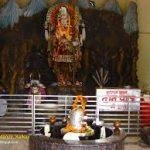
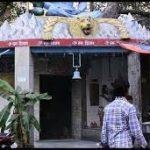
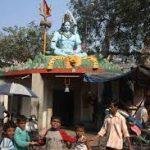
Photo Gallery: The visual history of Yogmaya Temple captures the essence of Mehrauli’s spiritual landscape.

Frequently Asked Questions (FAQ)
1. Is there a VIP or Special Darshan entry?
No, the Shri Yogmaya Temple follows a community-based darshan system. However, VIPs can contact the temple trust office 24 hours in advance for protocol assistance.
2. What is the significance of Phoolon ki Sair?
It is a unique festival of flowers celebrated in Mehrauli. A floral fan (Pankha) is offered to Yogmaya here, while a similar floral fan is offered at the nearby Dargah of Qutbuddin Bakhtiar Kaki. It symbolizes the Ganga-Jamuni Tehzeeb (syncretic culture) of Delhi.
3. Is online booking available for regular darshan?
Online booking is generally required for specific sevas (Abhishekam) rather than general darshan, which remains free and open to all.
4. Are there food facilities available?
Prasad is available for purchase at the temple counter. For full meals, several vegetarian restaurants are located in the main Mehrauli market, a 5-minute walk away.
5. When was the temple last renovated?
The most significant renovation in recent history was completed in the 1930s by the Jains, who currently manage the temple, ensuring the preservation of its ancient sanctity while modernizing facilities.
Address & Contact
Address: Yogmaya Temple, Mehrauli, New Delhi, Delhi 110030.
Contact: +91-11-XXXX-XXXX (Please check official listings for the current contact number in 2026).
Recent Posts

Shri Kaamkoteeshwar Mandir, Varanasi – History & Significance
In the heart of Kashi, the eternal city of Lord Shiva, where the Ganges flows with celestial grace, stands the Shri Kaamkoteeshwar Mandir. This sacred Sannidhi is not merely a temple but a profound spiritual bridge between the Northern…

ओ सांवरे तूने ही मुझको संभाला – Lyrics & Meaning
ओ सांवरे तूने ही मुझको संभाला – A Prayer to Shyam Origin & Spiritual Essence Why This Bhajan Resonates Devotees chant this when overwhelmed by life’s storms—the refrain ‘तूने ही मुझको संभाला’ is the soul’s sigh of relief: “You…

कथा ये है महाराज मेरे की – Lyrics & Meaning
कथा ये है महाराज मेरे की छत्रपति संभाजी महाराज – A Prayer to Chhatrapati Sambhaji Maharaj Origin & Spiritual Essence Why This Bhajan Resonates Devotees chant this when their spirit feels tested—its powerful refrain “महाराज मेरे” is a soul’s…

Rigveda Samhita Yathartha Anuvada (ऋग्वेद संहिता यथार्थ अनुवाद) – Complete Set with Anvayartha & Hindi/English Translation
The Rigveda is the oldest surviving scripture of humanity and the foundational text of Sanātana Dharma. For serious students, scholars, UPSC aspirants studying ancient Indian history, Sanskrit learners, and spiritual seekers, a precise and grammatically structured translation is indispensable.…

आना भी अकेला है जाना भी अकेला है – Lyrics & Meaning | BharatTemples
आना भी अकेला है जाना भी अकेला है – A Prayer to the Divine Witness Origin & Spiritual Essence Why This Bhajan Resonates Devotees turn to this bhajan in moments of deep reflection—when life’s attachments begin to ache. The…

माता शेरावाली के द्वार जो भी जाता है – Lyrics & Meaning
माता शेरावाली के द्वार जो भी जाता है – A Prayer to Maa Sherawali Origin & Spiritual Essence Why This Bhajan Resonates Devotees turn to this bhajan in times of fear or uncertainty—its promise that no one leaves Maa’s…

मार लेना सपणी उबार लेणा भवरा – Lyrics & Meaning
मार लेना सपणी उबार लेणा भवरा – A Prayer to the Divine Beloved Origin & Spiritual Essence Why This Bhajan Resonates Devotees chant this in moments of deep vulnerability—its cry of “मार लेना सपणी, उबार लेणा भवरा” is the…

हमें श्याम सुंदर भरोसा तुम्हारा – Lyrics & Meaning
हमें श्याम सुंदर भरोसा तुम्हारा – A Prayer to Shyam Sundar Origin & Spiritual Essence Why This Bhajan Resonates Devotees chant this when feeling alone—its refrain ‘de do sahara’ is the soul’s cry for divine support. Lyrics in Hindi…

Mere Satguru Ne Di Thi Davai Lyrics in Hindi & Meaning
Mere Satguru Ne Di Thi Davai: Invoking the Guru’s Liberating Wisdom This soul-stirring bhajan venerates the Satguru (True Spiritual Master) as the divine physician who dispenses the only remedy for life’s deepest sufferings. Composed by Sant Karmaveer Tufani, it…

Janm Diyo Thari Maa Dukh Dekhiyo Lyrics in Hindi & Meaning
जन्म दियो थारी माँ दुख देखियो (Maa’s Grief Upon Birthing You) This soul-stirring Chetavani Bhajan (admonitory hymn) is addressed to the Divine Mother (Maa) – a call for repentance when children forget their filial duties in the dark age…