
Contents
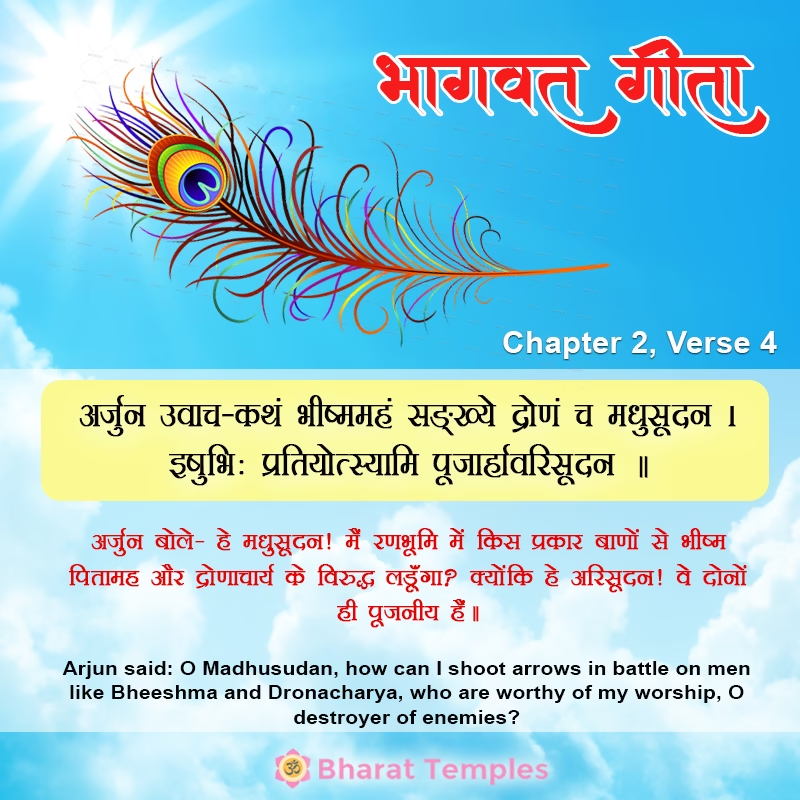
Chapter 2, Verse 4
अर्जुन उवाच |
कथं भीष्ममहं सङ्ख्ये द्रोणं च मधुसूदन |
इषुभि: प्रतियोत्स्यामि पूजार्हावरिसूदन || 4||
arjuna uvācha
kathaṁ bhīṣhmam ahaṁ sankhye droṇaṁ cha madhusūdana
iṣhubhiḥ pratiyotsyāmi pūjārhāvari-sūdana
भावार्थ:
अर्जुन बोले- हे मधुसूदन! मैं रणभूमि में किस प्रकार बाणों से भीष्म पितामह और द्रोणाचार्य के विरुद्ध लड़ूँगा? क्योंकि हे अरिसूदन! वे दोनों ही पूजनीय हैं॥4॥
Translation
Arjun said: O Madhusudan, how can I shoot arrows in battle on men like Bheeshma and Dronacharya, who are worthy of my worship, O destroyer of enemies?
2.4 कथम् how? भीष्मम् Bhishma? अहम् I? संख्ये in battle? द्रोणम् Drona? च and? मधुसूदन O Madhusudana? इषुभिः with arrows? प्रतियोत्स्यामि shall fight? पूजार्हौ worthy to be worshipped? अरिसूदन O destroyer of enemies.
Explanation in English:
Arjuna now expresses his internal conflict more clearly. He isn’t just afraid of battle — he’s emotionally torn because he’s being asked to fight people he deeply respects and reveres.
- Bhishma and Drona are not ordinary opponents.
Bhishma is his grand-uncle, a respected elder and warrior.
Drona is his guru (teacher) who taught him archery. - He calls them “pūjārhāv” – worthy of worship.
Arjuna sees them not as enemies, but as elders deserving honor and devotion, not arrows. - He calls Krishna “Madhusudana” (slayer of the demon Madhu) and “vari-sudana” (slayer of enemies), highlighting the contrast: Krishna destroys actual enemies, but Arjuna is being asked to raise weapons against his own kin and teachers.
Key Takeaway:
Arjuna is struggling with the moral and emotional dilemma of duty vs. personal attachment. His heart is not ready to hurt those he honors. This verse highlights the deep human conflict that often arises when one must make tough choices for a greater cause — a theme central to the Gita.
Recent Posts

Shri Kaamkoteeshwar Mandir, Varanasi – History & Significance
In the heart of Kashi, the eternal city of Lord Shiva, where the Ganges flows with celestial grace, stands the Shri Kaamkoteeshwar Mandir. This sacred Sannidhi is not merely a temple but a profound spiritual bridge between the Northern…

ओ सांवरे तूने ही मुझको संभाला – Lyrics & Meaning
ओ सांवरे तूने ही मुझको संभाला – A Prayer to Shyam Origin & Spiritual Essence Why This Bhajan Resonates Devotees chant this when overwhelmed by life’s storms—the refrain ‘तूने ही मुझको संभाला’ is the soul’s sigh of relief: “You…

कथा ये है महाराज मेरे की – Lyrics & Meaning
कथा ये है महाराज मेरे की छत्रपति संभाजी महाराज – A Prayer to Chhatrapati Sambhaji Maharaj Origin & Spiritual Essence Why This Bhajan Resonates Devotees chant this when their spirit feels tested—its powerful refrain “महाराज मेरे” is a soul’s…

Rigveda Samhita Yathartha Anuvada (ऋग्वेद संहिता यथार्थ अनुवाद) – Complete Set with Anvayartha & Hindi/English Translation
The Rigveda is the oldest surviving scripture of humanity and the foundational text of Sanātana Dharma. For serious students, scholars, UPSC aspirants studying ancient Indian history, Sanskrit learners, and spiritual seekers, a precise and grammatically structured translation is indispensable.…

आना भी अकेला है जाना भी अकेला है – Lyrics & Meaning | BharatTemples
आना भी अकेला है जाना भी अकेला है – A Prayer to the Divine Witness Origin & Spiritual Essence Why This Bhajan Resonates Devotees turn to this bhajan in moments of deep reflection—when life’s attachments begin to ache. The…

माता शेरावाली के द्वार जो भी जाता है – Lyrics & Meaning
माता शेरावाली के द्वार जो भी जाता है – A Prayer to Maa Sherawali Origin & Spiritual Essence Why This Bhajan Resonates Devotees turn to this bhajan in times of fear or uncertainty—its promise that no one leaves Maa’s…

मार लेना सपणी उबार लेणा भवरा – Lyrics & Meaning
मार लेना सपणी उबार लेणा भवरा – A Prayer to the Divine Beloved Origin & Spiritual Essence Why This Bhajan Resonates Devotees chant this in moments of deep vulnerability—its cry of “मार लेना सपणी, उबार लेणा भवरा” is the…

हमें श्याम सुंदर भरोसा तुम्हारा – Lyrics & Meaning
हमें श्याम सुंदर भरोसा तुम्हारा – A Prayer to Shyam Sundar Origin & Spiritual Essence Why This Bhajan Resonates Devotees chant this when feeling alone—its refrain ‘de do sahara’ is the soul’s cry for divine support. Lyrics in Hindi…

Mere Satguru Ne Di Thi Davai Lyrics in Hindi & Meaning
Mere Satguru Ne Di Thi Davai: Invoking the Guru’s Liberating Wisdom This soul-stirring bhajan venerates the Satguru (True Spiritual Master) as the divine physician who dispenses the only remedy for life’s deepest sufferings. Composed by Sant Karmaveer Tufani, it…

Janm Diyo Thari Maa Dukh Dekhiyo Lyrics in Hindi & Meaning
जन्म दियो थारी माँ दुख देखियो (Maa’s Grief Upon Birthing You) This soul-stirring Chetavani Bhajan (admonitory hymn) is addressed to the Divine Mother (Maa) – a call for repentance when children forget their filial duties in the dark age…