
Contents
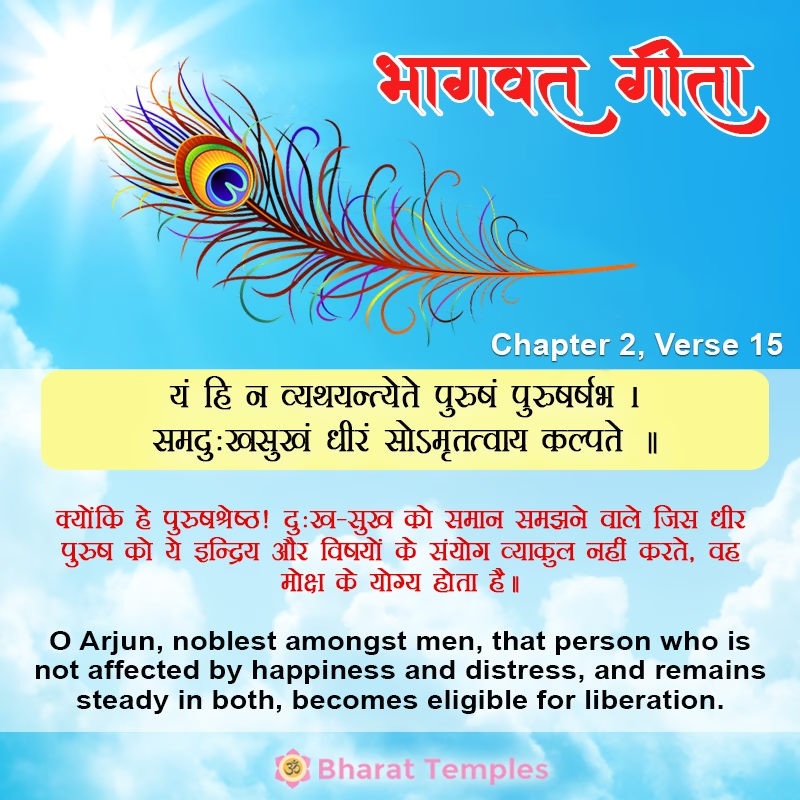
Chapter 2, Verse 15
यं हि न व्यथयन्त्येते पुरुषं पुरुषर्षभ |
समदु:खसुखं धीरं सोऽमृतत्वाय कल्पते || 15||
yaṁ hi na vyathayantyete puruṣhaṁ puruṣharṣhabha
sama-duḥkha-sukhaṁ dhīraṁ so ’mṛitatvāya kalpate
भावार्थ:
क्योंकि हे पुरुषश्रेष्ठ! दुःख-सुख को समान समझने वाले जिस धीर पुरुष को ये इन्द्रिय और विषयों के संयोग व्याकुल नहीं करते, वह मोक्ष के योग्य होता है॥15॥
Translation
O Arjun, noblest amongst men, that person who is not affected by happiness and distress, and remains steady in both, becomes eligible for liberation.
Explanation in English:
This verse continues from the previous one and teaches the value of equanimity — a central theme in the Bhagavad Gita.
Let’s break it down:
1. “Yaṁ hi na vyathayanti ete”: “Whom these (pleasure and pain) do not disturb…”
Krishna refers to those who are not shaken by the dual experiences of life — joy and sorrow, success and failure.
2. “Puruṣaṁ puruṣarṣabha”: “O noble man among men, Arjuna…”
Krishna respectfully addresses Arjuna as “puruṣarṣabha”, meaning the best among men, to encourage his strength and valor.
3. “Sama-duḥkha-sukhaṁ dhīraṁ”: “A wise person who is equal in sorrow and happiness…”
Such a person is called dhīra — calm, strong, and composed — who treats both pleasure and pain with the same attitude.
4. “So ’mṛtatvāya kalpate”: “He becomes fit for immortality (moksha).”
One who maintains balance and steadiness in life becomes qualified for liberation, the state beyond birth and death — called amṛtatva (immortality of the soul).
Key Teaching:
True wisdom is not about escaping life’s ups and downs, but about rising above them.
By remaining balanced in all situations, a person becomes spiritually mature and fit for self-realisation and eternal freedom.
Summary:
“He who remains balanced in pleasure and pain, unmoved by circumstances, is truly wise and becomes eligible for liberation.”
This verse teaches that equanimity is the doorway to freedom, and self-mastery leads to the highest goal of life — moksha (liberation).
Recent Posts

Shri Kaamkoteeshwar Mandir, Varanasi – History & Significance
In the heart of Kashi, the eternal city of Lord Shiva, where the Ganges flows with celestial grace, stands the Shri Kaamkoteeshwar Mandir. This sacred Sannidhi is not merely a temple but a profound spiritual bridge between the Northern…

ओ सांवरे तूने ही मुझको संभाला – Lyrics & Meaning
ओ सांवरे तूने ही मुझको संभाला – A Prayer to Shyam Origin & Spiritual Essence Why This Bhajan Resonates Devotees chant this when overwhelmed by life’s storms—the refrain ‘तूने ही मुझको संभाला’ is the soul’s sigh of relief: “You…

कथा ये है महाराज मेरे की – Lyrics & Meaning
कथा ये है महाराज मेरे की छत्रपति संभाजी महाराज – A Prayer to Chhatrapati Sambhaji Maharaj Origin & Spiritual Essence Why This Bhajan Resonates Devotees chant this when their spirit feels tested—its powerful refrain “महाराज मेरे” is a soul’s…

Rigveda Samhita Yathartha Anuvada (ऋग्वेद संहिता यथार्थ अनुवाद) – Complete Set with Anvayartha & Hindi/English Translation
The Rigveda is the oldest surviving scripture of humanity and the foundational text of Sanātana Dharma. For serious students, scholars, UPSC aspirants studying ancient Indian history, Sanskrit learners, and spiritual seekers, a precise and grammatically structured translation is indispensable.…

आना भी अकेला है जाना भी अकेला है – Lyrics & Meaning | BharatTemples
आना भी अकेला है जाना भी अकेला है – A Prayer to the Divine Witness Origin & Spiritual Essence Why This Bhajan Resonates Devotees turn to this bhajan in moments of deep reflection—when life’s attachments begin to ache. The…

माता शेरावाली के द्वार जो भी जाता है – Lyrics & Meaning
माता शेरावाली के द्वार जो भी जाता है – A Prayer to Maa Sherawali Origin & Spiritual Essence Why This Bhajan Resonates Devotees turn to this bhajan in times of fear or uncertainty—its promise that no one leaves Maa’s…

मार लेना सपणी उबार लेणा भवरा – Lyrics & Meaning
मार लेना सपणी उबार लेणा भवरा – A Prayer to the Divine Beloved Origin & Spiritual Essence Why This Bhajan Resonates Devotees chant this in moments of deep vulnerability—its cry of “मार लेना सपणी, उबार लेणा भवरा” is the…

हमें श्याम सुंदर भरोसा तुम्हारा – Lyrics & Meaning
हमें श्याम सुंदर भरोसा तुम्हारा – A Prayer to Shyam Sundar Origin & Spiritual Essence Why This Bhajan Resonates Devotees chant this when feeling alone—its refrain ‘de do sahara’ is the soul’s cry for divine support. Lyrics in Hindi…

Mere Satguru Ne Di Thi Davai Lyrics in Hindi & Meaning
Mere Satguru Ne Di Thi Davai: Invoking the Guru’s Liberating Wisdom This soul-stirring bhajan venerates the Satguru (True Spiritual Master) as the divine physician who dispenses the only remedy for life’s deepest sufferings. Composed by Sant Karmaveer Tufani, it…

Janm Diyo Thari Maa Dukh Dekhiyo Lyrics in Hindi & Meaning
जन्म दियो थारी माँ दुख देखियो (Maa’s Grief Upon Birthing You) This soul-stirring Chetavani Bhajan (admonitory hymn) is addressed to the Divine Mother (Maa) – a call for repentance when children forget their filial duties in the dark age…