
Contents
Introduction & Spiritual Essence of Karunagara Perumal Temple
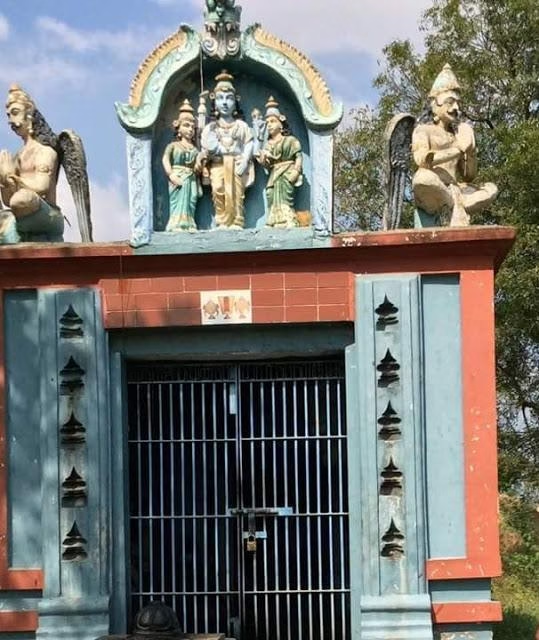
The Karunagara Perumal Temple, located in the serene village of Jamin Korattur in Thiruvallur District, stands as a profound testament to faith and resilience. Dedicated to Lord Vishnu (Perumal), the temple is revered as a site of immense compassion, where the Lord bestows his grace upon devotees seeking relief from worldly sufferings. The presiding deity, Karunagara Perumal, represents the benevolent form of Vishnu who listens to the prayers of the destitute.
Phalaśruti: Why Devotees Visit
According to temple lore, a visit to this shrine brings about spiritual cleansing and the removal of negative karma. The temple is particularly renowned for:
- Ancestral Peace: Performing rituals here is believed to help ancestors attain Moksha (liberation), easing ancestral afflictions.
- Removal of Obstacles: Devotees facing prolonged delays in marriage or career stagnation visit to offer prayers to Karunagara Perumal.
- Health & Well-being: The sanctity of the site is associated with curing chronic ailments and granting physical vitality.
Historical Origins & Scriptural Legend
The history of the Karunagara Perumal Temple is intertwined with the turbulent history of the region.
History of Conflict and Rebirth
According to historical records, the village of Jamin Korattur was a significant region during the pre-colonial era. However, during the late 18th century, the troops of Tipu Sultan raided this region, leaving a trail of destruction that affected several local shrines. The original Karunagara Perumal Temple was severely damaged during this conflict.
Tradition holds that despite the physical destruction, the faith of the local villagers remained unshaken. The temple was rebuilt in the recent past through the collective efforts of the devotees and the local community, restoring the sanctity of the holy ground. The temple complex was consecrated (Kumbhabhishekam) recently, infusing the presiding deity with renewed divine energy.
Scriptural Significance
While the specific Sthala Purana (local oral legend) of Jamin Korattur is unique to this village, the temple aligns with the broader Pancharatra Agamic traditions followed in Vishnu temples. The form of the deity is reminiscent of the compassionate Lord found in various Divya Desams (108 Abodes of Vishnu), symbolizing the preservation of Dharma even in times of adversity.
Architectural Marvels: Dravidian Heritage
The temple showcases the classic Dravidian style of architecture, characterized by towering gateways (Gopurams) and intricate carvings.
Structural Elements
- The Rajagopuram: The main entrance tower welcomes devotees with vibrant sculptural depictions of Hindu mythology. Though rebuilt, the architecture adheres to traditional Vastu Shastra principles, ensuring the flow of positive energy.
- Mandapas: The temple features a spacious Maha Mandapa (main hall) used for religious discourses and cultural events. The ceiling often features frescoes depicting the avatars of Vishnu.
- Garbhagriha (Sanctum Sanctorum): The inner sanctum houses the main deity, carved from black stone, representing the cosmic stability of the Lord.
Though the current structure is a reconstruction, the artisans have meticulously preserved the traditional iconography, ensuring the temple retains its ancient spiritual aura. As of 2026, the temple is maintained by the local temple committee, ensuring cleanliness and structural safety, though it is not a designated ASI or UNESCO site.
| Date built: | – |
|---|---|
| Deity: | Karunagara |
| Architectural style: | Dravidian architecture |
| Major festivals | – |
| Locale: | Jamin Korattur |
| District:: | Thiruvallur |
| Address: | – |
| Phone | – |
Darshan & Ritual Logistics (2026 Guide)
Planning your visit requires understanding the daily schedule and the specific sevas offered. While timings may vary slightly during festivals, the following is the standard schedule.
Daily Timings
| Session | Timing | Activity |
|---|---|---|
| Morning | 6:00 AM – 11:30 AM | Opening, Morning Pooja, Abhishekam |
| Afternoon | 12:00 PM – 4:30 PM | Closed for rest (Temple cleaning) |
| Evening | 4:30 PM – 8:30 PM | Darshan, Evening Pooja, Closing |
Key Sevas and Online Booking
Devotees can perform various sevas (offerings) to the deity. In 2026, most Tamil Nadu temples encourage digital facilitation.
- Thirukalyana Urchavam: Annual celestial wedding ceremony (Date: Feb 2026 – TBD).
- Vaikunta Ekadashi: Special early morning darshan. (Date: December 29, 2025 – January 7, 2026).
- Monthly Ekadashi: Recitation of the Thiruvaimozhi (Divya Prabandham).
Online Seva Booking: While the temple primarily functions on a walk-in basis, major festivals can be booked via the Tamil Nadu HR&CE official portal or at the temple counter.
Practical Visitor Guidance
To ensure a smooth pilgrimage, please adhere to the following guidelines.
Rules & Etiquette
- Dress Code: Traditional attire is mandatory. Men should wear dhotis or formal pants with shirts; women should wear sarees, salwar kameez, or long skirts.
- Photography: Photography is strictly prohibited inside the sanctum sanctorum. It is allowed in the outer corridors, but maintain decorum.
- Mobile Phones: Keep phones on silent mode. Lockers are generally available for electronic devices, though it is advisable to travel light.
- Accessibility: The temple complex is compact. Footwear must be removed at the designated stands outside the temple.
Crowd Management & Seasonal Advice
- Best Hours: For a peaceful darshan, visit between 9:00 AM and 11:00 AM on weekdays.
- Weekends: Expect moderate crowds on Saturdays and Sundays, especially in the evenings.
- Summer (April – June): Tamil Nadu summers are hot. Carry a water bottle, an umbrella, and wear breathable cotton clothing.
- Monsoon (Oct – Dec): Carry rain gear. Roads to Korattur can be slippery during heavy rains.
Pilgrimage Connectivity
The temple is well-connected by road to major hubs in Chennai and Thiruvallur.
How to Reach
- Nearest Airport: Chennai International Airport (MAA) is approximately 30-32 km away (approx. 45-60 mins by taxi).
- Nearest Railway Station: Thiruninravur Railway Station is about 8 km away. Alternatively, Avadi Railway Station is 14 km away.
- By Road:
- From Chennai Central: Take the Chennai-Tirupati Highway (NH 48) towards Padi. Connect to the Padi-Tiruvallur Road.
- From Avadi: Proceed towards Nemam, then divert to Jamin Korattur.
Nearby Sacred Sites (Pilgrimage Circuit)
Extend your spiritual journey by visiting these nearby temples:
- Trimalla Perumal Temple (Nemam): Located just 3 km away, this temple is dedicated to Vishnu as the Lord with three hills.
- Sri Venkateswara Temple (Thirumazhisai): A prominent hill temple dedicated to Lord Balaji, located about 9 km from Korattur.
- Kailasanathar Temple (Tiruninravur): An ancient Shiva temple situated 8 km away, perfect for a Shiva-Vishnu combined pilgrimage.
Frequently Asked Questions (FAQ)
1. Is there a VIP darshan entry at Karunagara Perumal Temple?
As a local shrine managed by the temple committee, the concept of corporate VIP darshan is not strictly enforced. However, priority is given to elderly devotees and those requiring assistance. During festivals, special passes may be issued for faster access.
2. Are there accommodation facilities near the temple?
The temple does not have an in-house guesthouse. For accommodation, visitors are advised to travel back to Avadi or Tiruvallur, where numerous lodges and choultries are available. It is recommended to book in advance during festival seasons.
3. Is the temple open on all days?
Generally, yes. However, it is advisable to check with local authorities or the Tamil Nadu Tourism Board updates before planning a trip on major government holidays, as the schedule might be altered.
4. Can I perform the Thirumanjanam (Abhishekam) personally?
Typically, only authorized temple priests perform the Abhishekam to maintain the sanctity of the process. However, devotees can sponsor the Abhishekam and receive the Prasadam (holy offering) after the ritual.
5. What is the significance of the name “Karunagara”?
“Karunagara” translates to the “Mountain of Mercy” in Tamil. It signifies Lord Vishnu’s boundless compassion in alleviating the sufferings of devotees who surrender to him.
Recent Posts

Shri Kaamkoteeshwar Mandir, Varanasi – History & Significance
In the heart of Kashi, the eternal city of Lord Shiva, where the Ganges flows with celestial grace, stands the Shri Kaamkoteeshwar Mandir. This sacred Sannidhi is not merely a temple but a profound spiritual bridge between the Northern…

ओ सांवरे तूने ही मुझको संभाला – Lyrics & Meaning
ओ सांवरे तूने ही मुझको संभाला – A Prayer to Shyam Origin & Spiritual Essence Why This Bhajan Resonates Devotees chant this when overwhelmed by life’s storms—the refrain ‘तूने ही मुझको संभाला’ is the soul’s sigh of relief: “You…

कथा ये है महाराज मेरे की – Lyrics & Meaning
कथा ये है महाराज मेरे की छत्रपति संभाजी महाराज – A Prayer to Chhatrapati Sambhaji Maharaj Origin & Spiritual Essence Why This Bhajan Resonates Devotees chant this when their spirit feels tested—its powerful refrain “महाराज मेरे” is a soul’s…

Rigveda Samhita Yathartha Anuvada (ऋग्वेद संहिता यथार्थ अनुवाद) – Complete Set with Anvayartha & Hindi/English Translation
The Rigveda is the oldest surviving scripture of humanity and the foundational text of Sanātana Dharma. For serious students, scholars, UPSC aspirants studying ancient Indian history, Sanskrit learners, and spiritual seekers, a precise and grammatically structured translation is indispensable.…

आना भी अकेला है जाना भी अकेला है – Lyrics & Meaning | BharatTemples
आना भी अकेला है जाना भी अकेला है – A Prayer to the Divine Witness Origin & Spiritual Essence Why This Bhajan Resonates Devotees turn to this bhajan in moments of deep reflection—when life’s attachments begin to ache. The…

माता शेरावाली के द्वार जो भी जाता है – Lyrics & Meaning
माता शेरावाली के द्वार जो भी जाता है – A Prayer to Maa Sherawali Origin & Spiritual Essence Why This Bhajan Resonates Devotees turn to this bhajan in times of fear or uncertainty—its promise that no one leaves Maa’s…

मार लेना सपणी उबार लेणा भवरा – Lyrics & Meaning
मार लेना सपणी उबार लेणा भवरा – A Prayer to the Divine Beloved Origin & Spiritual Essence Why This Bhajan Resonates Devotees chant this in moments of deep vulnerability—its cry of “मार लेना सपणी, उबार लेणा भवरा” is the…

हमें श्याम सुंदर भरोसा तुम्हारा – Lyrics & Meaning
हमें श्याम सुंदर भरोसा तुम्हारा – A Prayer to Shyam Sundar Origin & Spiritual Essence Why This Bhajan Resonates Devotees chant this when feeling alone—its refrain ‘de do sahara’ is the soul’s cry for divine support. Lyrics in Hindi…

Mere Satguru Ne Di Thi Davai Lyrics in Hindi & Meaning
Mere Satguru Ne Di Thi Davai: Invoking the Guru’s Liberating Wisdom This soul-stirring bhajan venerates the Satguru (True Spiritual Master) as the divine physician who dispenses the only remedy for life’s deepest sufferings. Composed by Sant Karmaveer Tufani, it…

Janm Diyo Thari Maa Dukh Dekhiyo Lyrics in Hindi & Meaning
जन्म दियो थारी माँ दुख देखियो (Maa’s Grief Upon Birthing You) This soul-stirring Chetavani Bhajan (admonitory hymn) is addressed to the Divine Mother (Maa) – a call for repentance when children forget their filial duties in the dark age…