
Contents
Introduction & Spiritual Essence
The Samayeswarar Temple, nestled in the historic island town of Pulicat (Pazhaverkadu) in the Thiruvallur district, stands as a serene beacon of Shaivism. Dedicated to Lord Shiva, revered here as Samayeswarar (The Lord of Time), and his consort Anandhavalli (Goddess of Bliss), this temple offers a profound spiritual atmosphere for devotees seeking liberation from the cycle of time.
Phalaśruti: The Spiritual Benefits
Devotees visit the Samayeswarar Temple to overcome negative planetary influences and seek temporal stability. According to spiritual traditions, worshipping Lord Samayeswarar helps in:
- Cleansing Ancestral Karma: Performing rituals here is believed to pacify the effects of past lineage debts.
- Time and Health: As the Lord of Time (Samaya), prayers are offered to prolong life and remove chronic ailments.
- Mindful Focus: The tranquil environment of Pulicat aids in deep meditation and inner peace.
Historical Origins & Scriptural Legend
The history of this temple is intertwined with the architectural patronage of the region, though records remain partially obscured by the ravages of time.
Historical Context
While the exact date of construction is not inscribed on the temple walls, architectural analysis suggests the structure dates back several centuries, likely during the later Chola or Vijayanagara eras when the region of Pazhaverkadu was a thriving port. The temple shares architectural similarities with the Adhi Narayana Perumal Temple in the vicinity, indicating a cohesive temple complex planning strategy of that period.
Scriptural Legend & Sthala Purana
Tradition holds that this Kshetram (temple town) is associated with the legendary Manuneethi Chola. Folklore embedded in the temple carvings speaks of the king’s famous judgment involving a cow (Kamadhenu). The temple is not just a stone structure but a living chronicle of ancient Tamil justice and devotion.
Architectural Marvels
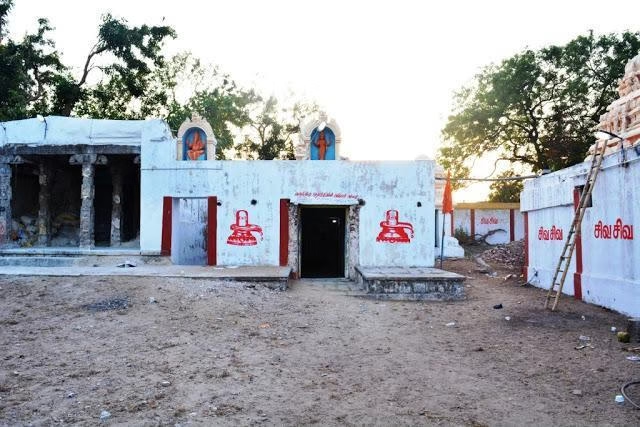
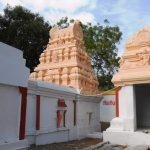
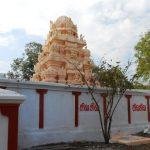
The Samayeswarar Temple is a prime example of Dravidian architecture. Despite showing signs of wear, it retains intricate artistic details that are rarely seen in modern reconstructions.
Structure and Sculptures
The temple faces east and follows the classic Pancha Ayatana style. The complex includes:
- The Sanctum & Mandapas: It consists of the main sanctum (Garbhagriha), an Arthamandapam (intermediate hall), and a Mahamandapam (great hall).
- Unique Pillar Carvings: The pillars in the Mahamandapam are masterpieces. Notable reliefs include:
- Narasimha emerging from a pillar.
- An inverted monkey hanging from a branch.
- Kannappa Nayanar (the devout hunter).
- The legend of Manuneethi Chola depicted through a cow ringing a bell.
- Ceiling Art: The ceiling features reliefs of lizards and winged fish, alongside standard symbols of solar and lunar eclipses.
The Step Well
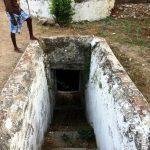
A distinct feature of the temple is the circular step well constructed with bricks and lime mortar. It features an adjoining podium with stairs descending into a tunnel, providing access to water—a unique engineering feature for Tamil Nadu temples.
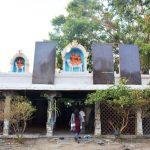
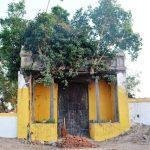
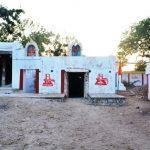
Note: The temple structure, including the front entrance, currently faces challenges due to natural growth and weathering. Preservation efforts are discussed with local stakeholders.
Darshan & Ritual Logistics
Planning your visit requires understanding the daily rhythms of the temple. Note that temple timings are subject to change during festival seasons.
Daily Timings
Since one Kala Pooja is conducted daily, the exact opening time can vary slightly. However, the standard operating hours are as follows:
| Session | Timing |
|---|---|
| Morning Darshan | 06:00 AM – 11:00 AM |
| Midday Closure | 11:00 AM – 04:30 PM |
| Evening Darshan | 04:30 PM – 08:00 PM |
Key Sevas & Online Booking
While specific online portals for this particular rural temple are limited, devotees can book major sevas through the HR&CE Department of Tamil Nadu or by contacting the temple office directly.
- Abhishekam: Performed during morning hours. Special assembly of lamps is offered to Anandhavalli Amman.
- Archana: Can be performed for individual family well-being.
- Pradosham: As this is a Shiva temple, Pradosham days attract significant devotees.
2026 Major Festival Dates
- Arudra Darshanam: January 2026 (Celebrating the cosmic dance of Nataraja).
- Maha Shivaratri: February 26, 2026 (The primary annual festival).
- Navaratri: September 2026 (Special decorations for Anandhavalli Amman).
- Thirukalyanam: Dates as per the local temple calendar (typically Kartikai or Margazhi).
Practical Visitor Guidance
Visiting Pulicat requires some preparation due to the coastal climate and the temple’s semi-ruin state.
Visitor Etiquette & Rules
- Dress Code: Traditional attire is mandatory. Men should wear dhotis or trousers with shirts; women should wear sarees or salwar kameez.
- Photography: Photography is allowed in the outer precincts and mandapas, but restricted inside the sanctum sanctorum. Please respect the sanctity of the shrine.
- Footwear: There are no formal locker facilities. Devotees are advised to wear easy-to-remove footwear as the temple path involves walking on uneven ground.
- Accessibility: Due to the dilapidated entrance, the temple may not be fully wheelchair accessible. Assistance may be required to navigate the steps.
Crowd Management
- Best Time to Visit: Weekday mornings (Tuesday being ideal for Shiva worship) are less crowded.
- Seasonal Advice: Pulicat can be humid. Carry water and wear sun protection if visiting between March and June. During the monsoon (Oct–Dec), carry an umbrella as the open mandapas offer limited shelter.
Pilgrimage Connectivity
How to Reach Samayeswarar Temple
The temple is located in the heart of Pulicat (Pazhaverkadu). Note that Pulicat is an island barrier between the Bay of Bengal and the backwaters.
- By Air: Chennai International Airport (MAA) is the nearest airport, approximately 70 km away (approx. 1.5 – 2 hours drive via NH16).
- By Train: The nearest railway station is Ponneri (20 km). From there, local taxis and buses are available.
- By Road: The temple is accessible via National Highway 16 (NH16) (formerly NH5). From Chennai, take the Red Hills – Ponneri – Pulicat route. Frequent town buses ply from Ponneri and Red Hills.
Nearby Sacred Sites
Enhance your pilgrimage by visiting these nearby locations:
- Adhi Narayana Perumal Temple: Located in the same vicinity, dedicated to Lord Vishnu. The twin temples of Pulicat represent the balance of Shiva and Vishnu energies.
- Nelapattu Bird Sanctuary: While not a temple, this is a revered natural site known for the breeding spot of the Spot-billed Pelican, often visited by devotees seeking tranquility.
- Sri Kalahasteeswarar Temple: Located slightly further inland (approx. 70 km), this is a major Shiva temple (Rahu-Ketu kshetram) often combined in a circuit from Chennai.
Frequently Asked Questions (FAQ)
1. Is there a VIP darshan entry available?
Given the temple’s heritage status and current operational scale, there is no formal VIP entry system. All devotees are treated equally, and darshan is generally quick except during major festivals like Pradosham.
2. Can we perform weddings or naming ceremonies at the temple?
Yes, the temple has a Mahamandapam suitable for small gatherings. It is advisable to contact the temple office (+91 86828 21200) at least 2 weeks in advance to arrange for the necessary priests and permissions.
3. Is there accommodation available in Pulicat?
Basic guest houses are available in the nearby tourist area of Pulicat lagoon. However, for better amenities, devotees prefer staying in Ponneri or traveling back to Chennai/Red Hills.
4. Why is the temple entrance dilapidated?
The temple has experienced structural challenges due to natural weathering and tree growth. Local devotees and the HR&CE department are actively discussing restoration plans to preserve these unique carvings.
5. What is the significance of the lizard carvings on the ceiling?
In Hindu iconography, the lizard represents time and past life karma. Seeing these ancient carvings is believed to cleanse the viewer of minor doshas.
Recent Posts

Shri Kaamkoteeshwar Mandir, Varanasi – History & Significance
In the heart of Kashi, the eternal city of Lord Shiva, where the Ganges flows with celestial grace, stands the Shri Kaamkoteeshwar Mandir. This sacred Sannidhi is not merely a temple but a profound spiritual bridge between the Northern…

ओ सांवरे तूने ही मुझको संभाला – Lyrics & Meaning
ओ सांवरे तूने ही मुझको संभाला – A Prayer to Shyam Origin & Spiritual Essence Why This Bhajan Resonates Devotees chant this when overwhelmed by life’s storms—the refrain ‘तूने ही मुझको संभाला’ is the soul’s sigh of relief: “You…

कथा ये है महाराज मेरे की – Lyrics & Meaning
कथा ये है महाराज मेरे की छत्रपति संभाजी महाराज – A Prayer to Chhatrapati Sambhaji Maharaj Origin & Spiritual Essence Why This Bhajan Resonates Devotees chant this when their spirit feels tested—its powerful refrain “महाराज मेरे” is a soul’s…

Rigveda Samhita Yathartha Anuvada (ऋग्वेद संहिता यथार्थ अनुवाद) – Complete Set with Anvayartha & Hindi/English Translation
The Rigveda is the oldest surviving scripture of humanity and the foundational text of Sanātana Dharma. For serious students, scholars, UPSC aspirants studying ancient Indian history, Sanskrit learners, and spiritual seekers, a precise and grammatically structured translation is indispensable.…

आना भी अकेला है जाना भी अकेला है – Lyrics & Meaning | BharatTemples
आना भी अकेला है जाना भी अकेला है – A Prayer to the Divine Witness Origin & Spiritual Essence Why This Bhajan Resonates Devotees turn to this bhajan in moments of deep reflection—when life’s attachments begin to ache. The…

माता शेरावाली के द्वार जो भी जाता है – Lyrics & Meaning
माता शेरावाली के द्वार जो भी जाता है – A Prayer to Maa Sherawali Origin & Spiritual Essence Why This Bhajan Resonates Devotees turn to this bhajan in times of fear or uncertainty—its promise that no one leaves Maa’s…

मार लेना सपणी उबार लेणा भवरा – Lyrics & Meaning
मार लेना सपणी उबार लेणा भवरा – A Prayer to the Divine Beloved Origin & Spiritual Essence Why This Bhajan Resonates Devotees chant this in moments of deep vulnerability—its cry of “मार लेना सपणी, उबार लेणा भवरा” is the…

हमें श्याम सुंदर भरोसा तुम्हारा – Lyrics & Meaning
हमें श्याम सुंदर भरोसा तुम्हारा – A Prayer to Shyam Sundar Origin & Spiritual Essence Why This Bhajan Resonates Devotees chant this when feeling alone—its refrain ‘de do sahara’ is the soul’s cry for divine support. Lyrics in Hindi…

Mere Satguru Ne Di Thi Davai Lyrics in Hindi & Meaning
Mere Satguru Ne Di Thi Davai: Invoking the Guru’s Liberating Wisdom This soul-stirring bhajan venerates the Satguru (True Spiritual Master) as the divine physician who dispenses the only remedy for life’s deepest sufferings. Composed by Sant Karmaveer Tufani, it…

Janm Diyo Thari Maa Dukh Dekhiyo Lyrics in Hindi & Meaning
जन्म दियो थारी माँ दुख देखियो (Maa’s Grief Upon Birthing You) This soul-stirring Chetavani Bhajan (admonitory hymn) is addressed to the Divine Mother (Maa) – a call for repentance when children forget their filial duties in the dark age…