
Contents
Introduction & Spiritual Essence
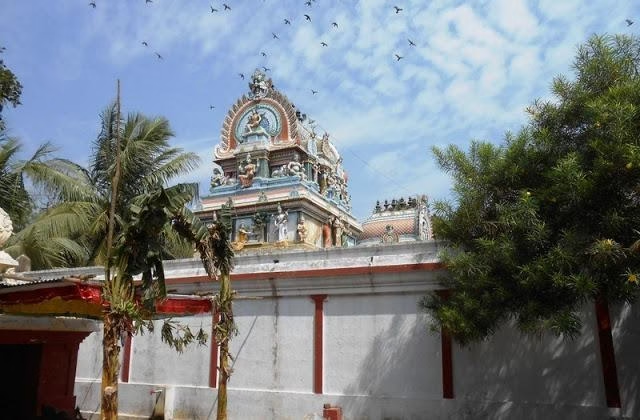
Nestled in the serene village of Thirupalaivanam in the Thiruvallur district, the Paaleeswarar Temple stands as a monumental testament to Dravidian heritage and divine legend. Known also as Palliswarar and Amrutheswarar, the presiding deity is a Swayambhu (self-manifested) Shiva Lingam. The consort, Logambigadevi (also revered as Balambigai), graces the sanctum with maternal benevolence.
Phalaśruti (Spiritual Benefits): Devotees flock to this temple primarily to absolve Karma Dosham, particularly ancestral debt. It is renowned as a potent Parihara Sthalam (remedial shrine) for those seeking relief from planetary afflictions, specifically related to the Pradosham period. Worshipping here is believed to bestow longevity, prosperity, and the removal of prolonged obstacles in life.
Historical Origins & Scriptural Legend
The history of Paaleeswarar Temple is woven into the fabric of cosmic events and royal patronage. According to Temple Records and local lore, the temple dates back to the era of the Chola Dynasty, specifically constructed under the patronage of the renowned Rajendra Chola I.
The Legend of the Amrutha Lingam
Tradition holds that during the celestial churning of the Milky Ocean (Kshira Sagara) by the Devas and Asuras, Amrutha (the nectar of immortality) emerged. A portion of this divine nectar solidified into a Shiva Lingam. This sacred Lingam was initially worshipped by the Devas, followed by the great sages Agastya and Markandeya.
The Scar of Rajendra Chola
A distinct local legend recounts the discovery by Rajendra Chola I. After a victorious battle, the King camped in the Palai Vanam (deserted forest). His royal elephant, tethered to a Jack tree, suddenly collapsed. Ordering the tree to be cut, the King witnessed blood oozing from the trunk. Upon excavation, a Shiva Lingam with a scar on its head was revealed. Recognizing this as a divine manifestation, the King constructed the temple around the Lingam.
Architectural Marvels
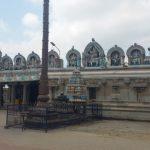
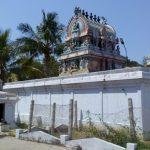
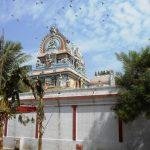
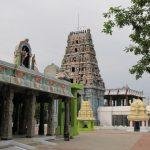
The temple showcases the grandeur of classic Dravidian Architecture. The sanctum is designed according to the Gajabrushta (elephant-back) style, characterized by its curved Vimana (tower) above the sanctum sanctorum.
- The Mandapas: The temple features spacious Mandapas (halls) with stone pillars that depict intricate sculptures of deities and mythical creatures.
- The Temple Tank: A unique feature of this shrine is the temple tank (Teppakulam). Legend suggests that the Devas washed their hands in this tank after consuming nectar, leaving the water so pure that it remains uninhabitable by frogs to this day.
- Preservation: While not officially a UNESCO site, the structures are maintained by the Hindu Religious and Charitable Endowments (HR&CE) Board of Tamil Nadu.
Darshan & Ritual Logistics
Performing specific sevas at Paaleeswarar Temple is highly auspicious. The Pradosham ritual here is particularly famous, drawing large crowds of devotees seeking wealth and well-being.
| Ritual / Seva | Timing | Booking Mode |
|---|---|---|
| Morning Darshan | 07:00 AM – 12:00 PM | Direct Entry |
| Evening Darshan | 04:30 PM – 08:00 PM | Direct Entry |
| Special Abhishekam | 08:00 AM | Online / Temple Office |
| Pradosham Pooja | Sunset to 1.5 hrs after | Advance Booking |
Festival Calendar 2026
- Maha Shivaratri: February 26, 2026 (Major celebrations with night-long vigil).
- Pradosham: Occurs twice monthly; check local panchangam for specific dates.
- Arudra Darshanam: January 2026 (Celebrate the cosmic dance of Nataraja).
- Cart Festival (Ther Thiruvizha): Usually held in the Tamil month of Panguni (March-April).
Online Seva Booking: While the temple offers traditional on-site bookings, devotees can check availability for Special Darshan and Archana through the Tamil Nadu HR&CE official portal prior to travel.
Practical Visitor Guidance
To ensure a serene darshan experience, visitors should adhere to the following guidelines:
- Dress Code: Traditional attire is mandatory. Men should wear Dhotis or trousers with shirts; women should wear sarees, salwar kameez, or full-length skirts.
- Photography: Photography is strictly prohibited inside the sanctum sanctorum. It is allowed in the outer prakarams (corridors), but flash should be disabled to preserve the sanctity.
- Mobile Lockers: Small electronic items may need to be deposited at the designated counter near the entrance, as mobile phone usage is restricted inside the inner shrine.
- Crowd Management: Weekends and Pradosham days see heavy footfall. The best time for a peaceful darshan is a weekday morning immediately after opening (7:00 AM).
- Seasonal Advice: During the summer months (May), temperatures in Thiruvallur can exceed 35°C. Carry a water bottle and an umbrella.
Pilgrimage Connectivity
The temple is accessible via road and rail from Chennai and surrounding regions.
How to Reach
- By Road: Located approximately 47 km from Chennai. Take NH16 (Chennai-Kolkata Highway) towards Gummidipoondi, diverting towards Ponneri/Pulicat. State Highway 57 is also accessible.
- By Rail: The nearest railway station is Ponneri Railway Station (approx. 11 km). From there, local taxis or autos are available.
- By Air: The nearest airport is Chennai International Airport (MAA), approximately 60 km away.
- Public Transport: Buses from Moolakadai (558B), Thiruvotriyur (595A), and Tollgate (595) connect to Ponneri. From Ponneri, switch to buses heading toward Pazhaverkadu (Pulicat) which stop at Thirupalaivanam.
Nearby Sacred Sites
Extend your pilgrimage to these nearby holy destinations:
- Poolatheeswarar Temple (Ponneri): Located about 10 km away, dedicated to Lord Shiva as the Ruler of the Water.
- Pulicat Lake (Sriharikatha): While primarily a natural wonder, it houses ancient temples and is a haven for migratory birds.
- Arulmigu Sri Prathyangira Devi Temple: Located at Kolapakkam, famous for destroying the evil effects of black magic (approx. 35 km via NH16).
Frequently Asked Questions (FAQs)
1. Is there a VIP darshan entry available?
The temple does not have a specific paid VIP entry channel. However, devotees can book the Special Darshan ticket (if available) or coordinate with the temple office for elderly or differently-abled assistance.
2. What is the significance of the “Jack Tree” in the temple?
The Jack tree (Panai Narasu) near the sanctum is believed to be the spot where the Shiva Lingam was discovered by King Rajendra Chola. It holds immense historical and botanical significance within the temple complex.
3. Are there accommodation facilities available nearby?
The temple complex has limited quarters for priests. For pilgrims, budget lodges are available in Ponneri (10 km) and better hotels in Tiruvottiyur (39 km) or Chennai.
4. Can I perform Rudra Abhishekam at this temple?
Yes, Rudra Abhishekam can be performed, typically requiring prior notice and booking through the temple priests. It is best performed during auspicious times like Pradosham.
5. Is the temple accessible for wheelchairs?
The inner sanctum requires climbing stairs, which might be challenging. However, the outer corridors are relatively flat. It is advisable to contact the temple administration (+91 44 2797 8667) for assistance.

Recent Posts

Shri Kaamkoteeshwar Mandir, Varanasi – History & Significance
In the heart of Kashi, the eternal city of Lord Shiva, where the Ganges flows with celestial grace, stands the Shri Kaamkoteeshwar Mandir. This sacred Sannidhi is not merely a temple but a profound spiritual bridge between the Northern…

ओ सांवरे तूने ही मुझको संभाला – Lyrics & Meaning
ओ सांवरे तूने ही मुझको संभाला – A Prayer to Shyam Origin & Spiritual Essence Why This Bhajan Resonates Devotees chant this when overwhelmed by life’s storms—the refrain ‘तूने ही मुझको संभाला’ is the soul’s sigh of relief: “You…

कथा ये है महाराज मेरे की – Lyrics & Meaning
कथा ये है महाराज मेरे की छत्रपति संभाजी महाराज – A Prayer to Chhatrapati Sambhaji Maharaj Origin & Spiritual Essence Why This Bhajan Resonates Devotees chant this when their spirit feels tested—its powerful refrain “महाराज मेरे” is a soul’s…

Rigveda Samhita Yathartha Anuvada (ऋग्वेद संहिता यथार्थ अनुवाद) – Complete Set with Anvayartha & Hindi/English Translation
The Rigveda is the oldest surviving scripture of humanity and the foundational text of Sanātana Dharma. For serious students, scholars, UPSC aspirants studying ancient Indian history, Sanskrit learners, and spiritual seekers, a precise and grammatically structured translation is indispensable.…

आना भी अकेला है जाना भी अकेला है – Lyrics & Meaning | BharatTemples
आना भी अकेला है जाना भी अकेला है – A Prayer to the Divine Witness Origin & Spiritual Essence Why This Bhajan Resonates Devotees turn to this bhajan in moments of deep reflection—when life’s attachments begin to ache. The…

माता शेरावाली के द्वार जो भी जाता है – Lyrics & Meaning
माता शेरावाली के द्वार जो भी जाता है – A Prayer to Maa Sherawali Origin & Spiritual Essence Why This Bhajan Resonates Devotees turn to this bhajan in times of fear or uncertainty—its promise that no one leaves Maa’s…

मार लेना सपणी उबार लेणा भवरा – Lyrics & Meaning
मार लेना सपणी उबार लेणा भवरा – A Prayer to the Divine Beloved Origin & Spiritual Essence Why This Bhajan Resonates Devotees chant this in moments of deep vulnerability—its cry of “मार लेना सपणी, उबार लेणा भवरा” is the…

हमें श्याम सुंदर भरोसा तुम्हारा – Lyrics & Meaning
हमें श्याम सुंदर भरोसा तुम्हारा – A Prayer to Shyam Sundar Origin & Spiritual Essence Why This Bhajan Resonates Devotees chant this when feeling alone—its refrain ‘de do sahara’ is the soul’s cry for divine support. Lyrics in Hindi…

Mere Satguru Ne Di Thi Davai Lyrics in Hindi & Meaning
Mere Satguru Ne Di Thi Davai: Invoking the Guru’s Liberating Wisdom This soul-stirring bhajan venerates the Satguru (True Spiritual Master) as the divine physician who dispenses the only remedy for life’s deepest sufferings. Composed by Sant Karmaveer Tufani, it…

Janm Diyo Thari Maa Dukh Dekhiyo Lyrics in Hindi & Meaning
जन्म दियो थारी माँ दुख देखियो (Maa’s Grief Upon Birthing You) This soul-stirring Chetavani Bhajan (admonitory hymn) is addressed to the Divine Mother (Maa) – a call for repentance when children forget their filial duties in the dark age…