
Contents
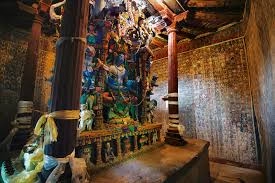
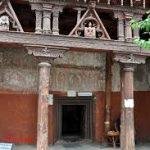
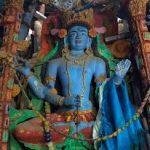
Manjushree Temple, also called ‘Jampe Lha khang’. From a variety of studies of the iconography of the Manjushree temple, Alchi evaluated with that of the Sumtseg and Sumda Assembly hall. It has been incidental that the temple dates to around 1225 AD. Four pillars form the enclosure for the images. The Manjushree images are on a common pedestal, painted recently to give an overall picture of fright since the decorative scrolls are derived from the tails of Makara surrounded by images of animals, gods and symbols. The normal color endorsed to Manjushree images is orange, but in this temple they are represented with different colors.
Introduction & Spiritual Essence
Perched in the tranquil village of Alchi, overlooking the mighty Indus River, the Manjushree Temple, locally revered as Jampe Lha khang, is a sanctuary of wisdom and artistic grandeur. Dedicated to Manjushree (Jampelyang), the Bodhisattva of Transcendent Wisdom, this temple serves as a spiritual anchor for pilgrims seeking clarity and intellectual enlightenment.
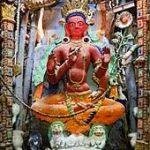
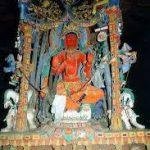
Unlike the vibrant, colorful deities often found in later Tibetan Buddhist art, the Manjushree images here are distinct. While the traditional iconographic color for Manjushree is orange (representing the energy of wisdom), the images in this temple are uniquely represented in different colors, a rare artistic choice that deepens the mystery and reverence of the site.
Phalaśruti (Spiritual Benefits): Devotees visit Jampe Lha khang to invoke the blessings of Manjushree for enhanced memory, eloquence, and spiritual insight. The temple is believed to cleanse intellectual blockages and aid in the accumulation of merit, making it a vital stop for scholars and monks studying at the nearby Alchi Monastery complex.
Historical Origins & Scriptural Legend
The 13th-Century Genesis
Based on comparative iconographic studies with the renowned Sumtseg and Sumda Assembly halls, historians place the construction of the Manjushree Temple around 1225 AD. This era marks the golden age of the Kashmiri influence on Himalayan architecture, facilitated by the great translator Rinchen Zangpo.
The Legend of the Four Pillars
According to local oral traditions and temple records, the structural integrity and spiritual sanctity of the temple are anchored by its four central pillars. These pillars are not merely architectural supports; they form the enclosure for the sacred images and are said to represent the Four Immeasurables (Brahmaviharas) in Buddhist practice: Loving-Kindness, Compassion, Sympathetic Joy, and Equanimity.
Architectural Marvels
The Manjushree Temple exemplifies the early Kashmiri-Influenced Himalayan style, a distinct architectural vocabulary that blends the intricate woodwork of Kashmir with the rugged stone masonry of Ladakh.
- The Makara Motif: A defining feature of the temple’s iconography is the Makara (a mythical aquatic creature). The decorative scrolls of the deity images are derived from the tails of the Makara, symbolizing protection and the flow of cosmic energy.
- The Pedestal of Unity: The Manjushree images reside on a common pedestal, arranged to give an overall impression of spiritual power and awe (Bhaya), despite the serene nature of the deity.
- Iconographic Diversity: The temple is a study in color. While the Sino-Tibetan tradition standardizes Manjushree as orange, the Alchi artists of the 13th century utilized a different palette, surrounding the deity with animals, gods, and symbols in varied hues, creating a visual tapestry that is unique to this region.
Darshan & Ritual Logistics
Manjushree Temple is part of the larger Alchi Monastery complex. While it maintains its distinct identity, the darshan logistics are generally integrated with the monastic schedule.
Daily Timings (2026 Schedule)
| Session | Timing | Activity |
|---|---|---|
| Morning | 08:00 AM – 01:00 PM | General Darshan & Morning Prayers |
| Afternoon | 01:00 PM – 02:00 PM | Closd for Monastic Rest |
| Evening | 02:00 PM – 06:00 PM | General Darshan & Evening Prayers |
Sevas and Offerings
As the temple is part of the Alchi complex, specific Sevas for Manjushree are often conducted by the resident monks. While online booking is not typically available for individual temples within the complex, the larger Alchi Monastery manages visits.
Note for 2026 Pilgrims: For specific Abhishekam or Archana requests at Manjushree Temple, it is recommended to coordinate directly with the Alchi Monastery administration at least 24 hours in advance.
Key Festivals in 2026
- Losar (Tibetan New Year): February 27, 2026. Special prayers and cham dances are performed.
- Gutor (Day before Losar): February 26, 2026. Protection rituals to ward off negative energies.
- Buddha Jayanti (Vesak): May 12, 2026. A major celebration honoring the birth, enlightenment, and parinirvana of the Buddha.
Practical Visitor Guidance
To ensure a respectful and smooth visit, please adhere to the following guidelines:
- Dress Code: Modest clothing is mandatory. Shoulders and knees must be covered. Remove hats and shoes before entering the inner sanctum.
- Photography: Photography is generally allowed in the outer courtyards but is strictly prohibited inside the inner shrine where the ancient paintings and statues reside to preserve their integrity.
- Mobile Lockers: Bags and large cameras may need to be deposited in lockers available at the main Alchi Monastery entrance (small fee applies).
- Crowd Management: The best time to visit is early morning (8:00 AM) right after opening, or late afternoon. Avoid weekends if possible, as local visitors increase footfall.
- Seasonal Advice: In summer (June-August), temperatures can rise; carry water. In winter (November-February), the site is accessible but roads may be icy; warm layers are essential.
Photo Gallery
How to Reach:
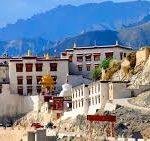
The Manjushree Temple is located in Alchi village, roughly 65 km west of Leh on the Srinagar-Leh Highway (NH1).
- By Air: Fly into Kushok Bakula Rimpochee Airport (IXL) in Leh. From Leh, hire a taxi to Alchi (1.5 – 2 hours drive).
- By Road: The drive from Leh is scenic. Public buses and shared taxis are available from Leh Main Bus Stand.
Address
Alchi Monastery Complex, Alchi Village, Ladakh, 194101, India.
Contact Details
+91-1982-212-XXXX (Contact Alchi Monastery Office for specific queries).

Pilgrimage Connectivity
Manjushree Temple is a jewel in the Alchi circuit. To maximize your spiritual journey in Ladakh, consider these nearby sacred sites:
- Muliyang Temple (Alchi): Located within the same complex, this shrine houses a massive Avalokiteshwara statue.
- Saspol Caves: Located 20 km west towards Leh, these 15th-century caves contain murals blending Buddhist and Hindu iconography.
- Likir Monastery: A 12th-century institution (approx. 25 km away) housing a massive 25-foot gold-coated Maitreya Buddha statue.
Frequently Asked Questions (FAQ)
Is there an entry fee for Manjushree Temple?
There is no separate entry fee for the Manjushree Temple itself, but it is part of the Alchi Monastery complex. There is a general entry fee for the Alchi complex which is maintained by the Alchi Gompa management committee.
What makes the iconography in this temple unique?
Unlike standard Tibetan art where Manjushree is depicted in orange, the Manjushree images here are painted in different colors. Additionally, the decorative scrolls are derived from the tails of the Makara, a mythical sea creature, surrounded by animals and gods, which is a distinct stylistic choice.
Is there a VIP darshan entry?
Generally, no. The temple operates on a first-come, first-served basis. However, those wishing to offer specific pujas or donations should contact the head lama of the Alchi Monastery.
What is the altitude of the temple?
Alchi village sits at an altitude of approximately 10,000 feet (3,100 meters) above sea level. While lower than Leh, visitors should still take precautions against altitude sickness.
Are non-Buddhists allowed inside?
Yes, the temple is open to all faiths and spiritual seekers. All visitors are expected to respect the sanctity of the site by maintaining silence and removing shoes.
Recent Posts

Shri Kaamkoteeshwar Mandir, Varanasi – History & Significance
In the heart of Kashi, the eternal city of Lord Shiva, where the Ganges flows with celestial grace, stands the Shri Kaamkoteeshwar Mandir. This sacred Sannidhi is not merely a temple but a profound spiritual bridge between the Northern…

ओ सांवरे तूने ही मुझको संभाला – Lyrics & Meaning
ओ सांवरे तूने ही मुझको संभाला – A Prayer to Shyam Origin & Spiritual Essence Why This Bhajan Resonates Devotees chant this when overwhelmed by life’s storms—the refrain ‘तूने ही मुझको संभाला’ is the soul’s sigh of relief: “You…

कथा ये है महाराज मेरे की – Lyrics & Meaning
कथा ये है महाराज मेरे की छत्रपति संभाजी महाराज – A Prayer to Chhatrapati Sambhaji Maharaj Origin & Spiritual Essence Why This Bhajan Resonates Devotees chant this when their spirit feels tested—its powerful refrain “महाराज मेरे” is a soul’s…

Rigveda Samhita Yathartha Anuvada (ऋग्वेद संहिता यथार्थ अनुवाद) – Complete Set with Anvayartha & Hindi/English Translation
The Rigveda is the oldest surviving scripture of humanity and the foundational text of Sanātana Dharma. For serious students, scholars, UPSC aspirants studying ancient Indian history, Sanskrit learners, and spiritual seekers, a precise and grammatically structured translation is indispensable.…

आना भी अकेला है जाना भी अकेला है – Lyrics & Meaning | BharatTemples
आना भी अकेला है जाना भी अकेला है – A Prayer to the Divine Witness Origin & Spiritual Essence Why This Bhajan Resonates Devotees turn to this bhajan in moments of deep reflection—when life’s attachments begin to ache. The…

माता शेरावाली के द्वार जो भी जाता है – Lyrics & Meaning
माता शेरावाली के द्वार जो भी जाता है – A Prayer to Maa Sherawali Origin & Spiritual Essence Why This Bhajan Resonates Devotees turn to this bhajan in times of fear or uncertainty—its promise that no one leaves Maa’s…

मार लेना सपणी उबार लेणा भवरा – Lyrics & Meaning
मार लेना सपणी उबार लेणा भवरा – A Prayer to the Divine Beloved Origin & Spiritual Essence Why This Bhajan Resonates Devotees chant this in moments of deep vulnerability—its cry of “मार लेना सपणी, उबार लेणा भवरा” is the…

हमें श्याम सुंदर भरोसा तुम्हारा – Lyrics & Meaning
हमें श्याम सुंदर भरोसा तुम्हारा – A Prayer to Shyam Sundar Origin & Spiritual Essence Why This Bhajan Resonates Devotees chant this when feeling alone—its refrain ‘de do sahara’ is the soul’s cry for divine support. Lyrics in Hindi…

Mere Satguru Ne Di Thi Davai Lyrics in Hindi & Meaning
Mere Satguru Ne Di Thi Davai: Invoking the Guru’s Liberating Wisdom This soul-stirring bhajan venerates the Satguru (True Spiritual Master) as the divine physician who dispenses the only remedy for life’s deepest sufferings. Composed by Sant Karmaveer Tufani, it…

Janm Diyo Thari Maa Dukh Dekhiyo Lyrics in Hindi & Meaning
जन्म दियो थारी माँ दुख देखियो (Maa’s Grief Upon Birthing You) This soul-stirring Chetavani Bhajan (admonitory hymn) is addressed to the Divine Mother (Maa) – a call for repentance when children forget their filial duties in the dark age…