
Contents
- 1 Chamba Temple Ladakh: A Definitive Pilgrimage Guide
Chamba Temple Ladakh: A Definitive Pilgrimage Guide
Introduction & Spiritual Essence
The Chamba Temple in Ladakh stands as a serene beacon of devotion amidst the stark, majestic landscapes of the Himalayas. Dedicated to Maitreya Buddha (the Buddha of the Future), this white-washed structure is more than a historical monument; it is a living testament to the Tibetan Buddhist belief in the cyclical nature of time and the eventual return of enlightenment.
The Prophecy of Maitreya (Maitreya Buddha)
According to Buddhist eschatology, a time will come when the teachings of Shakyamuni Buddha fade from the earth. Tradition holds that Maitreya, currently residing in the Tushita heaven, will descend to earth in the distant future to attain enlightenment and re-establish Dharma. Devotees visit the Chamba Temple to venerate this future Buddha, seeking blessings for wisdom, patience, and the accumulation of merit for future lives.
Phalaśruti: The Benefits of Pilgrimage
Why do pilgrims traverse difficult mountain roads to reach this specific site?
- Connection to the Future: Offering prayers here is believed to secure a favorable rebirth and a connection to the future era of Maitreya.
- Cleansing Karmic Obstacles: The secluded environment and sacred vibrations of the temple help in dissolving negative karma accumulated in past lives.
- Mental Clarity: The visual focus on the serene Maitreya statue aids in meditation and the reduction of mental agitation.
Historical Origins & Scriptural Legend
The history of the Chamba Temple is deeply woven into the fabric of the Buddhist Kingdom of Ladakh (formerly part of the Guge and later the Namgyal dynasty).
The 15th-Century Foundation
As per historical records and local folklore, the temple was constructed in the 15th Century by King Tragspa Bumde (also spelled Dragspa Bumde or Drag-pa Bum-de). This period was marked by a flourishing of Buddhist art and architecture in Ladakh, often mirroring the styles found in the nearby Basgo and Alchi monasteries.
Scriptural and Local Legend
While the temple adheres to the general Mahayana and Vajrayana scriptures, the Sthala Purana (local oral tradition) of Chamba adds a unique regional narrative. The temple was built not just as a place of worship, but as a spiritual fortress against the “end times” predicted in Buddhist scripture. The white structure symbolizes purity and the luminous nature of the enlightened mind that Maitreya will embody.
Architectural Marvels
The Chamba Temple is a fine example of the Gupta-influenced Tibetan Buddhist architectural style prevalent in ancient Ladakh. While distinct from the Nagara or Dravida styles of the south, it shares a focus on verticality and symbolic geometry.
Structure and Design
- The Exterior: The temple is distinguished by its whitewashed walls, a common feature in Ladakhi Buddhist monasteries (Gompas), symbolizing peace and the spread of pure knowledge.
- The Maitreya Statue: The sanctum houses a majestic, ancient statue of Maitreya Buddha in a seated posture. The craftsmanship reflects the stylistic nuances of the 15th century, with intricate gold leaf detailing and original pigments preserved over centuries.
- The Layout: The temple follows a traditional monastic layout with a main assembly hall (Du-khang) and sanctum (Garbhagriha), designed according to Vastu principles adapted for high-altitude sanctity.

Darshan & Ritual Logistics
Visiting a Himalayan monastery requires an understanding of the monastic routine. Unlike urban temples, the schedule here follows the monastic discipline.
Daily Timings (Standard Schedule)
Note: Timings may vary slightly based on the monastic calendar and seasonal daylight hours in Ladakh.
| Session | Timing | Activity |
|---|---|---|
| Morning | 6:00 AM – 1:00 PM | Morning Prayers, General Darshan |
| Afternoon | 1:00 PM – 2:00 PM | Lunch Break (Temple may close) |
| Evening | 2:00 PM – 6:00 PM | Evening Prayers, Lamp Offering |
Key Sevas and Offerings
While specific online booking platforms are less common for remote Ladakhi monasteries compared to major South Indian temples, arrangements can be made locally.
- Butter Lamp Offering (Diya): The most significant offering here. Devotees sponsor lamps for long life and prosperity.
- Abhishekam (Ritual Bathing): Performed for the Maitreya idol during special occasions.
- Puja & Havan: Fire rituals for the removal of obstacles.
Festival Dates for 2026
Plan your visit to coincide with these vibrant celebrations:
- Buddha Purnima (Vesak): May 29, 2026 (Tentative). Celebrating the birth, enlightenment, and parinirvana of Buddha. Special prayers are held for Maitreya.
- Ladakh Festival: September 2026 (Dates TBA). A cultural celebration featuring traditional dances and music.
- Losar (Tibetan New Year): February 2026 (Dates vary by lunar calendar).
Practical Visitor Guidance
Traveling to Ladakh requires preparation, especially regarding altitude and cultural respect.
Dress Code & Etiquette
- Attire: Modest clothing is mandatory. Shoulders and knees must be covered. Loose, comfortable clothing is recommended for sitting on the floor during prayers.
- Footwear: You must remove shoes before entering the temple complex. Wear slip-on shoes for convenience.
- Photography: Photography is generally allowed in the outer courtyards but strictly prohibited inside the sanctum and prayer halls where ancient murals and statues are present. Always ask the monks for permission.
Crowd Management & Accessibility
- Best Hours: Visit early morning (8:00 AM) to avoid tourist buses and experience the chanting sessions. Late afternoon offers the best light for photography on the white walls.
- Altitude Warning: Chamba is at a significant altitude. Carry water, avoid strenuous activity immediately upon arrival, and watch for signs of Acute Mountain Sickness (AMS).
- Mobile Lockers: While there are no high-tech lockers, the temple caretakers usually provide a secure area for footwear and outer layers. Keep valuables with you.
Pilgrimage Connectivity
The Chamba Temple is located in the Kargil region of Ladakh. It serves as a stopover for pilgrims traveling between Leh and Srinagar.
How to Reach
- By Air: The nearest airport is Kushok Bakula Rimpochee Airport (IXL) in Leh (approx. 200 km away). Taxis are available from Leh airport to Chamba.
- By Rail: As noted in historical records, the nearest major railway station is Pathankot Junction (PTK) in Punjab, India. It is approximately 200 km from Chamba (Himachal Pradesh side), but for Ladakh, the road journey is long. The closest operational rail link to Ladakh is currently the Kargil Railway Station (under development as part of the Banihal-Kargil line). Until fully operational, Pathankot is the standard railhead followed by a 2-day road journey.
- By Road:
- From Leh: 200 km via the Srinagar-Leh Highway (NH1). The drive takes roughly 5-6 hours.
- From Kargil Town: Approximately 30-40 km south. Shared taxis and buses are available.
Nearby Sacred Sites
Extend your pilgrimage circuit to these nearby landmarks:
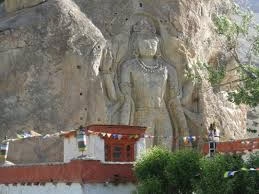
- Mulbekh Monastery: Located roughly 10 km away, famous for the giant rock-carved Maitreya statue (approx. 9th century).
- Lamayuru Monastery: One of the oldest and largest monasteries in Ladakh (approx. 70 km away), known for its “Moonland” landscapes.
- Shargole Monastery: A small but ancient cave monastery built into a cliff face.
Frequently Asked Questions (FAQ)
1. Is there a VIP darshan entry at Chamba Temple?
No, the Chamba Temple operates on a traditional monastic schedule. There are no paid VIP entry tickets. All devotees are treated equally, and darshan is available to everyone during opening hours.
2. Are there accommodation facilities near the temple?
Basic homestays and guesthouses are available in Chamba town and the nearby village of Mulbekh. For more luxury amenities, travelers usually stay in Kargil town (approx. 40 km north).
3. What is the best season to visit Chamba Temple?
The ideal time is from May to September. During these months, the roads are open, and the weather is pleasant (15-25°C). Winters are harsh with heavy snowfall, often blocking access.
4. Can non-Buddhists enter the temple?
Yes, absolutely. Buddhist monasteries in Ladakh are open to people of all faiths. Visitors are expected to maintain silence and respect the sanctity of the prayer halls.
5. Is mobile network connectivity available?
Connectivity can be patchy. Postpaid SIM cards (BSNL, Airtel, Jio) work better in the Kargil region than prepaid connections. It is advisable to download offline maps before leaving Leh or Kargil.
Address & Contact Details
Chamba Temple
Location: Chamba, Kargil District, Ladakh, India.
GPS Coordinates: Available upon request from the Kargil Tourist Information Center.
Contact: As the temple is managed by the local monastic community, there is no direct public phone number. For inquiries, contact the Office of the Executive Councillor, Kargil or the Department of Tourism, Ladakh.
Recent Posts

Shri Kaamkoteeshwar Mandir, Varanasi – History & Significance
In the heart of Kashi, the eternal city of Lord Shiva, where the Ganges flows with celestial grace, stands the Shri Kaamkoteeshwar Mandir. This sacred Sannidhi is not merely a temple but a profound spiritual bridge between the Northern…

ओ सांवरे तूने ही मुझको संभाला – Lyrics & Meaning
ओ सांवरे तूने ही मुझको संभाला – A Prayer to Shyam Origin & Spiritual Essence Why This Bhajan Resonates Devotees chant this when overwhelmed by life’s storms—the refrain ‘तूने ही मुझको संभाला’ is the soul’s sigh of relief: “You…

कथा ये है महाराज मेरे की – Lyrics & Meaning
कथा ये है महाराज मेरे की छत्रपति संभाजी महाराज – A Prayer to Chhatrapati Sambhaji Maharaj Origin & Spiritual Essence Why This Bhajan Resonates Devotees chant this when their spirit feels tested—its powerful refrain “महाराज मेरे” is a soul’s…

Rigveda Samhita Yathartha Anuvada (ऋग्वेद संहिता यथार्थ अनुवाद) – Complete Set with Anvayartha & Hindi/English Translation
The Rigveda is the oldest surviving scripture of humanity and the foundational text of Sanātana Dharma. For serious students, scholars, UPSC aspirants studying ancient Indian history, Sanskrit learners, and spiritual seekers, a precise and grammatically structured translation is indispensable.…

आना भी अकेला है जाना भी अकेला है – Lyrics & Meaning | BharatTemples
आना भी अकेला है जाना भी अकेला है – A Prayer to the Divine Witness Origin & Spiritual Essence Why This Bhajan Resonates Devotees turn to this bhajan in moments of deep reflection—when life’s attachments begin to ache. The…

माता शेरावाली के द्वार जो भी जाता है – Lyrics & Meaning
माता शेरावाली के द्वार जो भी जाता है – A Prayer to Maa Sherawali Origin & Spiritual Essence Why This Bhajan Resonates Devotees turn to this bhajan in times of fear or uncertainty—its promise that no one leaves Maa’s…

मार लेना सपणी उबार लेणा भवरा – Lyrics & Meaning
मार लेना सपणी उबार लेणा भवरा – A Prayer to the Divine Beloved Origin & Spiritual Essence Why This Bhajan Resonates Devotees chant this in moments of deep vulnerability—its cry of “मार लेना सपणी, उबार लेणा भवरा” is the…

हमें श्याम सुंदर भरोसा तुम्हारा – Lyrics & Meaning
हमें श्याम सुंदर भरोसा तुम्हारा – A Prayer to Shyam Sundar Origin & Spiritual Essence Why This Bhajan Resonates Devotees chant this when feeling alone—its refrain ‘de do sahara’ is the soul’s cry for divine support. Lyrics in Hindi…

Mere Satguru Ne Di Thi Davai Lyrics in Hindi & Meaning
Mere Satguru Ne Di Thi Davai: Invoking the Guru’s Liberating Wisdom This soul-stirring bhajan venerates the Satguru (True Spiritual Master) as the divine physician who dispenses the only remedy for life’s deepest sufferings. Composed by Sant Karmaveer Tufani, it…

Janm Diyo Thari Maa Dukh Dekhiyo Lyrics in Hindi & Meaning
जन्म दियो थारी माँ दुख देखियो (Maa’s Grief Upon Birthing You) This soul-stirring Chetavani Bhajan (admonitory hymn) is addressed to the Divine Mother (Maa) – a call for repentance when children forget their filial duties in the dark age…