
Contents
The Thiksey Tara Temple: A Definitive Guide to the 21 Forms of Compassion in Ladakh
As the Lead Heritage Architect and SEO Strategist for bharattemples.com, it is my privilege to present a comprehensive guide to the Tara Temple located within the majestic Thiksey Monastery in Ladakh. This guide is engineered for the modern pilgrim, balancing deep devotional insights with practical logistics, ensuring your journey to this high-altitude sanctuary is as spiritually fulfilling as it is seamless.
Introduction & Spiritual Essence
The Tara Temple (often referred to as the Chokhang or Chi-khang) is the spiritual heart of the Thiksey Monastery complex. Perched on a hilltop overlooking the Indus Valley, this Tibetan Buddhist temple is a sanctuary of unwavering compassion and protective energies.
Primary Deity and Form
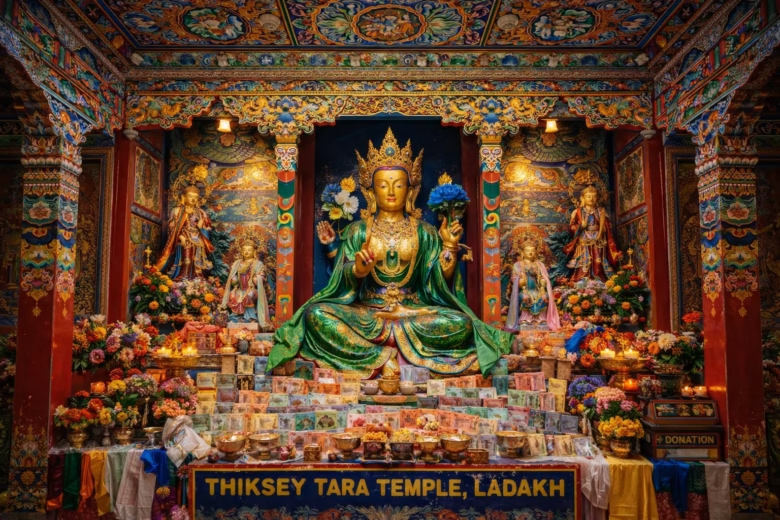
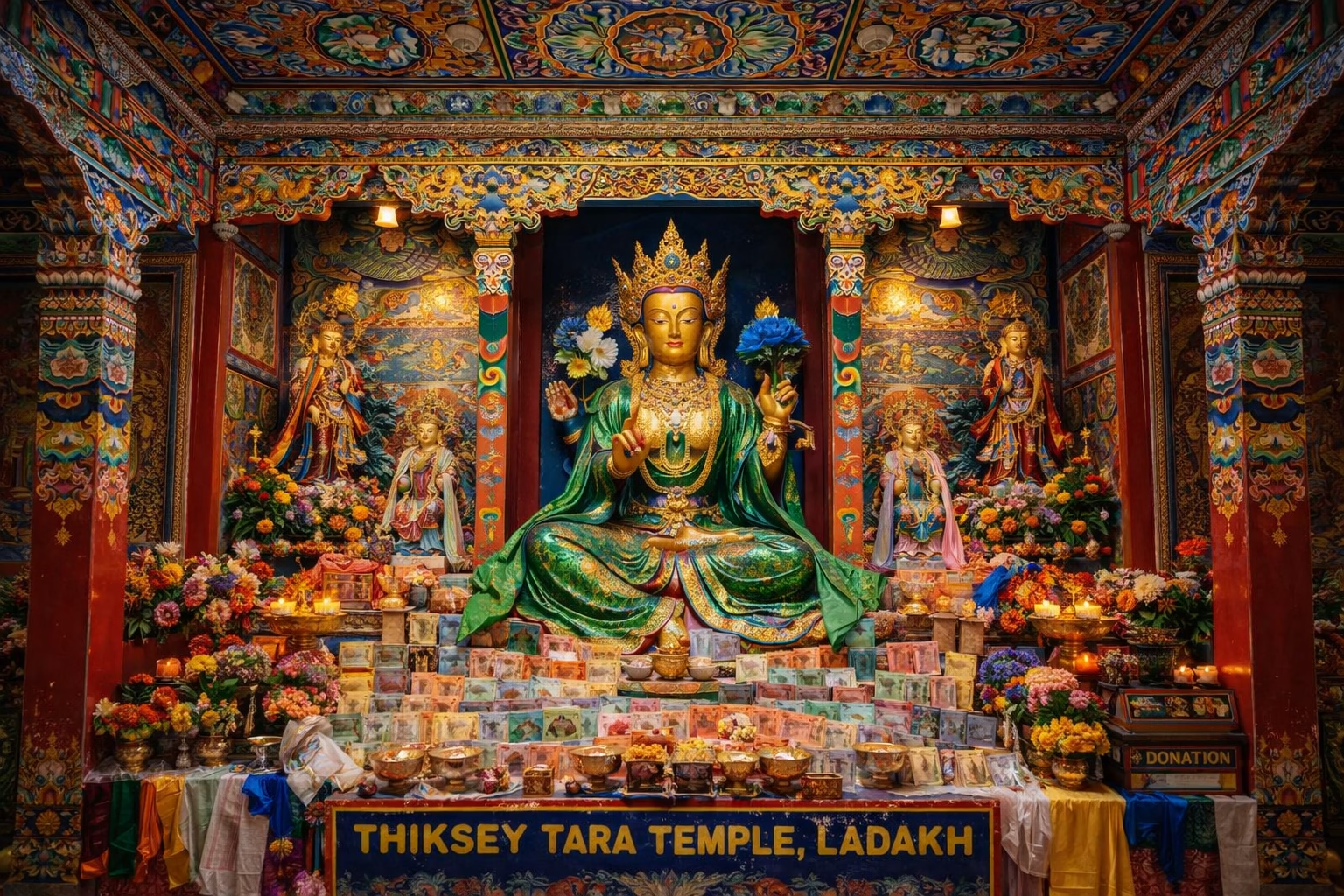
The temple is dedicated to Arya Tara, the female Bodhisattva of enlightened activity and compassion. In this context, she is venerated through her 21 forms, each representing a specific aspect of protection and benefit. These idols are not merely artistic depictions but are believed to be living embodiments of Tara’s vows to aid sentient beings.
Phalaśruti: The Fruits of Devotion
Why do devotees traverse the rugged terrains of Ladakh to visit this shrine? The Phalaśruti (merit of hearing and worshipping) is profound:
- Removal of Fear: Tara is the protector against the eight great fears (lions, elephants, fire, etc.). Worshipping her here, especially at 11,500 feet, brings an immediate sense of safety.
- Protection on Journeys: Given Ladakh’s challenging geography, invoking the 21 Taras is essential for safe travel through mountain passes.
- Inner Peace: The vibrations within the Chi-khang, combined with the visual focus on the 21 forms, cleanse the mind of anxiety.
Historical Origins & Scriptural Legend
The history of the Thiksey Tara Temple is inseparable from the history of the Thiksey Monastery itself.
Founding and Lineage
The Thiksey Monastery, located approximately 19 kilometers from Leh, is the largest gompa (monastery) in central Ladakh. It belongs to the Gelug school of Tibetan Buddhism (the “Yellow Hat” sect). According to temple records, the monastery was founded in the early 15th century, specifically around 1430 AD, by Sherab Sangpo. The spiritual lineage traces back to the great Tsongkhapa, the founder of the Gelug tradition.
Sthala Purana: Local Legend
Tradition holds that the site of Thiksey was chosen by a lama named Jangsem Sherab Zangpo. The location is considered auspicious due to its resemblance to the Potala Palace in Lhasa, Tibet. The Tara Temple within the complex houses ancient scriptures and idols brought from Tibet during the monastery’s formative years. The 21 Tara images are believed to have been consecrated with immense spiritual potency, protecting the region from invasions and natural calamities.
Architectural Marvels
The architecture of Thiksey Monastery is a spectacular example of Indian and Tibetan styles merging in the Himalayas. It is often called the “Mini Potala” for its striking architectural resemblance to the Potala Palace in Lhasa.
The Chi-khang Structure
The Tara Temple (Chi-khang) features the classic Thiksey style architecture:
- Ascension: The temple is accessed via a staircase leading from the main courtyard, symbolizing the spiritual ascent from ignorance to enlightenment.
- The Mandala Layout: The interior layout follows a mandala structure, with the central pillar housing the main statues.
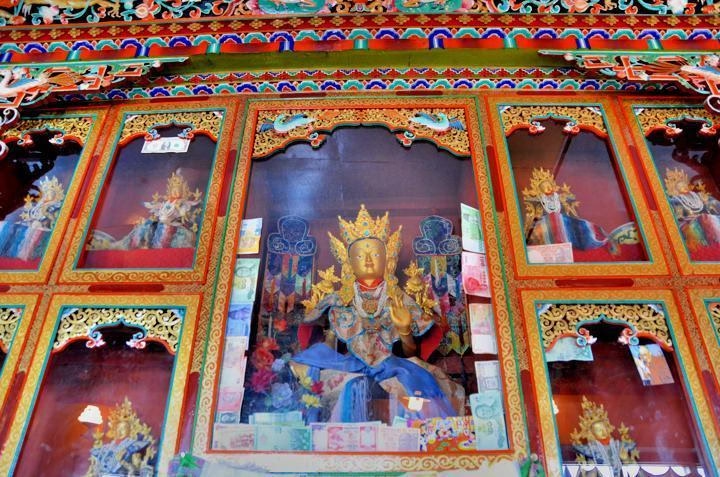
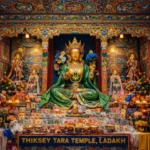
- The 21 Taras: The most striking architectural feature is the glass-covered wooden shelf that houses the 21 distinct images of Goddess Tara. This preservation technique protects the ancient paints and gilded surfaces from the harsh UV radiation and cold of the high altitude.
Sculptural and Mural Elements
Within the Chi-khang, you will find an image of Shakyamuni Buddha flanked by his two chief disciples, Sariputra and Maudgalyayana. Nearby, the fierce deity Yamantaka is depicted, symbolizing the transformation of anger into wisdom.
The courtyard walls are a canvas of spiritual art, depicting the great Tsong Khapa (founder of the Gelug sect), Padmasambhava (the second Buddha of Tibet), and wrathful protectors like Palden Lhamo and Mahakala. While the monastery is a religious complex, the preservation of these murals is of such high importance that they are often discussed in terms of heritage conservation, though they do not currently hold UNESCO World Heritage status.
Gallery of Serenity
To witness the visual splendor of the 21 Taras and the grandeur of the Thiksey architecture, please view the images below.
Darshan & Ritual Logistics
Visiting a Himalayan monastery requires adherence to specific timings and rituals. Unlike standard Hindu temples, the ritual schedule here follows the monastic lifestyle.
Daily Timings
The monastery generally opens early for morning prayers. However, these hours can shift slightly based on the season (summer vs. winter schedules).
| Session | Timing | Activity |
|---|---|---|
| Morning | 07:00 AM – 10:00 AM | Chanting of Prayers / Darshan |
| Noon | 12:00 PM – 01:00 PM | Closed for Lunch Break |
| Afternoon | 01:00 PM – 05:00 PM | Open for Tourists & Darshan |
Sevas and Offerings
While specific “online seva booking” is more common in major Hindu shrines, the Thiksey Monastery offers spiritual services that can be arranged by contacting the Gelugpa Monastic Committee or through local tour operators in Leh.
- Butter Lamp Offering: The most auspicious offering here. Lighting a lamp in the Tara Temple brings light to one’s spiritual path.
- Prayer Flags: Purchasing and hoisting prayer flags in the courtyard ensures blessings spread with the wind.
Festivals in 2026
Plan your visit around these major dates to experience the monastery in its full glory:
- Losar (Tibetan New Year): February 25 – 27, 2026. The monastery is decorated with religious paintings and special mask dances.
- Thiksey Gustor: November 11 – 12, 2026. The annual festival featuring the Cham dance (mask dance) and rituals to subdue evil spirits.
Practical Visitor Guidance
Ladakh is a high-altitude cold desert. Preparation is key to a safe pilgrimage.
Code of Conduct and Dress Code
- Dress Code: Modest clothing is mandatory. Shoulders and knees must be covered. Warm layers are essential as the interior, though shielded, retains the chill.
- Photography: Photography is generally allowed in the courtyard and external structures. However, strictly prohibited inside the Chi-khang (prayer hall) and the Tara Temple room. Flash photography is banned everywhere.
- Mobile Lockers: There are no formal locker facilities at the monastery entrance. It is advisable to leave electronic devices in your vehicle or hotel, especially large bags.
Crowd Management
- Best Hours: Visit immediately after opening (07:00 AM) or in the late afternoon (after 03:00 PM) to avoid the influx of tour buses arriving from Leh around mid-day.
- Seasonal Advice: In May and October, the wind can be biting; carry thermal layers. In July/August (monsoon), Ladakh remains dry, but sunscreen is crucial due to UV rays at high altitude.
Accessibility
The monastery is built on a steep slope. While vehicles can reach the base of the hill, there are stairs leading up to the main entrance. It is not wheelchair accessible.
Pilgrimage Connectivity
How to Reach
- Airport: Kushok Bakula Rimpochee Airport (IXL), Leh. The temple is approximately 20 km (45 minutes drive) from the airport.
- Road Access: Thiksey is located on the Leh – Manali Highway (NH3), about 19 km east of Leh. The road is paved and motorable by car or taxi.
- Public Transport: Shared taxis and buses are available from Leh’s main bazaar.
Nearby Sacred Sites (Pilgrimage Circuit)
Extend your spiritual journey by visiting these nearby destinations:
- Hemis Monastery (16 km away): The wealthiest and largest monastery in Ladakh, famous for its quadrennial festival.
- Shey Palace and Monastery (15 km away): The ancient summer capital of Ladakh, featuring a massive Shakyamuni Buddha statue.
- Stakna Monastery (25 km away): Known as the “Tiger’s Nose,” this fortress monastery sits on a precipice.
Frequently Asked Questions (FAQ)
The Tara Temple is a specific Chokhang (prayer hall) located within the larger complex of Thiksey Monastery. While the monastery contains multiple buildings and prayer halls, the Tara Temple specifically houses the 21 images of Goddess Tara.
Unlike commercialized temples, Thiksey Monastery does not have a “VIP darshan” ticket system. All visitors are granted equal access. However, making a small donation (optional) at the entry box is customary and appreciated.
Yes, the monastery has a guest house for pilgrims and spiritual seekers. However, it is advisable to book in advance. Most tourists prefer staying in Leh, which offers a wider range of hotels and amenities.
Yes, Thiksey Monastery welcomes people of all faiths. Visitors are requested to maintain silence inside the prayer halls and respect the monks during their prayers.
The ideal time is from May to September when the weather is pleasant and roads are open. Winters are harsh, with temperatures dropping below -20°C, and the monastery remains accessible but challenging to reach due to snow.
Address and Contact Details
Address:
Thiksey Monastery (Tara Temple),
Thiksey Village, Ladakh – 194201.
Contact Details:
For official inquiries regarding monastery history or specific rituals, it is best to contact the Central Institute of Buddhist Studies (CIBS) in Leh or the Monastery Head Lama’s office (Gelong) on-site.
Phone: +91-1982-252 299 (Monastery Office)
Recent Posts

Shri Kaamkoteeshwar Mandir, Varanasi – History & Significance
In the heart of Kashi, the eternal city of Lord Shiva, where the Ganges flows with celestial grace, stands the Shri Kaamkoteeshwar Mandir. This sacred Sannidhi is not merely a temple but a profound spiritual bridge between the Northern…

ओ सांवरे तूने ही मुझको संभाला – Lyrics & Meaning
ओ सांवरे तूने ही मुझको संभाला – A Prayer to Shyam Origin & Spiritual Essence Why This Bhajan Resonates Devotees chant this when overwhelmed by life’s storms—the refrain ‘तूने ही मुझको संभाला’ is the soul’s sigh of relief: “You…

कथा ये है महाराज मेरे की – Lyrics & Meaning
कथा ये है महाराज मेरे की छत्रपति संभाजी महाराज – A Prayer to Chhatrapati Sambhaji Maharaj Origin & Spiritual Essence Why This Bhajan Resonates Devotees chant this when their spirit feels tested—its powerful refrain “महाराज मेरे” is a soul’s…

Rigveda Samhita Yathartha Anuvada (ऋग्वेद संहिता यथार्थ अनुवाद) – Complete Set with Anvayartha & Hindi/English Translation
The Rigveda is the oldest surviving scripture of humanity and the foundational text of Sanātana Dharma. For serious students, scholars, UPSC aspirants studying ancient Indian history, Sanskrit learners, and spiritual seekers, a precise and grammatically structured translation is indispensable.…

आना भी अकेला है जाना भी अकेला है – Lyrics & Meaning | BharatTemples
आना भी अकेला है जाना भी अकेला है – A Prayer to the Divine Witness Origin & Spiritual Essence Why This Bhajan Resonates Devotees turn to this bhajan in moments of deep reflection—when life’s attachments begin to ache. The…

माता शेरावाली के द्वार जो भी जाता है – Lyrics & Meaning
माता शेरावाली के द्वार जो भी जाता है – A Prayer to Maa Sherawali Origin & Spiritual Essence Why This Bhajan Resonates Devotees turn to this bhajan in times of fear or uncertainty—its promise that no one leaves Maa’s…

मार लेना सपणी उबार लेणा भवरा – Lyrics & Meaning
मार लेना सपणी उबार लेणा भवरा – A Prayer to the Divine Beloved Origin & Spiritual Essence Why This Bhajan Resonates Devotees chant this in moments of deep vulnerability—its cry of “मार लेना सपणी, उबार लेणा भवरा” is the…

हमें श्याम सुंदर भरोसा तुम्हारा – Lyrics & Meaning
हमें श्याम सुंदर भरोसा तुम्हारा – A Prayer to Shyam Sundar Origin & Spiritual Essence Why This Bhajan Resonates Devotees chant this when feeling alone—its refrain ‘de do sahara’ is the soul’s cry for divine support. Lyrics in Hindi…

Mere Satguru Ne Di Thi Davai Lyrics in Hindi & Meaning
Mere Satguru Ne Di Thi Davai: Invoking the Guru’s Liberating Wisdom This soul-stirring bhajan venerates the Satguru (True Spiritual Master) as the divine physician who dispenses the only remedy for life’s deepest sufferings. Composed by Sant Karmaveer Tufani, it…

Janm Diyo Thari Maa Dukh Dekhiyo Lyrics in Hindi & Meaning
जन्म दियो थारी माँ दुख देखियो (Maa’s Grief Upon Birthing You) This soul-stirring Chetavani Bhajan (admonitory hymn) is addressed to the Divine Mother (Maa) – a call for repentance when children forget their filial duties in the dark age…