
Contents
- 1 Sundareswarar Temple, Kovur: A Sanctuary of Shiva, Sound, and Sacred Legend
Sundareswarar Temple, Kovur: A Sanctuary of Shiva, Sound, and Sacred Legend
Introduction & Spiritual Essence
Nestled in the spiritual hinterland of Kovur, near Mangadu in Chennai, stands the venerable Sundareswarar Temple. Dedicated to Lord Shiva, known here as Sundareswarar (or Thirumeneeswarar) and the Mother Goddess as Soundharaambigai (Thiruvudai Naayagi), this temple is a beacon of Dravidian heritage and divine grace.
The primary Phalaśruti (benefit of worship) attributed to this temple is profound. It is believed that worshipping Sundareswarar here brings relief from the malefic effects of the planet Mercury (Budhan) in one’s horoscope. Specifically, childless couples are blessed with progeny, obstacles in marriage are removed, and students seeking wisdom find clarity. It is a site where the intense heat of devotion cools the soul, mirroring the temple’s own origin myth.
Historical Origins & Scriptural Legend
The Chola Connection
According to temple records and historical estimates, the sanctum of Sundareswarar Temple dates back to the glorious era of the Chola Dynasty, likely built by King Sundara Chola. It was later significantly renovated and expanded by Kulothunga Chozha II (1133–1150 AD), whose inscriptions are often found in the Dravidian temples of this region.
The Sthala Purana: The Legend of Kovur
Tradition holds that the temple’s name Kovur is derived from the Tamil words Ko (Cow) and Ur (Place).
The legend narrates that Goddess Kamakshi was performing intense Thapas (penance) in the nearby town of Mangadu to win Lord Shiva as her consort. The heat generated by her penance became unbearable for the world. Lord Shiva, deep in meditation, remained unaware. To save the universe, Lord Vishnu requested Goddess Mahalakshmi to intervene. Assuming the form of a divine cow (Kamadhenu), Mahalakshmi came to this spot and worshipped Lord Shiva.
Pleased by her devotion, Shiva opened his eyes, tempering the cosmic heat and restoring balance. Hence, the place came to be known as Kopuri (The place of the Cow), which eventually evolved into Kovur.
Architectural Marvels
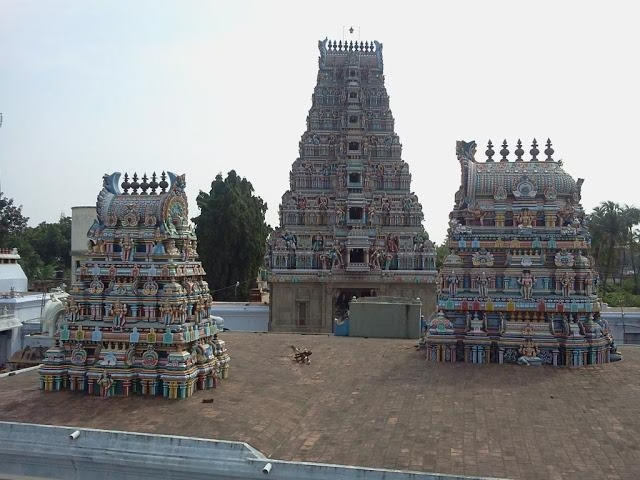
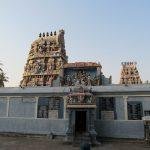
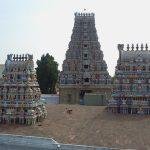
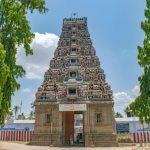
The Sundareswarar Temple is a classic example of the Dravidian architectural style. While it may not boast the towering gopurams of the larger Meenakshi temple, its charm lies in the intricate carvings and the sanctity of its structure.
- Sanctum Sanctorum (Garbhagriha): The presiding deity, Sundareswarar, is a Swayambhu (self-manifested) Lingam.
- Mandapas: The temple features a series of pillared Mandapas (halls) that display fine sculptural work, including the Sapta Mathas (Seven Mothers) and other guardian deities.
- Artistic Niches: The inner prakaram (corridor) houses shrines for Murugan, Navagrahas, and Sundarar (one of the Nayanmars).
Darshan & Ritual Logistics (2026 Guide)
To ensure a smooth visit, devotees are advised to check the schedule for special events. Below are the daily timings and key festival dates for the upcoming year.
Daily Timings
| Session | Time |
|---|---|
| Morning Darshan | 7:00 AM – 12:00 PM |
| Afternoon Recess | 12:00 PM – 4:00 PM |
| Evening Darshan | 4:00 PM – 8:00 PM |
Key Sevas and Offerings
Puja is performed five times daily. Notable rituals include:
- Abhishekam: Performed to Lord Sundareswarar with milk, honey, and sandalwood paste.
- Archana: Special Budhan (Mercury) Archana is highly recommended for those facing financial or educational hurdles.
- Thirukalyanam: The celestial wedding of the deities is performed on Vaikasi Visagam (May/June).
Online Seva Booking: While the temple traditionally manages bookings at the counter, devotees are advised to check the official Tamil Nadu Hindu Religious & Charitable Endowments (HRCE) portal for future online availability by 2026.
2026 Major Festival Dates
- Maha Shivarathri: February 26, 2026 (Wednesday)
- Vaikasi Visagam (Temple Anniversary): May 21, 2026 (Thursday)
- Skanda Sashti: November 4–8, 2026
- Margazhi Arudhra Darshan: December 25, 2026
Practical Visitor Guidance
Dress Code: Traditional attire is strictly encouraged. Men should wear Dhoti or formal trousers with a shirt; women should wear Saree, Salwar Kameez, or long skirts.
Photography & Mobiles: Photography is generally prohibited inside the inner sanctum. Mobile phones must be switched to silent mode; lockers are available for storage if required.
Crowd Management:
- Best Time: Weekday mornings (8:00 AM – 10:00 AM) offer the most peaceful Darshan.
- Weekends: Avoid weekends between 5:00 PM and 7:00 PM due to local crowds.
- Seasonal Advice: Carry an umbrella and water during the peak summer months of April–June. The temple corridors offer shade, but Chennai heat can be intense.
Pilgrimage Connectivity
How to Reach
Sundareswarar Temple is situated on the road connecting Porur and Kundrathur.
- By Air: Chennai International Airport (Meenambakkam) is approximately 14 km away (30-40 mins via NH48).
- By Rail: The nearest major railway stations are Guindy (12 km) and Chennai Central (23 km).
- By Road: From Kathipara Junction (Guindy), take the Butt Road leading to Porur Junction. From there, take the left toward Kundrathur/Kovur. The temple is about 400 meters off the main road.
Nearby Sacred Sites (Pilgrimage Circuit)
Extend your spiritual journey by visiting these nearby shrines:
- Mangadu Kamakshi Amman Temple (3 km): The site where Goddess Parvati performed her penance.
- Parthasarathy Temple, Kundrathur (4 km): A historic temple dedicated to Lord Krishna.
- Kandaswamy Temple, Porur (6 km): A unique temple dedicated to Lord Murugan on the banks of a lake.
Frequently Asked Questions (FAQ)
1. Is there a VIP Darshan entry at Sundareswarar Temple?
While the temple does not have a high-cost VIP ticket system like some mega-temples, donations to the temple trust (Hundial) can facilitate smoother access during peak hours. It is best to visit early in the morning to avoid all queues.
2. Where can I park my vehicle?
The temple has a dedicated small parking area for two-wheelers and cars. However, during festivals like Pradosham or Shivarathri, parking may be restricted, and public transport is recommended.
3. What is the significance of Budhan (Mercury) in this temple?
Astrologically, the planet Mercury represents intellect, business, and communication. A weak or afflicted Mercury in one’s horoscope can cause speech impediments or financial losses. Devotees believe that prayers to Sundareswarar here strengthen the influence of Budhan.
4. Is the temple accessible for senior citizens?
Yes, the temple has a raised platform for darshan, but the flooring is old. Devotees with mobility issues can seek assistance from the temple staff. Auto-rickshaws can usually get you very close to the entrance.
5. Can we conduct first birthdays or ear-piercing ceremonies here?
Yes, the temple trustees allow Annaprasanam (first rice feeding) and ear-piercing ceremonies. You must book the slot in advance by contacting the temple office at +91 44 2478 0124.
Original Source: https://tamilnadu-favtourism.blogspot.com/2018/05/sundareswarar-temple-kovur-chennai.html
Photo Gallery
Recent Posts

Shri Kaamkoteeshwar Mandir, Varanasi – History & Significance
In the heart of Kashi, the eternal city of Lord Shiva, where the Ganges flows with celestial grace, stands the Shri Kaamkoteeshwar Mandir. This sacred Sannidhi is not merely a temple but a profound spiritual bridge between the Northern…

ओ सांवरे तूने ही मुझको संभाला – Lyrics & Meaning
ओ सांवरे तूने ही मुझको संभाला – A Prayer to Shyam Origin & Spiritual Essence Why This Bhajan Resonates Devotees chant this when overwhelmed by life’s storms—the refrain ‘तूने ही मुझको संभाला’ is the soul’s sigh of relief: “You…

कथा ये है महाराज मेरे की – Lyrics & Meaning
कथा ये है महाराज मेरे की छत्रपति संभाजी महाराज – A Prayer to Chhatrapati Sambhaji Maharaj Origin & Spiritual Essence Why This Bhajan Resonates Devotees chant this when their spirit feels tested—its powerful refrain “महाराज मेरे” is a soul’s…

Rigveda Samhita Yathartha Anuvada (ऋग्वेद संहिता यथार्थ अनुवाद) – Complete Set with Anvayartha & Hindi/English Translation
The Rigveda is the oldest surviving scripture of humanity and the foundational text of Sanātana Dharma. For serious students, scholars, UPSC aspirants studying ancient Indian history, Sanskrit learners, and spiritual seekers, a precise and grammatically structured translation is indispensable.…

आना भी अकेला है जाना भी अकेला है – Lyrics & Meaning | BharatTemples
आना भी अकेला है जाना भी अकेला है – A Prayer to the Divine Witness Origin & Spiritual Essence Why This Bhajan Resonates Devotees turn to this bhajan in moments of deep reflection—when life’s attachments begin to ache. The…

माता शेरावाली के द्वार जो भी जाता है – Lyrics & Meaning
माता शेरावाली के द्वार जो भी जाता है – A Prayer to Maa Sherawali Origin & Spiritual Essence Why This Bhajan Resonates Devotees turn to this bhajan in times of fear or uncertainty—its promise that no one leaves Maa’s…

मार लेना सपणी उबार लेणा भवरा – Lyrics & Meaning
मार लेना सपणी उबार लेणा भवरा – A Prayer to the Divine Beloved Origin & Spiritual Essence Why This Bhajan Resonates Devotees chant this in moments of deep vulnerability—its cry of “मार लेना सपणी, उबार लेणा भवरा” is the…

हमें श्याम सुंदर भरोसा तुम्हारा – Lyrics & Meaning
हमें श्याम सुंदर भरोसा तुम्हारा – A Prayer to Shyam Sundar Origin & Spiritual Essence Why This Bhajan Resonates Devotees chant this when feeling alone—its refrain ‘de do sahara’ is the soul’s cry for divine support. Lyrics in Hindi…

Mere Satguru Ne Di Thi Davai Lyrics in Hindi & Meaning
Mere Satguru Ne Di Thi Davai: Invoking the Guru’s Liberating Wisdom This soul-stirring bhajan venerates the Satguru (True Spiritual Master) as the divine physician who dispenses the only remedy for life’s deepest sufferings. Composed by Sant Karmaveer Tufani, it…

Janm Diyo Thari Maa Dukh Dekhiyo Lyrics in Hindi & Meaning
जन्म दियो थारी माँ दुख देखियो (Maa’s Grief Upon Birthing You) This soul-stirring Chetavani Bhajan (admonitory hymn) is addressed to the Divine Mother (Maa) – a call for repentance when children forget their filial duties in the dark age…