
Contents
- 1 Agastheeshwarar Temple, Kolapakkam: A Definitive Pilgrimage Guide
- 1.1 1. Introduction & Spiritual Essence
- 1.2 2. Historical Origins & Scriptural Legend
- 1.3 3. Architectural Marvels
- 1.4 4. Darshan & Ritual Logistics (2026 Update)
- 1.5 5. Practical Visitor Guidance
- 1.6 6. Pilgrimage Connectivity
- 1.7 7. Frequently Asked Questions (FAQ)
- 1.7.1 1. Is there a VIP darshan entry available at Agastheeshwarar Temple?
- 1.7.2 2. What is the significance of the name “Vakeeswarar”?
- 1.7.3 3. Can we book online seva (Abhishekam) for the temple?
- 1.7.4 4. What is the best time to visit to avoid crowds?
- 1.7.5 5. Is non-vegetarian food allowed near the temple?
Agastheeshwarar Temple, Kolapakkam: A Definitive Pilgrimage Guide
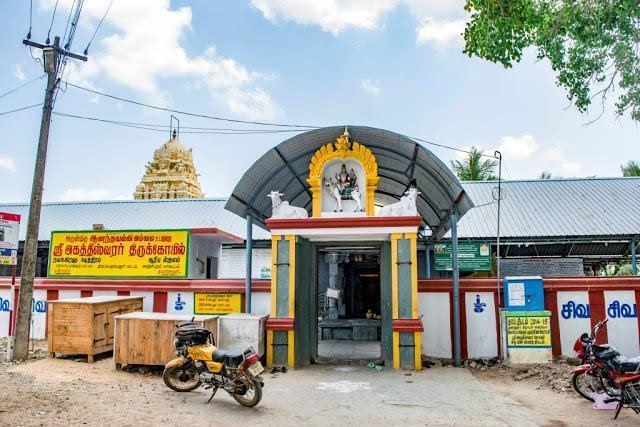
In the serene village of Kolapakkam, nestled within the bustling suburb of Chennai, stands a timeless testament to devotion—the Agastheeshwarar Temple. As the Lead Heritage Architect and SEO Strategist for BharatTemples.com, I present this definitive guide engineered for the modern pilgrim of 2026. This sanctuary is not merely a structure of stone but a living vibrational center dedicated to Lord Shiva, revered here as Agastheeshwarar (also known as Vakeeswarar) and the Mother Goddess Ananthavalli.
1. Introduction & Spiritual Essence
The Agastheeshwarar Temple is a prime example of a Swayambhu (self-manifested) shrine. The primary deity, a Shiva Linga, is believed to have manifested naturally, a form highly revered in Saiva Siddhanta philosophy. The temple is east-facing, greeting the rising sun, which signifies spiritual awakening.
Phalaśruti: Why Devotees Visit
According to sacred tradition, a visit to this temple offers profound spiritual benefits:
- Cleansing Ancestral Karma: The temple is regarded as a potent Pitru Tarpana site, where rituals performed here alleviate ancestral afflictions.
- Removal of Doshas: Devotees suffering from Pitru Dosha or Rahu-Ketu Dosha find solace here.
- Wish Fulfillment: It is believed that sincere prayers to Agastheeshwarar grant health, prosperity, and spiritual progress.
2. Historical Origins & Scriptural Legend
While temple records cite the structure’s origins to the Pallava dynasty (circa 7th-9th century CE), folklore suggests the sacred site is over 1300 years old. The architectural evolution bears the imprints of later Chola and Nayak contributions.
The Sthala Purana (Local Legends)
Tradition holds that this is a Sthala Purana deeply intertwined with celestial events:
- The Agastya Connection: The legendary sage Agastya, who played a pivotal role in stabilizing the southern continent, is said to have installed the Shiva Linga here. Hence, the deity bears his name: Agastheeshwarar.
- Surya Sthalam: Unique to this shrine is its designation as a Surya Sthalam (Sun Temple). Legend narrates that the Sun God, Surya, worshipped Lord Shiva at this precise spot to cure a physical affliction, bestowing the site with solar healing energies.
- Sage Vageesar: Another oral tradition honors Sage Vageesar, whose devotion led to the deity being named Vakeeswarar.
3. Architectural Marvels
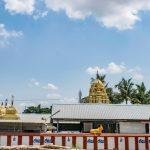
The temple showcases the classic Dravidian style of architecture, adhering to the principles of Vastu Shastra. The structure is compact yet spiritually expansive.
Key Structural Elements
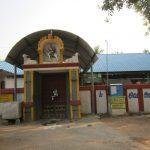
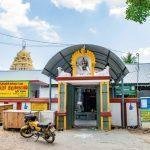
- Entrance: The temple opens to the east via a traditional gateway.
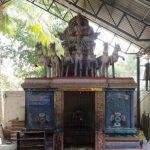
- Mandapa (Hall): A pillared hall serves as the gathering space for devotees before entering the sanctum.
- Sanctum Sanctorum (Garbhagriha): Housing the Swayambhu Linga, the sanctum is designed to amplify acoustic resonance during chanting.
While this temple does not hold a UNESCO heritage tag, it is a protected monument under the Archaeological Survey of India (ASI) standards, maintaining the structural integrity of ancient Dravidian temple architecture.
4. Darshan & Ritual Logistics (2026 Update)
To facilitate a smooth pilgrimage experience in 2026, we have outlined the daily schedule and key sevas. Please note that timings may vary slightly during festival seasons.
Daily Timings
| Session | Timing |
|---|---|
| Morning Darshan | 07:00 AM – 11:00 AM |
| Afternoon Break | 11:00 AM – 04:00 PM |
| Evening Darshan | 04:00 PM – 08:00 PM |
Key Sevas & Online Booking
Devotees can participate in various rituals. While the temple administration is managed locally, many Tamil Nadu temples are integrating with the Tamil Nadu Hindu Religious & Charitable Endowments (HR&CE) portal for digital bookings.
- Abhishekam: Ritual bathing of the deity. Best performed during morning hours.
- Archana: Recitation of names. Available on-site; advance booking recommended for groups.
- Annadhanam: Free meal service is often available on special days.
Major Festivals 2026
- Shivarathri (Feb/Mar): The most significant celebration; the temple remains open throughout the night with special abhishekams.
- Pradosham: Occurring twice a month (13th lunar day), these twilight rituals draw large crowds.
- Arudra Darshanam: Celebrating the cosmic dance of Nataraja.
5. Practical Visitor Guidance
As a heritage site in an urban setting, specific protocols ensure preservation and spiritual decorum.
Visitor Etiquette
- Dress Code: Traditional attire is mandatory. Men should wear dhotis or pants with shirts; women should wear sarees or salwar kameez.
- Photography: Photography is strictly prohibited inside the inner sanctum. Mobile phones should be silenced.
- Lockers: Small mobile lockers are available near the entrance for secure storage of footwear and electronic devices.
- Accessibility: The temple premises are relatively flat, making it accessible for senior citizens, though wheelchairs may need assistance on uneven paving.
Crowd Management & Seasonal Advice
- Best Hours: For a tranquil darshan, visit between 07:00 AM – 08:30 AM or 06:00 PM – 07:30 PM.
- Summer (May-June): Chennai heat can be intense. Carry a reusable water bottle and a head covering. The temple priest usually offers Theertham (holy water) to mitigate heat fatigue.
- Monsoon (Nov-Dec): While the rains are refreshing, the courtyards may be slippery. Wear rubber-soled footwear with good grip.
6. Pilgrimage Connectivity
Located in Kolapakkam village, near Porur, the temple is well-connected to the Chennai metropolitan transport network.
How to Reach
By Air: Chennai International Airport (MAA) is approximately 12 km away.
By Rail: The nearest major railway stations are Guindy (10 km) and Chennai Central (25 km).
By Road:
- NH 48 (Mount Poonamallee Road): Take the diversion towards Gerugambakkam/Kolapakkam.
- From Porur: Proceed via Gerugambakkam (approx. 5 km).
Local Transport: Share autos are readily available from Porur bus stand and Meenambakkam metro station. Bus numbers 114, 115, and M44 halt near Samiyar Kolam, 200 meters from the temple.
Nearby Sacred Sites
Enhance your pilgrimage by visiting these nearby temples:
- Kundrathur Murugan Temple: Located 8 km away, famous for its celestial abode on a hill.
- Mangadu Kamakshi Amman Temple: 10 km away, a powerful Shakthi peetham associated with the Penance of Parvati.
- Sri Ramana Maharshi Ashram (Tiruvannamalai): A slightly longer drive, but a profound spiritual complement to the Shiva-centric travel.
7. Frequently Asked Questions (FAQ)
1. Is there a VIP darshan entry available at Agastheeshwarar Temple?
The temple administration focuses on a democratic darshan experience. However, elderly citizens and those with mobility issues are allowed priority entry. VIP darshan passes are not typically issued, as the temple size allows for relatively swift queues compared to larger shrines.
2. What is the significance of the name “Vakeeswarar”?
Vakeeswarar translates to “The Lord of Speech.” This name honors Sage Vageesar, who worshipped here. It is believed that worshipping Shiva in this form enhances communication skills, eloquence, and confidence.
3. Can we book online seva (Abhishekam) for the temple?
Currently, daily sevas are performed on a first-come, first-served basis. However, for special Pradosham or Shivarathri events, the Tamil Nadu HR&CE department may open online slots. Pilgrims are advised to check the official Tamil Nadu temple portal closer to the festival dates in 2026.
4. What is the best time to visit to avoid crowds?
The absolute best time is Tuesday or Friday mornings between 7:00 AM and 8:00 AM. These days are auspicious for Lord Shiva but generally less crowded than Mondays or Mondays during Pradosham.
5. Is non-vegetarian food allowed near the temple?
No. As this is a Hindu religious site located in a traditional village setting, the immediate vicinity is strictly vegetarian. Alcohol and non-vegetarian food are prohibited in the temple precincts.
Recent Posts

Shri Kaamkoteeshwar Mandir, Varanasi – History & Significance
In the heart of Kashi, the eternal city of Lord Shiva, where the Ganges flows with celestial grace, stands the Shri Kaamkoteeshwar Mandir. This sacred Sannidhi is not merely a temple but a profound spiritual bridge between the Northern…

ओ सांवरे तूने ही मुझको संभाला – Lyrics & Meaning
ओ सांवरे तूने ही मुझको संभाला – A Prayer to Shyam Origin & Spiritual Essence Why This Bhajan Resonates Devotees chant this when overwhelmed by life’s storms—the refrain ‘तूने ही मुझको संभाला’ is the soul’s sigh of relief: “You…

कथा ये है महाराज मेरे की – Lyrics & Meaning
कथा ये है महाराज मेरे की छत्रपति संभाजी महाराज – A Prayer to Chhatrapati Sambhaji Maharaj Origin & Spiritual Essence Why This Bhajan Resonates Devotees chant this when their spirit feels tested—its powerful refrain “महाराज मेरे” is a soul’s…

Rigveda Samhita Yathartha Anuvada (ऋग्वेद संहिता यथार्थ अनुवाद) – Complete Set with Anvayartha & Hindi/English Translation
The Rigveda is the oldest surviving scripture of humanity and the foundational text of Sanātana Dharma. For serious students, scholars, UPSC aspirants studying ancient Indian history, Sanskrit learners, and spiritual seekers, a precise and grammatically structured translation is indispensable.…

आना भी अकेला है जाना भी अकेला है – Lyrics & Meaning | BharatTemples
आना भी अकेला है जाना भी अकेला है – A Prayer to the Divine Witness Origin & Spiritual Essence Why This Bhajan Resonates Devotees turn to this bhajan in moments of deep reflection—when life’s attachments begin to ache. The…

माता शेरावाली के द्वार जो भी जाता है – Lyrics & Meaning
माता शेरावाली के द्वार जो भी जाता है – A Prayer to Maa Sherawali Origin & Spiritual Essence Why This Bhajan Resonates Devotees turn to this bhajan in times of fear or uncertainty—its promise that no one leaves Maa’s…

मार लेना सपणी उबार लेणा भवरा – Lyrics & Meaning
मार लेना सपणी उबार लेणा भवरा – A Prayer to the Divine Beloved Origin & Spiritual Essence Why This Bhajan Resonates Devotees chant this in moments of deep vulnerability—its cry of “मार लेना सपणी, उबार लेणा भवरा” is the…

हमें श्याम सुंदर भरोसा तुम्हारा – Lyrics & Meaning
हमें श्याम सुंदर भरोसा तुम्हारा – A Prayer to Shyam Sundar Origin & Spiritual Essence Why This Bhajan Resonates Devotees chant this when feeling alone—its refrain ‘de do sahara’ is the soul’s cry for divine support. Lyrics in Hindi…

Mere Satguru Ne Di Thi Davai Lyrics in Hindi & Meaning
Mere Satguru Ne Di Thi Davai: Invoking the Guru’s Liberating Wisdom This soul-stirring bhajan venerates the Satguru (True Spiritual Master) as the divine physician who dispenses the only remedy for life’s deepest sufferings. Composed by Sant Karmaveer Tufani, it…

Janm Diyo Thari Maa Dukh Dekhiyo Lyrics in Hindi & Meaning
जन्म दियो थारी माँ दुख देखियो (Maa’s Grief Upon Birthing You) This soul-stirring Chetavani Bhajan (admonitory hymn) is addressed to the Divine Mother (Maa) – a call for repentance when children forget their filial duties in the dark age…