
Contents
- 1 Introduction & Spiritual Essence: The Presiding Deity of Chitrambakkam
- 2 Historical Origins & Scriptural Legend
- 3 Architectural Marvels: Dravidian Craftsmanship
- 4 Darshan & Ritual Logistics (2026 Guide)
- 5 Practical Visitor Guidance
- 6 Pilgrimage Connectivity: How to Reach
- 7 Frequently Asked Questions (FAQ)
Introduction & Spiritual Essence: The Presiding Deity of Chitrambakkam
In the serene village of Chitrambakkam, just outside the bustling sprawl of Chennai, stands the Kumbeshwarar Temple. Dedicated to Lord Shiva, this sacred site serves as a spiritual anchor for the local community and visiting devotees alike. The presiding deity is revered as Kumbeshwarar (Sanskrit for “Lord of the Water Pot” or Lord Shiva), while the Goddess, his consort, is venerated as Kuzhanthai Valli Amman (the benevolent mother who protects children).
Unlike the grand, sprawling complexes of metropolitan Chennai, the Kumbeshwarar Temple offers an intimate, deeply personal darshan experience. The primary form of the deity is a Swayambhu Lingam (self-manifested), which adds to its potency and spiritual significance.
Phalaśruti: Why Devotees Visit
According to temple lore and local belief, worshipping Kumbeshwarar offers specific spiritual benefits (Phalaśruti):
- Ancestral Deliverance: Performing Abhishekam here is believed to cleanse ancestral karma, helping departed souls attain peace (Moksha). It is often visited during the Amavasya (New Moon) and Mahalaya Paksha periods.
- Protection for Children: The presence of Goddess Kuzhanthai Valli makes this a powerful site for parents seeking blessings for their children’s health and education.
- Relief from Pitru Dosha: Regular worship is said to mitigate specific planetary afflictions and ancestral curses.
Historical Origins & Scriptural Legend
While the exact dates of the original construction are not definitively recorded in modern epigraphy, the architecture and the sanctity of the temple point to significant historical roots, likely dating back several centuries.
Archaeological Context and Renovation
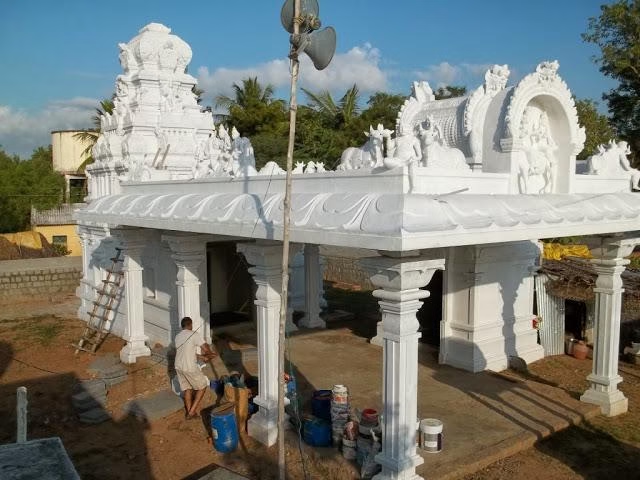
The temple complex has undergone significant renovations recently to preserve its structural integrity and enhance the devotional atmosphere. While the base structure reflects Dravidian architectural principles, the recent work has revitalized the intricate carvings and the interior sanctum.
Sthala Purana: The Legend of the Water Pot
Local tradition (Sthala Purana) holds that the village derives its spiritual power from the form of the deity. The name “Kumbeshwarar” is deeply symbolic. In Sanskrit, Kumbha refers to a pot or vessel, often associated with the Kamandalu carried by ascetics or the cosmic pot of nectar.
Legend suggests that this form of Shiva emerged to bless the region with fertility and water abundance, vital for the agricultural lands of Thiruvallur district. The idol is believed to have been discovered by sages meditating in this region, who felt an immense spiritual energy radiating from the ground.
Architectural Marvels: Dravidian Craftsmanship
The Kumbeshwarar Temple is a textbook example of traditional Dravidian architecture, characterized by its stepped towers and enclosed courtyards. Though moderate in scale, the precision of the stonework commands reverence.
Key Architectural Elements
- The Vimanam: The sanctum sanctorum features a pyramidal roof structure typical of Tamil temple architecture, adorned with traditional finials.
- The Mandapas: A pillared hall precedes the inner sanctum, providing space for devotees to sit during religious discourses and evening arati. The pillars feature carvings of divine figures and motifs from Hindu mythology.
- Sanctum Layout:
- Garbha Griha: Houses the Swayambhu Lingam of Kumbeshwarar.
- Niche Shrines: Smaller shrines dedicated to Lord Ganesha and Murugan flank the main sanctum, along with the shrine of Goddess Kuzhanthai Valli.
Unlike heritage sites managed by the ASI, this village temple focuses on active worship rather than archaeological preservation, yet it maintains the authentic architectural lineage of the region.
Darshan & Ritual Logistics (2026 Guide)
To facilitate a smooth pilgrimage experience, especially for travelers coming from Chennai, the temple administration has streamlined rituals. Below are the proposed timings for 2026.
Daily Timings
| Session | Timing | Activity |
|---|---|---|
| Morning | 06:00 AM – 08:30 AM | Morning Abhishekam & General Darshan |
| Midday | 08:30 AM – 04:00 PM | Temple Closed / Cleaning |
| Evening | 04:00 PM – 07:30 PM | Evening Arati & General Darshan |
| Night | 07:30 PM – 08:00 PM | Palliyarai Pujai (Closing Rites) |
Key Sevas and Online Booking
While many local rituals are performed on a first-come, first-served basis, special Sevas can be booked through the local temple office or designated online portals linked to the Thiruvallur District Temples Administration.
- Abhishekam: Performed with milk, honey, and sandalwood paste. Recommended for overcoming obstacles.
- Archana: Chanting of specific hymns dedicated to Kumbeshwarar and Kuzhanthai Valli.
- Rudra Homam: A fire ritual often performed on Mondays and Pradosham days.
2026 Festival Calendar
- Maha Shivaratri: February 26, 2026 (Special night-long vigils).
- Aadi Perukku: July 31, 2026 (Water rituals at the temple tank).
- Arudra Darshan: January 15, 2026 (Celebration of Lord Nataraja).
- Kartikai Deepam: November 10, 2026.
Practical Visitor Guidance
Ensuring a respectful and hassle-free visit is paramount for a positive pilgrimage experience.
Code of Conduct
- Dress Code: Traditional attire is mandatory. Men should wear Veshti (dhoti) or formal pants with a shirt; women should wear sarees, salwar kameez, or formal modest clothing. Avoid shorts and t-shirts.
- Photography: Photography is restricted inside the sanctum sanctorum to maintain the sanctity of the inner shrine. Visitors are permitted to take photos of the exterior architecture and pillared halls.
- Mobile Phones: Usage of mobile phones inside the inner sanctum is strictly prohibited. Lockers are generally available near the entrance for storage.
Crowd Management & Seasonal Advice
- Best Time to Visit: The ideal time for darshan is between 6:00 AM and 7:00 AM, or during the evening transition (4:00 PM – 5:00 PM). Mondays are busier than other weekdays.
- Seasonal Tips:
- Summer (April – June): Temperatures in Thiruvallur can soar. Carry a water bottle and an umbrella. Sunscreen is recommended for the walk to the temple.
- Monsoon (October – December): While the rain brings relief, the weather can be humid. Light, breathable cotton clothing is advised.
Pilgrimage Connectivity: How to Reach
The Kumbeshwarar Temple is conveniently located near Perambakkam and Chitrambakkam, making it accessible from Chennai.
Travel Routes
- From Chennai: Take the NH16 (formerly NH5) towards Tiruvottiyur and Red Hills. Proceed to Thiruvalangadu via the GNT Road. The temple is approximately 1.5 to 2 hours by car from North Chennai.
- From Perambakkam Bus Terminus: The temple is located roughly 4 km away. Local autos and share taxis are readily available.
- Nearest Railway Station: Manavur Railway Station is the closest railhead, approximately 6 km away.
- Nearest Airport: Chennai International Airport (MAA) is about 50 km away.
Nearby Sacred Sites (The Pilgrimage Circuit)
Extend your spiritual journey by visiting these nearby temples:
- Thiruvalangadu Vadaranyeswarar Temple: Located about 11 km away, this is a Paadal Petra Sthalam (one of the 275 revered Shiva temples). It houses the cosmic bronze dance of Nataraja.
- Thiruvallur Veeraraghava Swamy Temple: A major Divya Desam (108 Vishnu temples) located in the district headquarters, approximately 19 km away.
- Perambakkam Prasanna Venkateshwara Temple: A prominent temple dedicated to Lord Venkateshwara, located very close to Chitrambakkam.
Frequently Asked Questions (FAQ)
1. Is there a VIP or Special Darshan entry available?
Generally, for village temples like Kumbeshwarar, there is no formal VIP entry system like in Tirupati. However, for elderly or differently-abled devotees, assistance is available at the entrance to facilitate priority darshan.
2. How can I perform an Abhishekam for a specific reason?
For specific rituals like Maha Kumbhabhishekam or individual Abhishekam, it is best to contact the temple executive officer or the local priest. While online booking is not directly integrated for this specific temple, third-party platforms often list Tamil Nadu temple Sevas. Calling ahead is recommended.
3. Are there accommodation facilities nearby?
The temple itself does not have an attached guest house. However, several lodges and guest houses are available in Perambakkam and Thiruvallur, approximately 5-15 km from the temple.
4. Is the temple accessible for wheelchairs?
The temple architecture features steps at the entrance. While the outer courtyard is accessible, the inner sanctum may be challenging for wheelchair users. It is advisable to visit with assistance.
5. What is the significance of the name “Kuzhanthai Valli”?
The Goddess is named Kuzhanthai Valli (literally: “One who is fond of children” or “Protector of Children”). Devotees, especially new parents, bring their infants here for the first time to seek her blessings for a long and healthy life.





Recent Posts

Shri Kaamkoteeshwar Mandir, Varanasi – History & Significance
In the heart of Kashi, the eternal city of Lord Shiva, where the Ganges flows with celestial grace, stands the Shri Kaamkoteeshwar Mandir. This sacred Sannidhi is not merely a temple but a profound spiritual bridge between the Northern…

ओ सांवरे तूने ही मुझको संभाला – Lyrics & Meaning
ओ सांवरे तूने ही मुझको संभाला – A Prayer to Shyam Origin & Spiritual Essence Why This Bhajan Resonates Devotees chant this when overwhelmed by life’s storms—the refrain ‘तूने ही मुझको संभाला’ is the soul’s sigh of relief: “You…

कथा ये है महाराज मेरे की – Lyrics & Meaning
कथा ये है महाराज मेरे की छत्रपति संभाजी महाराज – A Prayer to Chhatrapati Sambhaji Maharaj Origin & Spiritual Essence Why This Bhajan Resonates Devotees chant this when their spirit feels tested—its powerful refrain “महाराज मेरे” is a soul’s…

Rigveda Samhita Yathartha Anuvada (ऋग्वेद संहिता यथार्थ अनुवाद) – Complete Set with Anvayartha & Hindi/English Translation
The Rigveda is the oldest surviving scripture of humanity and the foundational text of Sanātana Dharma. For serious students, scholars, UPSC aspirants studying ancient Indian history, Sanskrit learners, and spiritual seekers, a precise and grammatically structured translation is indispensable.…

आना भी अकेला है जाना भी अकेला है – Lyrics & Meaning | BharatTemples
आना भी अकेला है जाना भी अकेला है – A Prayer to the Divine Witness Origin & Spiritual Essence Why This Bhajan Resonates Devotees turn to this bhajan in moments of deep reflection—when life’s attachments begin to ache. The…

माता शेरावाली के द्वार जो भी जाता है – Lyrics & Meaning
माता शेरावाली के द्वार जो भी जाता है – A Prayer to Maa Sherawali Origin & Spiritual Essence Why This Bhajan Resonates Devotees turn to this bhajan in times of fear or uncertainty—its promise that no one leaves Maa’s…

मार लेना सपणी उबार लेणा भवरा – Lyrics & Meaning
मार लेना सपणी उबार लेणा भवरा – A Prayer to the Divine Beloved Origin & Spiritual Essence Why This Bhajan Resonates Devotees chant this in moments of deep vulnerability—its cry of “मार लेना सपणी, उबार लेणा भवरा” is the…

हमें श्याम सुंदर भरोसा तुम्हारा – Lyrics & Meaning
हमें श्याम सुंदर भरोसा तुम्हारा – A Prayer to Shyam Sundar Origin & Spiritual Essence Why This Bhajan Resonates Devotees chant this when feeling alone—its refrain ‘de do sahara’ is the soul’s cry for divine support. Lyrics in Hindi…

Mere Satguru Ne Di Thi Davai Lyrics in Hindi & Meaning
Mere Satguru Ne Di Thi Davai: Invoking the Guru’s Liberating Wisdom This soul-stirring bhajan venerates the Satguru (True Spiritual Master) as the divine physician who dispenses the only remedy for life’s deepest sufferings. Composed by Sant Karmaveer Tufani, it…

Janm Diyo Thari Maa Dukh Dekhiyo Lyrics in Hindi & Meaning
जन्म दियो थारी माँ दुख देखियो (Maa’s Grief Upon Birthing You) This soul-stirring Chetavani Bhajan (admonitory hymn) is addressed to the Divine Mother (Maa) – a call for repentance when children forget their filial duties in the dark age…