
Contents
Introduction & Spiritual Essence
Nestled on the serene slopes of the Javadhu Hills and the banks of the River Palar lies the ancient Ellaiamman Temple, Vettuvanam. This sacred shrine in Vellore district is not merely a structure of stone but a powerful energy center, revered as one of the potent Sakthi Peetams of the region. The presiding deity, Ellaiamman, is a manifestation of Renukadevi, the mother of the warrior sage Parasurama.
Phalaśruti (Spiritual Benefits): Devotees flock here for specific blessings. It is a prevailing belief that offering prayers here helps cleanse prarabdha karma (past ancestral debts). Unmarried individuals tie the sacred yellow thread at the Arundhati tree seeking ideal life partners, while childless couples perform specific rituals hoping for the boon of progeny.
Historical Origins & Scriptural Legend
The history of Ellaiamman Temple is deeply rooted in the Sthala Purana (local oral tradition). According to the legend, this is the precise location where the epic event involving Renukadevi and Parasurama took place.
The Legend of Vettuvanam: Tradition holds that Sage Jamadagni (incarnation of Lord Shiva) commanded his son Parasurama to behead his mother, Renukadevi, for a momentary lapse in thought. After the act, Parasurama requested the boon of restoring her life. In a twist of divine destiny, he inadvertently placed Renukadevi’s head on the body of an Arundhati (a local woodcutter girl). This composite form of the Goddess became known as Mariamman, and the place was named Vettuvanam (The Land of the Beheading).
Temple History: While the legend dates back to the Treta Yuga, the current structural history is notable. The temple was previously in a dilapidated state and was demolished and reconstructed by the Sivarasu Venkatraman family (hailing from Katpadi and London). The temple was consecrated during Kumbabishekam on 3rd December 2008. Earlier renovations date back to 1972 (Mandapam construction) and 1984-1988.
Architectural Marvels
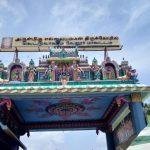
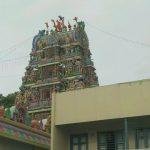
The temple showcases a pristine Dravidian architectural style. The sanctum sanctorum (Garbhagriha) houses a swayambhu (self-manifested) idol of Ellaiamman.
- The Mandapas: The temple features spacious Mandapas (halls) constructed in the 1970s, allowing for large congregations during festivals. A separate Naga (Snake) Mandapam was established in 1973, housing the snake deities protecting the temple premises.
- Compound Wall: To preserve the sanctity of the shrine, a robust compound wall was erected in 1981.
- Surroundings: Located on the foothills of the Javadhu Hills, the temple architecture is designed to harmonize with the natural landscape, facing the flowing Palar river.
Darshan & Ritual Logistics
Poojas at Ellaiamman Temple are conducted strictly according to the Kamika Agamam method, ensuring Vedic precision.
Daily Pooja Schedule
| Pooja / Seva | Timing |
|---|---|
| Kalasanthi Pooja | 8:00 AM – 9:00 AM |
| Sayaraksha Pooja (Evening) | 6:00 PM – 7:00 PM |
| Temple Closing | 8:00 PM |
Key Sevas & Booking:
Popular Sevas include the Abhishekam (ritual bathing of the deity) and Archana. While specific online booking portals for this local temple are still developing, devotees can typically book these by calling the temple office at +91 4171 240200 or via email at ellaiammantemple@gmail.com.
2026 Festival Calendar (Tentative Dates)
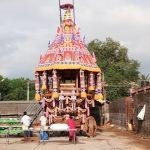
The temple is famous for its Adi Peruvizha, a 10-day car festival celebrated during the Tamil month of Adi (July–August).
- Adi Peruvizha (Car Festival): Expected July 15–25, 2026.
- Navarathri: Oct 15–23, 2026.
- Deepavali: Nov 12, 2026.
- Pongal: Jan 14, 2027 (Tamil New Year preparations begin).
Practical Visitor Guidance
Dress Code: Traditional attire is mandatory. Men should wear dhotis or trousers with shirts; women should wear sarees, salwar kameez, or churidars. Avoid shorts and sleeveless tops.
Photography & Mobiles: Photography is generally restricted inside the inner sanctum. Mobile phones should be kept silent or deposited in designated lockers (if available) during darshan.
Crowd Management & Best Time to Visit:
Weekends and Festival days (especially Adi Peruvizha) witness heavy crowds. For a peaceful darshan, visit between 9:00 AM and 11:30 AM on weekdays. During the summer months (April–June), the weather is warm; carry a water bottle as the temple is situated in an open landscape near the riverbed.
Pilgrimage Connectivity
How to Reach
The temple is strategically located on the Chennai-Bangalore NH-75 (formerly NH-4).
- By Road: 25 km from Vellore (Tamil Nadu). Buses are available from Vellore and Gudiyatham.
- Nearest Railway Stations: Melalathur (8 km) and Gudiyatham (10 km).
- Nearest Airport: Chennai International Airport (approx. 150 km).
Nearby Sacred Sites
Extend your pilgrimage to these nearby centers of divinity:
- Padavedu Renugambal Temple: Located nearby, connected through the legend of Renukadevi.
- Bagavathi Amman Temple, Kammavanpettai: A prominent shrine in the Vellore district.
- Javadhu Hills (Thiruvannamalai range): For nature enthusiasts and meditative hikes.
Photo Gallery
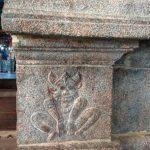
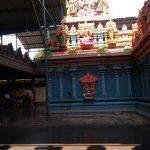
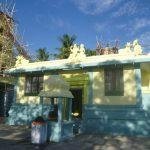
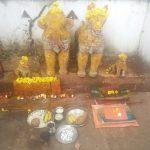
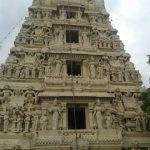
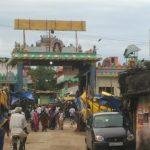
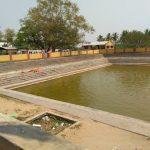
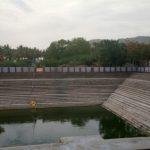


Frequently Asked Questions (FAQ)
1. Is there a VIP or special entry darshan available?
Ellaiamman Temple maintains a devotional atmosphere focused on equality. While there is no formal VIP entry, priority is given to elderly devotees and those with specific health needs during peak hours. It is advisable to call the temple office ahead of time for special assistance.
2. What is the significance of the name “Ellaiamman”?
The name “Ellaiamman” implies the Goddess who protects the borders or boundaries. Local lore suggests the name evolved from the word “Marudu,” but the divine voice that instructed the installation of the idol specifically identified herself as Ellaiamman.
3. Are there accommodation facilities near the temple?
Basic accommodation is not available within the temple complex. However, pilgrims can find lodges and guest houses in Vellore (25 km away) or Gudiyatham (12 km away), which offer comfortable stays.
4. Can I perform child-naming ceremonies here?
Yes, the temple is renowned for barrenness removal and child-birth boons. Many devotees perform child-naming ceremonies (Barasala) here as a thanksgiving ritual after their wishes are fulfilled.
5. What is the best route from Chennai?
Take the Chennai-Bangalore National Highway (NH75). Drive past Ranipet, Arcot, and Vellore. Continue towards Gudiyatham until you reach the Pallikonda bypass. The temple is located 3 km from Pallikonda on the left side of the highway.
Recent Posts

Shri Kaamkoteeshwar Mandir, Varanasi – History & Significance
In the heart of Kashi, the eternal city of Lord Shiva, where the Ganges flows with celestial grace, stands the Shri Kaamkoteeshwar Mandir. This sacred Sannidhi is not merely a temple but a profound spiritual bridge between the Northern…

ओ सांवरे तूने ही मुझको संभाला – Lyrics & Meaning
ओ सांवरे तूने ही मुझको संभाला – A Prayer to Shyam Origin & Spiritual Essence Why This Bhajan Resonates Devotees chant this when overwhelmed by life’s storms—the refrain ‘तूने ही मुझको संभाला’ is the soul’s sigh of relief: “You…

कथा ये है महाराज मेरे की – Lyrics & Meaning
कथा ये है महाराज मेरे की छत्रपति संभाजी महाराज – A Prayer to Chhatrapati Sambhaji Maharaj Origin & Spiritual Essence Why This Bhajan Resonates Devotees chant this when their spirit feels tested—its powerful refrain “महाराज मेरे” is a soul’s…

Rigveda Samhita Yathartha Anuvada (ऋग्वेद संहिता यथार्थ अनुवाद) – Complete Set with Anvayartha & Hindi/English Translation
The Rigveda is the oldest surviving scripture of humanity and the foundational text of Sanātana Dharma. For serious students, scholars, UPSC aspirants studying ancient Indian history, Sanskrit learners, and spiritual seekers, a precise and grammatically structured translation is indispensable.…

आना भी अकेला है जाना भी अकेला है – Lyrics & Meaning | BharatTemples
आना भी अकेला है जाना भी अकेला है – A Prayer to the Divine Witness Origin & Spiritual Essence Why This Bhajan Resonates Devotees turn to this bhajan in moments of deep reflection—when life’s attachments begin to ache. The…

माता शेरावाली के द्वार जो भी जाता है – Lyrics & Meaning
माता शेरावाली के द्वार जो भी जाता है – A Prayer to Maa Sherawali Origin & Spiritual Essence Why This Bhajan Resonates Devotees turn to this bhajan in times of fear or uncertainty—its promise that no one leaves Maa’s…

मार लेना सपणी उबार लेणा भवरा – Lyrics & Meaning
मार लेना सपणी उबार लेणा भवरा – A Prayer to the Divine Beloved Origin & Spiritual Essence Why This Bhajan Resonates Devotees chant this in moments of deep vulnerability—its cry of “मार लेना सपणी, उबार लेणा भवरा” is the…

हमें श्याम सुंदर भरोसा तुम्हारा – Lyrics & Meaning
हमें श्याम सुंदर भरोसा तुम्हारा – A Prayer to Shyam Sundar Origin & Spiritual Essence Why This Bhajan Resonates Devotees chant this when feeling alone—its refrain ‘de do sahara’ is the soul’s cry for divine support. Lyrics in Hindi…

Mere Satguru Ne Di Thi Davai Lyrics in Hindi & Meaning
Mere Satguru Ne Di Thi Davai: Invoking the Guru’s Liberating Wisdom This soul-stirring bhajan venerates the Satguru (True Spiritual Master) as the divine physician who dispenses the only remedy for life’s deepest sufferings. Composed by Sant Karmaveer Tufani, it…

Janm Diyo Thari Maa Dukh Dekhiyo Lyrics in Hindi & Meaning
जन्म दियो थारी माँ दुख देखियो (Maa’s Grief Upon Birthing You) This soul-stirring Chetavani Bhajan (admonitory hymn) is addressed to the Divine Mother (Maa) – a call for repentance when children forget their filial duties in the dark age…