

Contents
- 1 Introduction & Spiritual Essence
- 2 Historical Origins & Scriptural Legend
- 3 Architectural Marvels
- 4 Darshan & Ritual Logistics
- 5 Practical Visitor Guidance
- 6 Pilgrimage Connectivity
- 6.1 Nearby Sacred Sites (Pilgrimage Circuit)
- 6.2 Frequently Asked Questions (FAQ)
- 6.3 1. Is there a VIP darshan entry available?
- 6.4 2. Can I perform Abhishekam with my own milk/water?
- 6.5 3. What is the significance of the “Golden Lizard” story here?
- 6.6 4. How far is the temple from Madurai Junction Railway Station?
- 6.7 5. Are there dining facilities (Prasadam) available?
Introduction & Spiritual Essence
The Koodal Azhagar Temple stands as a timeless jewel in the heart of Madurai, a sanctuary dedicated to Lord Vishnu, revered here as Koodal Azhagar (The Beautiful Lord of the Congregation). Unlike many other holy shrines, this temple holds a rare spiritual distinction: it is one of only two Divyadesams (108 Vishnu temples glorified by the Alvars) where the presiding deity is worshipped in three distinct postures simultaneously—standing, sitting, and reclining. His consort, Mathuravalli, enshrined in a separate sanctum, faces him.
The primary Phalaśruti (spiritual benefits) of visiting this temple is the attainment of Moksha (liberation). Devotees believe that a darshan here washes away ancestral karma and grants the highest spiritual authority, Paramapatham. The temple is specifically renowned for the Tiruppallaandu, the first twelve verses of the 4,000-divine-hymn collection Divya Prabandham, sung by the Alvar saint Periyalvar right here. It is a holy site equivalent to the celestial abode itself.
Historical Origins & Scriptural Legend
According to temple records and Dravidian historical reconstruction, the Koodal Azhagar Temple dates back to the Pandya dynasty (circa 6th century AD), though it was massively expanded during the Vijayanagar and Madurai Nayak periods of the 16th century. The architectural style is classic Dravidian, characterized by towering gateways and granite enclosures.
Scriptural & Local Legends:
- The Golden Parrot (Thiru Pallandu): Tradition holds that the Pandya King Vallabhadeva hung a golden parrot that would only fall when the true Lord of Paramapatha was identified. Periyalvar, brought from Srivilliputhur, proved Vishnu’s supremacy through scripture, causing the parrot to descend. It was here that Periyalvar sang the Pallaandu, a lullaby for the Lord.
- The Meaning of “Koodal”: The word implies “congregation.” Legend states that all gods and goddesses gathered here for the wedding of Meenakshi Amman, hence the name. Another legend mentions four clouds (sent by Indra) joining over Madurai to avert a deluge, forming a protective fort (four structures joined).
- The Pandya Symbol: A Pandya king, Sathyaviradhan, washed his hands in the Kirutha Maala river before darshan and found a fish in his palm. Interpreting this as Lord Vishnu’s Matsya Avatar, he adopted the fish as the royal emblem.
- Silapathikaram: The epic poet Ilango Adigal praises the deity as “Needu Neer-Vaigai Nedumal,” describing the Lord who covered the universe in three strides (Vamana avatar) and settled on the banks of the Krithumala (a tributary of the Vaigai).
Architectural Marvels
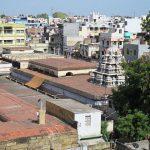
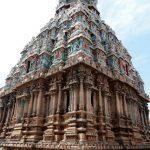
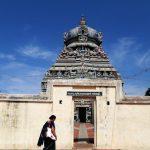
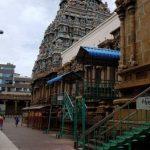
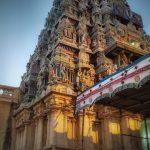
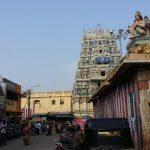
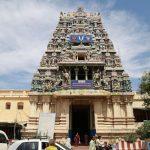
The temple is a masterpiece of Dravidian Architecture and follows strict Vastu Shastra principles. It is surrounded by a massive granite wall encompassing all shrines. The Rajagopuram (gateway tower) stands as a five-tiered structure rising majestically over the city skyline.
A unique feature is the internal layout, which houses shrines for Vishnu in three postures:
- Standing: In the primary sanctum (Vimanam).
- Sitting: In the Sannidhi of Narasimha.
- Reclining: In the form of Ranganatha.
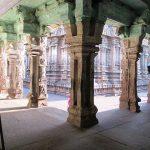
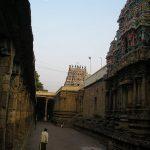
The temple tank, known as the Nandhi Teertham, is located in the Mandapa (hall) before the main shrine. The pillars in the Vasantha Mandapam feature intricate carvings depicting the Dasavatharam (ten incarnations) and scenes from the Periyalvar Thirumozhi. While not a UNESCO site, it is protected and maintained by the Hindu Religious and Endowment Board (HR&CE), Government of Tamil Nadu.
Darshan & Ritual Logistics
The temple follows the Thenkalai sect of the Vaishnavite tradition and adheres to Vaikasana Aagama. Seven specific poojas are performed daily, involving alangaram (decoration), neivethanam (food offering), and deepa aradanai.
Daily Temple Timings
The temple is open from 5:30 AM to 12:30 PM and reopens from 4:00 PM to 9:00 PM. On Saturdays, the temple remains open until 1:00 PM.
| S. No | Pooja Name | Pooja Timings |
|---|---|---|
| 1 | Viswa Roopa Darshnam | 06:00 AM |
| 2 | Kaala Santhi | 08:00 AM |
| 3 | Upa Santhi | 10:00 AM |
| 4 | Uchikalam | 12:00 PM |
| 5 | Sayaratchai | 05:00 PM |
| 6 | Raathiri Upa Santhi | 07:00 PM |
| 7 | Arthajamam | 09:00 PM |
Key Sevas & Online Booking
Popular Sevas include Thirumanjanam (Abhishekam) and Archana. For specific offerings like Vedi Vazhvu or special Alankaram, devotees can contact the temple administration.
How to Book: While traditional booking at the counter is available, most Tamil Nadu temples are moving towards online portals. Devotees should visit the official Tamil Nadu HR&CE website to search for “Koodal Azhagar Temple” and select the desired Seva for the current year.
2026 Major Festivals (Tentative Dates)
- Vaikasi Brahmotsavam (May – June): The most significant 14-day festival. The deity is paraded in chariots and mounts (Garuda, Sesha) around the temple streets. Dasavatharam enactments are performed.
- Aadi Pooram (July – August): Dedicated to Andal, celebrated with pomp.
- Purattasi Garuda Sevai (September – October): Special procession for the eagle mount.
- Karthikai Deepam (November – December): Lighting of lamps and special Ra Paththu recitations (10 days of hymns).
- Vaikuntha Ekadasi (December – January): The opening of the Vaikunta Vaasal (Celestial Gates). In 2026, this falls on December 22 (depending on the lunar calendar).
Practical Visitor Guidance
Dress Code: Traditional attire is mandatory. Men should wear Dhoti or Pants with a Shirt. Women should wear Saree, Salwar Kameez, or full-length formal skirts. Shorts and sleeveless tops are prohibited.
Photography & Electronics: Photography inside the sanctum is strictly prohibited. Mobile phones are allowed but must be silenced. There are no digital lockers, but a physical bag deposit counter is available near the entrance.
Crowd Management & Best Time to Visit:
- Best Hours: 8:00 AM to 11:00 AM (morning) is the least crowded time for a peaceful darshan.
- Weekends: Avoid Saturday afternoons if possible, as devotees flock for Palli Arai rituals.
- Seasonal Advice: Madurai can be scorching in May. Carry a water bottle and wear cotton clothing. The temple is open during the noon break (12:30 – 4:00 PM), so plan your lunch break accordingly in the market area.
Pilgrimage Connectivity
Located in the heart of Madurai, the temple is highly accessible.
- By Air: Madurai International Airport (IXM) is approximately 10-12 km away (15-20 mins by taxi).
- By Rail: Madurai Junction (MDU) is just 1 km away. It is a 10-minute auto-rickshaw ride.
- By Road: The temple is near the Complex Bus Stand (450m) and Periyar Bus Stand (400m). It is accessible via NH 38 (Madurai-Rameswaram Road) and connected to the city center by West Masi Street and South Masi Street.
Nearby Sacred Sites (Pilgrimage Circuit)
Since Koodal Azhagar is part of the Madurai religious ecosystem, combine your visit with:
- Meenakshi Amman Temple: Just 1 km away. The central hub of Madurai spirituality.
- Thiruparankundram Murugan Temple: 7 km away. One of the six abodes of Lord Murugan, located atop a hill.
- Alagar Koyil (Azhar Temple): 12 km away. The hill temple of Lord Vishnu, which is considered the residential abode of the Azhagar (brother of Meenakshi).
Frequently Asked Questions (FAQ)
1. Is there a VIP darshan entry available?
Yes, the temple management provides a special entry for senior citizens and differently-abled devotees. For other VIP darshans, special entry tickets are available at the temple counter, subject to availability.
2. Can I perform Abhishekam with my own milk/water?
Generally, only temple-provided materials are allowed inside the sanctum for rituals. However, you can purchase the specific materials from the temple counter and request the priest to perform a special Abhishekam during scheduled hours.
3. What is the significance of the “Golden Lizard” story here?
While the Fish is the Pandya symbol, legends associated with Vishnu occasionally mention the lizard in the context of protection from the deluge (floods), where the lord protected the city by standing in a fort-like structure (Koodal). This aligns with the temple’s association with the legend of the four clouds.
4. How far is the temple from Madurai Junction Railway Station?
It is approximately 1 km (less than a mile). An auto-rickshaw will take about 5-10 minutes depending on traffic.
5. Are there dining facilities (Prasadam) available?
The temple has a dining hall for devotees, serving Anna Daanam (free food) during specific hours. For other times, there are many vegetarian restaurants (Messed) in the surrounding Masi Streets and Periyar Bus Stand area.
Recent Posts

Shri Kaamkoteeshwar Mandir, Varanasi – History & Significance
In the heart of Kashi, the eternal city of Lord Shiva, where the Ganges flows with celestial grace, stands the Shri Kaamkoteeshwar Mandir. This sacred Sannidhi is not merely a temple but a profound spiritual bridge between the Northern…

ओ सांवरे तूने ही मुझको संभाला – Lyrics & Meaning
ओ सांवरे तूने ही मुझको संभाला – A Prayer to Shyam Origin & Spiritual Essence Why This Bhajan Resonates Devotees chant this when overwhelmed by life’s storms—the refrain ‘तूने ही मुझको संभाला’ is the soul’s sigh of relief: “You…

कथा ये है महाराज मेरे की – Lyrics & Meaning
कथा ये है महाराज मेरे की छत्रपति संभाजी महाराज – A Prayer to Chhatrapati Sambhaji Maharaj Origin & Spiritual Essence Why This Bhajan Resonates Devotees chant this when their spirit feels tested—its powerful refrain “महाराज मेरे” is a soul’s…

Rigveda Samhita Yathartha Anuvada (ऋग्वेद संहिता यथार्थ अनुवाद) – Complete Set with Anvayartha & Hindi/English Translation
The Rigveda is the oldest surviving scripture of humanity and the foundational text of Sanātana Dharma. For serious students, scholars, UPSC aspirants studying ancient Indian history, Sanskrit learners, and spiritual seekers, a precise and grammatically structured translation is indispensable.…

आना भी अकेला है जाना भी अकेला है – Lyrics & Meaning | BharatTemples
आना भी अकेला है जाना भी अकेला है – A Prayer to the Divine Witness Origin & Spiritual Essence Why This Bhajan Resonates Devotees turn to this bhajan in moments of deep reflection—when life’s attachments begin to ache. The…

माता शेरावाली के द्वार जो भी जाता है – Lyrics & Meaning
माता शेरावाली के द्वार जो भी जाता है – A Prayer to Maa Sherawali Origin & Spiritual Essence Why This Bhajan Resonates Devotees turn to this bhajan in times of fear or uncertainty—its promise that no one leaves Maa’s…

मार लेना सपणी उबार लेणा भवरा – Lyrics & Meaning
मार लेना सपणी उबार लेणा भवरा – A Prayer to the Divine Beloved Origin & Spiritual Essence Why This Bhajan Resonates Devotees chant this in moments of deep vulnerability—its cry of “मार लेना सपणी, उबार लेणा भवरा” is the…

हमें श्याम सुंदर भरोसा तुम्हारा – Lyrics & Meaning
हमें श्याम सुंदर भरोसा तुम्हारा – A Prayer to Shyam Sundar Origin & Spiritual Essence Why This Bhajan Resonates Devotees chant this when feeling alone—its refrain ‘de do sahara’ is the soul’s cry for divine support. Lyrics in Hindi…

Mere Satguru Ne Di Thi Davai Lyrics in Hindi & Meaning
Mere Satguru Ne Di Thi Davai: Invoking the Guru’s Liberating Wisdom This soul-stirring bhajan venerates the Satguru (True Spiritual Master) as the divine physician who dispenses the only remedy for life’s deepest sufferings. Composed by Sant Karmaveer Tufani, it…

Janm Diyo Thari Maa Dukh Dekhiyo Lyrics in Hindi & Meaning
जन्म दियो थारी माँ दुख देखियो (Maa’s Grief Upon Birthing You) This soul-stirring Chetavani Bhajan (admonitory hymn) is addressed to the Divine Mother (Maa) – a call for repentance when children forget their filial duties in the dark age…