
Contents
- 1 Kandhaswamy Temple, Manavur: A Definitive Pilgrimage Guide
Nestled in the serene village of Manavur, near Thiruvalangadu, the Kandhaswamy Temple stands as a timeless testament to Dravidian heritage and unwavering devotion. Dedicated to Lord Murugan, this ancient shrine is believed to have been consecrated before the legendary Suraa Samharam (the destruction of the demon Surapadman), offering pilgrims a unique spiritual energy distinct from more recent temples.
As we approach the pilgrimage season of 2026, this guide serves as your comprehensive resource for understanding the temple’s spiritual significance, logistical requirements, and the divine aura that has drawn devotees for over a millennium.
1. Introduction & Spiritual Essence
The presiding deity of this temple is Kandhaswamy, a form of Lord Murugan. In this manifestation, the deity is often depicted as a youthful warrior or a sage, symbolizing the victory of knowledge and virtue over ignorance.
- Primary Deity: Lord Murugan (Kandhaswamy).
- Form: Swayambhu (self-manifested) or ancient idol believed to be of divine origin.
- Alternate Names: Manavur Murugan Temple, Kandhaswamy Temple.
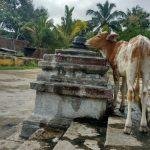
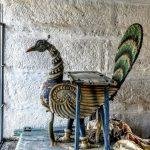
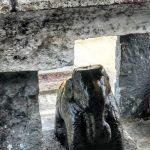
- Vahana (Mount): The Elephant. Unlike many Murugan temples where the peacock is the primary vehicle, the elephant holds a special place here, symbolizing wisdom and royal authority.
Phalaśruti: The Benefits of Visitation
Devotees flock to the Kandhaswamy Temple to seek blessings for:
- Removal of Obstacles: The temple is renowned for helping devotees overcome hurdles in career and personal life.
- Specific Blessings: Childless couples pray here for progeny (Vidhaimanatheepam), and students seek success in academic pursuits.
- Karmic Cleansing: It is believed that offering prayers here can cleanse ancestral karma, bringing peace to the departed souls.
- Protection: As a warrior deity, Kandhaswamy grants protection from negative influences and malefic planetary alignments.
2. Historical Origins & Scriptural Legend
According to historians and temple records, the Kandhaswamy Temple was constructed during the glorious Pallava Period, dating back approximately 1,200 years. The village of Manavur was historically known as Manavur Kottam during the Chozha era, indicating its continued prominence through the reign of subsequent dynasties.
Tradition holds that the temple was established prior to the Suraa Samharam. This lends a mythological weight to the site, suggesting it is a place where the divine energy of Murugan was anchored even before his epic battle against the demon clans. The lack of shrines for Valli and Devasena in the main sanctum (a feature noted in this specific ancient complex) suggests a focus on the ascetic or warrior aspect of Murugan, typical of early Shaivite worship.
Alignment and Agama Sastras
The layout of the temples in Manavur is a marvel of ancient geometry. They have been built with perfect alignment as mentioned in the Aagama Sastras (ancient Tamil scriptures governing temple construction).
The complex is laid out as follows:
- Karkadeswarar Temple: Built in the Easanya (North-East) direction.
- Vijayaraghava Perumal Temple: Situated in the Nirudhi moola.
- Sakthi Ganapathi Temple: Facing North.
- Kandaswamy Temple: Facing East, welcoming the rising sun.
3. Architectural Marvels
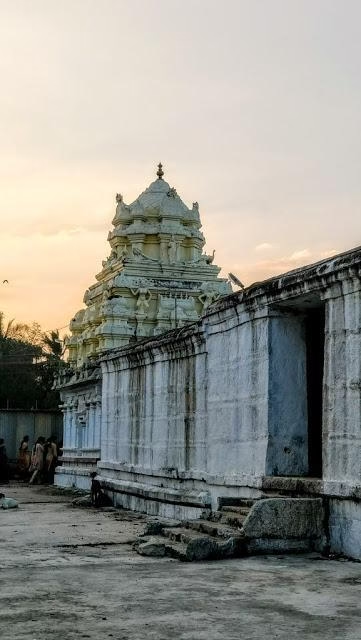
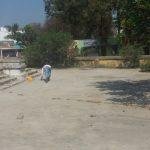
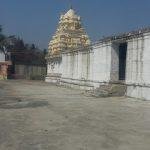
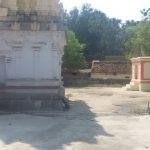
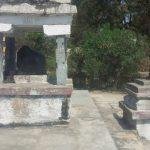
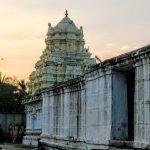
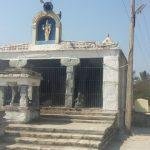
The temple showcases the quintessential Dravidian architectural style, characterized by towering gateways (Gopurams), intricate carvings, and spacious courtyards.
Key Features
- Vimana and Shikhara: The sanctum sanctorum (Vimana) features classic Dravidian tiers adorned with stucco figures and stone carvings depicting scenes from Hindu mythology.
- Stone Inscriptions: Pilgrims should observe the base of the temple walls, where Old Tamil inscriptions are etched. These epigraphs provide valuable historical data regarding the land grants and donations received during the Chozha and Pallava periods.
- Mandapas: The temple features pillared halls (Mandapas) that were used for religious discourses and cultural performances. The pillars are often carved with images of deities and mythical creatures.
4. Darshan & Ritual Logistics (2026 Guide)
To ensure a smooth spiritual journey, devotees should plan their visit according to the temple schedule. Below are the tentative daily timings for 2026.
Daily Timings
| Session | Timing | Description |
|---|---|---|
| Morning Opening | 6:00 AM | Ganesha Puja & Opening of Sanctum |
| Ucha Kalam (Midday) | 12:00 PM – 1:00 PM | Special Abhishekam |
| Evening Opening | 4:00 PM | Opening for Evening Darshan |
| Palliyarai Pooja | 8:00 PM | Night Ritual & Closing |
*Note: Timings may vary slightly during festival days. Please check with the temple office upon arrival.
Key Sevas and Online Booking
Devotees can book various sevas (ritual services) to enhance their pilgrimage experience. While many smaller temples rely on physical booking, Kandhaswamy Temple is gradually adopting digital systems.
- Abhishekam: The ritual bathing of the deity with water, milk, honey, and sandalwood paste.
- Archana: Recitation of the deity’s names (often performed with flowers or rice grains).
- Special Vahana Pooja: Performed on the Elephant vahanam.
Online Seva Booking: For 2026, devotees are encouraged to visit the official Tamil Nadu Temple Administration portal or the specific district shrine board (if available) to book sevas in advance to avoid queues.
2026 Major Festivals
Mark your calendars for these auspicious dates in 2026:
- Thai Poosam (January): A major festival dedicated to Lord Murugan, celebrating the day Parvati gave her earrings to Murugan.
- Thaipusam / Kavadi (January/February): Devotees carry Kavadis in fulfillment of vows.
- Panguni Uthiram (March/April): Celebrates the celestial wedding of Lord Murugan and Devasena.
- Skanda Sashti (October/November): The most significant festival commemorating the victory of Suraa Samharam.
- Deepavali (October): Celebrated with special lighting and special poojas.
5. Practical Visitor Guidance
To ensure a respectful and comfortable visit, please adhere to the following guidelines:
- Dress Code: Traditional attire is recommended. Men should wear dhotis or formal trousers with shirts; women should wear sarees, salwar kameez, or long skirts. Avoid shorts and sleeveless tops.
- Photography Rules: Photography is generally permitted in the outer courtyards and mandapas. However, it is strictly prohibited inside the inner sanctum (Garbhagriha).
- Mobile Lockers: While the temple may not have extensive locker facilities, it is advisable to travel light and carry minimal valuables.
- Accessibility: The temple complex is accessible via stone steps. Elderly devotees can request assistance from temple volunteers (Seva Dalams).
Crowd Management Tips
- Best Hours: The least crowded time is usually the morning slot between 6:00 AM and 8:00 AM on weekdays.
- Seasonal Advice: Summers (April–June) in Thiruvallur can be intensely hot. Carry sufficient water, a hat, and sunglasses. The cooler months (November–February) are ideal for visiting.
6. Pilgrimage Connectivity
The temple is located in Manavur, a small village that is well-connected by rail and road.
How to Reach
- By Air: The nearest airport is Chennai International Airport (approx. 59 km). From there, you can hire a taxi to Manavur.
- By Rail: The most convenient stop is Manavur Railway Station, located just 300 meters from the temple. It lies on the Chennai Central–Arakkonam route. If coming from Thiruvallur, it is approximately 4 stations away.
- By Road: The temple is located on the Thiruvallur–Thiruvalangadu road (State Highway). Regular bus services (specifically Route T2) operate between Thiruvallur and Thiruvalangadu via Manavur.
- Distances:
- Thiruvallur: 15 km
- Thiruvalangadu: 5 km
- Arakkonam: 23 km
- Chennai: 67 km
Nearby Sacred Sites (Circuit)
To make the most of your pilgrimage, consider visiting these nearby temples:
- Karkadeswarar Temple (Manavur): Located within the same village complex, dedicated to Lord Shiva.
- Vijayaraghava Perumal Temple (Manavur): A beautiful Vishnu temple also situated in Manavur.
- Thiruvalangadu: Famous for the Arulmigu Vadaranyeswarar Temple (One of the 7 Shiva Temples of Tamil Nadu) and the famous Nataraja (Dancing Shiva) shrine.
7. Frequently Asked Questions (FAQ)
1. Is there a VIP darshan entry available at Kandhaswamy Temple?
While the temple is not a massive complex like Tirupati, special arrangements can be made for elderly devotees or those with health issues. It is best to coordinate with the temple priest or local administrators for priority darshan.
Manavur is a small village with limited lodging. It is recommended to stay in Thiruvallur (15 km away) or Arakkonam (23 km away), where hotels and lodges are available. Alternatively, devotees can opt for budget stays in Chennai.
3. What is the significance of the Elephant Vahana here?
The elephant represents royalty, strength, and wisdom. In this temple, the association of the Elephant Vahana is unique. Devotees believe that praying to Kandhaswamy on his elephant mount removes obstacles and grants steady progress in life, much like an elephant moves steadily forward.
4. Is non-vegetarian food allowed in the area?
Strictly No. As this is a Hindu temple complex, the entire village of Manavur (especially the vicinity of the temple) is vegetarian. Devotees are requested to respect local customs.
5. When is the best time to visit to avoid crowds?
The best time is during weekdays (Tuesday, Thursday, and Friday) between 7:00 AM and 9:00 AM. Avoid weekends and major festival days (like Skanda Sashti) unless you are specifically coming for the festivities, as these attract large crowds.
Contact Details & Temple Office
For specific inquiries regarding rituals, donations, or recent updates, please contact the temple office directly:
- Address: Kandhaswamy Temple, Manavur, Thiruvallur District, Tamil Nadu.
- Phone: Please refer to local district tourism board listings for the latest contact number as specific lines may change.
Recent Posts

Shri Kaamkoteeshwar Mandir, Varanasi – History & Significance
In the heart of Kashi, the eternal city of Lord Shiva, where the Ganges flows with celestial grace, stands the Shri Kaamkoteeshwar Mandir. This sacred Sannidhi is not merely a temple but a profound spiritual bridge between the Northern…

ओ सांवरे तूने ही मुझको संभाला – Lyrics & Meaning
ओ सांवरे तूने ही मुझको संभाला – A Prayer to Shyam Origin & Spiritual Essence Why This Bhajan Resonates Devotees chant this when overwhelmed by life’s storms—the refrain ‘तूने ही मुझको संभाला’ is the soul’s sigh of relief: “You…

कथा ये है महाराज मेरे की – Lyrics & Meaning
कथा ये है महाराज मेरे की छत्रपति संभाजी महाराज – A Prayer to Chhatrapati Sambhaji Maharaj Origin & Spiritual Essence Why This Bhajan Resonates Devotees chant this when their spirit feels tested—its powerful refrain “महाराज मेरे” is a soul’s…

Rigveda Samhita Yathartha Anuvada (ऋग्वेद संहिता यथार्थ अनुवाद) – Complete Set with Anvayartha & Hindi/English Translation
The Rigveda is the oldest surviving scripture of humanity and the foundational text of Sanātana Dharma. For serious students, scholars, UPSC aspirants studying ancient Indian history, Sanskrit learners, and spiritual seekers, a precise and grammatically structured translation is indispensable.…

आना भी अकेला है जाना भी अकेला है – Lyrics & Meaning | BharatTemples
आना भी अकेला है जाना भी अकेला है – A Prayer to the Divine Witness Origin & Spiritual Essence Why This Bhajan Resonates Devotees turn to this bhajan in moments of deep reflection—when life’s attachments begin to ache. The…

माता शेरावाली के द्वार जो भी जाता है – Lyrics & Meaning
माता शेरावाली के द्वार जो भी जाता है – A Prayer to Maa Sherawali Origin & Spiritual Essence Why This Bhajan Resonates Devotees turn to this bhajan in times of fear or uncertainty—its promise that no one leaves Maa’s…

मार लेना सपणी उबार लेणा भवरा – Lyrics & Meaning
मार लेना सपणी उबार लेणा भवरा – A Prayer to the Divine Beloved Origin & Spiritual Essence Why This Bhajan Resonates Devotees chant this in moments of deep vulnerability—its cry of “मार लेना सपणी, उबार लेणा भवरा” is the…

हमें श्याम सुंदर भरोसा तुम्हारा – Lyrics & Meaning
हमें श्याम सुंदर भरोसा तुम्हारा – A Prayer to Shyam Sundar Origin & Spiritual Essence Why This Bhajan Resonates Devotees chant this when feeling alone—its refrain ‘de do sahara’ is the soul’s cry for divine support. Lyrics in Hindi…

Mere Satguru Ne Di Thi Davai Lyrics in Hindi & Meaning
Mere Satguru Ne Di Thi Davai: Invoking the Guru’s Liberating Wisdom This soul-stirring bhajan venerates the Satguru (True Spiritual Master) as the divine physician who dispenses the only remedy for life’s deepest sufferings. Composed by Sant Karmaveer Tufani, it…

Janm Diyo Thari Maa Dukh Dekhiyo Lyrics in Hindi & Meaning
जन्म दियो थारी माँ दुख देखियो (Maa’s Grief Upon Birthing You) This soul-stirring Chetavani Bhajan (admonitory hymn) is addressed to the Divine Mother (Maa) – a call for repentance when children forget their filial duties in the dark age…