

Contents
Kalimala Durgadevi Temple, Pathukani, Kanyakumari
| Date built: | – |
|---|---|
| Deity: | Kalimala Durgadevi |
| Architectural style: | Dravidian architecture |
| Major festivals | – |
| Locale: | Pathukani |
| District:: | Kanyakumari |
| Address: | – |
| Phone | – |
Introduction & Spiritual Essence
Perched at an elevation of 3,000 feet above sea level on the verdant slopes of the Western Ghats, the Kalimala Durgadevi Temple in Pathukani stands as a serene sanctuary dedicated to Shri Kaliamman. The name itself translates to “The Mountain of Goddess Kali,” signifying a Swayambhu (self-manifested) form of the Goddess residing amidst the rocks and mist.
Phalaśruti (Spiritual Benefits): Devotees undertake this arduous trek primarily to seek the blessings of Maa Durga in her fierce yet benevolent Kali form. The primary spiritual benefit sought here is the destruction of negative karma and the removal of obstacles. Pilgrims believe that offering prayers here cleanses ancestral sins, particularly through the sacred ritual of Ponkala, which is offered directly to the deity on the hilltop.
Historical Origins & Scriptural Legend
While the exact architectural date of construction remains undocumented in modern records, the temple’s spiritual history is deeply rooted in ancient mythology.
The Legend of Sage Agasthya
According to the Sthala Purana and local oral traditions, this region is intrinsically linked to the great sage Agasthya. It is believed that Sage Agasthya performed rigorous penance (Tapas) at this very location to gain the knowledge of the cosmos. The divine energy of his penance is said to have manifested in the form of Goddess Kali to bless him.
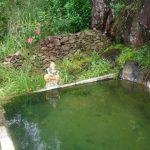
Adjacent to the temple lies the Kaali Theertham, a natural spring. Tradition holds that this spring never runs dry, regardless of the season. The water here is considered on par with the sanctity of the River Ganges, used for purification rituals and consumed by devotees as Theertham.
Architectural Marvels
The temple exemplifies the Dravidian architectural style, adapted to the rugged terrain of the Western Ghats. Despite its structural simplicity, the shrine exudes a powerful aura.
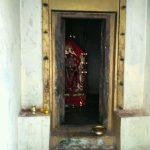
- Garbhagriha (Sanctum Sanctorum): The inner sanctum houses the idol of Goddess Durgadevi. The idol is distinct, often described as a fusion of a Shila Rupa (rock form) and a carved murti, facing east.
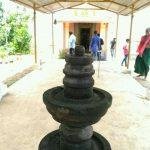
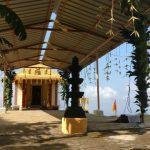
- Mandapa: The temple features a pillared hall (Mandapa) where devotees gather for prayers. The construction utilizes locally sourced granite, harmonizing with the natural landscape.
- Vastu Elements: The layout follows traditional Vastu principles, with the sanctum positioned to catch the first rays of the rising sun, symbolizing the dispelling of darkness.
Darshan & Ritual Logistics
The temple is generally managed by local priests and is less commercialized than major pilgrimage centers, offering a more intimate spiritual experience. However, during festivals, arrangements are made for larger crowds.
Daily Timings (Estimated)
Note: As this is a remote hill temple, timings may vary based on daylight and weather conditions.
| Session | Timing |
|---|---|
| Morning Darshan | 07:00 AM – 12:00 PM |
| Afternoon Break | 12:00 PM – 04:00 PM |
| Evening Darshan | 04:00 PM – 06:30 PM |
Key Sevas and Offerings
- Ponkala: The most significant offering, especially by women devotees. A earthen pot filled with rice, jaggery, and milk is cooked over a wood fire until it boils over, symbolizing prosperity.
- Abhishekam: Ritual bathing of the deity (often performed with milk, honey, and sandalwood).
- Archana: Chanting of the Goddess’s holy names.
2026 Festival Dates
The temple sees its largest influx during Navaratri. Specifically, Durgashtami (the eighth day) is the peak event.
- Navaratri: September 22 – October 1, 2026
- Durgashtami: September 29, 2026
- Vijayadashami (Dussehra): October 2, 2026
Online Seva Booking: Due to the remote nature of the temple, a formal centralized online portal is not always active. Devotees are advised to contact the local Pathukani Panchayat Office or the Kanyakumari Temple Administration Office for festival-related bookings. However, for general guidance, inquiries can be directed to the Tamil Nadu Hindu Religious and Charitable Endowments Department.
Practical Visitor Guidance
Dress Code & Etiquette
As with all Hindu temples in Tamil Nadu, modest attire is mandatory. Men should wear Dhotis or formal trousers with shirts (vests are discouraged). Women are required to wear Sarees, Salwar Kameez, or traditional full-length attire.
Photography & Mobiles
Photography is generally restricted inside the Garbhagriha. In the outer praharam (circumambulation path), you may take photos, but avoid using flash. Mobile phones are allowed, but please maintain silence.
Crowd Management & Best Time to Visit
- Best Season: October to March. The weather is cool, and the mist is enchanting.
- Summer (April–May): Carry water and wear head protection. The granite steps become hot by midday.
- Monsoon (June–September): The paths become slippery. Exercise extreme caution while trekking.
- Off-Season: The temple is usually deserted on weekdays, offering a deeply meditative atmosphere.
Pilgrimage Connectivity
How to Reach
The temple is accessible via a scenic 6 km trek from the foothills.
- By Air: Trivandrum International Airport (TRV) is the nearest airport, approximately 44 km away.
- By Rail: Kuzhithurai Railway Station (approx. 22 km) or Parassala are the closest railheads.
- By Road: The temple is located near the Tamil Nadu-Kerala border. It is 68 km from Kanyakumari and 46 km from Nagercoil.
Nearby Sacred Sites
Extend your pilgrimage with these nearby attractions:
- Kurisumala Ashram: Located on the same mountain range, a center for Christian meditation and interfaith harmony.
- Mata Amritanandamayi Math (Kuzhithurai): A major spiritual center just 22 km away.
- Thirparappu Waterfalls: A natural waterfall located 13 km away, believed to be associated with Shiva.
Photo Gallery
























Frequently Asked Questions (FAQ)
Is there a VIP or special entry darshan available at Kalimala Temple?
No, there is no formal VIP entry system. The temple management encourages all devotees to wait in the general queue. However, during the main Durgashtami festival, priority is given to those carrying offerings like Ponkala pots.
Is the trek to Kalimala Temple difficult?
The trek is moderate. While the path is motorable to an extent, the final ascent requires climbing steps and uneven terrain. It is not suitable for those with severe mobility issues, though porters are sometimes available for assistance during festivals.
Can we carry food inside the temple?
Food is not allowed inside the sanctum. However, there are small stalls near the base where you can buy snacks and water. It is advisable to carry dry fruits and water for the trek.
What is the significance of Kaali Theertham?
It is a natural spring located near the temple. According to legend, Sage Agasthya created this water source. Devotees believe it has healing properties and is as holy as the Ganges.
Is parking available at Kalimala Temple?
Limited parking is available at the base of the hill near the village. It is recommended to arrive early in the morning to secure a spot, as the road is narrow.
Kalimala Durgadevi Temple
Pathukani, Kanyakumari District
Tamil Nadu, India
(Near the Kerala Border)
Recent Posts

Shri Kaamkoteeshwar Mandir, Varanasi – History & Significance
In the heart of Kashi, the eternal city of Lord Shiva, where the Ganges flows with celestial grace, stands the Shri Kaamkoteeshwar Mandir. This sacred Sannidhi is not merely a temple but a profound spiritual bridge between the Northern…

ओ सांवरे तूने ही मुझको संभाला – Lyrics & Meaning
ओ सांवरे तूने ही मुझको संभाला – A Prayer to Shyam Origin & Spiritual Essence Why This Bhajan Resonates Devotees chant this when overwhelmed by life’s storms—the refrain ‘तूने ही मुझको संभाला’ is the soul’s sigh of relief: “You…

कथा ये है महाराज मेरे की – Lyrics & Meaning
कथा ये है महाराज मेरे की छत्रपति संभाजी महाराज – A Prayer to Chhatrapati Sambhaji Maharaj Origin & Spiritual Essence Why This Bhajan Resonates Devotees chant this when their spirit feels tested—its powerful refrain “महाराज मेरे” is a soul’s…

Rigveda Samhita Yathartha Anuvada (ऋग्वेद संहिता यथार्थ अनुवाद) – Complete Set with Anvayartha & Hindi/English Translation
The Rigveda is the oldest surviving scripture of humanity and the foundational text of Sanātana Dharma. For serious students, scholars, UPSC aspirants studying ancient Indian history, Sanskrit learners, and spiritual seekers, a precise and grammatically structured translation is indispensable.…

आना भी अकेला है जाना भी अकेला है – Lyrics & Meaning | BharatTemples
आना भी अकेला है जाना भी अकेला है – A Prayer to the Divine Witness Origin & Spiritual Essence Why This Bhajan Resonates Devotees turn to this bhajan in moments of deep reflection—when life’s attachments begin to ache. The…

माता शेरावाली के द्वार जो भी जाता है – Lyrics & Meaning
माता शेरावाली के द्वार जो भी जाता है – A Prayer to Maa Sherawali Origin & Spiritual Essence Why This Bhajan Resonates Devotees turn to this bhajan in times of fear or uncertainty—its promise that no one leaves Maa’s…

मार लेना सपणी उबार लेणा भवरा – Lyrics & Meaning
मार लेना सपणी उबार लेणा भवरा – A Prayer to the Divine Beloved Origin & Spiritual Essence Why This Bhajan Resonates Devotees chant this in moments of deep vulnerability—its cry of “मार लेना सपणी, उबार लेणा भवरा” is the…

हमें श्याम सुंदर भरोसा तुम्हारा – Lyrics & Meaning
हमें श्याम सुंदर भरोसा तुम्हारा – A Prayer to Shyam Sundar Origin & Spiritual Essence Why This Bhajan Resonates Devotees chant this when feeling alone—its refrain ‘de do sahara’ is the soul’s cry for divine support. Lyrics in Hindi…

Mere Satguru Ne Di Thi Davai Lyrics in Hindi & Meaning
Mere Satguru Ne Di Thi Davai: Invoking the Guru’s Liberating Wisdom This soul-stirring bhajan venerates the Satguru (True Spiritual Master) as the divine physician who dispenses the only remedy for life’s deepest sufferings. Composed by Sant Karmaveer Tufani, it…

Janm Diyo Thari Maa Dukh Dekhiyo Lyrics in Hindi & Meaning
जन्म दियो थारी माँ दुख देखियो (Maa’s Grief Upon Birthing You) This soul-stirring Chetavani Bhajan (admonitory hymn) is addressed to the Divine Mother (Maa) – a call for repentance when children forget their filial duties in the dark age…