
Contents
- 1 Definitive Pilgrimage Guide: Anjaneya Temple, Alamelumangapuram, Mylapore
Definitive Pilgrimage Guide: Anjaneya Temple, Alamelumangapuram, Mylapore
Introduction & Spiritual Essence
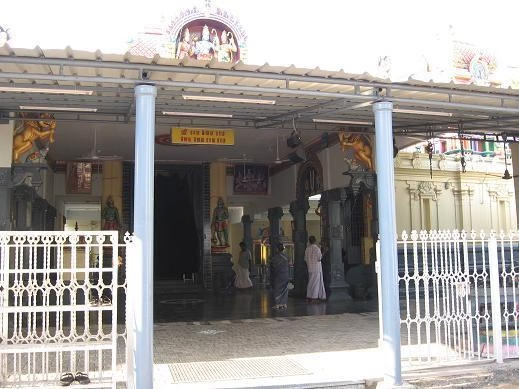
Located in the culturally vibrant neighborhood of Mylapore in Chennai, the Anjaneya Temple at Alamelumangapuram stands as a beacon of devotion to Lord Hanuman (Anjaneya). Unlike ancient structures shrouded in centuries of history, this temple is a modern marvel established to preserve the timeless Vedic traditions of the Ramanuja Sampradaya. The primary deity, a majestic 16-foot monolithic granite idol of Lord Hanuman, faces north (the direction of Kubera, the deity of wealth), symbolizing strength, protection, and prosperity.
Why do devotees visit? (Phalaśruti)
The temple is renowned for its spiritual potency. According to temple records, a visit here is believed to aid in:
- Cleansing Ancestral Karma: Performing specific sevas here is said to pacify Pitru Dosha (ancestral afflictions), bringing peace to the departed souls.
- Removal of Obstacles: As Vighna Harta (remover of obstacles), Lord Hanuman helps devotees overcome difficulties in career, education, and personal life.
- Health and Vitality: The north-facing murti is traditionally associated with healing energy, making this a popular site for those seeking recovery from ailments.
Historical Origins & Scriptural Legend
Founding and Patronage
Tradition holds that the construction of this temple was initiated under the spiritual guidance of Jayendra Saraswathi, the Shankaracharya of the revered Kanchi Matha. The temple was constructed in the mid-1980s, a specific era dedicated to reviving Hanuman worship in urban Chennai. The idol was installed on March 31, 1985, and the grand consecration (Kumbhabhishekam) was performed on June 26, 1986.
Scriptural Significance
While the temple is modern, its roots are deeply entwined with ancient texts. The Sthala Purana (local legend) associated with this site aligns with the Ananda Ramayana, which extols the virtues of Hanuman. The installation of such a massive monolithic idol in a densely populated urban area is seen as a divine intervention to protect Sanatana Dharma during the rapid urbanization of Chennai.
Architectural Marvels
Dravidian Architecture
The temple showcases the classical Dravidian architectural style, characterized by its pyramid-shaped gopurams and intricate carvings. Despite its modern origins, the architects adhered to strict Vastu Shastra principles.
The Monolithic Idol
The centerpiece is the 16-foot tall monolithic granite idol of Lord Anjaneya, carved from a single stone. This is one of the tallest Hanuman idols in Chennai. The deity holds a mace (Gada) and is depicted in a blessing pose. The sanctum is designed so that the idol is visible from the main entrance, allowing devotees to receive the Lord’s gaze immediately upon entering.
Sanctum Layout
The garbhagriha (sanctum sanctorum) houses the main deity facing north. The pradakshina path (circumambulation path) surrounding the main shrine features reliefs of Hanuman in various forms, including Panchamukha Hanuman (five-faced Hanuman) and Yoga Anjaneya. Shrines for Hayagriva Perumal, Garuda, and Ganapathy are situated along the inner corridors, creating a complete pantheon for devotees.
Darshan & Ritual Logistics
Visitors are encouraged to check the timings in advance as they may vary during festival seasons. Below are the standard operating hours for 2026.
Daily Timings
| Session | Timing |
|---|---|
| Morning Darshan | 7:00 AM – 12:00 PM |
| Afternoon Break | 12:00 PM – 4:30 PM (Temple Closed) |
| Evening Darshan | 4:30 PM – 9:00 PM |
Seva & Offerings
The temple is famous for its Kodi Archana, where one crore names of Hanuman are recited over a period of two years. Devotees can participate in this unique offering.
- Abhishekam: Performed with holy water, milk, and honey.
- Archana: Personal prayers recited by the priest.
- Special Seva: Satyanarayana Puja and Rudra Homam are conducted upon request.
Online Booking: To book online sevas, devotees should visit the official temple website or trusted third-party platforms that list Chennai temples. Search for “Anjaneya Temple Alamelumangapuram online seva booking” for current availability.
2026 Major Festival Dates
- Hanuman Jayanti: April 12, 2026 (Saturday) – Expect special Abhishekam and Sahasranama Archana from 6:00 AM.
- Vaikuntha Ekadashi: January 10, 2026 (Saturday) – Special darshan for Perumal shrines.
- Deepavali: November 4, 2026 (Tuesday) – Temple decoration with lamps and flowers.
- Rama Navami: April 6, 2026 (Monday) – Celebrated with Hanuman Chalisa recitation.
Practical Visitor Guidance
Dress Code
Traditional attire is recommended. Men should wear dhotis or formal pants with shirts; women should wear sarees, salwar kameez, or long skirts. Avoid shorts and sleeveless tops.
Photography and Mobiles
Photography is strictly prohibited inside the sanctum sanctorum. Mobile phones are allowed, but please switch to silent mode out of respect for the sanctity of the space.
Crowd Management
The temple attracts significant crowds on Saturdays (considered auspicious for Hanuman) and festival days.
- Best Time to Visit: Weekday mornings between 7:00 AM and 8:30 AM offer the least crowd.
- Seasonal Advice: Chennai experiences high humidity. If visiting in May, carry a water bottle and wear light cotton clothing. The temple queue is partially covered, but shade is limited.
Pilgrimage Connectivity
The temple is situated in the heart of South Chennai, making it highly accessible via public and private transport.
How to Reach
- By Air: Chennai International Airport (MAA) is approximately 17 km away (approx. 40-50 mins by cab).
- By Train: The nearest MRTS station is Thirumayilai (Mylapore), about 850 meters from the temple. Chennai Central is about 9 km away.
- By Road: The temple is located near the main Mylapore bus stop. It is accessible via Dr. Radhakrishnan Salai or Luz Corner.
Nearby Sacred Sites (Pilgrimage Circuit)
Extend your visit by exploring these nearby holy sites in Mylapore:
- Kapaleeshwarar Temple: One of Chennai’s oldest Shiva temples, located just 1.5 km away.
- Sri Parthasarathy Temple (Triplicane): A UNESCO-recognized heritage site (5 km).
- Santhome Cathedral Basilica: A historic Christian pilgrimage site built over the tomb of St. Thomas (3 km).
Frequently Asked Questions (FAQs)
1. Is there a VIP darshan entry available?
Yes, the temple management provides a queue for senior citizens and differently-abled devotees for ease of access. Special passes for immediate darshan may be issued by the temple administration on request, subject to availability.
2. What is the significance of the north-facing idol?
Lord Hanuman facing north signifies his role as the guardian of wealth and the remover of obstacles for those who travel north (the spiritual path). It is also considered highly auspicious for devotees seeking financial stability.
3. Is parking available at the temple?
Parking in Alamelumangapuram can be challenging due to narrow lanes. It is advisable to park at the nearby Mylapore public parking lots or use the MTC bus stand parking and walk the short distance (approx. 600 meters).
4. Are there food facilities (Annadhanam) available?
While the temple does not have a full-time canteen, Annadhanam (free meals) is distributed during special festivals and on auspicious Saturdays. Devotees are advised to check the temple notice board for daily schedules.
5. Can I bring my own offerings (Naivedyam)?
Yes, devotees can bring fruits and sweets for offering. However, these must be submitted to the temple priest at the designated counter before the darshan. Non-vegetarian items and alcohol are strictly prohibited within the temple premises.
Recent Posts

Shri Kaamkoteeshwar Mandir, Varanasi – History & Significance
In the heart of Kashi, the eternal city of Lord Shiva, where the Ganges flows with celestial grace, stands the Shri Kaamkoteeshwar Mandir. This sacred Sannidhi is not merely a temple but a profound spiritual bridge between the Northern…

ओ सांवरे तूने ही मुझको संभाला – Lyrics & Meaning
ओ सांवरे तूने ही मुझको संभाला – A Prayer to Shyam Origin & Spiritual Essence Why This Bhajan Resonates Devotees chant this when overwhelmed by life’s storms—the refrain ‘तूने ही मुझको संभाला’ is the soul’s sigh of relief: “You…

कथा ये है महाराज मेरे की – Lyrics & Meaning
कथा ये है महाराज मेरे की छत्रपति संभाजी महाराज – A Prayer to Chhatrapati Sambhaji Maharaj Origin & Spiritual Essence Why This Bhajan Resonates Devotees chant this when their spirit feels tested—its powerful refrain “महाराज मेरे” is a soul’s…

Rigveda Samhita Yathartha Anuvada (ऋग्वेद संहिता यथार्थ अनुवाद) – Complete Set with Anvayartha & Hindi/English Translation
The Rigveda is the oldest surviving scripture of humanity and the foundational text of Sanātana Dharma. For serious students, scholars, UPSC aspirants studying ancient Indian history, Sanskrit learners, and spiritual seekers, a precise and grammatically structured translation is indispensable.…

आना भी अकेला है जाना भी अकेला है – Lyrics & Meaning | BharatTemples
आना भी अकेला है जाना भी अकेला है – A Prayer to the Divine Witness Origin & Spiritual Essence Why This Bhajan Resonates Devotees turn to this bhajan in moments of deep reflection—when life’s attachments begin to ache. The…

माता शेरावाली के द्वार जो भी जाता है – Lyrics & Meaning
माता शेरावाली के द्वार जो भी जाता है – A Prayer to Maa Sherawali Origin & Spiritual Essence Why This Bhajan Resonates Devotees turn to this bhajan in times of fear or uncertainty—its promise that no one leaves Maa’s…

मार लेना सपणी उबार लेणा भवरा – Lyrics & Meaning
मार लेना सपणी उबार लेणा भवरा – A Prayer to the Divine Beloved Origin & Spiritual Essence Why This Bhajan Resonates Devotees chant this in moments of deep vulnerability—its cry of “मार लेना सपणी, उबार लेणा भवरा” is the…

हमें श्याम सुंदर भरोसा तुम्हारा – Lyrics & Meaning
हमें श्याम सुंदर भरोसा तुम्हारा – A Prayer to Shyam Sundar Origin & Spiritual Essence Why This Bhajan Resonates Devotees chant this when feeling alone—its refrain ‘de do sahara’ is the soul’s cry for divine support. Lyrics in Hindi…

Mere Satguru Ne Di Thi Davai Lyrics in Hindi & Meaning
Mere Satguru Ne Di Thi Davai: Invoking the Guru’s Liberating Wisdom This soul-stirring bhajan venerates the Satguru (True Spiritual Master) as the divine physician who dispenses the only remedy for life’s deepest sufferings. Composed by Sant Karmaveer Tufani, it…

Janm Diyo Thari Maa Dukh Dekhiyo Lyrics in Hindi & Meaning
जन्म दियो थारी माँ दुख देखियो (Maa’s Grief Upon Birthing You) This soul-stirring Chetavani Bhajan (admonitory hymn) is addressed to the Divine Mother (Maa) – a call for repentance when children forget their filial duties in the dark age…