
Contents
Abayavaradarajar Temple, Alangudi, Thiruvarur


1. Introduction & Spiritual Essence
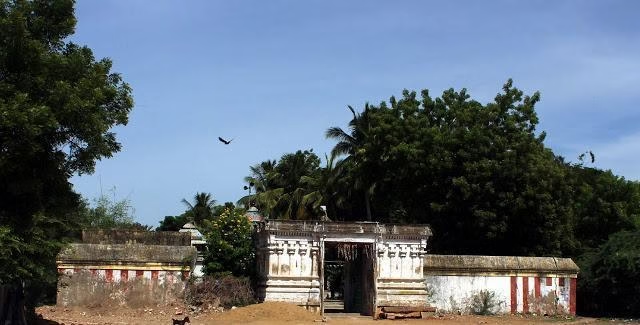
Nestled in the holy soil of the Kaveri delta, the Abayavaradarajar Temple in Alangudi stands as a timeless beacon of divine grace. This revered shrine is dedicated to Lord Vishnu in his form as Abayavaradarajar (The Lord who bestows protection) and the consort Goddess, Perundevi Thaayar. While the temple is estimated to be contemporaneous with the nearby Padal Petra Sthalam, Thirupperuvelur Abathsahayeswarar Temple, it has been beautifully renovated by the Chola kings, preserving its Dravidian soul.
Phalaśruti: The Spiritual Benefit
Devotees flock to this shrine seeking the Prayoga Chakra—the discus held in the ready-to-use posture—symbolizing immediate intervention and protection. The primary spiritual benefit (Phalaśruti) of worshipping here is the removal of ancestral karma and the blessing of protection from impending dangers. It is particularly auspicious for those seeking relief from long-standing legal disputes and obstacles in professional endeavors.
2. Historical Origins & Scriptural Legend
The history of Alangudi is deeply woven into the celestial movements of the Navagrahas. According to temple records and local tradition, the temple’s origins are linked to a divine event involving the Sun God (Surya) and the Moon God (Chandra).
The Legend of the Divine Wedding
Tradition holds that during the celestial wedding of Lord Vishnu, Surya and Chandra hesitated to attend together, fearing their combined radiance would engulf the world in blinding light. Lord Vishnu, in his grace, mediated their energies and invited both to witness the ceremony. Grateful for this cosmic balance, Surya and Chandra requested the Lord to remain at Alangudi as a guardian of time and fate, establishing the temple’s significance in the Guru (Jupiter) and Rahu-Ketu) axis of the Navagraha Sthalams.
The structure bears the architectural signatures of the Chola Dynasty, with major renovations augmenting its grandeur over the centuries, making it a vital heritage site in the Thiruvarur District.
3. Architectural Marvels
The temple is a quintessential example of Dravidian architecture. Upon entering through the imposing gateway, the spacious Prakaram (circumambulatory path) reveals a sanctuary of peace, adorned with lush trees, including the sacred Jackfruit tree (Artocarpus heterophyllus)—the Sthala Vriksham.
Sculptural Details & Shrines
The main sanctum (Garbhagriha) houses the presiding deity, Abayavaradarajar, facing east. The central idol stands approximately 7 feet tall, radiating a sense of protective power.
The outer Prakaram hosts several significant shrines, including:
- Kalyana Lakshmi Narasimhar: Depicting Lord Narasimha with Goddess Lakshmi.
- Garudan & Chakkarathalwar: Dedicated to the eagle mount and the divine discus.
- Anjaneya (Hanuman): The embodiment of devotion and strength.
- Yoga Narasimhar: Representing the meditative form of the avatar.
- Surya and Chran: Separate shrines for the Sun and Moon deities, validating the temple’s legend.
The Theertham associated with this temple is the Aayar Theertham.
4. Darshan & Ritual Logistics
To facilitate a smooth spiritual journey, we have outlined the daily schedule and seva timings. Note: While specific festival dates for the current year are standard, devotees are advised to check the temple’s official website for real-time updates.
Daily Timings (2026 Schedule)
| Session | Time Slot |
|---|---|
| Morning Darshan | 06:00 AM – 12:00 PM |
| Midday Closure | 12:00 PM – 04:00 PM |
| Evening Darshan | 04:00 PM – 08:00 PM |
Key Sevas & Online Booking
The temple follows a digital-first approach for major sevas. Devotees can book Abhishekam (ritual bathing of the deity) and Archana (recitation of names) via the Tamil Nadu State Temples Online Portal or the designated counter at the temple entry.
- Special Entry Darshan: Available via token issuance at the temple.
- Upanayana/Archana: Can be sponsored for specific durations (e.g., 11/21 days).
- 2026 Festival Highlights: Panguni Uthiram (Mar-Apr 2026) and the Brahmotsavam are the major annual events. The Rathotsavam (Chariot procession) is a must-see during these months.
5. Practical Visitor Guidance
Ensuring a comfortable visit enhances the devotional experience.
Visitor Etiquette & Essentials
- Dress Code: Traditional attire is mandatory. Men: Dhoti/Pants and Shirt. Women: Saree/Salwar Kameez.
- Photography: Strictly prohibited inside the sanctum sanctorum. Permitted in the outer corridors with non-flash modes.
- Mobile Lockers: Small bags are allowed, but electronic items may need to be deposited at the free counter near the entrance.
Crowd Management & Seasonal Advice
To avoid long queues, plan your Darshan between 6:00 AM and 8:00 AM on weekdays.
Seasonal Note: During the summer months (April–June), Alangudi experiences high humidity. Carry a reusable water bottle and a head cover (scarf/cap) as the temple corridors, though shaded, can be warm.
6. Pilgrimage Connectivity
Alangudi is well-connected via road and rail within the Thanjavur corridor.
How to Reach
- By Air: The nearest airport is Trichy (Tiruchirappalli) International Airport, approximately 95 km away.
- By Rail: The closest railway heads are Needamangalam (8 km) and Kumbakonam (18 km). From Kumbakonam, frequent bus services are available.
- By Road: Located 36 km from Thiruvarur and 22 km from Mannargudi. The temple is accessible via the NH 83 (Thanjavur-Tiruvarur Road) and state highways connecting Mannargudi.
Nearby Sacred Sites (Pilgrimage Circuit)
Alangudi serves as a gateway to other holy centers in the delta:
- Guru Temple (Alangudi): The famous Navagraha temple dedicated to Jupiter is located very close by.
- Thirupperuvelur (Abathsahayeswarar Temple): A Padal Petra Sthalam (Shiva temple) mentioned in the Thevaram, located nearby.
- Kumbakonam Temples: A short drive leads to the Adhi Kumbeswarar and Sarangapani temples.
7. Frequently Asked Questions (FAQs)
Is there a VIP darshan entry at Abayavaradarajar Temple?
Yes, the temple offers a special entry darshan for senior citizens, differently-abled devotees, and through paid tickets issued at the temple counter. It is subject to availability during peak festival times.
What is the significance of the Prayoga Chakra here?
Unlike the resting posture found in some Vishnu temples, the Abayavaradarajar holds the Prayoga Chakra (discus) in a ready-to-throw position, signifying instant protection from evil forces and the granting of immediate boons to devotees.
Are there food facilities available?
Yes, the temple trust occasionally organizes Annadhanam (free meals) during festival days. Small eateries serving vegetarian meals are available in the Alangudi town market, a short walk from the temple.
What is the best way to book seva online?
Visit the official Tamil Nadu temples portal or search for ‘Tamil Nadu Temples Online Seva Booking’. Select Abayavaradarajar Temple, Alangudi, choose the desired seva (Archana/Abhishekam), and pay via the payment gateway. An e-receipt must be produced at the counter.
Is the temple accessible for wheelchairs?
The inner sanctum requires climbing steps, which may be difficult. However, the outer corridors and the main mandapam are generally accessible via ramps, though assistance from family members is recommended.
Recent Posts

Shri Kaamkoteeshwar Mandir, Varanasi – History & Significance
In the heart of Kashi, the eternal city of Lord Shiva, where the Ganges flows with celestial grace, stands the Shri Kaamkoteeshwar Mandir. This sacred Sannidhi is not merely a temple but a profound spiritual bridge between the Northern…

ओ सांवरे तूने ही मुझको संभाला – Lyrics & Meaning
ओ सांवरे तूने ही मुझको संभाला – A Prayer to Shyam Origin & Spiritual Essence Why This Bhajan Resonates Devotees chant this when overwhelmed by life’s storms—the refrain ‘तूने ही मुझको संभाला’ is the soul’s sigh of relief: “You…

कथा ये है महाराज मेरे की – Lyrics & Meaning
कथा ये है महाराज मेरे की छत्रपति संभाजी महाराज – A Prayer to Chhatrapati Sambhaji Maharaj Origin & Spiritual Essence Why This Bhajan Resonates Devotees chant this when their spirit feels tested—its powerful refrain “महाराज मेरे” is a soul’s…

Rigveda Samhita Yathartha Anuvada (ऋग्वेद संहिता यथार्थ अनुवाद) – Complete Set with Anvayartha & Hindi/English Translation
The Rigveda is the oldest surviving scripture of humanity and the foundational text of Sanātana Dharma. For serious students, scholars, UPSC aspirants studying ancient Indian history, Sanskrit learners, and spiritual seekers, a precise and grammatically structured translation is indispensable.…

आना भी अकेला है जाना भी अकेला है – Lyrics & Meaning | BharatTemples
आना भी अकेला है जाना भी अकेला है – A Prayer to the Divine Witness Origin & Spiritual Essence Why This Bhajan Resonates Devotees turn to this bhajan in moments of deep reflection—when life’s attachments begin to ache. The…

माता शेरावाली के द्वार जो भी जाता है – Lyrics & Meaning
माता शेरावाली के द्वार जो भी जाता है – A Prayer to Maa Sherawali Origin & Spiritual Essence Why This Bhajan Resonates Devotees turn to this bhajan in times of fear or uncertainty—its promise that no one leaves Maa’s…

मार लेना सपणी उबार लेणा भवरा – Lyrics & Meaning
मार लेना सपणी उबार लेणा भवरा – A Prayer to the Divine Beloved Origin & Spiritual Essence Why This Bhajan Resonates Devotees chant this in moments of deep vulnerability—its cry of “मार लेना सपणी, उबार लेणा भवरा” is the…

हमें श्याम सुंदर भरोसा तुम्हारा – Lyrics & Meaning
हमें श्याम सुंदर भरोसा तुम्हारा – A Prayer to Shyam Sundar Origin & Spiritual Essence Why This Bhajan Resonates Devotees chant this when feeling alone—its refrain ‘de do sahara’ is the soul’s cry for divine support. Lyrics in Hindi…

Mere Satguru Ne Di Thi Davai Lyrics in Hindi & Meaning
Mere Satguru Ne Di Thi Davai: Invoking the Guru’s Liberating Wisdom This soul-stirring bhajan venerates the Satguru (True Spiritual Master) as the divine physician who dispenses the only remedy for life’s deepest sufferings. Composed by Sant Karmaveer Tufani, it…

Janm Diyo Thari Maa Dukh Dekhiyo Lyrics in Hindi & Meaning
जन्म दियो थारी माँ दुख देखियो (Maa’s Grief Upon Birthing You) This soul-stirring Chetavani Bhajan (admonitory hymn) is addressed to the Divine Mother (Maa) – a call for repentance when children forget their filial duties in the dark age…