
Contents
For devotees seeking the divine grace of the Mother Goddess in the pristine southern tip of India, the Esakki Amman Temple in Elankadai, Kanyakumari, stands as a beacon of ancient tradition and spiritual solace. This definitive guide serves as a comprehensive resource for pilgrims planning their visit in 2026, blending scriptural reverence with practical travel logistics.
| Date built: | Centuries old (Exact date lost to time) |
|---|---|
| Deity: | Esakki Amman (Mother Goddess) |
| Architectural style: | Dravidian architecture |
| Major festivals | Aadi Perukku, Navaratri, Amavasai |
| Locale: | Elankadai |
| District: | Kanyakumari, Tamil Nadu |
| Address: | Elankadai Village, Nagercoil, Kanyakumari Dist |
Introduction & Spiritual Essence
The Esakki Amman Temple is a revered focal point for the spiritual energies of Kanyakumari. The primary deity, Esakki Amman, is worshipped in her fierce yet benevolent form as the protector of her devotees. In the Dravidian tradition, she is the embodiment of Shakti (divine feminine energy).
Phalaśruti: Why Devotees Visit
According to local tradition, the temple holds immense Phalaśruti (spiritual benefits) for those in distress. Devotees flock here for:
- Removal of Obstacles: It is believed that praying here clears the path for success in new ventures and marriage alliances.
- Ancestral Karma: Rituals performed here are said to help cleanse negative karma associated with ancestors, bringing peace to departed souls.
- Health and Harmony: The temple is a sanctuary for those seeking healing from prolonged illnesses and familial discord.
Historical Origins & Scriptural Legend
While precise inscriptional evidence regarding the exact century of construction has been obscured by time, the temple is deeply woven into the cultural fabric of the Nagercoil region.
The Sthala Purana
Tradition holds that this sacred site was established during the reign of the Pandya or Chera dynasties, who were instrumental in spreading Dravidian culture in the south. While specific historical texts focus largely on the grandeur of the Thanjavur or Madurai temples, the oral legends of Elankadai are passed down through generations of temple custodians.
According to local lore, the name “Elankadai” itself holds botanical significance, likely tied to the lush vegetation that once surrounded the sanctum. The temple was constructed to honor the Goddess who protects the village (Nagaram) and its agricultural roots. Over the centuries, the temple has undergone several renovations to preserve its structural integrity while maintaining the ancient Vastu Shastra alignments.
Architectural Marvels
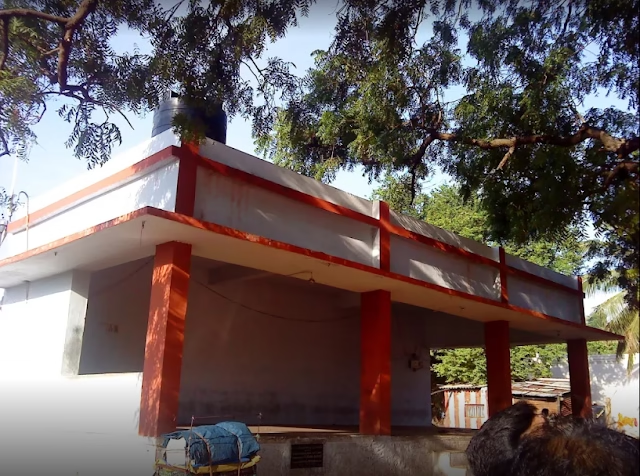
The Esakki Amman Temple is a classic example of Dravidian Architecture, characterized by its pyramidical towers (Vimana) and large enclosures.
- The Sanctum (Garbhagriha): The innermost shrine houses the presiding deity. The architecture is designed to channel cosmic energy, with the idol placed in a way that receives the first light of dawn.
- Mandapas (Halls): The temple features pillared halls designed for large congregations during festivals. The intricate carvings on the pillars often depict mythological scenes from the Puranas.
- Sculpture & Iconography: Unlike the more ornate gopurams of larger cities, the sculptures here are subtle yet powerful, showcasing the distinct artistry of the Kanyakumari region.
Darshan & Ritual Logistics (2026 Guide)
Planning your visit requires awareness of the daily schedules and specific rituals. The following timetable is estimated based on standard South Indian temple protocols for 2026.
| Session | Timing | Rituals |
|---|---|---|
| Morning Darshan | 06:00 AM – 12:00 PM | Ushathkalam, Abhishekam |
| Afternoon Closure | 12:00 PM – 04:00 PM | Temple cleaning & Rest |
| Evening Darshan | 04:00 PM – 08:00 PM | Deeparadhana, Archana |
Key Sevas & Online Booking
While specific online booking portals for this local temple may vary, most rituals can be booked via the HRCE (Hindu Religious and Charitable Endowments) Department or on-site at the temple counter.
- Abhishekam: Ritual bathing of the deity (usually performed in the morning).
- Archana: Chanting of the deity’s names (can be done individually or for the family).
- Annadhanam: Offering of food to devotees.
Major Festivals 2026
To witness the temple in its full glory, plan your visit during:
- Aadi Perukku: Celebrated in the Tamil month of Aadi (July/August). This is the most significant festival here, involving special abhishekams and processions.
- Navaratri: Nine nights of dedicated worship (September/October).
- Amavasai (New Moon): Monthly ritual days where devotees gather in large numbers to offer prayers to ancestors.
Practical Visitor Guidance
Ensuring a smooth pilgrimage requires preparation. The temple is located in a tropical climate, and specific codes of conduct are expected.
- Dress Code: Traditional attire is mandatory. Men should wear dhotis or pants with a formal shirt; women should wear sarees, half-sarees, or churidars. Avoid shorts and sleeveless tops.
- Photography: Photography is generally strictly prohibited inside the inner sanctum (Garbhagriha). Please respect this rule to maintain the sanctity of the shrine.
- Mobile Phones & Lockers: Electronic devices are to be kept silent. While small temples may not have sophisticated locker facilities, it is advisable to carry minimal luggage.
- Accessibility: The temple complex is relatively compact. Those with mobility issues may find the uneven stone surfaces challenging; wearing comfortable footwear with good grip is recommended.
- Crowd Management: The temple sees peak crowds on Sundays and festival days. Best time to visit: Weekday mornings between 7:00 AM and 8:00 AM for a peaceful darshan. In May (summer), carry a water bottle and cover your head while waiting in the queue.
Pilgrimage Connectivity
The temple is situated in Elankadai, which is well-connected to the major town of Nagercoil.
How to Reach
- By Air: The nearest airport is Trivandrum International Airport (TRV) in Kerala, located approximately 65-70 km away. From there, taxis and buses are available to Nagercoil.
- By Rail: The nearest major railway station is Nagercoil Junction (NCJ), just 5 km from the temple.
- By Road: Elankadai is located about 5 km from Nagercoil town. It is accessible via local state highways connecting to NH 66.
Nearby Sacred Sites (Circuit Guide)
Extend your spiritual journey by visiting these nearby destinations:
- Kanyakumari Bhagavathi Amman Temple: Located roughly 20 km away, this is the ultimate shrine of the Goddess at the southernmost tip of India.
- Thanumalayan Temple (Suchindram): Famous for its musical pillars and towering gopuram, located approximately 15 km from Elankadai.
- Padmanabhapuram Palace: A historical marvel of Kerala-Tamil architecture, located about 25 km away.
Photo Gallery
Frequently Asked Questions (FAQ)
1. Is there a VIP darshan entry available?
For smaller temples like Esakki Amman in Elankadai, VIP darshan is not typically structured like in major pilgrimage centers. However, donations to the temple trust can often facilitate a quicker entry or prioritize access to specific rituals. It is best to inquire directly with the temple administrator.
2. What is the best season to visit Kanyakumari for temple darshan?
The ideal time to visit is between October and March. The weather is cooler and pleasant. Avoid the peak summer months (April–June) if you are sensitive to heat, as the region can get quite humid.
3. Are there accommodation facilities near Elankadai?
Elankadai is a village area. For better accommodation options, most pilgrims stay in Nagercoil (5 km away) or Kanyakumari (20 km away), where a wide range of hotels, lodges, and guest houses are available.
4. Is the temple open during eclipse timings?
According to traditional practices, temple doors are usually closed during solar and lunar eclipses for the sanctity of the deity. Specific notifications are issued by the temple authorities based on astronomical calculations.
5. Can non-Hindus visit the temple?
Generally, the Esakki Amman Temple follows traditional customs where entry is primarily for devotees of the Hindu faith. Non-Hindus are requested to respect local sentiments; however, rules can vary, so it is advisable to check with local guides before visiting.
Contact Details
Official Address:
Esakki Amman Temple,
Elankadai Village,
Nagercoil, Kanyakumari District,
Tamil Nadu, India.
Note: As contact numbers for local temples can change, it is recommended to verify the current contact details via the Tamil Nadu Tourism Department or the local HRCE office in Nagercoil.
Recent Posts

Shri Kaamkoteeshwar Mandir, Varanasi – History & Significance
In the heart of Kashi, the eternal city of Lord Shiva, where the Ganges flows with celestial grace, stands the Shri Kaamkoteeshwar Mandir. This sacred Sannidhi is not merely a temple but a profound spiritual bridge between the Northern…

ओ सांवरे तूने ही मुझको संभाला – Lyrics & Meaning
ओ सांवरे तूने ही मुझको संभाला – A Prayer to Shyam Origin & Spiritual Essence Why This Bhajan Resonates Devotees chant this when overwhelmed by life’s storms—the refrain ‘तूने ही मुझको संभाला’ is the soul’s sigh of relief: “You…

कथा ये है महाराज मेरे की – Lyrics & Meaning
कथा ये है महाराज मेरे की छत्रपति संभाजी महाराज – A Prayer to Chhatrapati Sambhaji Maharaj Origin & Spiritual Essence Why This Bhajan Resonates Devotees chant this when their spirit feels tested—its powerful refrain “महाराज मेरे” is a soul’s…

Rigveda Samhita Yathartha Anuvada (ऋग्वेद संहिता यथार्थ अनुवाद) – Complete Set with Anvayartha & Hindi/English Translation
The Rigveda is the oldest surviving scripture of humanity and the foundational text of Sanātana Dharma. For serious students, scholars, UPSC aspirants studying ancient Indian history, Sanskrit learners, and spiritual seekers, a precise and grammatically structured translation is indispensable.…

आना भी अकेला है जाना भी अकेला है – Lyrics & Meaning | BharatTemples
आना भी अकेला है जाना भी अकेला है – A Prayer to the Divine Witness Origin & Spiritual Essence Why This Bhajan Resonates Devotees turn to this bhajan in moments of deep reflection—when life’s attachments begin to ache. The…

माता शेरावाली के द्वार जो भी जाता है – Lyrics & Meaning
माता शेरावाली के द्वार जो भी जाता है – A Prayer to Maa Sherawali Origin & Spiritual Essence Why This Bhajan Resonates Devotees turn to this bhajan in times of fear or uncertainty—its promise that no one leaves Maa’s…

मार लेना सपणी उबार लेणा भवरा – Lyrics & Meaning
मार लेना सपणी उबार लेणा भवरा – A Prayer to the Divine Beloved Origin & Spiritual Essence Why This Bhajan Resonates Devotees chant this in moments of deep vulnerability—its cry of “मार लेना सपणी, उबार लेणा भवरा” is the…

हमें श्याम सुंदर भरोसा तुम्हारा – Lyrics & Meaning
हमें श्याम सुंदर भरोसा तुम्हारा – A Prayer to Shyam Sundar Origin & Spiritual Essence Why This Bhajan Resonates Devotees chant this when feeling alone—its refrain ‘de do sahara’ is the soul’s cry for divine support. Lyrics in Hindi…

Mere Satguru Ne Di Thi Davai Lyrics in Hindi & Meaning
Mere Satguru Ne Di Thi Davai: Invoking the Guru’s Liberating Wisdom This soul-stirring bhajan venerates the Satguru (True Spiritual Master) as the divine physician who dispenses the only remedy for life’s deepest sufferings. Composed by Sant Karmaveer Tufani, it…

Janm Diyo Thari Maa Dukh Dekhiyo Lyrics in Hindi & Meaning
जन्म दियो थारी माँ दुख देखियो (Maa’s Grief Upon Birthing You) This soul-stirring Chetavani Bhajan (admonitory hymn) is addressed to the Divine Mother (Maa) – a call for repentance when children forget their filial duties in the dark age…