
Contents
By BharatTemples.com Heritage Team | Updated: January 2026
Amidst the spiritual bustle of Kanchipuram district lies the ancient village of Thirukazhukundram, famously known as Dakshina Kailasam. While many pilgrims flock to the hilltop Vedagiriswarar Temple, the roots of this sacred geography lie firmly at the foot of the hills in the Rudhra Kodeeswarar Temple. This shrine is not merely a structure of stone; it is a living chronicle of the Thevara Paadal Petra Sthalam, revered for over two millennia.
1. Introduction & Spiritual Essence
The Rudhra Kodeeswarar Temple is dedicated to Lord Shiva in his form as Rudhra Kodeeswarar (also spelt Rudrakoteeswarar). The consort deity is known as Pennin Nallaal or Abhirami Nayaki.
The Divine Form
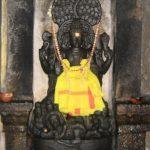
Unlike many temples where the deity is consecrated by sages or kings, the Moolavar (primary deity) here is Swayambhu—self-manifested. This ancient Murti is believed to have existed long before the current temple structure was erected.
Phalaśruti: The Benefits of Pilgrimage
According to Saiva Siddhanta, Rudra represents the element of Fire (Agni) within the cosmic order. The spiritual potency of this temple is described as exponential; it is believed that praying here is multiplied by one crore (10 million) times its value.
- Cleansing of Sins: Legend states that one crore Rudras worshipped here to atone for the sin of slaying the Kodi Asuras. Devotees visit to cleanse deep-seated Karma and ancestral debt.
- Health & Well-being: Regular worship during Pradosham (a specific twilight period on the 13th/14th lunar day) is believed to alleviate heart ailments, hypertension, and diabetes.
- Marital Harmony: The Goddess, Sri Abhirami, is known to have pacified Sri Kali Devi. Worshipping her on nine consecutive full moon days (Pournami) is said to resolve marital disputes and bless devotees with a happy family life.
2. Historical Origins & Scriptural Legend
Antiquity and Timeline
While precise architectural dating remains a subject of archaeological study, temple records and local tradition hold that this shrine is approximately 2,600 years old. It predates many of the grand structures seen today, standing as a witness to the evolution of Dravidian temple architecture.
The Legend of the One Crore Rudras
The Sthala Purana (local legend) narrates a fascinating cosmic event. The celestial beings were once tormented by the Kodi Asuras (demons emanating from Sage Kashyapa). Lord Shiva unleashed one crore Rudras from his chest to vanquish these demons. After the battle, the Rudras sought absolution for the violence. Lord Shiva pardoned them and allowed them to merge into his heart—hence the name Rudhra Kodeeswarar (The Lord where one crore Rudras reside).
The Story of Nandhi and Garuda
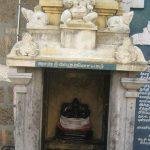
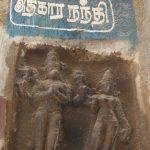
Tradition holds that Lord Vishnu, in the form of Garudan, visited this temple to see Shiva. Nandikeswarar, the bull mount of Shiva, blew his breath upon Garuda, causing his feathers to fall. Angered, Shiva punished Nandikeswarar by causing him to sink into the earth. Vishnu intervened, and Shiva halted Nandhi’s descent. Consequently, the Nandhi statue in this temple appears partially buried in the ground—a unique physical manifestation of this legend.
3. Architectural Marvels
Dravidian Style and Vastu
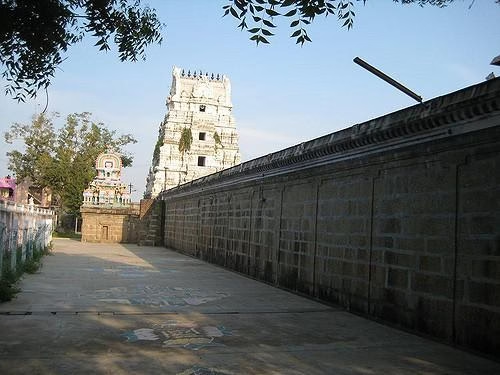
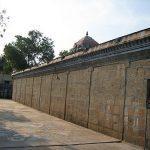
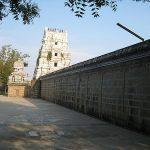
The temple exemplifies the Dravidian architectural style, characterized by towering gateways and enclosed courtyards. It faces East, adhering to traditional Vastu Shastra principles for optimal energy flow. The complex is surrounded by a very tall stone wall and features a long, imposing temple corridor.
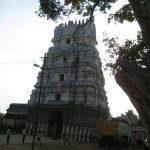
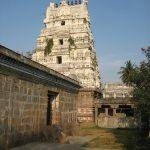
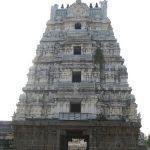
The Five-Tiered Rajagopuram
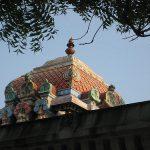
The entrance features a five-tiered Rajagopuram (main gateway). While the tower was historically in a dilapidated state, devoted restoration efforts have preserved four tiers and the Kalkaram (finial), restoring its grandeur.
Notable Sculptures and Shrines
- The Reclined Goddess: The shrine of the Goddess is situated on the left side, facing south. She is depicted in a slightly reclined position, symbolizing her calming of Goddess Kali’s anger.
- Lingodbhavar Anomaly: Typically, Lingodbhavar is found on the western side of sanctums. However, this temple houses an image of Mahavishnu with Varada Hastham (boon-giving hand) in that spot, highlighting the harmony between Shaivism and Vaishnavism.
- Preservation Status: The flooring around the Prakaram (outer corridor) has been recently renewed, and the Nandi Mandapam superstructure rebuilt. Note: The Madapalli (kitchen) remains in a dilapidated state and requires urgent restoration.
4. Darshan & Ritual Logistics
The temple follows traditional Agama rituals. Unlike the crowded hill temple, the Rudhra Kodeeswarar temple offers a more serene atmosphere for prolonged worship.
Daily Darshan Timings (2026 Schedule)
| Session | Timing | Notes |
|---|---|---|
| Morning | 6:00 AM – 12:00 PM | Best time for Abhishekam |
| Afternoon | Closed (12:00 PM – 4:00 PM) | Sanctum Sanctorum resting period |
| Evening | 4:00 PM – 8:30 PM | Ideal for Pradosham worship |
Key Sevas and Online Booking
Currently, the temple management performs one time Pooja daily. However, special requests can be arranged.
- Abhishekam: Performed with water, milk, and honey. Best done in the morning.
- Archana: Recitation of names. Devotees can request specific Sahasranamams.
- Pradosham: The 16 Pradoshams are the highlight of the year here.
Booking Note: While general darshan is free, standard puja bookings are handled locally at the temple counter. For specific Vedic rituals, contact the priest directly via the provided numbers.
2026 Major Festivals
- Pradosham: Occurring twice every lunar month. Highly recommended for health-related prayers.
- Arudra Darshanam: Celebrated in January 2026 (Margazhi month). This marks the cosmic dance of Nataraja.
- Shivaratri: February 26, 2026. A night-long vigil is held with special chanting.
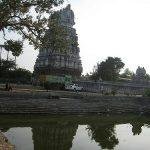
- Aadi Perukku: July 2026. Celebrated near the Rudhra Theertham (temple tank).
5. Practical Visitor Guidance
Rules and Etiquette
- Dress Code: Traditional attire is mandatory. Men should wear dhotis or pants with shirts; women should wear sarees, salwar kameez, or churidars. Avoid shorts and sleeveless tops.
- Photography: Strictly prohibited inside the inner sanctum (Garbhagriha). Allowed in the outer corridors.
- Mobile Phones: Electronic devices must be switched off or kept in silent mode. Lockers are available near the entrance for bags and phones.
- Accessibility: The temple has stone steps at the entrance. While the inner corridors are flat, wheelchair access may be challenging due to the ancient nature of the flooring.
Crowd Management & Best Time to Visit
- Best Hours: 8:00 AM – 10:00 AM is ideal to avoid morning rush and ensure a peaceful Darshan.
- Seasonal Advice:
- Summer (March–June): The granite floors retain heat. Carry water and wear light cottons. Visiting early morning is crucial.
- Monsoon (July–October): The temple is lush, but the stone steps can be slippery. Wear anti-skid footwear.
- Winter (November–February): The most pleasant time to visit.
6. Pilgrimage Connectivity
How to Reach
Thirukazhukundram is strategically located on the State Highway 58 (SH-58), connecting Sadras and Thiruttani.
- By Air: The nearest airport is Chennai International Airport (MAA), approximately 70 km away.
- By Rail: The nearest major railway junction is Chengalpattu (approx. 15 km). Local trains from Chennai Egmore or Chennai Beach are available.
- By Road:
- From Chennai: 70 km via ECR (East Coast Road) or GST Road.
- From Mahabalipuram: 15 km (approx. 20 mins drive).
Nearby Sacred Sites (Pilgrimage Circuit)
To maximize your spiritual journey, consider visiting these sites within a 10-15 km radius:
- Vedagiriswarar Temple (The Hill Temple): Located right above the Rudhra Kodeeswarar temple. Famous for the annual Pakshi (bird) rituals.
- Kelambakkam Temple: Located on the ECR road, known for its unique shrine to Brahma.
- Kanchipuram Kamakshi Amman Temple: The seat of Shakti worship, located about 25 km inland.
7. Frequently Asked Questions (FAQ)
Is there a VIP Darshan entry?
Unlike large temple corporations, the Rudhra Kodeeswarar temple relies on local administration. There is no formal online VIP ticket system. However, prior notice to the temple trustee or priest allows for a more guided darshan experience during non-peak hours.
Can we perform last rites (Karma) here?
While this is a Shiva temple associated with dissolution and renewal, the specific rites for last rites are generally performed at riverside Thirthams or designated cremation grounds. However, Shraddha and Tarpanam (ancestor rituals) are very effective here due to the presence of the Rudra Theertham tank within the complex.
Is there accommodation available nearby?
There are no major guest houses directly attached to this temple. However, Chengalpattu (15 km) and Mahabalipuram (15 km) offer ample hotels and lodges ranging from budget to luxury.
Why is the temple called ‘Kodeeswarar’?
The name originates from the Tamil/Word ‘Koti’, meaning ‘One Crore’ (Ten Million). It signifies the number of Rudras who worshipped Shiva here to attain salvation.
What is the difference between this and the Hill Temple?
The Hill Temple is the famous Vedagiriswarar temple known for the visiting eagles and higher elevation. The Rudhra Kodeeswarar temple is the ancient foot-hill temple (Moolavar). Legend states that one must visit the foot-hill temple before ascending to the hill temple to complete the full ritual circuit.
Photo Gallery
![IMG_0079[7], Rudhra Kodeeswarar Temple, Thirukazhukundram, Kanchipuram](https://www.bharattemples.com/wp-content/uploads/bt/2018/07/IMG_00797-150x150.jpg)
![IMG_0077[5], Rudhra Kodeeswarar Temple, Thirukazhukundram, Kanchipuram](https://www.bharattemples.com/wp-content/uploads/bt/2018/07/IMG_00775-150x150.jpg)
![IMG_0070[6], Rudhra Kodeeswarar Temple, Thirukazhukundram, Kanchipuram](https://www.bharattemples.com/wp-content/uploads/bt/2018/07/IMG_00706-150x150.jpg)
![IMG_0068[6], Rudhra Kodeeswarar Temple, Thirukazhukundram, Kanchipuram](https://www.bharattemples.com/wp-content/uploads/bt/2018/07/IMG_00686-150x150.jpg)
![IMG_0067[7], Rudhra Kodeeswarar Temple, Thirukazhukundram, Kanchipuram](https://www.bharattemples.com/wp-content/uploads/bt/2018/07/IMG_00677-150x150.jpg)
![IMG_0066[5], Rudhra Kodeeswarar Temple, Thirukazhukundram, Kanchipuram](https://www.bharattemples.com/wp-content/uploads/bt/2018/07/IMG_00665-150x150.jpg)
![IMG_0064[8], Rudhra Kodeeswarar Temple, Thirukazhukundram, Kanchipuram](https://www.bharattemples.com/wp-content/uploads/bt/2018/07/IMG_00648-150x150.jpg)

Contact Details
Rudhra Kodeeswarar Temple
Thirukazhukundram
Kanchipuram District, Tamil Nadu
Phone: +91 – 98941 27930
Recent Posts

Shri Kaamkoteeshwar Mandir, Varanasi – History & Significance
In the heart of Kashi, the eternal city of Lord Shiva, where the Ganges flows with celestial grace, stands the Shri Kaamkoteeshwar Mandir. This sacred Sannidhi is not merely a temple but a profound spiritual bridge between the Northern…

ओ सांवरे तूने ही मुझको संभाला – Lyrics & Meaning
ओ सांवरे तूने ही मुझको संभाला – A Prayer to Shyam Origin & Spiritual Essence Why This Bhajan Resonates Devotees chant this when overwhelmed by life’s storms—the refrain ‘तूने ही मुझको संभाला’ is the soul’s sigh of relief: “You…

कथा ये है महाराज मेरे की – Lyrics & Meaning
कथा ये है महाराज मेरे की छत्रपति संभाजी महाराज – A Prayer to Chhatrapati Sambhaji Maharaj Origin & Spiritual Essence Why This Bhajan Resonates Devotees chant this when their spirit feels tested—its powerful refrain “महाराज मेरे” is a soul’s…

Rigveda Samhita Yathartha Anuvada (ऋग्वेद संहिता यथार्थ अनुवाद) – Complete Set with Anvayartha & Hindi/English Translation
The Rigveda is the oldest surviving scripture of humanity and the foundational text of Sanātana Dharma. For serious students, scholars, UPSC aspirants studying ancient Indian history, Sanskrit learners, and spiritual seekers, a precise and grammatically structured translation is indispensable.…

आना भी अकेला है जाना भी अकेला है – Lyrics & Meaning | BharatTemples
आना भी अकेला है जाना भी अकेला है – A Prayer to the Divine Witness Origin & Spiritual Essence Why This Bhajan Resonates Devotees turn to this bhajan in moments of deep reflection—when life’s attachments begin to ache. The…

माता शेरावाली के द्वार जो भी जाता है – Lyrics & Meaning
माता शेरावाली के द्वार जो भी जाता है – A Prayer to Maa Sherawali Origin & Spiritual Essence Why This Bhajan Resonates Devotees turn to this bhajan in times of fear or uncertainty—its promise that no one leaves Maa’s…

मार लेना सपणी उबार लेणा भवरा – Lyrics & Meaning
मार लेना सपणी उबार लेणा भवरा – A Prayer to the Divine Beloved Origin & Spiritual Essence Why This Bhajan Resonates Devotees chant this in moments of deep vulnerability—its cry of “मार लेना सपणी, उबार लेणा भवरा” is the…

हमें श्याम सुंदर भरोसा तुम्हारा – Lyrics & Meaning
हमें श्याम सुंदर भरोसा तुम्हारा – A Prayer to Shyam Sundar Origin & Spiritual Essence Why This Bhajan Resonates Devotees chant this when feeling alone—its refrain ‘de do sahara’ is the soul’s cry for divine support. Lyrics in Hindi…

Mere Satguru Ne Di Thi Davai Lyrics in Hindi & Meaning
Mere Satguru Ne Di Thi Davai: Invoking the Guru’s Liberating Wisdom This soul-stirring bhajan venerates the Satguru (True Spiritual Master) as the divine physician who dispenses the only remedy for life’s deepest sufferings. Composed by Sant Karmaveer Tufani, it…

Janm Diyo Thari Maa Dukh Dekhiyo Lyrics in Hindi & Meaning
जन्म दियो थारी माँ दुख देखियो (Maa’s Grief Upon Birthing You) This soul-stirring Chetavani Bhajan (admonitory hymn) is addressed to the Divine Mother (Maa) – a call for repentance when children forget their filial duties in the dark age…