
Contents
1. Introduction & Spiritual Essence
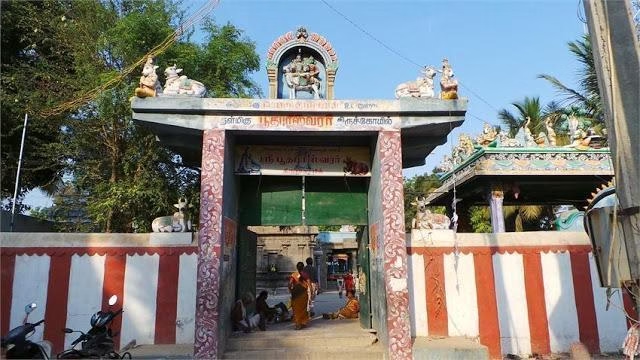
The Bhutapureeswarar Temple, nestled in the historic town of Sriperumpudur, Kanchipuram district, stands as a timeless abode of Lord Shiva. In this sacred sanctuary, the primary deity is worshipped as Bhutapureeswarar (a form of Shiva representing the lord of spirits or elemental beings), alongside the divine consort Soundaravalli Ambal (an aspect of Parvati). The Shiva Lingam here is believed to be a Swayambhu (self-manifested) idol, radiating immense spiritual energy.
Phalaśruti (Benefits of Visiting): Devotees flock to this ancient temple seeking relief from planetary afflictions and spiritual cleansing. It is particularly renowned for alleviating the malefic effects of Rahu and Ketu in one’s horoscope. According to local belief, offering prayers here helps cleanse ancestral karma and removes obstacles in career and education. The temple is also a powerful center for those seeking marital harmony and familial bliss.
2. Historical Origins & Scriptural Legend
While specific construction dates are not etched on the stone, the architecture and inscriptions suggest the temple dates back over a millennium, likely originating during the Pallava dynasty (7th–9th century CE), with significant additions made during the Chola period (11th century CE). Tradition holds that the temple has undergone several renovations to preserve its Dravidian heritage.
Sthala Purana (Local Legend): Legend narrates that Lord Shiva manifested as Bhutapureeswarar to bless the Ashta Dikpalakas (Guardians of the Directions) who had committed a sin. They constructed a lingam out of sand and worshipped Shiva here to attain redemption. Another folklore suggests that Lord Brahma, the creator, worshipped Shiva at this site to gain the power of creation. The proximity to Sriperumpudur, the birthplace of the Alvar saint Sri Ramanujacharya, adds to the spiritual significance of the region, creating a convergence of Shaivism and Vaishnavism.
3. Architectural Marvels
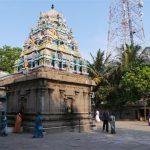
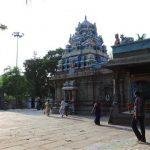
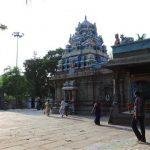
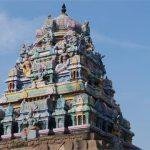
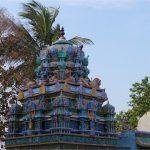
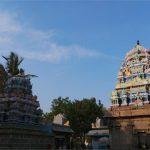
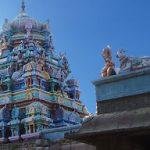
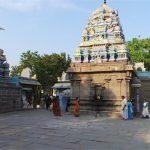
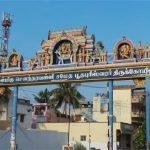
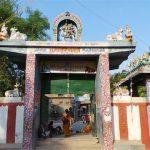
The Bhutapureeswarar Temple is a classic example of the Dravidian style of architecture, characterized by its towering gateways (Gopurams) and spacious courtyards. The temple complex is designed according to Vastu Shastra, aligning the sanctum with cardinal points to channel cosmic energies.
Key Features:
- The Sanctum (Garbhagriha): The inner shrine housing Bhutapureeswarar is atmospheric and dimly lit, enhancing the meditative experience. The Lingam is relatively large and embodies the formless aspect of the divine.
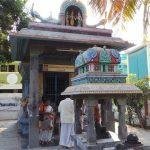
- Mandapas: The temple features intricately carved pillared halls (Mandapas) used for rituals and concerts. The ceiling often depicts scenes from Hindu mythology.
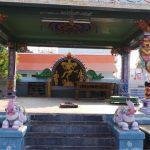
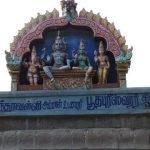
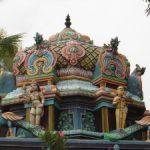
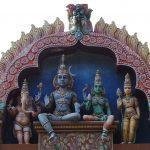
- Sculptures: Detailed carvings of Dwarapalakas (guardians) flank the entrance. The niches (Alcoves) of the temple walls house icons of Shiva in various avatars.
- Shrines: A unique feature is the extensive line-up of sub-shrines. While the main deities are Bhutapureeswarar and Soundaravalli Ambal, there are separate sanctums for Shanmukha (Subramanya), Vinayagar (Ganesha), Bhairava, and the Navagrahas (nine planets).
While this temple is not a UNESCO site, it is a protected monument under the Archaeological Survey of India (ASI) standards for conservation.
4. Darshan & Ritual Logistics
Visitors can participate in daily pujas and special rituals. Below is the schedule for regular darshan and pooja timings.
Daily Timings (2026 Schedule)
| Session | Timing |
|---|---|
| Morning Darshan | 06:30 AM – 11:30 AM |
| Afternoon Break | 11:30 AM – 04:30 PM |
| Evening Darshan | 04:30 PM – 08:30 PM |
Ritual Pooja Timings
| S.No | Pooja Name | Timings |
|---|---|---|
| 1 | Thiruvanandhal Pooja | 07:00 AM – 07:30 AM |
| 2 | Uchchi Kaala Pooja | 11:00 AM – 11:30 AM |
| 3 | Sayaratchi Pooja | 06:00 PM – 06:30 PM |
| 4 | Palliarai Pooja | 08:00 PM – 08:30 PM |
Sevas and Online Booking
The temple is famous for its Pradosham Pooja, a ritual performed during the twilight period on the 13th day of the lunar cycle. To participate in specific Abhishekams or Archana, devotees can contact the temple office directly at +91 44 – 27162236. While dedicated online portals are currently being upgraded by the Hindu Religious and Charitable Endowments (HR&CE) department, bookings can be confirmed via phone or in-person visit.
2026 Festival Calendar
Plan your visit around these major celebrations to witness the temple in its full glory:
- Pradosham: Bi-monthly (Please check the lunar calendar for specific dates in 2026; the 1st Pradosham of 2026 falls in January).
- Panguni Uthiram: March/April 2026 (Special procession for Soundaravalli Ambal).
- Tamil New Year: April 14, 2026 (Special Aabhishekam).
- Shivaratri: February 26, 2026 (All-night Pooja).
- Pavithrotsavam: Usually conducted in the month of Puratasi (September/October) 2026.
5. Practical Visitor Guidance
To ensure a peaceful darshan and respect for the sanctity of the temple, please adhere to the following guidelines:
- Dress Code: Traditional attire is mandatory. Men should wear Veshti (dhoti) or formal trousers with a shirt, and women should wear saree, half-saree, or churidar. Avoid shorts and sleeveless tops.
- Photography: Photography is strictly prohibited inside the inner sanctum (Garbhagriha). You may take photos of the outer corridors and halls, but please maintain silence.
- Mobile Lockers: The temple provides a cloakroom facility for electronic items, particularly mobile phones, which are not allowed inside the sanctum. Use these lockers to secure your belongings.
- Accessibility: The temple is largely accessible for senior citizens via wheelchair, though the inner sanctum has a few steps. Volunteers are often available to assist.
- Crowd Management:
- Best Hours: The least crowded time for darshan is immediately after the morning opening (6:30 AM – 7:30 AM) or during the afternoon break (1:00 PM – 4:00 PM).
- Seasonal Advice: During the hot summer months (May), carry a bottle of water. While the temple serves Theertham (holy water), external hydration is essential in Tamil Nadu’s heat.
6. Pilgrimage Connectivity
How to Reach:
- By Air: The nearest airport is Chennai International Airport (MAA), approximately 40 km away.
- By Rail: The nearest major railway station is Chennai Central. The closest suburban station is Thiruvallur (20 km away). From here, local cabs and buses connect to Sriperumpudur.
- By Road: Sriperumpudur is located on National Highway 4 (NH 4) (now part of the Chennai-Bangalore corridor). It is well-connected to Chennai, Kanchipuram, and Tiruvallur.
- Local Bus Routes (from Chennai):
- High Court to Sriperumpudur: Route 502
- Thiruvanmiyur to Sriperumpudur: Route 549
- Broadway to Sriperumpudur: Route 553
- Tambaram to Sriperumpudur: Route 583 / 583C
Nearby Sacred Sites
Enhance your pilgrimage by visiting these nearby temples:
- Adikesava Perumal Temple (Sriperumpudur): Located just a short distance away, this temple is dedicated to Lord Vishnu and is the birthplace of Sri Ramanujacharya.
- Kanchipuram Temples: A 35 km drive takes you to the temple city of Kanchipuram, home to Ekambareswarar Temple (Earth element) and Kamakshi Amman Temple.
- Thiruvallur Veeraraghava Swamy Temple: Located 20 km north, this is a prominent Vishnu temple associated with healing.
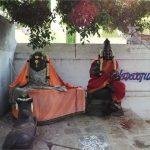
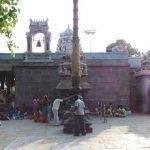
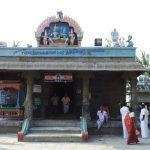
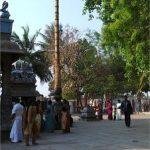
7. Photo Gallery
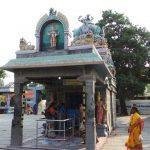
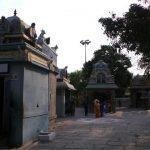
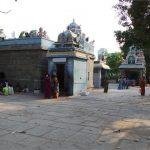

8. Frequently Asked Questions (FAQs)
Is there a VIP darshan entry at Bhutapureeswarar Temple?
The temple does not have a formal VIP entry system similar to Tirupati. However, priority is given to senior citizens, differently-abled devotees, and those purchasing special tickets for specific Sevas (like Abhishekam). Arriving early is the best way to avoid crowds.
What is the significance of the name “Bhutapureeswarar”?
The name translates to “The Lord of the City of Spirits.” In Shiva lore, “Bhuta” refers to the elemental beings or past entities. Legend says Lord Shiva subdued negative energies at this spot, making it a powerful center for protection against malefic planetary influences.
Can I perform Rudra Abhishekam at the temple?
Yes, Rudra Abhishekam is a significant ritual performed here, especially on Mondays and Pradosham days. It is advisable to book this in advance by calling the temple office.
Are there accommodation facilities near the temple?
Sriperumpudur is a bustling town with limited star hotels but several decent lodges and guest houses. For more luxurious stays, devotees often prefer staying in Chennai (40 km) or Kanchipuram (35 km) and traveling to Sriperumpudur by taxi.
What is the best time to visit with family?
The months of November to February offer the most pleasant weather. Avoid the peak summer months (April–June) unless visiting for specific festivals like Tamil New Year.
Contact Details
Arulmigu Soundaravalli Ambal Samedha Bhutapureeswarar (Boodhapurishwarar) Temple
Sriperumpudur – 602 105
Kancheepuram District, Tamil Nadu
Phone: +91 44 – 27162236
Recent Posts

Shri Kaamkoteeshwar Mandir, Varanasi – History & Significance
In the heart of Kashi, the eternal city of Lord Shiva, where the Ganges flows with celestial grace, stands the Shri Kaamkoteeshwar Mandir. This sacred Sannidhi is not merely a temple but a profound spiritual bridge between the Northern…

ओ सांवरे तूने ही मुझको संभाला – Lyrics & Meaning
ओ सांवरे तूने ही मुझको संभाला – A Prayer to Shyam Origin & Spiritual Essence Why This Bhajan Resonates Devotees chant this when overwhelmed by life’s storms—the refrain ‘तूने ही मुझको संभाला’ is the soul’s sigh of relief: “You…

कथा ये है महाराज मेरे की – Lyrics & Meaning
कथा ये है महाराज मेरे की छत्रपति संभाजी महाराज – A Prayer to Chhatrapati Sambhaji Maharaj Origin & Spiritual Essence Why This Bhajan Resonates Devotees chant this when their spirit feels tested—its powerful refrain “महाराज मेरे” is a soul’s…

Rigveda Samhita Yathartha Anuvada (ऋग्वेद संहिता यथार्थ अनुवाद) – Complete Set with Anvayartha & Hindi/English Translation
The Rigveda is the oldest surviving scripture of humanity and the foundational text of Sanātana Dharma. For serious students, scholars, UPSC aspirants studying ancient Indian history, Sanskrit learners, and spiritual seekers, a precise and grammatically structured translation is indispensable.…

आना भी अकेला है जाना भी अकेला है – Lyrics & Meaning | BharatTemples
आना भी अकेला है जाना भी अकेला है – A Prayer to the Divine Witness Origin & Spiritual Essence Why This Bhajan Resonates Devotees turn to this bhajan in moments of deep reflection—when life’s attachments begin to ache. The…

माता शेरावाली के द्वार जो भी जाता है – Lyrics & Meaning
माता शेरावाली के द्वार जो भी जाता है – A Prayer to Maa Sherawali Origin & Spiritual Essence Why This Bhajan Resonates Devotees turn to this bhajan in times of fear or uncertainty—its promise that no one leaves Maa’s…

मार लेना सपणी उबार लेणा भवरा – Lyrics & Meaning
मार लेना सपणी उबार लेणा भवरा – A Prayer to the Divine Beloved Origin & Spiritual Essence Why This Bhajan Resonates Devotees chant this in moments of deep vulnerability—its cry of “मार लेना सपणी, उबार लेणा भवरा” is the…

हमें श्याम सुंदर भरोसा तुम्हारा – Lyrics & Meaning
हमें श्याम सुंदर भरोसा तुम्हारा – A Prayer to Shyam Sundar Origin & Spiritual Essence Why This Bhajan Resonates Devotees chant this when feeling alone—its refrain ‘de do sahara’ is the soul’s cry for divine support. Lyrics in Hindi…

Mere Satguru Ne Di Thi Davai Lyrics in Hindi & Meaning
Mere Satguru Ne Di Thi Davai: Invoking the Guru’s Liberating Wisdom This soul-stirring bhajan venerates the Satguru (True Spiritual Master) as the divine physician who dispenses the only remedy for life’s deepest sufferings. Composed by Sant Karmaveer Tufani, it…

Janm Diyo Thari Maa Dukh Dekhiyo Lyrics in Hindi & Meaning
जन्म दियो थारी माँ दुख देखियो (Maa’s Grief Upon Birthing You) This soul-stirring Chetavani Bhajan (admonitory hymn) is addressed to the Divine Mother (Maa) – a call for repentance when children forget their filial duties in the dark age…