
Contents
- 1 Introduction & Spiritual Essence
- 2 Historical Origins & Scriptural Legend
- 3 Architectural Marvels
- 4 Darshan & Ritual Logistics (2026 Update)
- 5 Practical Visitor Guidance
- 6 Pilgrimage Connectivity
- 7 Frequently Asked Questions (FAQs)
- 8 Architecture
- 9 Legend / Local stories
- 10 Photo Gallery
- 11 How to Reach:
- 12 Contact Details
Introduction & Spiritual Essence
Amidst the serene landscapes of Kanchipuram district lies a sacred haven of spiritual rejuvenation: the Prasanna Venkatesa Perumal Temple in Salavakkam. Dedicated to Lord Vishnu, specifically in his manifestation as Lord Venkatesa, this temple holds a unique place in the hearts of devotees. The presiding deity is known as Prasanna Venkatesa Perumal (the ‘Graciously Pleased Lord’), flanked by his consort, Goddess Alarmelmangai Thayar.
The temple is revered as a Divya Desam (a holy abode of Vishnu praised in the Nalayira Divya Prabandham) and is steeped in divine grace. It is widely believed that worshiping here brings immense peace, prosperity, and relief from prolonged afflictions.
Phalaśruti (Spiritual Benefits): Devotees flock to this shrine to seek blessings for:
- Removal of Illusions: Lord Venkatesa is known to grant wisdom, dispelling the illusions of material life.
- Marriage & Harmony: Unmarried individuals pray here for timely alliances, while families seek harmony.
- Ancestral Karma: Performing rituals here is said to help cleanse ancestral debts and guide souls to salvation.
Historical Origins & Scriptural Legend
The Hoysala Legacy and Ancient Roots
While the precise year of construction is documented in local inscriptions as being influenced by the Hoysala and later the Pallava dynasties, the temple stands as a testament to centuries of devotion. According to temple records, the structure was significantly expanded during the reign of the Later Cholas and Pandyas, with the distinct Dravidian features added over time. The granite walls bear silent testimony to these eras through inscriptions that detail grants and endowments.
The Sthala Purana (Local Legend)
Tradition holds that this land was once the site of a severe penance performed by a local tribal king named Sala. Seeking liberation from a curse, he worshipped Lord Vishnu with unwavering devotion. Pleased by his dedication, the Lord appeared as a Swayambhu (self-manifested) idol. Because the idol arose from Sala’s rigorous worship, the place came to be known as Salavakkam (The place of Sala’s penance). This legend highlights the temple’s power to grant the wishes (Prasanna) of any sincere devotee.
Architectural Marvels
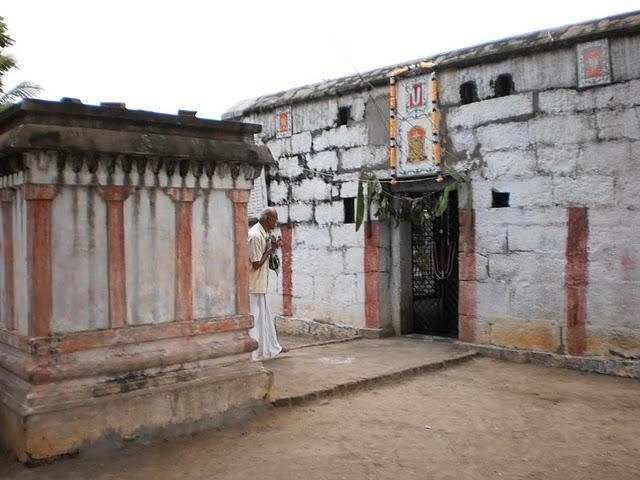
The Prasanna Venkatesa Perumal Temple is a jewel of Dravidian architecture. The temple complex is designed according to the principles of Vastu Shastra, with the Gopuram (gateway tower) aligning perfectly with the rising sun.
- The Shikhara: The temple features a modest yet elegant Shikhara (tower) above the sanctum, typical of early Dravidian styles, which differs from the towering Rajagopurams of later periods but retains a pristine, ancient aesthetic.
- Mandapas: The temple houses a spacious Maha Mandapa (great hall) and a Moolavar Sannidhi (main sanctum). The pillars are carved with intricate motifs depicting scenes from the Puranas, including the Dasavathara (ten incarnations) of Vishnu.
- Sanctum Details: The inner sanctum is uniquely designed to allow a Pradakshina (circumambulation) around the deity. The idols of Lord Venkatesa and Alarmelmangai Thayar are carved in black stone, radiating a serene aura.
Darshan & Ritual Logistics (2026 Update)
Planning your visit requires an understanding of the daily rituals. Please note that timings are subject to change during festival seasons.
Daily Timings
| Session | Timings | Ritual Description |
|---|---|---|
| Morning | 06:00 AM – 12:00 PM | Thiruvabhishekam, Sahasranama Archana |
| Afternoon | 12:00 PM – 04:00 PM | Temple remains closed for Midday rest |
| Evening | 04:00 PM – 08:30 PM | Deepa Alankaram, Palliyarai Pooja |
Key Sevas & Online Booking
Devotees can book specific rituals in advance. For 2026, the following Sevas are highly recommended:
- Thiru Kalyana Utsavam: Wedding ceremony rituals for those seeking matrimony.
- Vishnu Sahasranama Archana: Chanting of 1000 names for prosperity.
- Special Abhishekam: Performed on Fridays with milk, honey, and sandalwood paste.
Booking: Visit the official Tamil Nadu HR&CE website or the specific temple portal (if applicable) to reserve slots. Look for the “Salavakkam Prasanna Venkatesa Perumal” listing.
2026 Festival Calendar
- Pavitrotsavam: August 15 – August 17, 2026.
- Brahmotsavam: September 10 – September 18, 2026 (Includes the grand chariot procession).
- Vaikuntha Ekadashi: December 29, 2026 – January 7, 2027.
Practical Visitor Guidance
Dress Code & Etiquette
Strict adherence to traditional attire is requested. Men must wear Dhoti or formal trousers with a shirt; women should wear sarees, salwar kameez, or long skirts. Western casual wear (shorts, t-shirts) is not permitted inside the sanctum.
Facilities
- Photography: Strictly prohibited inside the inner sanctum. Allowed in the outer prakarams.
- Mobile Lockers: Available at the entrance for electronic devices and leather items.
- Accessibility: The temple is generally accessible, though the inner sanctum requires climbing a few steps. Wheelchair access is available for the outer corridors.
Crowd Management
For a peaceful Darshan, weekdays (Tuesday and Friday) are ideal. Weekend mornings can get crowded. The best time to visit is between 7:00 AM and 9:00 AM. During summer (April–June), it is advisable to carry water and an umbrella, as the queue lines may be exposed to the sun.
Pilgrimage Connectivity
Salavakkam is well-connected to major cities in Tamil Nadu, making it an accessible destination for pilgrims.
How to Reach
- By Air: The nearest airport is Chennai International Airport (MAA), approximately 70 km away.
- By Rail: The closest major railway junction is Kanchipuram (32 km away) or Chengalpattu (35 km away). Local trains are available to these stations, followed by a taxi or bus ride.
- By Road: Salavakkam is located off the Chennai – Kanchipuram stretch. It is about 12 km from Uthiramerur. You can take the NH-48 (Chennai-Bangalore Highway) and divert towards Uthiramerur via State Highway 58.
Nearby Sacred Sites
Expand your pilgrimage by visiting these nearby holy shrines:
- Uthiramerur Sundara Varadaraja Perumal Temple: (12 km) Known for its unique architectural layout and ancient inscriptions.
- Kailasanathar Temple, Kanchipuram: (32 km) A quintessential Pallava structure dedicated to Lord Shiva.
- Ekambareswarar Temple: (30 km) One of the Pancha Bhoota Stalam representing the element of Earth.
Frequently Asked Questions (FAQs)
1. Is there a VIP Darshan entry available at Prasanna Venkatesa Perumal Temple?
Yes, the temple administration facilitates a special entry darshan for senior citizens and physically challenged devotees. A limited number of slots are available for VIPs, which can be coordinated through the temple executive officer.
2. What is the best time of year to visit Salavakkam?
The ideal months are October to February when the weather in Kanchipuram district is cool and pleasant. However, visiting during Brahmotsavam (September) offers a vibrant spiritual experience.
3. Are there accommodation facilities near the temple?
While Salavakkam is a small village with limited lodging, there are several guest houses and hotels available in Uthiramerur (12 km) and Kanchipuram (32 km). It is recommended to book accommodation in advance during festival seasons.
4. Can I perform last rites (Shraddha) here?
Yes, the Prasanna Venkatesa Perumal Temple is known for performing ancestral rituals. Devotees often visit to perform Tharpanam and Shraddha ceremonies for their forefathers to ensure their peace.
5. Is the temple open on all days?
The temple remains open on all days of the week, excluding major maintenance periods (which are announced locally). However, it is strictly advisable to check the local panchangam or contact the temple office before planning a visit on public holidays.
Prasanna Venkatesa Perumal Temple, Salavakkam, Kanchipuram
| Date built: | – |
|---|---|
| Deity: | Prasanna Venkatesa Perumal |
| Architectural style: | Dravidian architecture |
| Major festivals | – |
| Locale: | Salavakkam |
| District:: | Kanchipuram |
| Address: | – |
| Phone | – |
Original Source: https://tamilnadu-favtourism.blogspot.com/2016/12/prasanna-venkatesa-perumal-temple_29.html
Architecture
Legend / Local stories
Photo Gallery
How to Reach:
Prasanna Venkatesa Perumal Temple is dedicated to Hindu God Vishnu located at Salavakkam Village in Kanchipuram District of Tamilnadu. Salavakkam is 4 kms from Meyyur. Salavakkam is a Village in Uthiramerur Taluk in Kanchipuram District of Tamilnadu State, India. It is located 32 Kms towards East from District headquarters Kanchipuram, 12 Kms from Uthiramerur and 68 Kms from State capital Chennai.
Contact Details
Official Address
Recent Posts

Shri Kaamkoteeshwar Mandir, Varanasi – History & Significance
In the heart of Kashi, the eternal city of Lord Shiva, where the Ganges flows with celestial grace, stands the Shri Kaamkoteeshwar Mandir. This sacred Sannidhi is not merely a temple but a profound spiritual bridge between the Northern…

ओ सांवरे तूने ही मुझको संभाला – Lyrics & Meaning
ओ सांवरे तूने ही मुझको संभाला – A Prayer to Shyam Origin & Spiritual Essence Why This Bhajan Resonates Devotees chant this when overwhelmed by life’s storms—the refrain ‘तूने ही मुझको संभाला’ is the soul’s sigh of relief: “You…

कथा ये है महाराज मेरे की – Lyrics & Meaning
कथा ये है महाराज मेरे की छत्रपति संभाजी महाराज – A Prayer to Chhatrapati Sambhaji Maharaj Origin & Spiritual Essence Why This Bhajan Resonates Devotees chant this when their spirit feels tested—its powerful refrain “महाराज मेरे” is a soul’s…

Rigveda Samhita Yathartha Anuvada (ऋग्वेद संहिता यथार्थ अनुवाद) – Complete Set with Anvayartha & Hindi/English Translation
The Rigveda is the oldest surviving scripture of humanity and the foundational text of Sanātana Dharma. For serious students, scholars, UPSC aspirants studying ancient Indian history, Sanskrit learners, and spiritual seekers, a precise and grammatically structured translation is indispensable.…

आना भी अकेला है जाना भी अकेला है – Lyrics & Meaning | BharatTemples
आना भी अकेला है जाना भी अकेला है – A Prayer to the Divine Witness Origin & Spiritual Essence Why This Bhajan Resonates Devotees turn to this bhajan in moments of deep reflection—when life’s attachments begin to ache. The…

माता शेरावाली के द्वार जो भी जाता है – Lyrics & Meaning
माता शेरावाली के द्वार जो भी जाता है – A Prayer to Maa Sherawali Origin & Spiritual Essence Why This Bhajan Resonates Devotees turn to this bhajan in times of fear or uncertainty—its promise that no one leaves Maa’s…

मार लेना सपणी उबार लेणा भवरा – Lyrics & Meaning
मार लेना सपणी उबार लेणा भवरा – A Prayer to the Divine Beloved Origin & Spiritual Essence Why This Bhajan Resonates Devotees chant this in moments of deep vulnerability—its cry of “मार लेना सपणी, उबार लेणा भवरा” is the…

हमें श्याम सुंदर भरोसा तुम्हारा – Lyrics & Meaning
हमें श्याम सुंदर भरोसा तुम्हारा – A Prayer to Shyam Sundar Origin & Spiritual Essence Why This Bhajan Resonates Devotees chant this when feeling alone—its refrain ‘de do sahara’ is the soul’s cry for divine support. Lyrics in Hindi…

Mere Satguru Ne Di Thi Davai Lyrics in Hindi & Meaning
Mere Satguru Ne Di Thi Davai: Invoking the Guru’s Liberating Wisdom This soul-stirring bhajan venerates the Satguru (True Spiritual Master) as the divine physician who dispenses the only remedy for life’s deepest sufferings. Composed by Sant Karmaveer Tufani, it…

Janm Diyo Thari Maa Dukh Dekhiyo Lyrics in Hindi & Meaning
जन्म दियो थारी माँ दुख देखियो (Maa’s Grief Upon Birthing You) This soul-stirring Chetavani Bhajan (admonitory hymn) is addressed to the Divine Mother (Maa) – a call for repentance when children forget their filial duties in the dark age…