
Contents
Introduction & Spiritual Essence
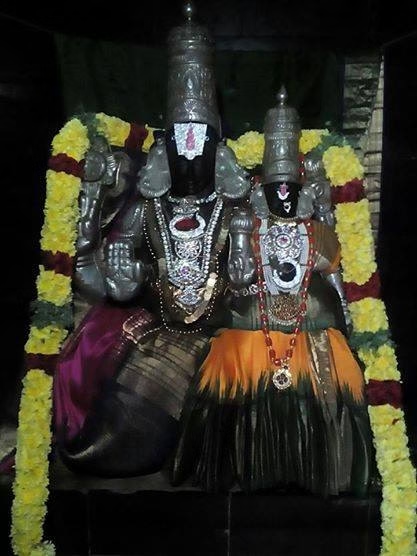
Nestled in the serene village of Madambakkam, approximately 2 km west of Guduvancheri in the Kanchipuram district, the Lakshmi Narayana Swamy Temple stands as a magnificent testament to Dravidian spirituality and architectural grandeur. This ancient temple, believed to have been constructed during the reign of the Pallava dynasty, is dedicated to Sri Lakshmi Narayana Perumal (Vishnu) and his consort, Goddess Lakshmi.
Unlike many other Vishnu temples, the presiding deity here is revered as a Swayambhu (self-manifested) form. In the sanctum sanctorum, the idol depicts Lord Vishnu reclining on the serpent Ananta, with Goddess Lakshmi (Sridevi) seated affectionately on his left lap, embracing him. This unique posture symbolizes the eternal bond and inseparable nature of the divine couple.
Phalaśruti: The Benefits of Pilgrimage
Devotees flock to this sacred shrine seeking specific blessings:
- Marriage & Harmony: It is strongly believed that offering prayers here, particularly with sincere devotion, helps overcome obstacles in marriage and ensures a harmonious married life.
- Ancestral Karma: The temple is associated with performing rites that alleviate ancestral karma, bringing peace to the departed souls.
- Unique Navagraha Shrine: A rare feature for a Vishnu temple, the presence of a Navagraha shrine allows devotees to worship all nine planetary deities, cleansing astrological afflictions.
- Kadhara Gowri Vratam: It is a popular practice, especially among women, to perform the Kadhara Gowri Vratam on the day following Deepavali (Deepavali Vidya) to seek marital bliss and prosperity.
Historical Origins & Scriptural Legend
The Pallava Legacy
While specific inscriptions dating the exact construction year are still being studied by the Archaeological Survey of India (ASI), temple historians and architectural analysis strongly attribute the structure to the Pallava dynasty (approx. 6th to 9th century CE). The Dravidian style of architecture, particularly the base pillars and the sanctum layout, bears the hallmark of early Pallava craftsmanship.
According to temple records and local tradition, the village Madambakkam was historically significant as a ‘Jain seat’ before the advent of Vaishnavism in the region. The temple’s construction marks the region’s transition into a Vaishnava theological center.
The Legend of Sridevi’s Embrace
Tradition holds that the temple was built on land blessed by a dense forest of Neem trees (Vepu). The air here is perpetually filled with the holy fragrance of neem leaves, which are considered medicinal and purifying in Ayurveda. Folklore suggests that Lord Vishnu chose this secluded spot to rest, mesmerized by the devotion of local sages who practiced severe austerities in the Neem groves.
The local deity is often referred to as Madambakkam Pattarathar (The Lord of Madambakkam). The temple complex was later renovated during the Chola and Vijayanagara periods, adding the expansive pillared halls (Mandapas) seen today.
Architectural Marvels
The Lakshmi Narayana Swamy Temple is a classic example of early Dravidian Architecture, characterized by its robust proportions and intricate carvings.
Sanctum and Garbhagriha
The Garbhagriha (inner sanctum) houses the main deity in a reclining posture (Anantasayana). The sanctum is built to optimize natural ventilation, ensuring a cool environment even during peak summer.
Mandapas and Sculptures
The temple features several Mandapas (halls), including:
- Front Mandapa: Features stone pillars with exquisitely carved miniature sculptures of deities and mythical creatures.
- Rajagopuram: The main entrance tower, though not among the tallest, displays vibrant hues and iconographic representations of Vishnu’s avatars.
- Prakara Walls: The circumambulatory path features niches housing various forms of Vishnu and Shiva (in the outer shrines).
While the temple is not a UNESCO site, it holds significant regional importance and is a protected monument under state heritage conservation efforts.
Darshan & Ritual Logistics
Below are the standard operating hours and rituals. Please note that timings may vary during festivals.
| Session | Timings | Details |
|---|---|---|
| Morning Darshan | 6:00 AM – 12:00 PM | Abhishekam performed between 7:00 AM and 8:30 AM. First hour is often reserved for priests’ rituals. |
| Afternoon Break | 12:00 PM – 4:00 PM | Temple remains closed for deity rest. |
| Evening Darshan | 4:00 PM – 8:00 PM | Deeparadhana and Palliyarai Pooja (Thiruvaradhana) performed around 6:30 PM. |
Key Sevas and Online Booking
Devotees can perform various Sevas to the Lord. While standard pujas can be done at the temple counter, specialized Sevas often require advance notice.
- Abhishekam: Daily morning ritual performed to the Utsava Murthi (procession deity).
- Archana: Offering flowers and chanting the names of the deity (Sahasranamam).
- Kalyana Utsavam: Annual wedding festival of the deities.
Note on Online Booking: For the year 2026, the temple administration is expected to facilitate bookings through the official Tamil Nadu Hindu Religious and Charitable Endowments (HR&CE) website or designated local portals. We recommend checking the portal closer to the date of your visit for real-time availability.
2026 Major Festival Dates
- Vaikuntha Ekadashi: January 6, 2026 (Celebrated with special ‘Gajendra Moksham’ event).
- Brahmotsavam (Annual Flag Hoisting): Typically during the Tamil month of Panguni (March – April 2026). Exact dates subject to the temple almanac.
- Pavitrotsavam: Purification rituals held twice a year (Aadi & Margazhi months).
Practical Visitor Guidance
Dress Code and Etiquette
To maintain the sanctity of the temple:
- Traditional attire is mandatory. Men: Dhoti or trousers with a shirt (no shorts/t-shirts). Women: Saree, Salwar Kameez, or full-length skirt with blouse.
- Leather items (belts, wallets, purses) are discouraged inside the sanctum area.
Crowd Management & Best Time to Visit
- Weekdays: Ideal for a peaceful Darshan. Mornings before 9:00 AM are least crowded.
- Weekends: Expect moderate crowds, especially on Sundays.
- Seasonal Advice: During peak summer (April–May), carry water and an umbrella. The temple is open-air, and queue areas may be exposed to the sun.
- Accessibility: The sanctum has a few steps. The outer corridors are wheelchair friendly, but access to the main shrine may require assistance.
Photography & Mobiles
Photography is strictly prohibited inside the sanctum sanctorum and the inner courtyard. Mobile lockers are available at the entrance for storing electronics and footwear.
Pilgrimage Connectivity
How to Reach
By Road: The temple is located in Madambakkam village, accessible via the road leading west from Guduvancheri. It is approximately 30 km from Chennai city center. Use National Highway 48 (NH48) or State Highway 58 (SH58) to reach Guduvancheri.
By Rail: The nearest railway station is Guduvancheri (approx. 2 km away). From there, local share autos and buses connect to Madambakkam.
By Air: Chennai International Airport (MAA) is the nearest airport, approximately 25 km away.
Nearby Sacred Sites
Enhance your pilgrimage circuit by visiting these nearby temples:
- Uthanda Narayana Perumal Temple (Uthiramerur): Located about 15 km away, famous for its unique standing posture of Vishnu.
- Kailasanathar Temple (Kanchipuram): A classic Pallava-era rock-cut temple dedicated to Shiva, roughly 25 km away.
- Ekambareswarar Temple: One of the Pancha Bhoota Stalas, located in Kanchipuram.
Frequently Asked Questions (FAQ)
1. Is there a VIP darshan entry available?
Yes, the temple administration provides a special entry queue for elderly citizens, differently-abled devotees, and those with special darshan tickets issued by the HR&CE department.
2. Are there accommodation facilities available in Madambakkam?
Madambakkam is a small village with limited lodging options. For better accommodation, it is recommended to stay in Kanchipuram or Guduvancheri, where budget hotels and guest houses are available.
3. What is the significance of the Neem trees in this temple?
The region is known for its dense neem groves. In local folklore, the neem trees (Vepu) are considered sacred to Lord Vishnu, and the natural air here is believed to have healing properties for respiratory ailments.
4. Can we perform marriage prayers (Thirukalyana Prarthana) here?
Absolutely. The temple is renowned for granting the wishes of devotees praying for early marriage and marital harmony. Performing a special Archana in the name of the couple is recommended.
Yes, unlike many Vishnu temples where Navagrahas are absent, this shrine includes a dedicated enclosure for the nine planets. It is advisable to offer prayers here to mitigate negative planetary influences in one’s horoscope.
Photo Gallery
Contact Details
As specific phone numbers for this localized temple office are not always publicly listed in centralized directories, we recommend contacting the Kanchipuram HR&CE Regional Office for the most current contact information.
Planning your trip to Kanchipuram?
Visit bharattemples.com for the latest updates on festival schedules, prasadam timings, and detailed guides to other sacred shrines in Tamil Nadu.
Recent Posts

Shri Kaamkoteeshwar Mandir, Varanasi – History & Significance
In the heart of Kashi, the eternal city of Lord Shiva, where the Ganges flows with celestial grace, stands the Shri Kaamkoteeshwar Mandir. This sacred Sannidhi is not merely a temple but a profound spiritual bridge between the Northern…

ओ सांवरे तूने ही मुझको संभाला – Lyrics & Meaning
ओ सांवरे तूने ही मुझको संभाला – A Prayer to Shyam Origin & Spiritual Essence Why This Bhajan Resonates Devotees chant this when overwhelmed by life’s storms—the refrain ‘तूने ही मुझको संभाला’ is the soul’s sigh of relief: “You…

कथा ये है महाराज मेरे की – Lyrics & Meaning
कथा ये है महाराज मेरे की छत्रपति संभाजी महाराज – A Prayer to Chhatrapati Sambhaji Maharaj Origin & Spiritual Essence Why This Bhajan Resonates Devotees chant this when their spirit feels tested—its powerful refrain “महाराज मेरे” is a soul’s…

Rigveda Samhita Yathartha Anuvada (ऋग्वेद संहिता यथार्थ अनुवाद) – Complete Set with Anvayartha & Hindi/English Translation
The Rigveda is the oldest surviving scripture of humanity and the foundational text of Sanātana Dharma. For serious students, scholars, UPSC aspirants studying ancient Indian history, Sanskrit learners, and spiritual seekers, a precise and grammatically structured translation is indispensable.…

आना भी अकेला है जाना भी अकेला है – Lyrics & Meaning | BharatTemples
आना भी अकेला है जाना भी अकेला है – A Prayer to the Divine Witness Origin & Spiritual Essence Why This Bhajan Resonates Devotees turn to this bhajan in moments of deep reflection—when life’s attachments begin to ache. The…

माता शेरावाली के द्वार जो भी जाता है – Lyrics & Meaning
माता शेरावाली के द्वार जो भी जाता है – A Prayer to Maa Sherawali Origin & Spiritual Essence Why This Bhajan Resonates Devotees turn to this bhajan in times of fear or uncertainty—its promise that no one leaves Maa’s…

मार लेना सपणी उबार लेणा भवरा – Lyrics & Meaning
मार लेना सपणी उबार लेणा भवरा – A Prayer to the Divine Beloved Origin & Spiritual Essence Why This Bhajan Resonates Devotees chant this in moments of deep vulnerability—its cry of “मार लेना सपणी, उबार लेणा भवरा” is the…

हमें श्याम सुंदर भरोसा तुम्हारा – Lyrics & Meaning
हमें श्याम सुंदर भरोसा तुम्हारा – A Prayer to Shyam Sundar Origin & Spiritual Essence Why This Bhajan Resonates Devotees chant this when feeling alone—its refrain ‘de do sahara’ is the soul’s cry for divine support. Lyrics in Hindi…

Mere Satguru Ne Di Thi Davai Lyrics in Hindi & Meaning
Mere Satguru Ne Di Thi Davai: Invoking the Guru’s Liberating Wisdom This soul-stirring bhajan venerates the Satguru (True Spiritual Master) as the divine physician who dispenses the only remedy for life’s deepest sufferings. Composed by Sant Karmaveer Tufani, it…

Janm Diyo Thari Maa Dukh Dekhiyo Lyrics in Hindi & Meaning
जन्म दियो थारी माँ दुख देखियो (Maa’s Grief Upon Birthing You) This soul-stirring Chetavani Bhajan (admonitory hymn) is addressed to the Divine Mother (Maa) – a call for repentance when children forget their filial duties in the dark age…