
Contents
- 1 Kanikandeswarar Temple, Kanchipuram: A Definitive Pilgrimage Guide
Kanikandeswarar Temple, Kanchipuram: A Definitive Pilgrimage Guide
Introduction & Spiritual Essence
Nestled in the sacred town of Kanchipuram, often revered as the ‘City of Temples’ or ‘Varanasi of the South,’ the Kanikandeswarar Temple stands as a profound testament to Shaivism. Located specifically in the Pillaiyarpalayam locality, this ancient shrine is dedicated to Lord Shiva, worshipped here as Sri Kanikandeswarar (also spelled Kanikandeswarar).
The Primary Deity & Form:
The Presiding Deity is known as Kanikandeswarar. In the sanctum sanctorum (Garbhagriha), the Lingam is the primary focus of worship. The term ‘Kanikandeswarar’ is deeply devotional, often interpreted as ‘The Lord who is an Ocean of Mercy’ (Karunia Sagaram) or associated with the proximity to the Kanchipuram Kamakshi Amman temple, implying a connection to the heart of the divine feminine energy.
Phalaśruti: Why Devotees Visit
The spiritual magnetism of this temple draws devotees seeking specific boons and spiritual cleansing. According to temple lore and devotional belief:
- Cleansing Ancestral Karma: Performing rites and prayers here is believed to alleviate pitru dosha (ancestral curses), bringing peace to the souls of forefathers.
- Removal of Obstacles: Devotees visit to remove hurdles in marriage, career, and family harmony.
- Divine Grace: As it is located in a Maha Kshetram (Great Holy Field), the energy here is potent for spiritual upliftment and meditation.
Historical Origins & Scriptural Legend
The history of the Kanikandeswarar Temple is deeply intertwined with the glorious past of Kanchipuram. While specific construction dates are traditionally attributed to the Pallava Dynasty (6th–9th century CE), the temple has seen significant renovations and expansions during the Chola and later Vijayanagara periods.
Architectural Heritage:
Tradition holds that the temple structure reflects the evolution of Dravidian architecture, bearing the unmistakable hallmarks of Pallava craftsmanship, particularly in the vertical rise of the tower and the intricacy of the pillared halls.
Scriptural References & Sthala Purana
While the temple is a gem in the collection of Kanchipuram’s 108 Shiva temples, specific scriptural references are often categorized under the broader Tevara Stalam (Pancha Bhoota Stalam) history.
The Legend:
Local oral tradition (Sthala Purana) suggests that this specific location is where the divine union of Shiva (Kanikandeswarar) and Parvati (known here locally as Periya Nayaki or Kamakshi, depending on the shrine’s proximity) is celebrated. The name Kanikandeswarar can be phonetically broken into Kani (wealth/truth) or Karunia (mercy) and Eswarar (God), signifying the ‘Lord of Compassion.’ It is believed that the great sage Bhringi performed penance here, and Lord Shiva granted him the boon to reside here as the compassionate savior.
Architectural Marvels
The Kanikandeswarar Temple is a fine example of the Dravidian style of architecture. It embodies the principles of Vastu Shastra, oriented to allow maximum solar energy and spiritual vibrations into the sanctum.
Structure and Design
1. The Shikhara (Vimana):
The temple features a modest but elegant Shikhara (tower) above the sanctum. Unlike the towering Rajagopurams of larger temples, this shrine focuses on the sanctity of the inner chamber. The Vimanam is likely of the Ashtasala or Triasala type, typical of smaller yet ancient Pallava-era constructions.
2. The Mandapas:
The temple complex includes a Mandapa (hall) used for religious discourses and rituals. The pillars are often intricately carved, though simpler compared to the massive Kailasanatha or Ekambareswarar temples.
3. Sculptures and Sannidhis:
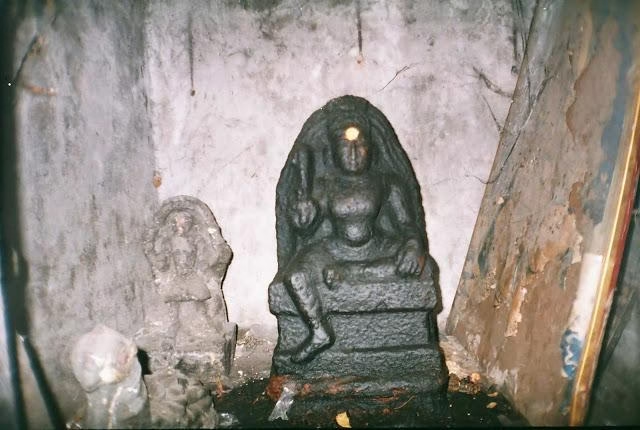
The inner sanctum houses the Kanikandeswarar Lingam. A notable feature of temples in Kanchipuram is the presence of Sapta Matas (Seven Mothers) and other guardian deities. The temple walls likely feature niches housing images of Shiva, Parvati, and other Hindu deities.
Status:
While it may not have a specific UNESCO tag like the Kailasanatha temple, it is a protected monument under the Archaeological Survey of India (ASI) and the Hindu Religious and Charitable Endowments (HR&CE) Department of Tamil Nadu.
Darshan & Ritual Logistics
For devotees planning a visit in 2026, here is the updated logistical guide. Please note that timings can vary during festivals.
Daily Timings
| Session | Timing | Details |
|---|---|---|
| Morning Darshan | 06:00 AM – 12:00 PM | Includes Abhishekam slots (subject to availability) |
| Afternoon Break | 12:00 PM – 04:00 PM | Closed for temple cleaning and rest |
| Evening Darshan | 04:00 PM – 08:30 PM | Includes Deeparadhana and Oṉṉam (evening prayer) |
| Palli Arai | 08:30 PM – 09:00 PM | Closing rituals |
Key Sevas and Online Booking
The temple follows a structured ritual system. To participate in specific Sevas, booking is recommended:
- Abhishekam (Ritual Bathing): Performed usually in the morning. Items include milk, honey, sandalwood paste, and sacred ash (Vibhuti).
- Archana (Name Recitation): Daily individual or group chanting of Shiva names.
- Deeparadhana: The evening lamp offering.
Online Booking:
Devotees can book standard and special Sevas via the official Tamil Nadu HR&CE portal or associated Arulmigu Kanchipuram apps. Search for “Kanikandeswarar Temple Pillaiyarpalayam” under the Kanchipuram district list.
2026 Festival Calendar
Plan your pilgrimage around these auspicious dates:
- Pradosham: The 13th day of every lunar fortnight (Triyodashi). In 2026, notable dates include January 5, February 3, and March 5.
- Maha Shivaratri: February 26, 2026. This is the most significant festival here, featuring night-long vigils and special Abhishekams.
- Arudra Darshan: Occurring around January 12-13, 2026, celebrating the cosmic dance of Shiva (Nataraja).
- Aadi Perukku: July 29, 2026. A monsoon festival where devotees offer special prayers and rice dishes to the flowing waters (though typically near rivers, it is observed with great fervor in Kanchipuram temples).
Practical Visitor Guidance
Code of Conduct & Dress Code
To maintain the sanctity of the temple:
- Dress Code: Traditional attire is mandatory. Men should wear Veshti (dhoti) and shirt, or formal trousers and shirts. Women should wear saree, half-saree, or salwar kameez with a dupatta. Jeans and t-shirts are discouraged.
- Photography: Photography is strictly prohibited inside the sanctum sanctorum (Garbhagriha) and the inner prakaram (corridor). Mobile phones are allowed but must be switched to silent mode.
Crowd Management
Kanchipuram is a bustling temple town. To ensure a peaceful Darshan:
- Best Hours: The least crowded times are between 10:00 AM and 11:30 AM, or after 7:00 PM.
- Seasonal Advice:
- Summer (May – July): Temperatures can exceed 38°C. Carry water bottles, hats, and wear breathable cotton.
- Monsoon (Oct – Dec): Carry an umbrella. The temple steps may be slippery.
- Lockers: Free mobile lockers are often available at the temple entrance or nearby shops managed by the temple administration.
Accessibility
The temple is located in Pillaiyarpalayam, which is a residential area with narrow lanes. While there are no complex staircases leading to the main sanctum (it is accessible via a small flight of steps), wheelchair accessibility is limited due to the antiquity of the structure.
Pilgrimage Connectivity
How to Reach
- By Air: The nearest airport is Chennai International Airport (MAA), approximately 75 km away. From there, take a taxi or the Kanchipuram bus service.
- By Rail: Kanchipuram Railway Station is well-connected to Chennai and Chengalpattu. Auto-rickshaws from the station to Pillaiyarpalayam take about 15 minutes.
- By Road: Kanchipuram is located on the Chennai-Bangalore Highway (NH 48). From Chennai, take the Chennai-Tiruvottiyur-Ponneri-Pallavaram Thandalam Road (SH-58) or via NH 48 for a faster route. Buses run frequently from Chennai’s CMBT and Tambaram.
Nearby Sacred Sites (Pilgrimage Circuit)
Maximize your spiritual journey by visiting these nearby temples within Kanchipuram:
- Kamakshi Amman Temple: Located just a few minutes from Pillaiyarpalayam, this is one of the Shakti Peethas and the seat of the Goddess of Love and Mercy.
- Ekambareswarar Temple: Situated in the northern part of the city (approx. 3-4 km away), dedicated to Lord Shiva as the Lord of the Mango Tree (one of the Pancha Bhoota Stalam representing Earth).
- Varadaraja Perumal Temple: A masterpiece of Vijayanagara architecture, dedicated to Lord Vishnu (approx. 4 km away).
Frequently Asked Questions (FAQ)
Is there a VIP or Special Darshan entry available?
Yes, the temple administration often allows VIP darshans for senior citizens, differently-abled devotees, and those with special permits. However, during peak festivals like Maha Shivaratri, the queue system is strictly followed for all.
What is the best way to book Seva online?
The most reliable method is through the Official Tamil Nadu HR&CE Website (temple.tamilnadutourism.tn.gov.in) or the dedicated ‘Arulmigu’ apps. Ensure you carry a printout or digital copy of the booking confirmation to the temple counter.
Are non-Hindus allowed inside the temple?
Generally, entry is restricted to Hindus and followers of Indian religions. Foreigners are sometimes allowed to view the architecture from the entrance or outer corridors, but Darshan inside the sanctum may be restricted depending on current temple customs.
Is there a dining hall (Annapoorna) for devotees?
Kanchipuram is famous for its temple food. While the Kanikandeswarar temple may have a small community hall, the larger dining facilities (Anna Dhana) are usually available at the major temples like Ekambareswarar or Kamakshi. However, small local eateries in Pillaiyarpalayam serve excellent vegetarian meals.
How old is the Kanikandeswarar Temple?
While specific dating records are lost to time, the architectural style suggests origins in the Pallava era (6th-9th Century CE). It is believed to be over 1,300 years old, with renovations dating to the Chola period.
Photo Gallery
Recent Posts

Shri Kaamkoteeshwar Mandir, Varanasi – History & Significance
In the heart of Kashi, the eternal city of Lord Shiva, where the Ganges flows with celestial grace, stands the Shri Kaamkoteeshwar Mandir. This sacred Sannidhi is not merely a temple but a profound spiritual bridge between the Northern…

ओ सांवरे तूने ही मुझको संभाला – Lyrics & Meaning
ओ सांवरे तूने ही मुझको संभाला – A Prayer to Shyam Origin & Spiritual Essence Why This Bhajan Resonates Devotees chant this when overwhelmed by life’s storms—the refrain ‘तूने ही मुझको संभाला’ is the soul’s sigh of relief: “You…

कथा ये है महाराज मेरे की – Lyrics & Meaning
कथा ये है महाराज मेरे की छत्रपति संभाजी महाराज – A Prayer to Chhatrapati Sambhaji Maharaj Origin & Spiritual Essence Why This Bhajan Resonates Devotees chant this when their spirit feels tested—its powerful refrain “महाराज मेरे” is a soul’s…

Rigveda Samhita Yathartha Anuvada (ऋग्वेद संहिता यथार्थ अनुवाद) – Complete Set with Anvayartha & Hindi/English Translation
The Rigveda is the oldest surviving scripture of humanity and the foundational text of Sanātana Dharma. For serious students, scholars, UPSC aspirants studying ancient Indian history, Sanskrit learners, and spiritual seekers, a precise and grammatically structured translation is indispensable.…

आना भी अकेला है जाना भी अकेला है – Lyrics & Meaning | BharatTemples
आना भी अकेला है जाना भी अकेला है – A Prayer to the Divine Witness Origin & Spiritual Essence Why This Bhajan Resonates Devotees turn to this bhajan in moments of deep reflection—when life’s attachments begin to ache. The…

माता शेरावाली के द्वार जो भी जाता है – Lyrics & Meaning
माता शेरावाली के द्वार जो भी जाता है – A Prayer to Maa Sherawali Origin & Spiritual Essence Why This Bhajan Resonates Devotees turn to this bhajan in times of fear or uncertainty—its promise that no one leaves Maa’s…

मार लेना सपणी उबार लेणा भवरा – Lyrics & Meaning
मार लेना सपणी उबार लेणा भवरा – A Prayer to the Divine Beloved Origin & Spiritual Essence Why This Bhajan Resonates Devotees chant this in moments of deep vulnerability—its cry of “मार लेना सपणी, उबार लेणा भवरा” is the…

हमें श्याम सुंदर भरोसा तुम्हारा – Lyrics & Meaning
हमें श्याम सुंदर भरोसा तुम्हारा – A Prayer to Shyam Sundar Origin & Spiritual Essence Why This Bhajan Resonates Devotees chant this when feeling alone—its refrain ‘de do sahara’ is the soul’s cry for divine support. Lyrics in Hindi…

Mere Satguru Ne Di Thi Davai Lyrics in Hindi & Meaning
Mere Satguru Ne Di Thi Davai: Invoking the Guru’s Liberating Wisdom This soul-stirring bhajan venerates the Satguru (True Spiritual Master) as the divine physician who dispenses the only remedy for life’s deepest sufferings. Composed by Sant Karmaveer Tufani, it…

Janm Diyo Thari Maa Dukh Dekhiyo Lyrics in Hindi & Meaning
जन्म दियो थारी माँ दुख देखियो (Maa’s Grief Upon Birthing You) This soul-stirring Chetavani Bhajan (admonitory hymn) is addressed to the Divine Mother (Maa) – a call for repentance when children forget their filial duties in the dark age…